







Search Results for: TDS Concentration
Can repeatedly boiled water still be used for pour-over coffee? Testing TDS changes and extraction flavor differences
When brewing coffee, most people focus on whether the water's TDS is in the appropriate range, but few pay attention to whether repeatedly boiling the hot water affects the coffee's flavor. Some believe that coffee brewed with water that has been boiled multiple times will decline in quality. To verify this claim, Front Street Coffee designed a controlled experiment, using a TDS test pen and a coffee concentration meter, brewing a medium-light roasted Sidamo Hachira 8.0 by immersion in a clever cup, using water boiled for the first through fourth times respectively, and recording the TDS value of the water and the coffee concentration performance each time. This article will present the experimental setup, operating procedure, and data results one by one, to help coffee enthusiasts determine whether repeatedly boiled water is truly unsuitable for brewing coffee. [more…]
An In-Depth Analysis of Coffee Extraction: Concentration Measurement, Extraction Yield Conversion, and Calculation Methods for Various Brewing Devices
Coffee extraction is the key step that determines flavor. About 30% of coffee beans consists of soluble substances, including both aromatic components and mouthfeel-related compounds, and a higher extraction yield does not necessarily mean better quality. This article systematically introduces concentration measurement methods (refractometer, conductivity pen, evaporation and drying), explains the extraction yield conversion formula in detail, and provides specific calculation steps for different brewing devices such as immersion, pour-over, and espresso. It also includes the golden cup concentration recommendations from the SCAA and SCAE, as well as relevant product information from the Front Street Coffee brand, to help enthusiasts understand extraction more scientifically. [more…]
ATAGO Refractometer Operation Guide: How to Convert TDS Readings to Golden Cup Extraction Yield
Front Street Coffee received a question from an enthusiast who wants to know how to get started with coffee concentration measuring instruments like ATAGO. This article will demonstrate the operating procedure of the instrument step by step, explain the meaning of the two readings, Brix and TDS, and show how to use the measured TDS value to calculate the coffee's extraction yield. The article will also introduce the two core standards of the Golden Cup theory—extraction yield of 18%–22% and concentration of 1.2%–1.45%—as well as the flavor characteristics brought by under-extraction and over-extraction, helping you more accurately judge whether a cup of coffee falls within the ideal range in your daily brewing. [more…]
How Does Water Quality Shape Cold Brew Flavor? Coffee Brewing Recommendations After Testing Four Types of Drinking Water
In a cup of black coffee, water makes up the vast majority, so its impact on flavor must not be underestimated. Different brands of drinking water vary in mineral composition, hardness, and pH, so the coffee brewed with them naturally takes on different characteristics. To investigate this variable, Front Street Coffee selected four common drinking waters—Baisui Mountain, Nongfu Spring, Ganten, and C'estbon—and used the same Costa Rica Mozart coffee beans to make cold brew, measuring TDS, coffee liquid concentration, and recording flavor performance one by one. The experiment found that the amount of calcium and magnesium ions in water affects extraction efficiency and taste direction, while Nongfu Spring with medium TDS and C'estbon purified water each showed distinct stylistic differences. This article will present the full experimental process and tasting results, and offer water selection suggestions for different taste preferences. [more…]
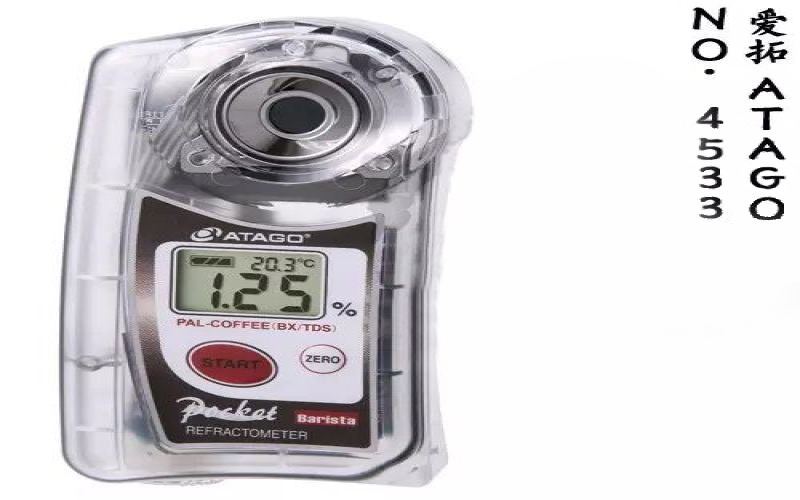
ATAGO Coffee Concentration Meter Operation Guide: A Complete Analysis from Zero Calibration to Extraction Yield Calculation
For coffee enthusiasts pursuing precise extraction, the ATAGO refractometer is a common professional tool. This article focuses on three coffee refractometers under the brand—4523, 4532, and 4533—sorting out their differences and purchasing advice, and addresses questions about accuracy comparisons with the VST LAB. Then, using the 4532 TDS model as an example, it explains step by step the practical essentials such as the unboxing checklist, battery installation, zero calibration, concentration measurement, and extraction yield calculation. The article also particularly reminds readers of easily overlooked details such as zeroing frequency, sample temperature, and cleaning taboos. If you are currently using or considering purchasing an ATAGO refractometer, this guide will help you avoid common pitfalls and make every measurement more reliable. Front Street Coffee also emphasizes the standardized use of such instruments in daily quality control. [more…]

How is the extraction yield of immersion brewing calculated? Concentration measurement and practical demonstration under the Golden Cup theory
In the Golden Cup extraction theory, extraction yield and concentration are the two core metrics for assessing the flavor state of coffee. However, coffee that falls within the ideal range is not necessarily delicious, and coffee outside the range is not necessarily undrinkable—the key lies in how to use these two values to help adjust the brewing plan. From the perspective of Front Street, this article first clarifies the basic definitions and ideal ranges of extraction yield and concentration, then explains in detail how to use two sets of concentration measuring tools, and finally uses the Santa Vini anaerobic natural beans as an example to fully demonstrate the entire process from weighing the liquid weight to plugging it into the formula to calculate the extraction yield. [more…]
How to determine the coffee-to-water ratio for pour-over coffee? The Golden Cup extraction yield and strength calculation and practical methods to avoid over-extraction
Many coffee enthusiasts have encountered this confusion: for the same beans, why does the taste always differ between what you brew yourself and what a Front Street barista brews? In fact, this involves two core concepts—extraction yield and concentration. This article, based on the daily experience of Front Street Coffee (FrontStreet Coffee), systematically explains what coffee extraction yield is, how to measure extraction yield using a TDS concentration meter, and the conversion relationships in the SCAA Golden Cup standard among 18%–22% extraction yield, 1.15%–1.35% concentration, and a 1:12–1:15 coffee-to-water ratio. The article also reviews the historical origins of the Golden Cup theory and, using Front Street's brewing of Panama Elida Natural Typica as an example, provides complete staged pouring parameters and the extraction yield calculation process, helping you brew a cup of pour-over coffee at home that is not over-extracted and has a pleasing flavor. [more…]
How Is the Extraction Yield of Pour-Over Coffee Calculated? A Complete Guide to the Golden Cup Extraction Theory's Formula and Practical Methods
Should brewing coffee rely on feeling or on data? With the maturation of extraction theory, pour-over coffee has gradually moved from empiricism toward a scientific approach. As a classic reference, the Golden Cup extraction standard, although some of the ranges in its 1.0 version are no longer fully suited to the present, still leaves behind extraction yield and concentration calculation formulas that remain practical today. From Front Street's perspective, this article first reviews the background of the Golden Cup standard and Lockhart's research journey, then focuses on explaining two methods for calculating extraction yield: the traditional dry weighing method, and the method of using a TDS meter to infer extraction yield from concentration. The article also summarizes the definitions of concentration and extraction yield, their interrelationship, and conversion formulas, and reminds that for drip coffee, the water absorbed by the coffee bed requires correcting the weight of the brewed liquid, helping you more accurately evaluate the performance of a cup of pour-over. [more…]
How Fine Should Cold Brew Coffee Grounds Be? An Analysis of How Coarse and Fine Grinds Affect Extraction Strength
When making cold brew coffee, should the grind size be coarse or fine? Many enthusiasts habitually assume that grinding finer will increase the concentration, but in a low-temperature, still-steeping extraction environment, this logic does not necessarily hold. Through practical experiments, Front Street used the same Yirgacheffe beans, the same coffee-to-water ratio, and the same steeping time to make cold brew with fine and coarse grinds respectively, testing the concentration and tasting the flavor differences. The results showed that the coarse grind actually had a slightly higher TDS, and its flavor performance was also brighter and sweeter. This article will explain this phenomenon from the perspectives of water temperature and particle movement, and provide grinding recommendations and applicable conditions for making cold brew coffee, helping you make a cup of cold brew with excellent concentration and flavor. [more…]
SCA Golden Cup Extraction Standard Explained: How Concentration, Extraction Yield Ranges, and Pour-Over Parameters Affect Flavor
Coffee is a futures commodity with trading volume second only to crude oil worldwide, yet brewing it at home often makes it hard to replicate cafe flavors—the key lies in whether one understands the SCA Golden Cup extraction standards. This article starts from the principles of soluble substances and solid-liquid extraction, explaining the Golden Cup range of TDS concentration 1.15% to 1.35% and extraction yield 18% to 22%, and systematically sorts out the effects of time, grind size, water temperature, and coffee-to-water ratio on flavor. The article also combines Front Street Coffee's brewing comparison using Huakui 5.0 as an example and store parameters to help readers translate abstract standards into operable daily pour-over brewing. [more…]

How Are the Gold Cup Extraction Yield and Strength Calculated for Pour-Over Coffee? Recommended Coffee-to-Water Ratios and an Analysis of the Evolution of SCA Standards
Many coffee enthusiasts have heard of the Golden Cup extraction theory: ideal concentration 1.15%-1.35%, ideal extraction yield 18%-22%. But this standard actually comes from the SCAA, not the SCA; the European and American coffee associations each have their own positions on ideal concentration. After the SCAA and SCAE merged in 2017, the UC Davis Coffee Center made slight adjustments to the old brewing control chart, loosening the upper concentration limit and the brew ratio range. This article will start with the history of the Golden Cup theory, sort out the differences between the old and new control charts, explain why high concentration with low extraction can highlight acidity while low concentration with high extraction can bring out floral and chocolate notes, and, combined with product information from Front Street Coffee, help you understand how concentration and extraction yield should be judged together, rather than fixating on a single number. [more…]
What Water Should You Choose for Brewing Coffee? Why Purified Water Is Not Recommended for Coffee Machine Extraction
Regarding what water to use for brewing coffee, there has long been a popular saying: "Don't use purified water." Does this claim actually hold up? Water quality really does influence how coffee flavors express themselves, and purified water is called into question mainly for two reasons: first, its extraction efficiency is on the low side, because the water lacks calcium and magnesium ions to help dissolve flavor compounds; second, purified water has poor conductivity, which can cause the boiler probe in a coffee machine to malfunction, leading to abnormal refilling or even breakdowns. Through comparative experiments, Front Street found that coffee brewed with purified water versus mineral water shows only slight differences in concentration and extraction yield—hard for an ordinary person to notice. What is truly unsuitable for brewing coffee is hard water with a TDS above 175 ppm. This article will analyze these points one by one and offer water-quality recommendations for everyday brewing. [more…]
How Is the Golden Cup Extraction Yield for Pour-Over Coffee Calculated? A Detailed Explanation from Concentration Measurement to Front Street Coffee Practical Cases
How exactly should the extraction yield and strength of pour-over coffee be calculated? The golden cup extraction yield range defined by the SCAA is 18% to 22%, corresponding to a TDS strength of about 1.15% to 1.35%, while the coffee-to-water ratio falls within the range of 1:12 to 1:15. This theory originates from Dr. Lockhart's scientific experiments in the 1950s, in which he quantified coffee flavor and laid the foundation for the golden cup standard. This article starts from the daily brewing at Front Street Coffee, explains the definitions of extraction yield and strength, the conversion formulas, and how to use a refractometer, and, using beans from Panama's Elida Estate as an example, fully demonstrates the parameter settings, pouring rhythm, and extraction yield calculation process of a staged pour-over, helping coffee enthusiasts understand the practical application and reference value of the golden cup theory. [more…]
In-Depth Analysis of Espresso Dose Control: Extraction Adjustment Strategies from Gram Weight Differences to Flavor Balance
Many coffee enthusiasts are intimately familiar with latte art and equipment, yet when it comes to espresso extraction, they often overlook dosing, puck management, and tasting judgment. In fact, dose control is just as critical as grind size adjustment—fluctuations in dose mean that even the most beautiful latte art cannot mask an imbalance in the coffee itself. Starting from the TDS and extraction yield formulas, and drawing on a 2.3-gram dose difference measured on a Mazzer Robur grinder, this article uses charts and data to illustrate the specific effects of dose on concentration, extraction yield, and the balance between acidity and bitterness, and explores approaches to dosing for light-roast espresso. Front Street Coffee also emphasizes the importance of dose consistency in its daily output, and we hope this article offers practical reference for your extraction adjustments. [more…]
Is Lower TDS Water Always Better for Brewing Coffee? An In-Depth Look at ppm Standards and Mineral Water Choices
Many coffee enthusiasts, after purchasing equipment and beans, often overlook the critical impact of water quality on flavor. Tap water, filtered water, or purified water—different TDS levels will directly change the extraction results. From the perspective of Front Street, this article explains how calcium and magnesium ions influence the taste, why tap water tends to produce astringency, and why purified water leads to a hollow sensation. It also cites the SCAA standard of 75-250ppm along with practical recommendations, advocating the use of filtered or bottled water, and specifically mentions Nongfu Spring as a reference choice for daily brewing. [more…]
The Grinding Logic and Bean Selection Guide for Low-Temperature Cold Brew Coffee: From Extraction Principles to Specialty Drink Concentration Control
Cold brew coffee is extracted in a low-temperature, still environment, and many people habitually assume that grinding the coffee finer will increase its strength—but is that actually true? Through comparative experiments, Front Street Coffee found that a coarser grind actually yields a higher TDS reading in cold brew. Starting from the underlying logic of water temperature and particle movement, this article will explain why the "finer grind equals stronger coffee" theory that applies to high-temperature pour-over does not hold for cold brew. It also offers coffee bean recommendations suitable for cold brew, suggested coffee-to-water ratios, and points to note on grind selection for beans of different roast levels, helping you make a specialty cold brew with just the right strength and an aroma that isn't masked by added ingredients. [more…]
Ninety Plus Candle Glow Coffee Flavor Analysis: Roasting Key Points and Brewing Grind Adjustments for Natural Sidamo
Candlelight Coffee is a naturally processed Ethiopian bean from the LevelUp series by Ninety Plus, named for its flavor profile. It comes from the Sidama region, and its name means "the best way" in the local dialect. This article begins with the background of the Ninety Plus brand, then outlines Candlelight's origin characteristics, flavor expression, and roasting approach. It also documents a grind size comparison experiment conducted by Front Street Coffee using the same batch of beans, examining how different grind coarseness affects TDS concentration and the drinking experience. The article also organizes the N2, H2, and W2 labeling logic that Ninety Plus uses to classify flavor directions, helping coffee enthusiasts understand what makes this bean unique and how to adjust their brewing. [more…]

Cold Brew Coffee Extraction Rate | How to Increase Cold Brew Coffee Concentration? What Is the Brewing Ratio for Cold Brew Coffee? Cold Brew Coffee Bean Recommendations for Specialty Coffee Drinks
Before writing this article, Front Street asked several coffee professionals/enthusiasts: "Under normal circumstances, when making cold brew coffee, if you use the same water, coffee beans, amount of coffee grounds, brewing container, and brewing time, how would you increase the extraction concentration of the coffee?" I believe everyone, like the interviewees, would [more…]

Why Is Espresso Ordered So Rarely? An In-Depth Look at Espresso's High Concentration and Bitter Notes
Espresso, as Italy's national drink, is known for its high concentration and quick preparation, yet in China few people actively order it. Its TDS concentration can reach 7%–12%, far exceeding pour-over coffee, and bitterness becomes most people's first impression. However, bitter does not mean undrinkable—the caramel, dark chocolate, and roasted nut aromas brought by dark-roast blends, along with the viscous texture imparted by Crema, are the true flavor core that enthusiasts seek. In recent years, the rise of SOE has given espresso even more diverse expressions such as fruity notes and fermented aromas. Starting from Front Street Coffee's experience, this article takes you to rediscover this small-volume, high-density cup of coffee. [more…]

A Barista's Daily Record: Those Moments with Customers That Leave the Person Behind the Counter Not Knowing Whether to Laugh or Cry
Having been immersed in the coffee industry for many years, the author is both a barista behind the counter and an observer on social media. Over these years, consumers have gone from knowing nothing about coffee to becoming increasingly particular, and the industry has indeed made progress. However, dealing with all kinds of customers every day, one always encounters some both amusing and exasperating moves—from "an Americano with milk" to bringing one's own water quality testing pen, from cupping spoons to TDS concentration meters. These moments not only test a barista's professional competence but also reflect the various misunderstandings in the process of coffee culture becoming widespread. This article records seven real-life scenarios with escalating shock levels, and after each story provides professional analysis and suggested responses. Whether you are a practitioner or an enthusiast, you can see both the absurdity and the reality of the coffee world in them. [more…]