







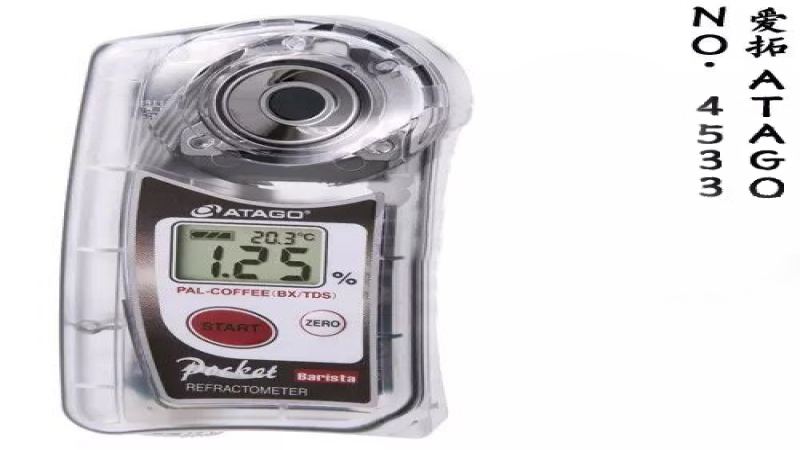
For coffee enthusiasts pursuing precise extraction, the ATAGO refractometer is a common professional tool. This article focuses on three coffee refractometers under the brand—4523, 4532, and 4533—sorting out their differences and purchasing advice, and addressing the question of accuracy compared with VST LAB. Then, using the 4532 TDS model as an example, it explains step by step the practical points of the unboxing list, battery installation, zero calibration, concentration measurement, and extraction yield calculation. The article also specifically reminds readers of easily overlooked details such as zeroing frequency, sample temperature, and cleaning taboos. If you are using or considering purchasing an ATAGO refractometer, this guide will help you avoid common pitfalls and make every measurement more reliable. Front Street Coffee also emphasizes the standardized use of such instruments in daily quality control.
How should the zeroing operation and concentration measurement of the ATAGO refractometer be performed correctly? How accurate is this brand's instrument, and compared with VST LAB, which is better? Can it handle Espresso concentration testing?
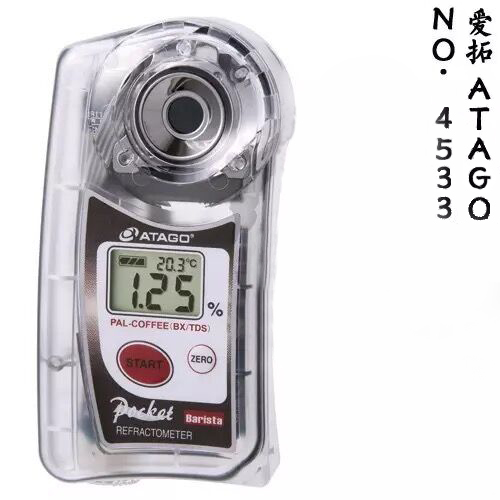
ATAGO has a wide variety of refractometers, among which there are three models used for coffee concentration measurement: NO: 4523 (Brix), NO: 4532 (TDS), and NO: 4533 (BX/TDS), hereinafter referred to as 4523, 4532, and 4533 respectively.
The differences among 4523, 4532, and 4533 are as follows: 4523: Displays Brix value, requires multiplying by 0.85 yourself to convert to TDS, relatively affordable. 4532: Directly displays TDS reading, slightly more expensive than 4523. 4533: Displays Brix value, but can switch to TDS reading with one button, the highest priced of the three. Price ranking: 4523<4532<4533
Q: These three are all precision instruments, and their prices are not low. Many buyers want to know how to choose so they can get it right in one step. A: In terms of ease of operation, 4523 (Brix) requires manual conversion of values, and its price is close to that of 4533 (TDS), so its cost-effectiveness is greatly reduced, which is also why we do not recommend 4523 (Brix). 4532 (TDS) currently has the highest sales volume, with a price in the middle of the three. 4533 (BX/TDS) is suitable for scenarios where, besides coffee, the store also needs to make syrups, sugar liquids, and freshly squeezed juices. The specific BX value can be decided on your own.
Q: Compared with VST LAB, which of these ATAGO models is more accurate? A: To make such a comparison, you first need third-party precision testing equipment, and the test samples will produce errors due to time and temperature; every instrument is an independent individual and difficult to represent the overall level. Therefore, the two are not comparable (currently there is no experimental data showing which side is more accurate). ATAGO and VST LAB can only be chosen between the two, and cannot be cross-compared. Only by consistently using the same refractometer can errors be minimized. ATAGO can test Espresso; before testing, simply filter it with a dry pour-over filter paper, and the subsequent testing method is the same.
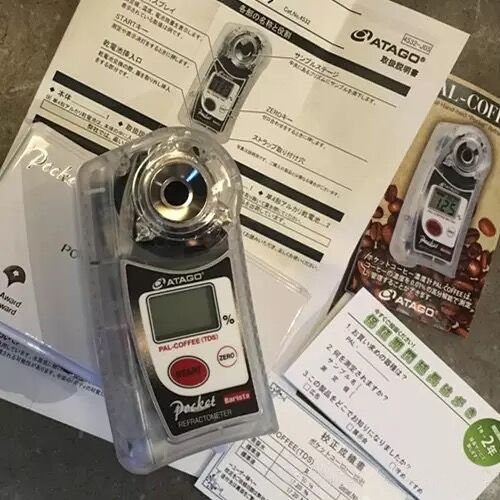
After receiving the purchased model (taking 4532 TDS as an example), opening the package reveals the following items:
One ATAGO 4532 (TDS) refractometer One instruction manual (Japanese) One calibration certificate One warranty card (Japan) One introductory leaflet (Japanese)
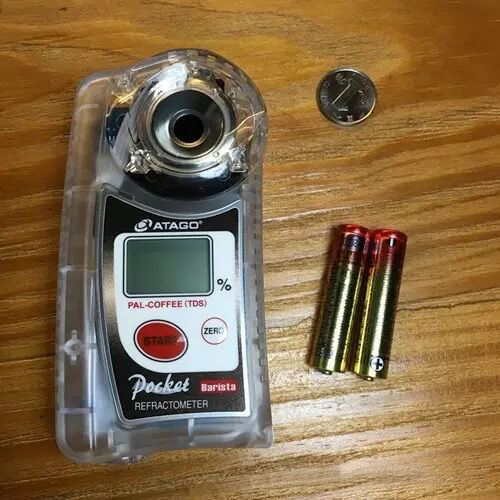
▲International EMS airmail prohibits mailing batteries, please prepare 2 AAA batteries yourself.
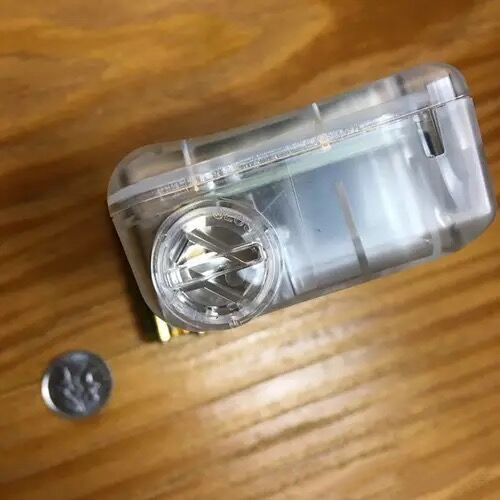
▲Use a coin to turn the battery cover at the bottom of the device counterclockwise all the way to open the battery compartment.
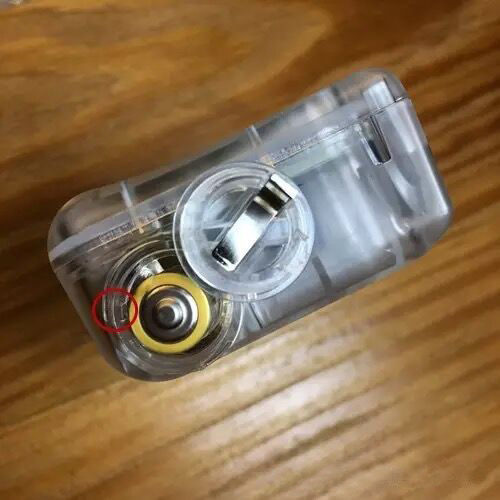
▲Place the batteries with correct polarity, align the battery cover with the notch of the battery compartment, and turn clockwise to tighten.
▲Press the red START key to power on. LLL indicates that no sample has been placed in the detection dish.
"Zeroing"
Precautions for zero setting: Prepare room-temperature distilled water or water from a pour-over kettle (let it sit until room temperature) Clean the detection dish with a paper towel or clean cloth Drop about 2 drops of water into the detection dish Press the zero key and wait for the screen to display 000 If other values are displayed, press the zero key again When the screen displays AAA, add more water to the detection dish and press the zero key After successful zeroing, wipe the water from the detection dish with a paper towel or cloth, and then start testing samples Zeroing is required once before use every day
"Measuring Concentration"
▲Brew coffee in your usual way, and wait for the coffee to reach room temperature before testing TDS. Testing steps: First brew coffee according to your own habits Then let the coffee sit until it reaches room temperature Use a spoon to add the room-temperature coffee into the detection dish Press the start key and wait about 20 seconds The value displayed on the screen is the TDS Concentration is 1.11% Wipe the coffee liquid in the detection dish clean Then the next coffee sample can be tested Testing precautions: Please let the coffee reach room temperature before testing The instrument can be rinsed, but never immerse the instrument in water during use Do not clean the body with warm water above 30°C (The detection dish can accept coffee liquid above 30°C) Never let the instrument come into contact with toxic or corrosive solvents The center of the detection dish is made of glass, do not poke it with metal or hard objects If the screen displays "nnn" during testing, cover the detection dish with your hand, then press the start key
"Calculating Extraction Yield" Known: amount of coffee grounds used, concentration, and weight of coffee liquid. Weight of coffee liquid × concentration ÷ Amount of coffee grounds = Extraction yield (Golden Cup extraction yield is between 18% and 22%)
The above content is compiled by CoffeeHunters, a coffee news website.


