







What Does the Coffee Scope of Extraction Theory Cover?
Extraction yield of pour-over coffee is calculated in two main ways: the traditional dry-weighing method, which compares the dry coffee dose with the weight of dissolved solids, and a TDS-meter method that measures the concentration of the brewed liquid and works backward to the yield. Both rest on formulas left behind by the Golden Cup extraction standard.
Lockhart, a chemistry PhD commissioned by the National Coffee Association of America in the 1950s, found that roughly 30 percent of a coffee bean's weight is extractable while 70 percent is insoluble fiber. He tied taste to two measures: extraction yield and concentration, or TDS. Note that for drip coffee, the water held in the coffee bed means the brewed liquid weight needs correction.
Should coffee brewing rely on feel or on data? As extraction theory matures, pour-over coffee has gradually moved from empiricism toward a more scientific approach. The Golden Cup extraction standard serves as a classic reference; although some of the ranges in version 1.0 no longer fully fit the present day, the extraction yield and concentration formulas it left behind remain useful today. From Front Street Coffee's perspective, this article first reviews the background of the Golden Cup standard and Lockhart's research journey, then focuses on two methods for calculating extraction yield: the traditional dry-weighing method, and the method of using a TDS meter to work backward from concentration to extraction yield. It also organizes the definitions of concentration and extraction yield, their relationship, and the conversion formulas, and reminds you that for drip coffee, the water absorbed by the coffee bed means the weight of the brewed liquid must be corrected, helping you more accurately evaluate the performance of a cup of pour-over.
In the past, judging how well a cup of coffee was brewed mostly relied on accumulated feel and experience, and beginners often had to practice repeatedly before gradually getting a sense of it. Today, as extraction theory has matured, brewing coffee has also gradually shifted from "mysticism" toward a quantifiable science.
When it comes to extraction, one cannot avoid the Golden Cup extraction standard. Of course, from today's perspective, the applicable scope of version 1.0 already has limitations, and the SCA is also advancing research on version 2.0. Before 2.0 is officially released, Front Street Coffee will first walk everyone through the relevant knowledge of Golden Cup Extraction version 1.0.
The Origin of the Golden Cup Standard
In the 1950s, the National Coffee Association (NCA) commissioned Lockhart, a chemistry PhD from MIT, to carry out scientific research related to coffee. Lockhart found that the substances that can be extracted from coffee beans account for about 30% of their total weight, while the remaining 70% is insoluble solid fiber. He also pointed out that whether a cup of coffee tastes good depends on two indicators: coffee extraction yield and coffee liquid concentration (TDS).
Between 1952 and 1960, Lockhart conducted sampling surveys among the American public. The results showed that the coffee extraction yield preferred by the public fell between 17.5% and 21.2%, while concentration was between 1.04% and 1.39%. This was the prototype of the American Golden Cup standard.
Afterward, Lockhart's team, together with the U.S. Army Midwest Research Center, combined data with expert cupping and concluded that an extraction yield of 18%–22% and a concentration of 1.15%–1.35% constituted the optimal extraction range for coffee. This conclusion later became the foundation of the Golden Cup extraction theory of the Specialty Coffee Association of America (SCAA) and, after the merger, the SCA.
Of course, from today's point of view, even if only one of extraction yield and concentration falls outside the Golden Cup range, it is still possible to brew delicious coffee, so discussing the Golden Cup range now is no longer very meaningful. However, the extraction yield and concentration calculation formulas left by the Golden Cup standard are still applicable today.
How Is Coffee Extraction Yield Calculated?
Coffee extraction yield refers to the proportion of coffee substances released from coffee beans (or grounds) after brewing. That being the case, we can simply calculate extraction yield using the traditional method (it is just rather time-consuming)!
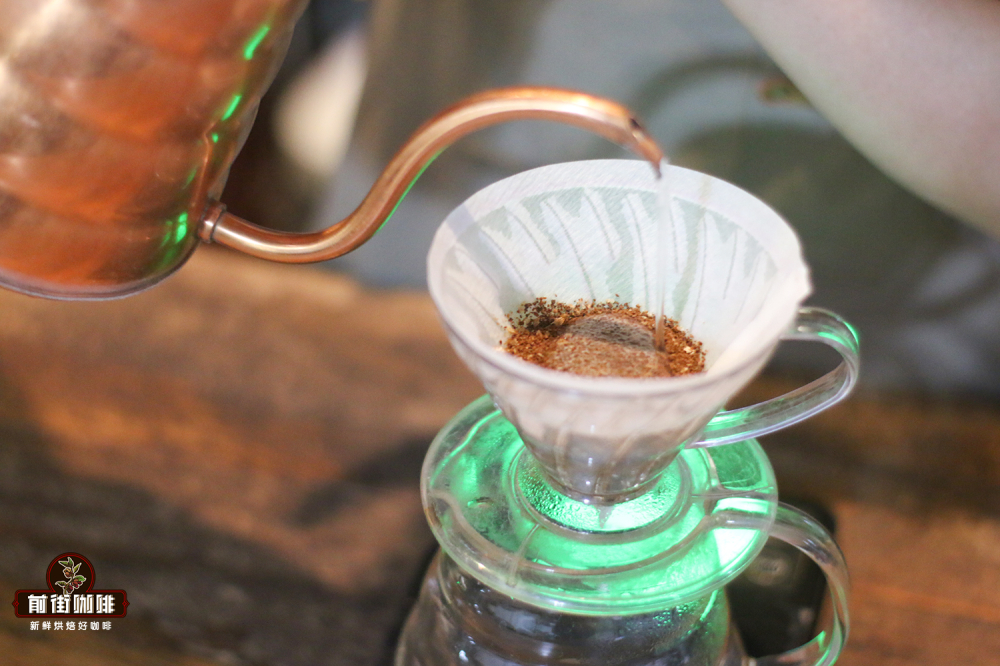
Since coffee grounds dissolve coffee substances after contacting water, that is to say, the weight of the dissolved substances equals the weight lost by the coffee beans (or grounds). Then all you need to do is dry the brewed coffee grounds and weigh them again. The part by which the weight is less than the original coffee beans (or grounds) is the weight of the extracted coffee substances. Therefore:
Weight of extracted coffee substances ÷ Weight of original coffee beans (or grounds) = Extraction yield
For example: if you brew with 15 grams of coffee grounds, then dry the spent grounds completely and weigh them at 12.3 grams, then the weight of the substances dissolved in water is 2.7 grams. The extraction yield of this cup of coffee is 2.7 ÷ 15 = 0.18 (18%).
But the drawbacks of this method are also obvious: first, it takes a long time; second, the data accuracy is relatively low, mainly reflected in the degree of loss during the drying process of the coffee grounds and the precision of the weighing. Most common electronic scales can only be accurate to 0.1 grams, and an error of 0.1 grams will bring about a 0.7% error in extraction yield.
Therefore, the method we commonly use now to calculate extraction yield is related to coffee concentration. Of course, the prerequisite for using this method is having an instrument that measures concentration (a TDS meter)!
First, let's understand what concentration and extraction yield each represent.
[Concentration] indicates the proportion of "extracted coffee substances" in the total coffee liquid in a cup of coffee.
[Extraction yield] indicates the proportion of "extracted coffee substances" in the total weight of coffee beans.
(One is based on coffee liquid, and the other is based on coffee beans or coffee grounds.)
Based on these conditions, we can derive:
Coffee liquid concentration = Weight of extracted coffee substances ÷ Weight of coffee liquid
Coffee extraction yield = Weight of extracted coffee substances ÷ Weight of coffee beans (or grounds)
Combining the above formulas gives the calculation formula for coffee extraction yield:
Coffee extraction yield = Coffee liquid concentration × Coffee liquid weight ÷ Coffee beans (or grounds) weight
With a concentration meter, we can easily learn the concentration of the coffee liquid, and in this way we can conveniently calculate the coffee's extraction yield. However, note that for drip coffee, the coffee grounds themselves absorb about twice their own weight in water, so
Coffee liquid weight = Amount of water poured - 2 × Coffee beans (or grounds) weight
For professional coffee knowledge exchange and more coffee bean information, please follow Coffee Workshop (WeChat public account: cafe_style). For more specialty coffee beans, please add the private WeChat of Front Street Coffee (FrontStreet Coffee), WeChat ID: qjcoffeex
The above content is compiled by CoffeeHunters, a coffee news website.


