







How Does Water Quality Affect Coffee Brewing?
Water makes up most of a cup of black coffee, so its mineral content, hardness, and pH directly shape cold brew flavor. A test using the same Costa Rica Mozart beans and four bottled waters showed that calcium and magnesium levels change extraction efficiency and taste direction, while moderate-TDS water and pure water each produce clearly different cup profiles.
The test compared Baisui Mountain, Nongfu Spring, Ganten, and C'estbon, recording each water's TDS, the finished cold brew concentration, taste, and mouthfeel. Calcium coffee chemistry matters here: some calcium helps dissolve coffee acidity, but too much forms scale, so matching water to a preferred style is a practical step in coffee brewing.
In a cup of black coffee, water makes up the vast majority, so the impact of water quality on flavor must not be underestimated. Different brands of drinking water vary in mineral composition, hardness, and pH, so the coffee brewed with them naturally presents different profiles. To investigate this variable, Front Street Coffee selected four common drinking waters—Baisui Mountain, Nongfu Spring, Ganten, and C'estbon—and used the same Costa Rica Mozart coffee beans to make cold brew, measuring TDS, coffee liquid concentration, and recording flavor performance one by one. The experiment found that the amount of calcium and magnesium ions in water influences extraction efficiency and taste direction, while Nongfu Spring with medium TDS and C'estbon pure water each showed distinct stylistic differences. This article will fully present the experimental process and tasting results, and provide water selection suggestions for different taste preferences.
A freshly brewed cup of black coffee is mostly water, with flavor compounds making up only a small proportion. To make coffee taste good, water temperature is certainly key, but water quality should not be overlooked either. Experienced coffee enthusiasts will notice that different brands of drinking water have inconsistent compositions, with differences in hardness and pH, so the coffee brewed naturally tastes different.
One afternoon, Front Street Coffee had a sudden inspiration and planned a small experiment. We bought four common types of direct drinking water available on the market—Baisui Mountain mineral water, Nongfu Spring, Ganten natural spring water, and C'estbon pure water—and used the same coffee beans to make cold brew for a side-by-side comparison, wanting to figure out what flavor changes different water qualities would bring to cold brew coffee.
The items to be measured and recorded in this experiment include: the TDS value of each bottle of water, the concentration of the finished cold brew coffee liquid, the coffee taste, and the mouthfeel.
First, a brief explanation of TDS
TDS (Total Dissolved Solids) reflects the amount of dissolved substances in water, covering minerals, salts, metals, and other solids, with the main components being ions such as calcium, magnesium, potassium, and sodium. These substances affect the hardness of water, and generally speaking, hard water is not suitable for brewing coffee.
Scientific research shows that an appropriate amount of calcium ions in water can better dissolve the acidity of coffee, but excessive calcium content easily forms scale. A small amount of magnesium ions can enhance the sweetness and aroma of coffee. Therefore, water with moderate calcium and magnesium ion content is very suitable for brewing coffee.
The measurement unit for TDS is mg/L, and the concentration unit is ppm. The larger the ppm value, the more dissolved substances there are. For example, if the TDS of water is 50ppm, it means the total amount of all dissolved solid substances in the water is 50mg/L. Here Front Street Coffee should add that TDS can only measure the total amount of dissolved solids and cannot break down the specific content of magnesium, calcium, and other trace elements.
No time to waste, let's start the practical work
In this experiment, the coffee beans selected by Front Street Coffee were Costa Rica Mozart. The raisin honey processing method gives it the fragrance of osmanthus, as well as high sweetness like ripe fruit and preserved fruit, making it very suitable for iced coffee. In addition, when making iced cold brew, it is recommended to prioritize coffee beans rich in sweet aromas. For home production, you can buy Front Street Coffee Strawberry Candy, Front Street Coffee Blackberry, or try the full-bodied juice-like Front Street Coffee Cherry Tomato, Front Street Coffee Sidra, all of which can make iced coffee even better than coffee shops.
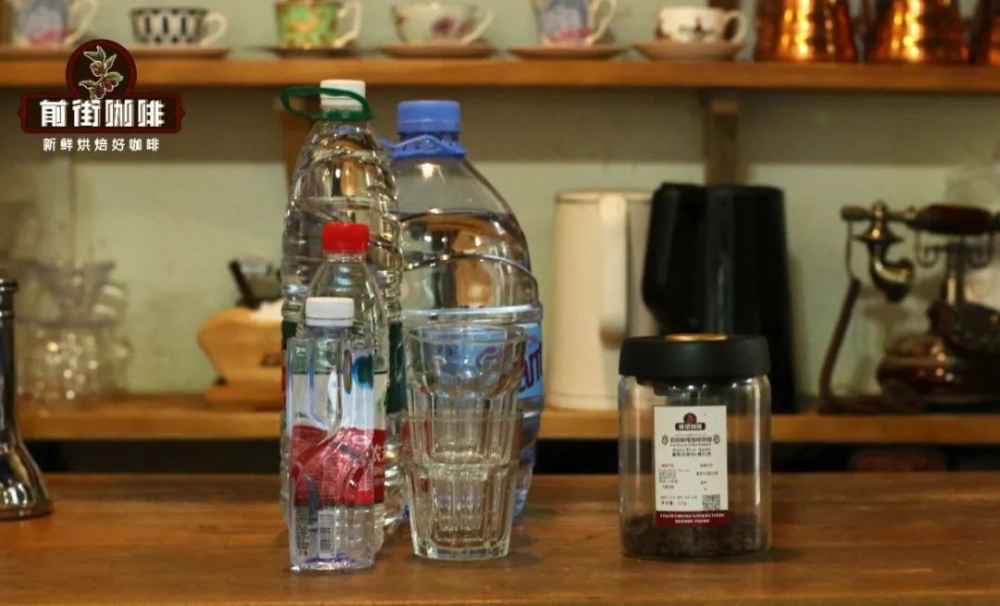
Water quality measurement results before brewing
Baisui Mountain mineral water TDS: 58ppm
Nongfu Spring natural water TDS: 37ppm
Ganten natural spring water TDS: 18ppm
C'estbon pure water TDS: 0ppm
Cold brew parameters
Coffee grounds per sample: 15 grams
Grind size: No. 20 sieve pass rate 83% (EK43s setting 9.0)
Coffee-to-water ratio: 1:10
Steeping time: 15 hours (after filtering, refrigerate for 2 hours)
Coffee concentration measurement and tasting
Baisui Mountain mineral water cold brew concentration: 2.0%
Mouthfeel: berry, black tea, monotonous and heavy flavor, slight powdery texture on entry
Nongfu Spring natural water cold brew concentration: 2.15%
Mouthfeel: raisin, tropical fruit, light floral aroma, obvious fermented wine aroma, full-bodied flavor
Ganten natural spring water cold brew concentration: 1.98%
Mouthfeel: blueberry, dried fruit, slight fermentation, weak sweetness, unremarkable flavor, average aroma
C'estbon pure water cold brew concentration: 2.09%
Mouthfeel: bright fruit acidity, sweet orange, spice, highest cleanliness, overall uplifting and refreshing
The extraction conditions of cold brew are relatively stable, and the concentration is mainly determined by the coffee-to-water ratio, grind size, and steeping time. Therefore, under the premise of only changing the water quality, even the lowest concentration from Ganten and the highest from Nongfu Spring do not differ much.
Since cold brew is carried out in a low-temperature environment, the extraction power of water is weaker, and usually only small-molecule substances such as floral aromas and fruit acids can be extracted. Coffee is unlikely to show the bitterness typical of light to medium roasts, so none of the four cups of coffee had obvious negative mouthfeel. As for the flavor differences presented by each cup of coffee, the root cause lies in the different trace components (calcium and magnesium ions) contained in the four types of drinking water, which affected the extraction amount of various flavor substances in the coffee.
Combining Front Street Coffee's experience in producing cold brew and the comparison results of this experiment, if you want the coffee you make to consistently express flavor while having a nice fermented mouthfeel, Front Street Coffee recommends choosing Nongfu Spring with a medium ppm value; if you like cold brew coffee with brighter acidity and fresher fruitiness, you might try soaking the coffee grounds in pure water like C'estbon.
The above content is compiled by CoffeeHunters, a coffee news website.


