







Does Purified Water Really Hurt Coffee Extraction?
Purified water does not ruin coffee extraction, but it changes it slightly. With TDS near 0ppm it carries almost no calcium or magnesium ions to help dissolve flavor compounds, so extraction yield and concentration drop a little. Its low conductivity can also make a coffee machine's boiler probe misread water levels, causing odd refilling or breakdowns.
Comparative tests by Front Street Coffee found purified water and mineral water differ only slightly in extraction yield and concentration, a gap most drinkers would not notice. The real problem is hard water: a TDS above 175ppm is genuinely unsuitable for brewing. For daily brewing, water with some mineral content but moderate TDS is the practical middle ground.
When it comes to what water to use for brewing coffee, the saying "don't use purified water" has been circulating for a long time. Does this claim actually hold up? Water source does indeed influence how coffee flavors express themselves, and purified water is questioned mainly for two reasons: first, its extraction efficiency is relatively low, because the water lacks calcium and magnesium ions to help dissolve flavor compounds; second, purified water has poor conductivity, which can cause the boiler probe in a coffee machine to malfunction, leading to abnormal refilling or even breakdowns. Through comparative experiments, Front Street Coffee found that coffee brewed with purified water and with mineral water differs only slightly in concentration and extraction yield—hardly noticeable to the average person. What is truly unsuitable for brewing coffee is hard water with a TDS above 175ppm. This article will analyze these points one by one and offer water-quality recommendations for everyday brewing.
If you've ever chatted with friends about coffee or searched for related topics online, chances are you've come across this view: "It's best not to use purified water for brewing coffee!" Yesterday, a customer at the Front Street Coffee shop, while selecting coffee beans, specifically asked us: "Can purified water really not be used to make coffee?"
The choice of water source does indeed influence the overall performance of a cup of coffee—much like brewing tea. Switch to a different water, and the taste and mouthfeel of the coffee will differ. As for why purified water is considered unsuitable for brewing coffee, there are mainly two reasons.
Reason one: relatively low extraction efficiency
Although most water looks clear and transparent, as if it contains nothing, in reality it usually has a certain amount of minerals dissolved in it—and when present in the right amounts, these minerals help release the finer flavors in coffee. Calcium and magnesium ions in particular carry positive charges and are attracted to and bind with the negatively charged acidic flavor compounds in coffee (such as chlorogenic acid and citric acid), thereby speeding up the dissolution of these substances.
Purified water, by contrast, has extremely low mineral content, with TDS close to 0ppm. So compared with mineral-containing water, purified water has a harder time extracting flavor compounds from coffee during brewing. Under otherwise identical conditions, coffee brewed with purified water will have a lower extraction yield and concentration, and taste relatively thin.
Take Front Street Coffee's own test as an example: we brewed a pot of coffee with purified water and another with mineral water at 37ppm TDS, using the Front Street Ethiopia Hamasho from our bean list, with completely identical brewing parameters: 15g coffee grounds, Ek43 grind setting 10, water temperature 92°C, 1:15 coffee-to-water ratio, and a two-minute extraction time.
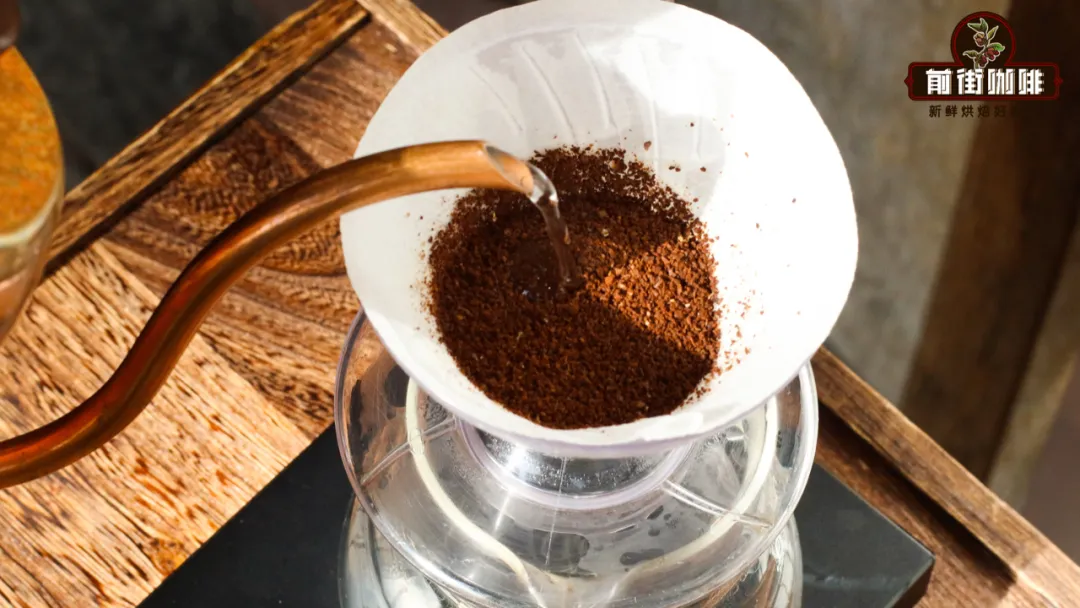
Both cups displayed strawberry, citrus, guava and floral notes. Only in terms of taste and aroma intensity, compared with the Hamasho brewed with mineral water, the cup brewed with purified water was slightly lighter in concentration. By measuring extraction yield, Front Street Coffee also confirmed this difference: the Hamasho brewed with mineral water had an extraction yield of 19.34%, while the purified-water version was 19.01%.
To rule out errors from manual brewing, Front Street Coffee ran another comparison set, with nearly identical results. This shows that, with identical parameters, compared with mineral water, purified water—containing nothing—extracts slightly less from the coffee, and the taste is not as full.
But only slightly less.
Without a direct side-by-side comparison, the average person can hardly taste a clear difference. And as long as you readjust your extraction plan, even with purified water you can brew an equally rich cup. That's because purified water simply doesn't dissolve coffee flavor compounds as easily—it doesn't fail to dissolve them entirely.
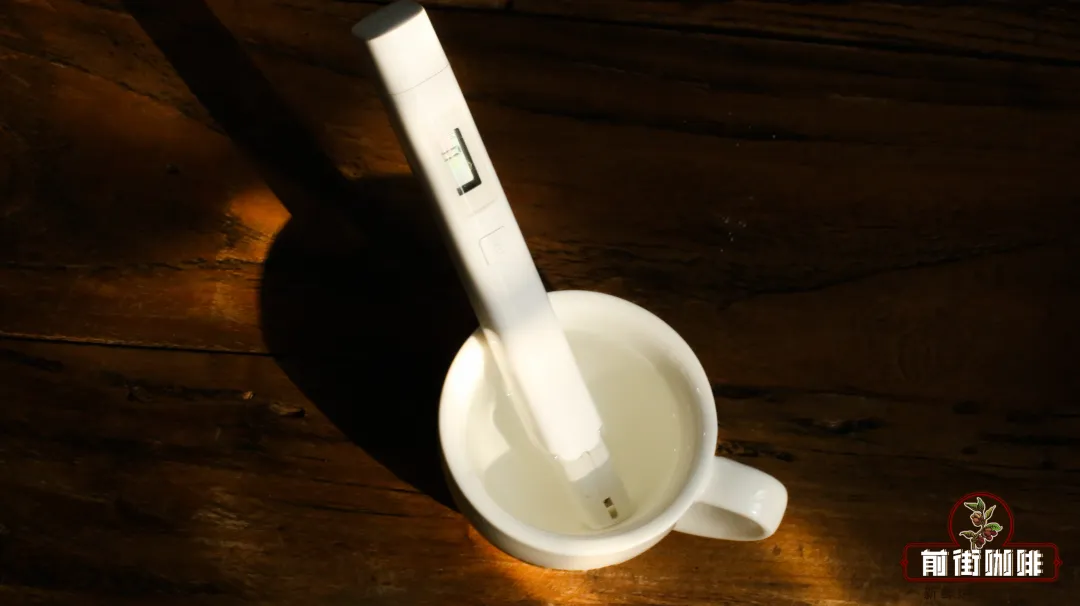
Compared with purified water, hard water with a TDS above 175ppm is even less suitable for brewing coffee. This kind of water not only struggles to extract flavor compounds from coffee but also brings unpleasant tastes and mouthfeel—especially the untreated tap water in many cities. Even if you adjust your extraction plan to achieve a suitable extraction yield, the mouthfeel and taste will be compromised and the quality degraded—and the adjustment process is quite tedious. So Front Street Coffee recommends choosing water with a TDS of around 175ppm when brewing coffee.
Reason two: it cannot be detected by the probe
In fact, the claim that purified water is unsuitable for coffee is mainly aimed at coffee machines. Low extraction efficiency is secondary, because as Front Street Coffee said earlier, low extraction efficiency can be improved.
Because purified water has very few minerals and extremely low conductivity, this affects the coffee machine's probe in detecting and controlling the boiler water level. The steam boiler of a coffee machine contains metal probes inside, which mainly judge the water level by detecting the conductivity of the water. When the water lacks minerals and has insufficient conductivity, the boiler's water-level detection system easily fails, leading to overfilling or boiler malfunction.
Combined with what Front Street Coffee mentioned earlier—that purified water's extraction performance is also slightly inferior—coffee machine sellers or users often urge people not to use purified water, since it easily causes machine failures and the coffee extraction performance isn't ideal either.
But if you don't use a coffee machine and simply brew pour-over coffee the ordinary way, using purified water is no problem. After all, as Front Street Coffee said, it affects extraction, but not by much~
- END -
The above content is compiled by CoffeeHunters, a coffee news website.


