








How the Coffee Association of America Measures Extraction Yield Under the Golden Cup Theory
Extraction yield is the proportion of soluble material dissolved out of the coffee, and concentration measures how strong the resulting liquid is. Together they describe the state of a brew. The Golden Cup framework came from research by the Specialty Coffee Association of America, which quantified both values, but a cup inside the range is not automatically tasty and one outside it is not automatically bad.
The practical method is to weigh the brewed liquid, measure concentration with a refractometer or similar tool, and plug the numbers into the yield formula. Worked through with a Santa Viny anaerobic sun-dried bean, the process runs from weighing liquid weight to calculating yield, and it helps diagnose a brew that tastes off when the cause is not obvious.
In the Golden Cup extraction theory, extraction yield and concentration are the two core metrics for gauging the flavor state of coffee. However, coffee that falls within the ideal range is not necessarily tasty, and coffee outside the range is not necessarily bad—the key lies in how to use these two values to help adjust the brewing scheme. From Front Street's perspective, this article first clarifies the basic definitions and ideal ranges of extraction yield and concentration, then explains in detail how to use two sets of concentration measurement tools, and finally uses the Santa Viny anaerobic sun-dried bean as an example to fully demonstrate the whole process from weighing the liquid weight to plugging it into the formula to calculate extraction yield.

In many articles, Front Street mentions the concept of "Gold Cup Extraction." It originates from a research study initiated by the Specialty Coffee Association of America (SCAA), which quantifies extraction yield and concentration to define an extraction range considered to be coffee's "optimal" performance. As long as the brewed coffee falls within the range for both values, the cup will most likely deliver a good taste experience.
But nothing is absolute. Because the test subjects and the coffee beans used in the Golden Cup experiments at the time had certain limitations, this conclusion cannot assert that all good-tasting coffee must necessarily meet the Golden Cup standard. Conversely, coffee within the Golden Cup extraction range is not necessarily tasty, and coffee outside the range is not necessarily undrinkable.
Nevertheless, the Golden Cup concept can still serve as a useful reference tool to help us make better-tasting coffee. After all, extraction yield and concentration are both quantified, so we can more intuitively judge what "state" the coffee is currently in. When we feel the brewed coffee is not ideal but cannot pinpoint the problem, we can measure extraction yield and concentration to verify our guesses and find targeted directions for adjustment.
So today, Front Street will talk about how to measure coffee's extraction yield and concentration. Before getting started, let's briefly sort out what extraction yield and concentration each represent.
Coffee's Extraction Yield The so-called coffee extraction yield refers to the proportion of soluble substances extracted from coffee beans or coffee grounds. At most, only 30% of a coffee bean's substances can be dissolved out, so the theoretical upper limit of extraction yield is 30%; the remaining 70% is insoluble woody fiber, which is the coffee grounds left in the container after brewing.
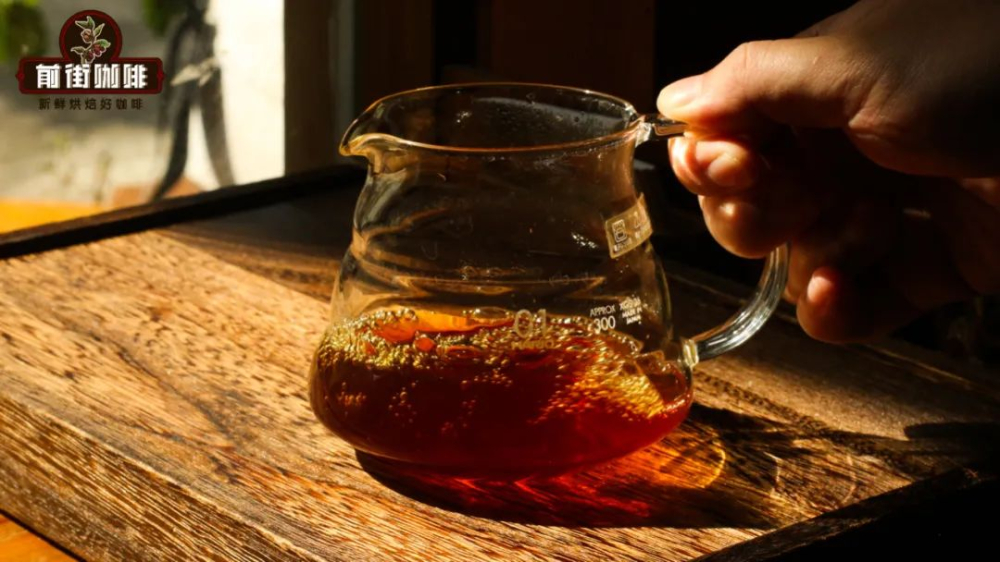
In the Golden Cup extraction concept, the relatively ideal extraction yield range is 18%–22%. When extraction yield is above this range, because too many substances have been dissolved out, the coffee may show obvious bitterness and muddled character; when below this range, because too few substances have been dissolved out, the coffee may show sharp acidity or under-extracted flavors reminiscent of weeds (not absolute).
Coffee's Concentration Coffee's concentration refers to the proportion of brewed coffee substances in the coffee liquid. The higher the concentration, the greater the proportion of coffee substances in the whole cup of liquid, and vice versa.
In the Golden Cup extraction concept, the relatively ideal concentration range is 1.15%–1.45%. When concentration is below this range, the coffee appears weak in flavor and thin in body; when above this range, it tends to have flavors that are too concentrated and unclear in layering.
How to Calculate Coffee's Extraction Yield and Concentration? In summary, extraction yield represents "the proportion of coffee substances extracted from coffee beans," while concentration represents "the proportion of extracted coffee substances in the entire cup of coffee liquid."
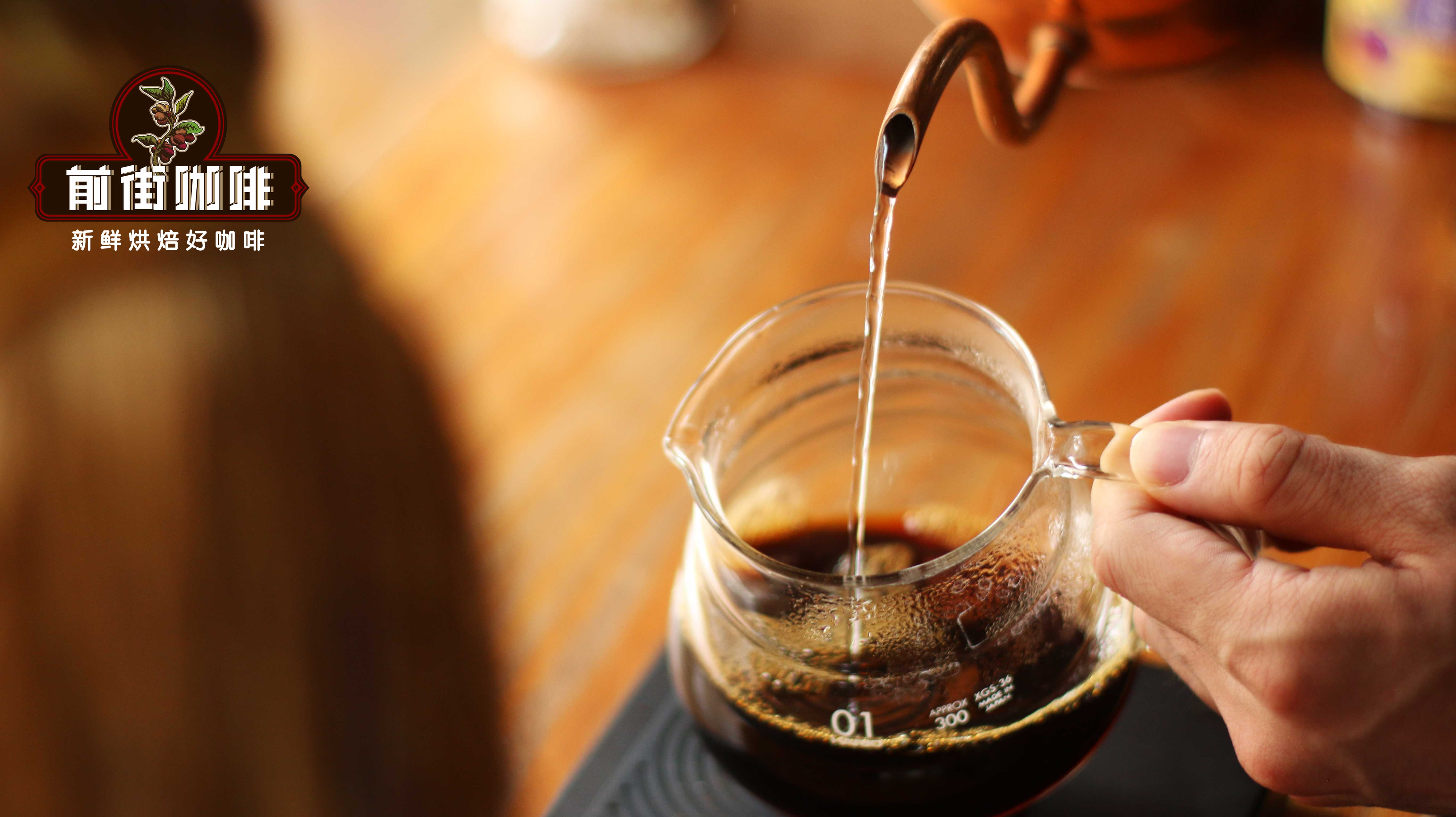
Then, the formula for coffee concentration is: weight of extracted coffee substances ÷ weight of coffee liquid The formula for coffee extraction yield is: weight of coffee substances ÷ weight of coffee beans (grounds) If the two are combined, the formula for extraction yield can also be written as: coffee extraction yield = coffee liquid concentration × coffee liquid weight ÷ coffee bean (grounds) weight
In other words, to calculate coffee's extraction yield, you first need to measure the coffee's concentration, then plug it into the formula to derive the extraction yield. So how should concentration be measured? There are mainly two ways.
1. Measuring with a TDS Water Quality Test Pen A TDS (Total Dissolved Solids) water quality test pen is a common tool for daily water quality measurement, and it can also be used to estimate coffee concentration. Its working principle is to indirectly infer the TDS value by measuring the liquid's conductivity, and most substances dissolved in water increase the water's conductivity, so coffee can likewise be measured with a TDS pen to estimate concentration. The most crucial point is that, compared with the other method, a TDS test pen costs much less.
But its shortcomings are also obvious: it cannot give very fine results. Because not all substances increase water's conductivity, it can only measure an approximate range, and there will be some error.
2. Measuring with a Coffee Concentration Meter If you want more precise measurement results, you need to use a coffee concentration meter. Its principle for measuring concentration is to determine concentration by detecting the refractive index of dissolved solids in the coffee liquid. Its advantages are straightforward: fast and accurate. Measurement is quick, and results are relatively more precise and intuitive. But it has one very big drawback: expensive.
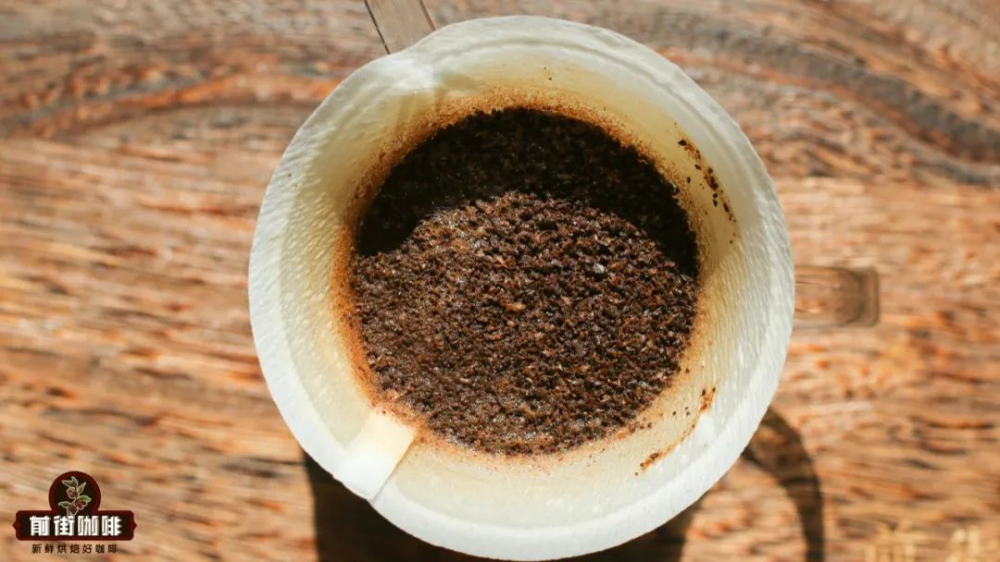
Coffee concentration meters usually start at 2,000 yuan, which is quite unfriendly to your wallet. So if you're just measuring for fun, a test pen is completely sufficient—after all, this is not something you must do.
Next, Front Street will demonstrate how to use these two tools to measure coffee concentration and calculate extraction yield. First, we brew a pot of any coffee. Since this time Front Street is demonstrating the calculation of concentration and extraction yield, we'll skip the brewing process; the parameters are no different from usual, still using 15g of grounds and a 1:15 grounds-to-water ratio. After brewing is complete, we first weigh the coffee liquid.
The coffee beans Front Street uses this time are Santa Viny, a light-roasted coffee bean processed by anaerobic sun-drying. The amount of water poured in was 224ml, and the final liquid weight obtained was 194ml, with 30ml absorbed by the coffee grounds.
Then, we use the test pen and the concentration meter respectively to measure the concentration of the coffee liquid. The test pen can simply be inserted directly into the coffee liquid, while measurement with the concentration meter requires using a straw or small spoon to transfer the coffee liquid onto the measuring prism; afterward, both require pressing the switch to measure.

The result from the test pen was 143×10ppm. Because the test pen uses ppm rather than percentage as its unit, you need to divide by 1,000 for conversion; after conversion, the concentration is about 1.43%. The result from the concentration meter was 1.47% (because it is affected by temperature, it is best to measure multiple times).
Now that concentration is known, we can calculate the coffee's extraction yield. According to the formula "coffee extraction yield = coffee liquid concentration × coffee liquid weight ÷ coffee bean (grounds) weight," our calculation is: 1.47% (the concentration meter's result) × 194 ÷ 15, giving an extraction yield of about 19.01%.
Once we have mastered the methods for calculating extraction yield and concentration, the next time the coffee tastes off and we can't be sure why, we can verify our thoughts through measurement. See whether it is excessive dissolution causing off-flavors in the coffee, or insufficient dissolution making the coffee's flavors not vivid enough.
The above content is compiled by CoffeeHunters, a coffee news website.


