







What Is the SCA Golden Cup Extraction Standard?
The SCA Golden Cup stands for a TDS concentration of 1.15% to 1.35% and an extraction yield of 18% to 22%. Brewing inside those ranges is what separates a balanced cup from a weak or bitter one, and time, grind size, water temperature, and coffee-to-water ratio are the variables that move a brew into or out of that window.
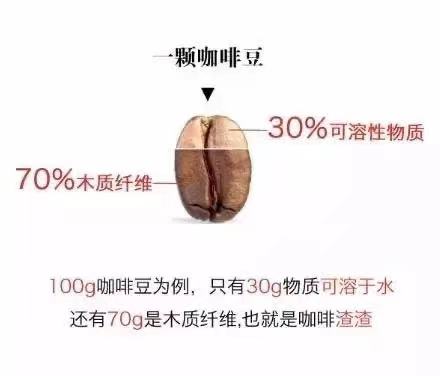
A roasted bean holds more than 1,800 chemical substances, yet soluble material makes up only about 30% of its weight, and not all of that tastes good. Brewing works through solid-liquid extraction, where hot water dissolves the soluble parts and the filter traps the rest. Coffee particles, grind, and contact time decide how much of that 30% ends up in the cup.
Coffee is a futures commodity with global trading volume second only to crude oil, yet brewing it at home often makes it hard to replicate the flavor of a café, and the key lies in whether one understands the SCA Golden Cup extraction standards. Starting from the principles of soluble substances and solid-liquid extraction, this article explains the Golden Cup range of TDS concentration from 1.15% to 1.35% and extraction yield from 18% to 22%, and systematically sorts out the effects of time, grind size, water temperature, and coffee-to-water ratio on flavor. The article also combines Front Street Coffee's brewing comparison using Huakui 5.0 as an example and its store parameters to help readers translate abstract standards into operable daily pour-over practice.
Tea, coffee, and cocoa are the world's three most popular beverages, and among them coffee ranks second in global trading volume among futures commodities, after crude oil. Unlike oil buried deep underground, coffee comes from the fruit borne by the coffee tree, and the term is also often used to refer collectively to roasted coffee beans and ground coffee powder. When brewed with hot water, the soluble components in coffee are released, while the insoluble parts are intercepted by filtration, and the dark beverage ultimately formed has long been integrated into the daily lives of consumers around the world.
Compared with buying it at a café, brewing a cup of coffee at home is obviously more time-saving and money-saving. But then the problem arises: why can't you make the same flavor at home as in a café? This brings up a concept many people have heard of but cannot explain clearly—"SCA Golden Cup Extraction."
As is well known, a complete coffee bean contains more than 1,800 chemical substances, and soluble substances account for only 30% of the bean's weight, and not all of that 30% can bring ideal flavor. There are all kinds of coffee brewing methods, and people use the principle of "solid-liquid extraction" to extract the best parts of coffee as much as possible through different means, while judgments of coffee quality often vary from person to person.
Because the chemical composition of coffee is extremely complex, it is not easy to extract precisely and consistently obtain high-quality coffee. However, if the extraction process is understood from a mathematical perspective and the variables affecting coffee quality are clarified, brewing coffee will become more methodical.
The production logic of espresso is different from pour-over: it uses high pressure to push hot water through a puck of coffee, and the puck is formed by compacting very finely ground coffee.
Pour-over and other drip coffees, by contrast, involve pouring hot water over coffee grounds in a V-shaped dripper, with extraction pressure close to atmospheric pressure and a longer extraction time. Both methods essentially dissolve the soluble substances in the coffee grounds, the undissolved parts are retained by the filter device, and the coffee liquid flows out through the filter.
According to the chart provided by the Specialty Coffee Association (SCA), if it falls within the SCA Golden Cup extraction standard, the final coffee concentration (TDS) should be between 1.15% and 1.35%, and the extraction yield should be between 18% and 22%. So-called TDS is the ratio of total dissolved solids to water, and this value directly affects the flavor people perceive from coffee. On the chart, the range of Golden Cup extraction is exactly in the central shaded area.
Because this statement is so widely circulated, even beginners who have just come into contact with specialty pour-over will rack their brains trying to brew a pot of coffee that meets the SCA Golden Cup extraction standard. Front Street finds it necessary here to popularize the basic knowledge of pour-over coffee for everyone.
Many people want to do it themselves and be self-sufficient, and come to Front Street to ask the barista for pour-over coffee bean recommendations, but all the friends who buy new beans will ask Front Street's barista: for the favorite bean you've got in hand, exactly how should you brew it to produce the flavor of a café?
Observant friends will always hear Front Street Coffee (FrontStreet Coffee) mention several pour-over coffee elements: pour-over coffee temperature, pour-over coffee grind size standard, coffee-to-water ratio, and dripper. Front Street Coffee (FrontStreet Coffee) will divide brewing parameters into several categories according to the roast level of the coffee beans.
The most representative among them is Ethiopian coffee beans, which are usually given a medium-light roast to highlight acidity; while Indonesian Mandheling coffee beans are usually given a medium-dark roast to highlight a full-bodied mouthfeel.
Anyone who has compared the flavors of the two will find that dark-roasted coffee tastes more bitter, while light-roasted coffee is more prominent in acidity. As the roast level deepens, the rate at which substances in the coffee beans exchange with water also increases.
[Time]
Once coffee particles come into contact with water, extraction has already begun, and sour, sweet, and bitter flavors are released accordingly and dissolve into the water until saturation or artificial interruption. In the early stage of extraction, sourness and sweetness are released in greater amounts and faster than bitterness. In order to maximize ideal flavors and reduce the extraction of bitterness, Front Street generally controls the time to about 2 minutes when brewing coffee.
[Grind Size]
The smaller the coffee particle size, the larger the contact area between the coffee grounds and water, which means the reaction between substances in the coffee and water is faster, and more flavor substances can be extracted. Therefore, the finer the coffee grounds, the more intense the flavor.
[Water Temperature]
According to the laws of molecular thermal motion, when the temperature rises, the movement between molecules becomes more intense. It can also be felt in daily life that, compared with boiling hot water, soaking tea leaves in room-temperature water still leaves it flat and tasteless even after two minutes. When Front Street brews coffee, it takes into account both the grind size and roast level of the coffee beans: deeply roasted coffee beans have a faster dissolution rate of substances, so a coarser grind and lower-temperature hot water are used to avoid over-extraction and bitterness.
[Coffee-to-Water Ratio]
Friends who frequently read Front Street articles will notice that when brewing many kinds of coffee beans, Front Street uses a coffee-to-water ratio of 1:15.
Front Street Coffee (FrontStreet Coffee) Ethiopia Sidamo Huakui 5.0
Region: Guji Zone, Sidamo, Ethiopia
Altitude: 2250–2350 meters
Variety: Local heirloom varieties
Processing method: Natural process
Front Street compared four ratios for this Huakui 5.0 bean—1:15, 1:16, 1:17, and 1:18—and found that as the coffee-to-water ratio widened further, the berry acidity in Huakui 5.0 was further diluted. When the coffee-to-water ratio reached 1:18, the aftertaste carried bitterness. As the coffee-to-water ratio widened, the coffee concentration (TDS) also became thinner, and the flavors opened up, but there was also a risk of a watery expression.
Next, Front Street will brew Huakui 5.0 once according to the store's serving standard. Dripper: Hario V60; water temperature: 92°C; dose: 15 grams; coffee-to-water ratio: 1:15; grind size: 80% passing a Chinese standard No. 20 sieve.
First pour in 30 grams of water to completely wet the coffee grounds and let them bloom for 30 seconds, then pour from the center point in a small stream and slowly circle to 125 grams for a staged pour; when the coffee bed is about to be exposed, continue circling and pouring water until 225 grams, then stop pouring. Wait for the water in the dripper to drip completely into the server, then remove the dripper. The total extraction time is about 2 minutes.
After the above standard brewing, Huakui 5.0 has a rich berry flavor, with a sweet-and-sour sensation like citrus and plum, an obvious mango juice-like quality, a hint of floral aroma, and a sweet aftertaste like black tea.
For more coffee bean information, please follow Coffee Workshop (WeChat public account cafe_style)
For professional coffee knowledge exchange, please add WeChat ID kaixinguoguo0925
The above content is compiled by CoffeeHunters, a coffee news website.


