







Search Results for: Maracaturra
In-Depth Analysis and Brewing Suggestions for Nicaragua Los Andes Estate Maracaturra Natural Coffee
Nicaraguan coffee has long maintained a low profile in the global market, yet it possesses growing talent on par with other Central American countries, distinguished by its balanced flavor. This feature focuses on the sun-dried Maracaturra from Finca La India in the Nueva Segovia region. This variety, a cross between Caturra and Maragogipe, offers both plump beans and sweet flavors, but due to its delicate plants, susceptibility to leaf rust, and low yield, it is rarely seen on the market. The article will outline Nicaragua's four major producing regions and their terroir characteristics, analyze the varietal advantages and cultivation challenges of Maracaturra, and share Front Street Coffee's roasting curve, cupping data, and pour-over parameters, providing a complete reference for coffee enthusiasts. [more…]
A Comprehensive Analysis of Nicaraguan Coffee Regions: Flavors and Brewing from Jinotega to Maracaturra Varieties
When people mention Nicaragua, most first think of its magnificent waterfalls, yet the country's coffee has long been overlooked on the international stage. In fact, Nicaragua's natural conditions are in no way inferior to those of other coffee-producing countries in Central America, and its coffee is renowned for its balanced flavor: smallholder lots display a clean brightness and soft acidity reminiscent of Costa Rica when lightly roasted, while taking on a sweet, full-bodied richness like Colombia's when darkly roasted. This article takes you on a tour of Nicaragua's four major coffee-producing regions, covering their geography and climate, grading system, coffee development history, and the distinctive Maragogype and its derivative varieties, along with the washed pour-over parameters and flavor description for Front Street Coffee's Buena Vista Estate Maracaturra. [more…]
Flavor Analysis of Guatemala Fraijanes Region and Brewing Parameters for Finca Cabana Washed Pache
Fraijanes is a distinctive yet often overlooked coffee-producing region in Guatemala. Its active volcanic activity and variable Atlantic climate give local coffee a lively acidity and full body. This article first outlines the geographical and climatic conditions of Fraijanes and the flavor profile of its coffee, then focuses on Cabana Estate—the result of nearly sixty years of management by the Solares family—to learn how estate owner Isauro improved quality through expansion, variety cultivation, and competition participation. Finally, it presents a detailed profile and flavor description of a washed Pache, along with Front Street Coffee's roasting and brewing recommendations for coffee enthusiasts' reference. [more…]
2024 Nicaragua Cup of Excellence Results Announced: Pacamara Variety Debuts and Wins Runner-Up
The results of the 2024 Nicaragua Cup of Excellence (COE) competition were recently announced, with the Geisha variety continuing its strong performance, sweeping first, third, and fourth places, among which the natural Geisha won the championship with 91.10 points. However, the most eye-catching aspect of this competition was undoubtedly the Parainema variety, which made its first appearance in Nicaragua, winning second place with 89.85 points. This rare variety, which previously won the 2017 Honduras COE, has what kind of genetic origins behind it? Can it break buyers' prejudice against the cup quality of leaf rust-resistant varieties? This article will provide a detailed interpretation of the origins, development, and outstanding performance of Parainema in this competition, while also introducing Front Street Coffee's attention to and recommendation of this variety. [more…]
2024 Nicaragua COE Champion Alpine Estate: The Road to Consecutive Wins in the Nueva Segovia Region
The 2024 Nicaragua Cup of Excellence (COE) has concluded, with a sun-dried Geisha from Finca Los Alpes in the Nueva Segovia region winning the championship with a score of 91.1, successfully defending its title. This article will guide you through Nicaragua's coffee-growing environment and the distribution of its main production regions, and take a deeper look at this champion estate that has won the COE for two consecutive years. From the two farms owned by estate owner Olman Balladares, to the planting layout of varieties such as Caturra, Catuai, Bourbon, and Geisha, and to the coffee research and quality control team behind them, we will explore the origins of their excellent results. At the same time, Front Street Coffee will also recommend related products for you. [more…]
Coffee flowers come in pink as well as white? Uncovering the variety origins and cultivation stories of pink-flowered coffee trees
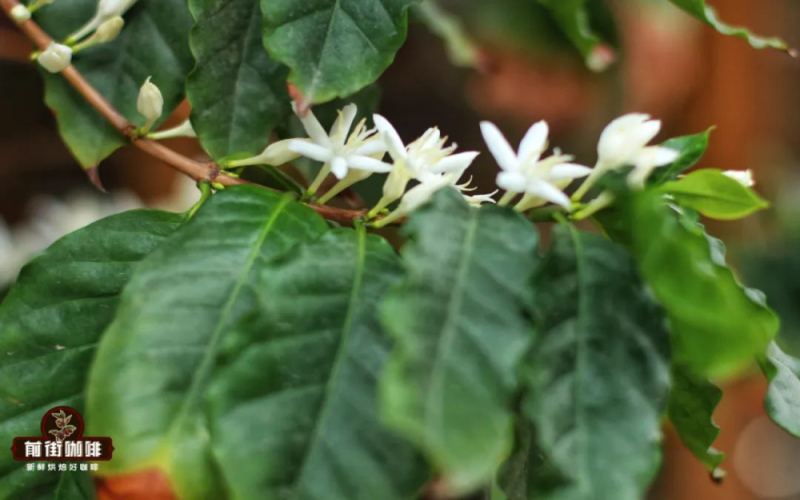
Coffee trees bloom with clusters of white flowers, usually signaling that the harvest season is approaching; the denser the petals, the more fruit can be harvested. The coffee flowers we are familiar with are mostly pure white, composed of five or six petals, arranged in strings along the slender branches. Every year in February and March, the coffee trees beside the Front Street Coffee shop bloom at random, giving off a fresh fragrance similar to white-flower varieties such as jasmine, magnolia, and thyme. But did you know that in extremely rare cases, coffee trees can actually produce pink flowers? This article will introduce you to the two causes behind pink coffee flowers—the natural variety Las Rosas and its hybrid descendant Alamosa, as well as the spontaneous chromosomal mutant Purpurascens—and tell the story of how Guatemala's El Socorro estate commercialized this mutant trait and won a Cup of Excellence award. [more…]
What bean variety is Caturra, the high-yielding dwarf cultivar? The spread of Caturra and an analysis of its pour-over flavor and brewing
Caturra is known for its small stature and tight secondary branching, allowing for high-density planting and considerable yields per unit area, making it a pivotal bean variety on the coffee map of the Americas. This article will review its path from participating in selection and breeding at Brazil's IAC research institution, to landing in Guatemala in the 1940s, and then spreading across Central American countries. It will also explain why it is often used as a "benchmark" for testing new varieties, as well as the ins and outs of changes in its share of plantings in Colombia. The article also takes stock of several products on Front Street Coffee's bean list that contain Caturra, with a key breakdown of the bean information for Front Street Colombia Rose Valley and a three-stage pour-over recipe, analyzing the release patterns of acidity, sweetness, and bitterness in staged extraction, and finally appending tasting notes for Huila washed Caturra. [more…]
A Complete Guide to Guatemala's Coffee Regions: Variety Characteristics of Eight Major Origins and a Flavor Guide to Antigua La Flor del Café
Guatemala is an important representative of specialty coffee in Central America. Thanks to its volcanic geology, highland microclimates, and high-altitude growing conditions, it produces coffee beans known for bright fruit acidity and a smoky finish. This article systematically reviews the geographical and flavor differences among Guatemala's eight major producing regions, explains the key points of the washed processing method, and introduces representative beans from producing regions such as Antigua, Huehuetenango, New Oriente, and Acatenango one by one. Among the Front Street Coffee staple bean series, Guatemalan coffee and Antigua La Flor del Café beans are ideal choices for experiencing the country's classic flavors, performing excellently whether brewed by pour-over or made as cold brew or ice drip. [more…]
A Detailed Guide to Single-Origin Coffee Classification: A Comprehensive Analysis of Flavor Characteristics Across Major Producing Regions from Africa to the Americas and Differences in Coffee Shop Flavors
Have you ever walked into a specialty coffee shop, faced the dazzling array of single-origin coffees on the menu, and felt at a loss where to begin? Single-origin coffee refers to coffee made from beans sourced from a single origin, and it can be traced back to a specific region or even estate. This article will systematically sort through the representative single-origin coffees from major producing regions such as Africa, Central and South America, and Asia, introduce Front Street Coffee's rigorous process from roasting curve testing to cupping selection, and present the flavor descriptions of coffee beans from each region one by one, helping you find the cup that best suits your taste. [more…]
A Comprehensive Guide to Honduran Coffee Regions: Barrel-Fermented Flavors, Six Major Regions, and Moka Estate's Sherry and Lychee Orchid
Although Honduras is not as renowned as Ethiopia, it has carved out a place for itself in the specialty coffee world with its distinctive barrel-aged processing method. Sherry and Litchi Orchid, these two beans carrying the aromas of whiskey and brandy, come precisely from the Moka Estate in Marcala, Honduras. This article will give you a comprehensive understanding of Honduras's geography and climate, the distribution of its six major coffee regions, its main coffee varieties, as well as the flavor characteristics and brewing parameters of the two barrel-fermented beans recommended by Front Street Coffee, allowing you to grasp the charm of this Central American coffee-producing country in one go. [more…]
Guatemalan Coffee vs. Mandheling Flavor Differences: Which Is More Bitter? A Complete Overview of the Antigua Region
Guatemala and Mandheling are two representatives with vastly different styles in the world of specialty coffee. The former is known for its bright fruity acidity, smoky aftertaste, and elegant balance, while the latter is renowned for its rich, full-bodied intensity, low acidity, high sweetness, and complex layers. Which one is more bitter? The answer is often Mandheling. This article systematically examines the flavor differences between Guatemala Antigua, Huehuetenango, and Sumatra Lintong, PWN Golden Mandheling—from growing environments, regional distribution, and varietal structure to processing methods, roasting, and brewing parameters—and shares Front Street Coffee's practical approach to roasting and extraction, helping you more accurately understand and choose between these two types of coffee. [more…]
Complete Guide to Honduran Coffee: Six Major Regions, Main Varieties, and Barrel-Fermented Flavor Characteristics
Although Honduras is not as renowned as Ethiopia, it stands out in the specialty coffee world with its unique barrel-fermented processing method. Sherry coffee and Lychee Orchid coffee are prime examples, where the aromas of whiskey and brandy intertwine with the sweet notes of fruit and cream, leaving an unforgettable impression. More than three-quarters of Honduras is mountainous highlands, located in the coffee-growing belt with abundant annual rainfall, providing superior natural conditions for coffee. This article systematically reviews the terroir characteristics and flavor differences of Honduras's six major regions—Copán, Opalaca, Montecillos, Comayagua, Agalta, and El Paraíso—and introduces the main cultivated varieties such as Caturra, Catuai, and Pacas, as well as Front Street Coffee's brewing suggestions and flavor descriptions for two barrel-fermented beans from Mocha Estate, offering a comprehensive understanding of the unique charm of this Central American coffee-producing country. [more…]
Comprehensive Comparison of Guatemalan Coffee and Indonesian Mandheling: The Meaning of SHB Grade and Analysis of Flavor Differences
Guatemalan coffee and Indonesian Mandheling coffee are two distinctly different presences in the specialty coffee world. The former is known for its bright fruity acidity, smoky finish, and elegant, balanced mouthfeel, while the latter wins over the palate with its rich, full body, low acidity, and high sweetness. This article will systematically compare the two in terms of origin environment, variety structure, processing methods, grade classification, and brewing parameters, while also answering the question of whether Guatemalan SHB is the highest grade. The article also includes Front Street Coffee's roasting approach and brewing suggestions for these two beans, helping coffee enthusiasts gain a more comprehensive understanding of their flavor characteristics. [more…]
A Complete Analysis of the World's Top Ten Coffee Producing Regions: From Brazil to Guatemala, the Flavor Differences Between Mandheling and Blue Mountain Explained Once and for All
The golden coffee-growing belt spans the Tropics of Cancer and Capricorn. The climate, terrain, altitude, and processing methods of different producing countries give coffee beans vastly different flavor personalities. In this article, Front Street Coffee will guide you through the world's top ten coffee origins—from Brazil's balanced sweetness and Costa Rica's honey-processed sweetness, to Indonesia Mandheling's rich herbal aroma and Jamaica Blue Mountain's clean elegance, and on to Ethiopia's floral and fruity notes and Kenya's cherry tomato-like acidity. It will also answer a question many enthusiasts care about: which is actually better-tasting, Mandheling or Blue Mountain coffee beans? The two have completely different styles and suit different taste preferences, and after reading this article you will have a clearer judgment. [more…]
A Complete Guide to Coffee Bean Grades and Variety Tiers: Where Do Arabica and Canephora Stand?
For friends who are just getting into coffee, the difference between Arabica and Canephora (Robusta), and the quality tier each occupies, are often the first questions they encounter. Starting from plant taxonomy, this article sorts out the output share, disease resistance, and flavor characteristics of the world's major cultivated coffee varieties, and introduces one by one the varietal composition and flavor trends of representative Arabica-producing regions such as Brazil, Colombia, Ethiopia, Kenya, Panama, Guatemala, Costa Rica, Jamaica, and Indonesia. The article also includes the specific parameters and flavor descriptions of Front Street Coffee's everyday beans from various regions, helping readers build a complete cognitive framework from variety to producing region. [more…]