







Guatemala is a key representative of specialty coffee in Central America. Thanks to its volcanic geology, highland microclimates, and high-altitude growing conditions, it produces coffee beans known for bright fruit acidity and a smoky finish. This article systematically reviews the geographical and flavor differences among Guatemala's eight major producing regions, explains the key points of the washed processing method, and introduces representative beans from regions such as Antigua, Huehuetenango, New Oriente, and Acatenango one by one. Among the Front Street daily beans series, the Guatemala coffee and the Antigua La Flor del Cafe beans are ideal choices for experiencing the country's classic flavors, performing excellently whether brewed by hand pour-over or as cold brew or ice drip.
For more specialty coffee knowledge, please follow the WeChat official account: Front Street Coffee (FrontStreet Coffee)
Guatemalan coffee beans are praised for their vivid fruit acidity and smoky finish. In the Front Street daily beans series, there is a bean that expresses Guatemala's classic flavor, produced in the country's well-known Huehuetenango region. In addition, Front Street has also listed La Flor del Cafe beans from another specialty region, Antigua. This bean not only has Guatemala's most representative flavor characteristics, but its layering and body are also quite outstanding, and it is equally memorable when made into cold brew or ice drip.
Guatemala's geographical location is very special: it borders Mexico to the north, Honduras and El Salvador to the south, the Caribbean Sea to the east, and the Pacific Ocean to the west. This terrain, backed by mountains and facing the sea, together with tropical rainforests, volcanic soils, highland valleys, and variable microclimates, gives Guatemalan coffee beans their distinctive flavor. The country's coffee-growing belt is generally at high altitude, mostly above 1,500 meters, where Strictly Hard Bean is most likely to be produced. Guatemalan coffee beans are mainly washed processed, and the proportion of specialty grade is as high as 45%, which is a considerable figure. Guatemalan Coffee Bean Grading
The higher the altitude, the denser the coffee beans and the higher the green bean grade:
SHB (Strictly Hard Bean): grown at 1,500-1,700 meters;
HB (Hard Bean): grown at 1,350-1,500 meters;
SH (Semi-Hard Bean): grown at 1,200-1,350 meters;
Extra Prime (Extra Prime Washed Bean): grown at 1,000-1,200 meters;
Prime (Prime Washed Bean): grown at 850-1,000 meters;
Good Washed (Good Washed Bean): grown at 700-850 meters.
Guatemalan Coffee Bean Processing Methods Guatemala's processing methods are mainly washed, with natural as a supplement. Front Street Coffee (FrontStreet Coffee) often receives questions from customers asking about the difference between washed and natural. You should know that even coffee beans from the same region and the same estate are divided into washed and natural processing paths. Friends who often buy Front Street Coffee (FrontStreet Coffee) daily beans will notice that Front Street's daily beans mostly use the washed processing method, because washing can clearly present a region's basic flavor and is also the starting point for understanding a region's characteristics. Natural processing, on the other hand, adds extra sweet aroma and fermented notes on top of this foundation.
1. Harvesting. After ripe coffee cherries are picked, they first undergo preliminary impurity removal, elimination of defective beans, and screening out floating beans. This stage is completely the same as in the natural method.
2. Pulping. Fresh cherries are sent into a pulping machine to strip off the skin and pulp. Unripe cherries are not easy to separate from the pulp and are eliminated at this stage. After processing by the pulping machine, what remains is mucilage, parchment, and seeds.
3. Fermentation to remove mucilage. The seeds with mucilage still attached after pulping are placed into fermentation tanks. Although it is called the washed method, in practice the mucilage is not simply rinsed off directly with water; instead, it is removed by biological decomposition through fermentation. Fermentation lasts about 16 to 36 hours, during which frequent stirring is needed to help the mucilage detach from the surface of the seeds. Washed fermentation produces acidic substances such as citric acid, malic acid, and acetic acid. After these acids penetrate the green beans, washed beans have more prominent acidity than natural beans. Only after fermentation is complete does washing actually take place, rinsing the beans clean once again.
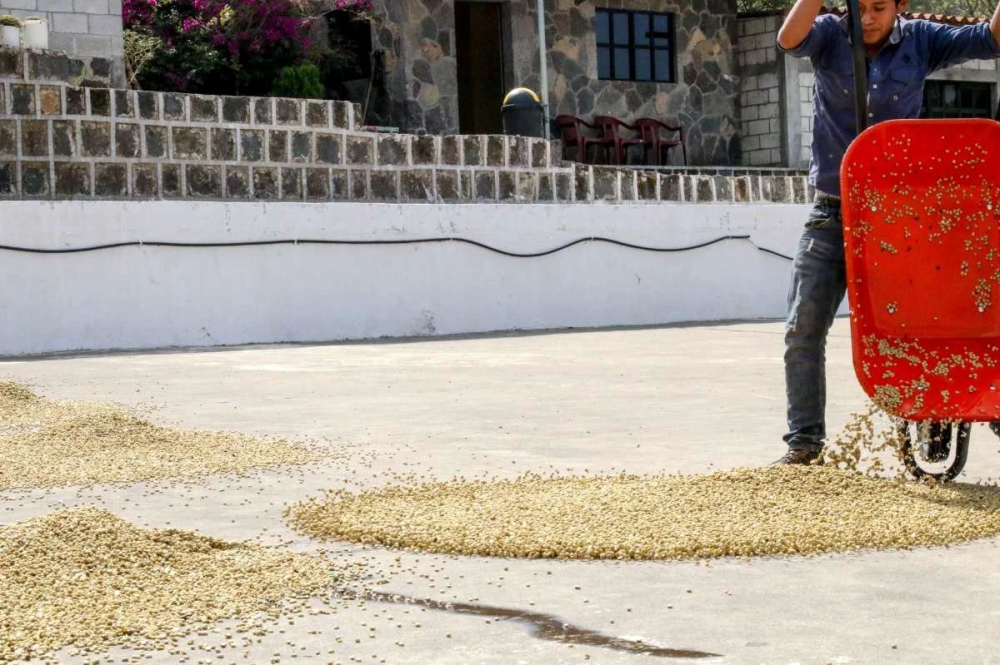
4. Drying. After washing is completed, the beans also need to be dried by sunlight or machine to reduce moisture content to 12%. Because the washed method has already removed the pulp, there is no need to worry about mold during drying as there is with the natural method. The dried parchment green beans are also not as hard as natural beans that still contain pulp and skin, and can be hulled to obtain green beans.
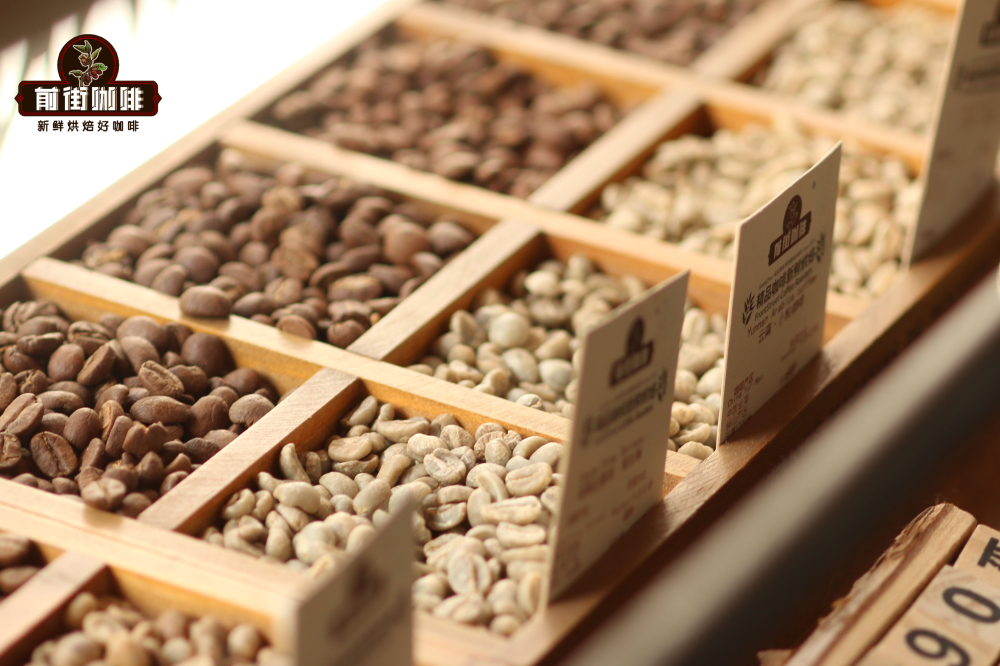
Guatemalan Coffee Varieties Guatemala's coffee varieties are mainly Bourbon, Typica, Catuai, and Caturra, with a small amount of Yellow Bourbon, Geisha, and Pacamara, as well as the newly cultivated Maracaturra. The varietal composition is quite diverse. Guatemalan Coffee Producing Regions
Guatemala has eight major producing regions, which can be divided into five volcanic regions and three non-volcanic regions. The five volcanic regions are: Antigua, Acatenango, Atitlan, Volcanic San Marcos, and Fraijanes. The three non-volcanic regions are: Huehuetenango, Coban, and New Oriente.
Guatemala's two most famous regions are Antigua and Huehuetenango, and Antigua's reputation has long been higher than Huehuetenango's. Especially four or five years ago, the transaction price of Antigua coffee beans consistently ranked first among all regions. However, with the advancement of the specialty coffee wave, the quality of coffee produced in Huehuetenango has gradually won the favor of coffee lovers, and the situation of one region dominating alone has slowly begun to change.
In addition to Antigua and Huehuetenango, Front Street has also compared other regions. The Little Blueberry Estate from the New Oriente region and coffee beans from the Acatenango region also perform notably well. Antigua Region
Front Street Coffee (FrontStreet Coffee): Guatemala La Minita La Flor del Cafe Region: Antigua Region
Trader: La Minita
Altitude: 1,200-1,600m
Varieties: Bourbon, Caturra
Processing method: Washed
Grade: SHB
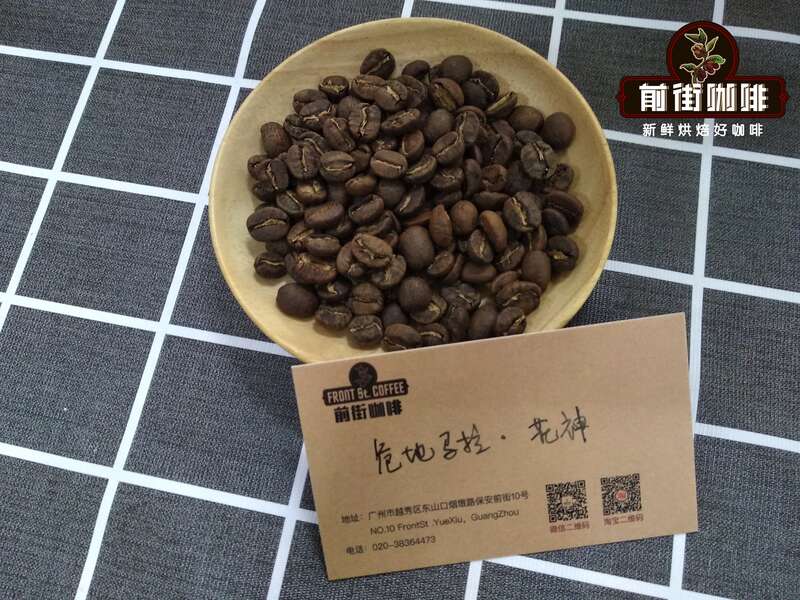
The Antigua region is located in the central highlands of Guatemala, with a subtropical monsoon climate, abundant rainfall, and fertile volcanic ash soil. The coffee produced has bright acidity and fruity aroma, making Antigua a renowned coffee-producing region in Guatemala. La Minita is a trader that created its own coffee brand in Guatemala, "La Flor del Cafe," meaning "flower of coffee," translated into Chinese as "花神."
The varieties of this batch of La Flor del Cafe from Front Street Coffee (FrontStreet Coffee) are Bourbon and Caturra. Bourbon is a natural mutation of Typica and, like Typica, is an old and high-quality variety; its bean shape is slightly smaller and rounder than Typica. Caturra is a natural mutation of Bourbon, with a fresh lemon-citrus acidity on the palate, though its sweetness is slightly inferior to Typica and Bourbon.
Front Street Coffee (FrontStreet Coffee) determined the direction of light roasting. In order to highlight its rich juicy mouthfeel, multiple rounds of parameter adjustments and cupping evaluations were carried out.
Huehuetenango Region
Front Street Coffee (FrontStreet Coffee): Guatemala Huehuetenango Coffee Beans Region: Huehuetenango
Altitude: 1,500-2,000m
Varieties: Bourbon, Caturra, Catuai
Processing method: Washed
Huehuetenango is located in central Guatemala. Its name comes from Nahuatl and means "place of the ancients (or ancestors)." This region is almost the most remote of all producing regions from the capital, and the transportation routes are rugged and difficult. Because it is affected by dry hot winds from Mexico, although the mountains are high in altitude, there is no risk of frost, allowing coffee to be grown at heights approaching 2,000 meters.
The varieties of this batch of Huehuetenango coffee selected by Front Street Coffee (FrontStreet Coffee) include Bourbon, Caturra, and Catuai. Among them, Catuai is a hybrid of Caturra and Mundo Novo. It can adapt to the harsh climate of high-altitude areas and also has high yield. It first originated in Brazil and is now widely planted in Central America. Its acidity is bright, but its layering is not as rich as Mundo Novo, and its body is also relatively low.
Front Street Coffee (FrontStreet Coffee) determined the direction of light roasting. In order to highlight its rich juicy mouthfeel, multiple rounds of parameter adjustments and cupping evaluations were carried out.
Front Street Coffee (FrontStreet Coffee) Guatemala Huehuetenango Coffee Bean Roast Curve
New Oriente Region
Front Street Coffee (FrontStreet Coffee): Guatemala · New Oriente Geisha Coffee Beans Region: Guatemala · New Oriente
Altitude: 1,500-2,050 meters
Processing method: Honey processing
Grade: SHB
Variety: Geisha
Flavor: Sweet orange, magnolia, citrus, toffee
The New Oriente region is the youngest member of Guatemala's eight major producing regions. It has abundant rainfall and is shrouded in cloud shade all year round. In ancient times, this area was a volcanic region, and the soil is composed of metamorphic rock, making it rich in minerals. Before coffee cultivation began, New Oriente was once the poorest area in Guatemala. Since the 1950s, mountain farmers have relied on this naturally fertile land to develop coffee cultivation, gradually bringing vitality to the area. Today it has become a rising star in Guatemala's coffee-growing industry.
For this Geisha coffee from Guatemala's New Oriente region, Front Street Coffee (FrontStreet Coffee) also chose the direction of light roasting to present the distinctive flavors of the region and Geisha. Brewing performance: on the first sip, you can feel the traditional flavor of Guatemala's producing regions, "sweet orange," accompanied by toffee sweetness and elegant white floral notes. At medium and low temperatures, a clear honey-like texture emerges, and the sweet orange also transforms into bergamot with a slight tartness, making the layering of the whole cup even richer!
Acatenango Region
Front Street Coffee (FrontStreet Coffee): Guatemala Acatenango Coffee Beans Region: Acatenango
Altitude: 1,300-2,000m
Processing method: Washed
Varieties: Bourbon, Caturra, Catuai
Coffee from the Acatenango region ranks among Guatemala's highest-altitude coffee beans. Because the nearby Fuego Volcano and Pacaya Volcano are continuously erupting, the rough and sandy soil is rich in minerals. This region has a unique microclimate: during the day it is influenced by the Pacific, which brings humid hot air from the coast; at dawn and night it receives dry cold air from the Guatemalan highlands. The large temperature difference between day and night gives coffee from this area higher sweetness.
Front Street's comparison found that the coffee flavor of Acatenango is similar to that of Antigua, but with slightly lower fruit acidity, notable and pleasant dry and wet aromas, full body, a clear finish, and an aroma that refreshes the heart.
When roasting this Guatemalan coffee bean, Front Street used a light-medium roast profile.
Brewing Parameters | |
Coffee dose | 15 grams |
Ratio | 1:15 |
Water temperature | 90℃ |
Grind size | 80% passing through a 0.85mm sieve |
Dripper | Hario v60 #01 dripper |
Brewing Process | |
First pour | 30 grams of water for a 30-second bloom |
Second pour | Pour in 95 grams of water (scale reads 125 grams), finish pouring in about 1 minute |
Third pour | Pour in 100 grams of water (scale reads 225 grams), finish pouring in about 1 minute 40 seconds |
Extraction time | 1 minute 54 seconds, remove the dripper to finish brewing |
| Flavor Description | |
| Berry acidity, citrus, slight chocolate, rich layering, smooth mouthfeel | |
The above content is compiled by CoffeeHunters, a coffee news website.


