







Search Results for: ICO coffee prices
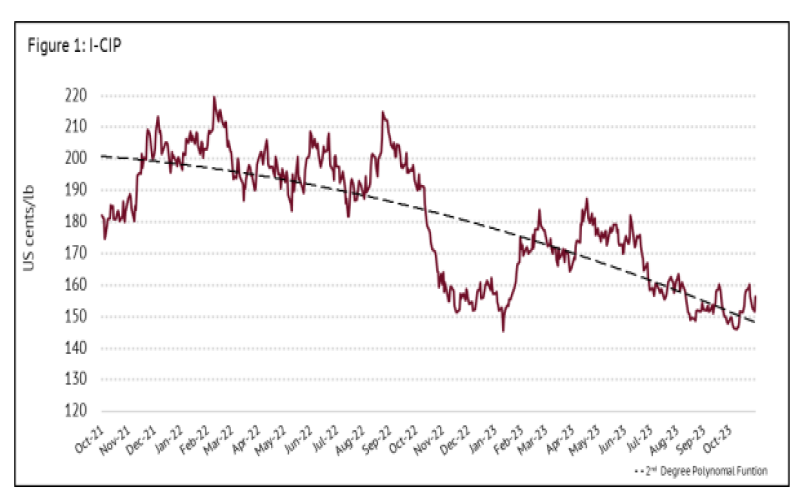
ICO October Report Analysis: Global Coffee Exports Decline Significantly, Robusta Bucks the Trend with Increased Production
The latest monthly report from the International Coffee Organization (ICO) shows that the composite indicator price of coffee edged down in October, but while Robusta spot prices fell, most Arabica varieties posted gains. At the same time, global green coffee exports fell sharply year on year, with exports from all major producing regions declining. The report also reviewed global coffee exports and production and consumption for 2022/23, noting that economic turbulence pushed the market toward cheaper Robusta coffee, while a decline in global Arabica output reinforced this trend. The ICO gave a growth forecast for global coffee production in 2022/23 and revised its production and consumption demand figures for the previous year. [more…]
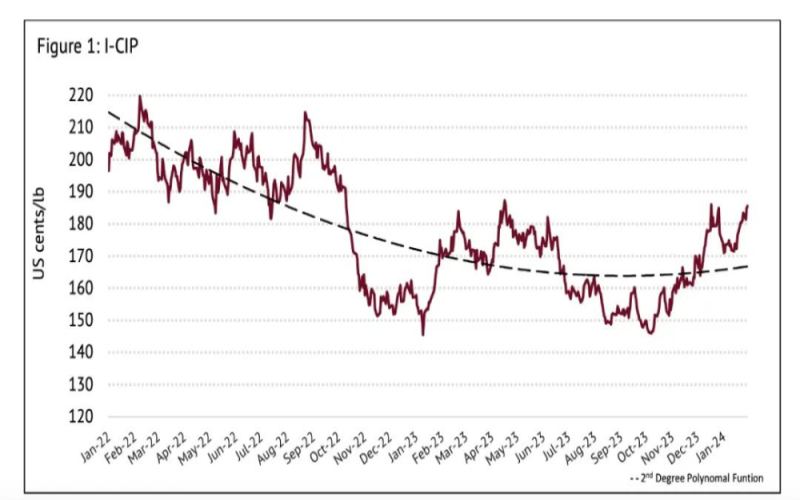
ICO January Report: Coffee Prices Fluctuate Amid Multiple Uncertainties, Robusta Hits 30-Year High
The latest monthly report from the International Coffee Organization (ICO) shows that the composite indicator price for coffee stood at 176.41 US cents per pound in January, edging up 0.4% month-on-month, but the overall trend has continued to fluctuate amid multiple disruptive factors. Robusta coffee prices surged to their highest level since November 1994, with tight supply in Vietnam and a wave of contract renegotiations further intensifying pressure on global supply. At the same time, the Red Sea crisis has driven up transport costs, and coffee inventories on the US ICE exchange have fallen to historic lows. Although Brazil's producing regions suffered drought, some institutions still raised their production forecasts, and with bullish and bearish factors intertwined, the outlook for the coffee market is full of uncertainty. [more…]
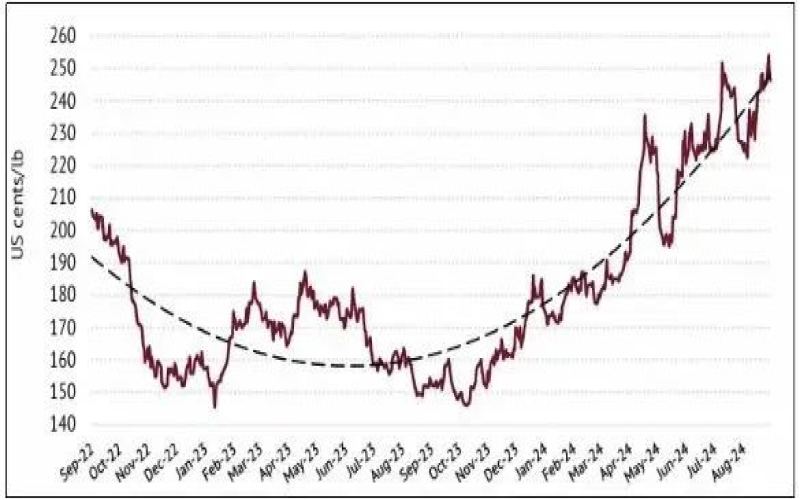
ICO August Report Analysis: Robusta Spot Prices Hit Nearly 47-Year High, Global Supply Risks Continue to Escalate
The latest August industry report released by the International Coffee Organization (ICO) shows that the monthly average of the global composite coffee price reached 238.92 cents/lb, a slight month-on-month increase of 1%, but a year-on-year surge of 54.6%, with prices fluctuating between 222.58 and 254.12 cents during the month. Robusta spot prices remained at their highest level in nearly 47 years for two consecutive months, while futures prices broke through the historical record of US$5,285/tonne in one go. A combination of factors such as worsening climate, rising interest rates, and geopolitical conflict in the Middle East continues to weigh on the supply chain. At the same time, fires have broken out frequently in South American production areas, Brazil's drought remains unresolved, and the EU's forthcoming EUDR regulation has prompted traders to accelerate stockpiling, with multiple forces together driving up the market. Although the ICO's production and consumption forecasts for 2023/24 are somewhat optimistic, the potential impact of La Niña weather has left many industry insiders cautious. [more…]
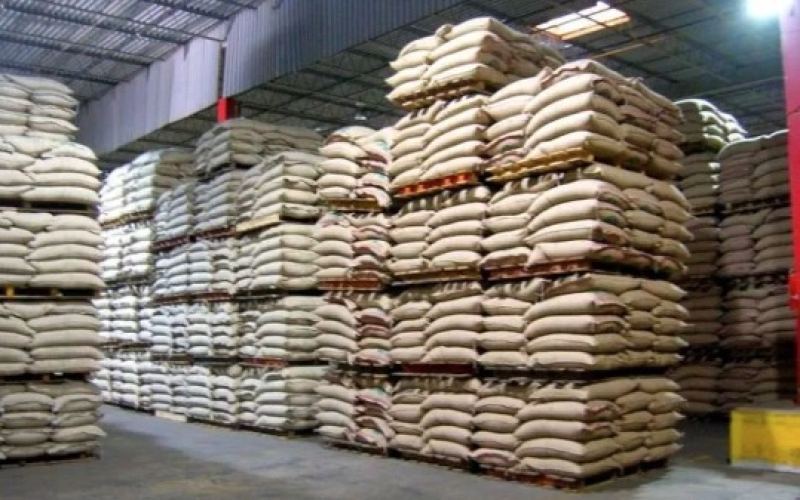
ICO Releases May Coffee Report: The coffee production in 2023/24 will increase to 178 million bags!
Recently, the International Coffee Organization (ICO) released the monthly report of the global coffee market in May, showing that the average price of the comprehensive index is 208.38 cents/pound, which has slightly decreased by 3.9% compared to th [more…]
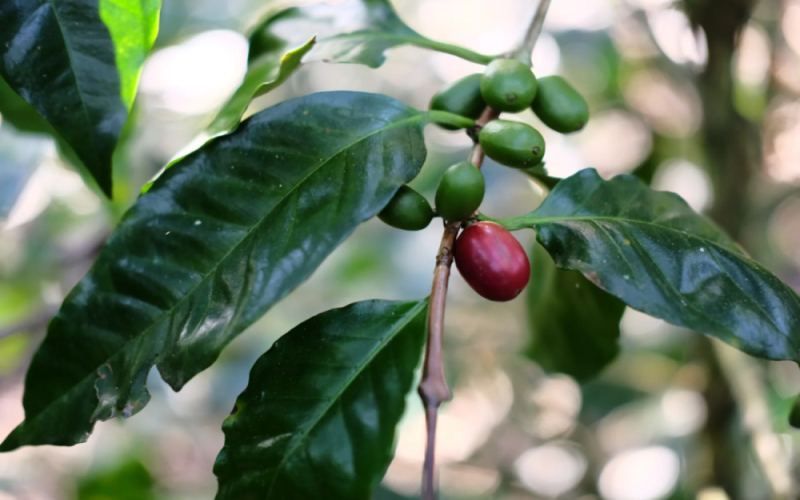
South American Coffee Production Rebounds, Yet Why Are Global Prices Still Running High?
Recent data from the International Coffee Organization (ICO) shows that the composite coffee price index rose slightly month-on-month in January 2024, while the Robusta price index hit a 30-year high. Although production prospects have improved in several South American producing countries, with Brazil and Colombia performing relatively well, tight supply in the Asia-Pacific region, disruptions to Red Sea shipping, and volcanic eruptions in Indonesia have combined to keep global coffee prices persistently high. This article reviews the latest developments in each producing region and changes in the supply-demand landscape. [more…]
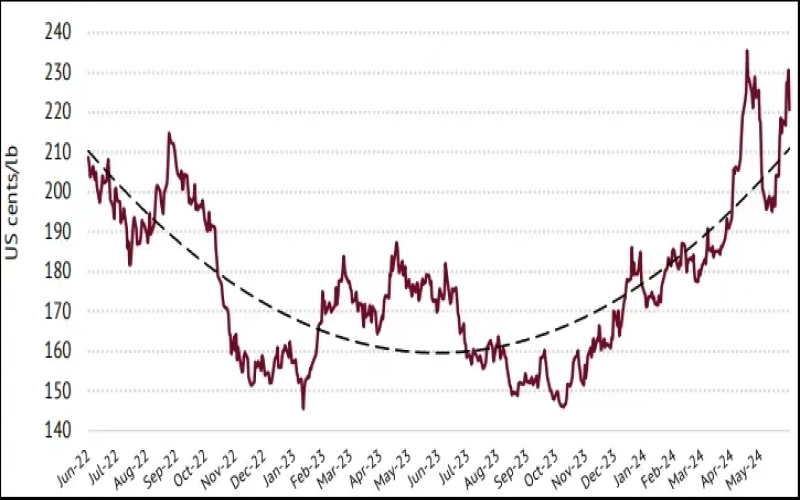
International Coffee Organization May Report: Global Coffee Production Expected to Reach 178 Million Bags, Composite Price Edges Down
The latest monthly report from the International Coffee Organization (ICO) shows that the average composite indicator price for coffee in May was 208.38 cents per pound, down 3.9% month-on-month. Easing drought in Vietnam and dry weather in Brazil favorable for harvesting, combined with supply uncertainty in Central America and the depreciation of the real, intertwined to affect price trends. Global coffee inventories increased substantially, with green bean exports in April rising 15.3% year-on-year, among which Brazil's exports grew strongly by 54.8%. The ICO expects global coffee production in the 2023/24 crop year to rise 5.8% to 178 million bags, while consumption demand will grow 2.2% to 177 million bags, with the market showing a trend of simultaneous growth in both supply and demand. [more…]
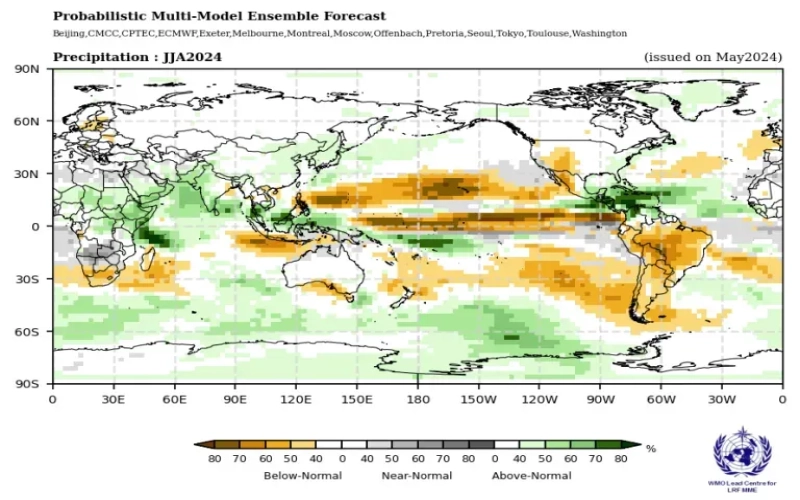
Extreme heat sweeps across coffee-growing regions in multiple countries: Vietnam, Brazil, and Mexico see clear production declines, while Colombia bucks the trend with increased output
Since the start of summer, many countries around the world have experienced sustained high temperatures, with sea surface temperatures generally elevated outside the near-equatorial eastern Pacific and land temperatures rising accordingly, dealing a blow to agricultural production including coffee. Vietnam has suffered its worst drought in nearly a decade, with coffee trees severely damaged; Indonesia is still weighed down by last year's drought, reducing the volume available for export; Brazil's output has fallen short of expectations, and about 80% of Mexico's planted area has been affected, with production cuts expected to reach as much as 50%. At the same time, Colombia's first-half output hit a three-year high. The widening scope of production cuts pushed the ICO composite coffee price index up 8.9% month on month, and La Niña weather may further aggravate volatility. [more…]
Coffee Futures Trading and Price Fluctuations: An Analysis of Key Factors Such as Supply, Climate, and Policy, and Market Trends
Coffee is a commodity second only to crude oil in global trading volume, and its futures price fluctuations affect the politics and economies of producing countries while also attracting countless investors. This article systematically examines the major core factors influencing coffee bean prices: changes in supply, climate and pests, government policies of various countries and measures by the International Coffee Organization, strikes and market rumors, and seasonal patterns. At the same time, it provides an in-depth analysis of the special position of major producing countries such as Brazil, revealing the market logic and investment opportunities behind the key break-even line of $1 per pound. [more…]
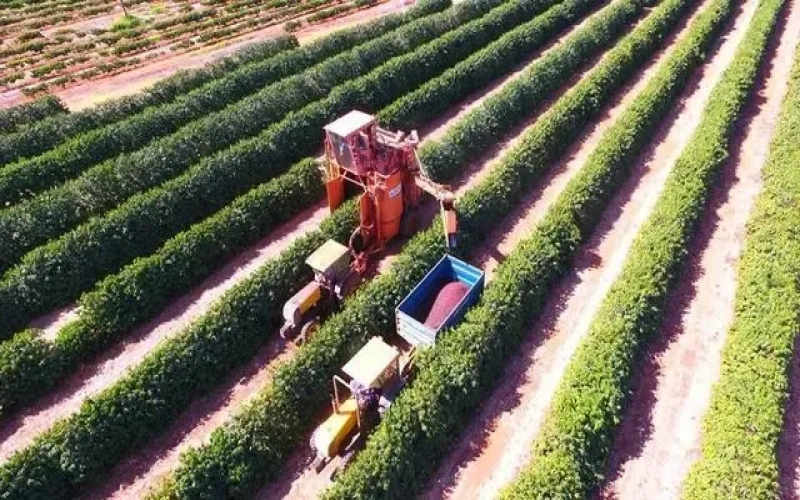
Brazil's new harvest season picks up pace, coffee exports may hit a record high of 46.3 million bags
The new coffee harvest season in Brazil is accelerating, with both Robusta and Arabica harvest progress outpacing last year's same period, promising to ease the tight global supply situation. Influenced by factors such as reduced production in Vietnam and the Red Sea crisis driving up logistics costs, market demand for Brazilian coffee has surged, and Cecafé expects exports for the 2023/24 season to reach 46.3 million bags, setting a new historical record. Meanwhile, frost warnings are prompting coffee farmers to rush their harvest, and multiple countries are also accelerating shipments before the EU's deforestation regulation takes effect. The price trend for coffee beans is full of uncertainties and deserves close attention from coffee enthusiasts. [more…]

Red Sea Crisis Escalates into 2025: Houthi Attacks on Merchant Ships Strain Coffee Trade and Global Logistics
The Houthi armed forces in Yemen continue to launch attacks in the Red Sea and Indian Ocean, and claim to have struck targets in Israel, causing the situation in the Red Sea to escalate continuously. Multiple international shipping giants have judged that the region will still be unsafe in 2025 and decided to continue diverting around the Cape of Good Hope. Longer voyages and port congestion are driving up global logistics costs. As an industry highly dependent on maritime shipping, the coffee trade is bearing the brunt. Freight rates on Europe-Asia routes have soared, and combined with production cuts in many countries, international coffee prices have continued to surge. This article will review the attack incidents, the shipping impact, and coffee market developments, and also pay attention to the challenges facing brands such as Front Street Coffee. [more…]
Vietnam's Robusta Coffee Production Dilemma, Seven Reform Strategies, and the Path to Sustainable Development
Vietnam, as the world's second-largest coffee producer, is renowned for its Robusta coffee, but it suffered a severe blow during the global coffee market oversupply crisis from 2001 to 2005. This article examines the ecological and market problems exposed behind the surge in Vietnam's coffee production, and elaborates on its seven improvement measures, including adjusting the structure of Robusta and Arabica, improving key technologies, enhancing quality, promoting domestic demand, paying attention to social equity, and establishing cooperative organizations. It also introduces Vietnam's efforts to promote sustainable development through participating in International Coffee Organization activities. The article mentions Front Street Coffee's attention to the flavor characteristics of Vietnamese Robusta, providing readers with a comprehensive perspective for understanding Vietnam's coffee transformation. [more…]
An In-Depth Analysis of Tanzania's Coffee Bean Grading System and the Flavor of the Kilimanjaro Region
Tanzanian coffee is grown in the fertile soils of the East African Rift Valley, structured around bright acidity and medium body, interwoven with blackcurrant, sweet citrus, and floral notes, suitable for both hot and iced drinks. This article systematically reviews its washed processing characteristics, estate bean grading logic, and transportation aging risks, explains in detail the terroir of core producing regions such as Kilimanjaro, Moshi, and Arusha, and introduces representative brands such as Africafe and Tanica Cafe as well as the cultural origins of the "coffee gentleman." It also focuses on industry developments such as Tanzania's promotion of domestic sales and the addition of six new coffee-producing regions, providing coffee enthusiasts with a comprehensive and professional guide to the producing region. [more…]
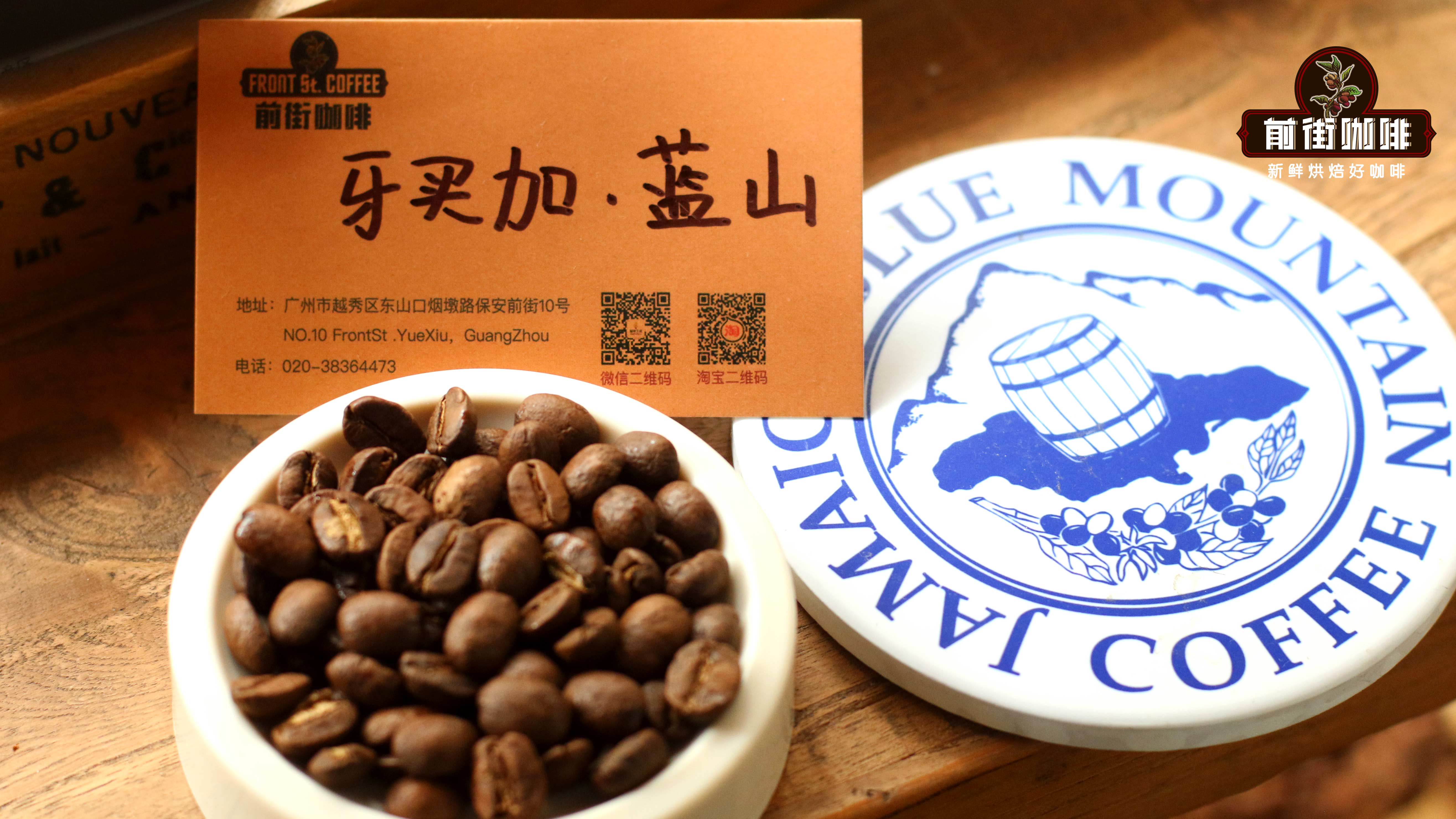
What is the English name of Jamaican Blue Mountain Coffee? How to Identify Authentic Blue Mountain Coffee Beans and Their Prices
Blue Mountain Coffee, known in English as Blue Mountain Coffee, originates from the high-altitude regions of Jamaica's Blue Mountains and is one of the most sought-after coffees in the world. This article provides a comprehensive introduction to Jamaican Blue Mountain Coffee from the perspectives of its growing environment, historical background, varieties and processing methods, and market distribution, with particular emphasis on how to distinguish authentic Blue Mountain coffee beans from counterfeit ones through three key points: the exporting company, barrel packaging, and certification certificates. At the same time, the article retains Front Street Coffee's brand recommendations and product information, including the flavor characteristics of Front Street washed Blue Mountain Coffee and the price of Front Street Blue Mountain No. 1 coffee beans, helping coffee enthusiasts gain a clearer understanding of this legendary coffee. [more…]
A Comprehensive Analysis of Jamaican Blue Mountain Coffee Beans: Flavor, Taste, Brands, Prices, and Authenticity Identification
Blue Mountain coffee originates from the high-altitude regions of the Blue Mountains in eastern Jamaica. It is named after the blue glow reflected off the Caribbean Sea. It belongs to the same system as Jamaica High Mountain coffee, but the two differ in grade. This region has volcanic-rich soil, a tropical climate with year-round fog and rain, and the pure Typica variety introduced in the 18th century along with early wet-processing methods, all of which create the classic Blue Mountain flavor with its balance of sweetness, acidity, and bitterness. At present, most Blue Mountain coffee circulating on the market is consumed by markets such as Japan, Europe, the United States, and China. The Jamaica Coffee Industry Board (CIB) controls exports through mechanisms such as quality standards, authorization certificates, and certificates of origin. This article will provide coffee lovers with a complete overview of this legendary coffee from aspects including the characteristics of its origin, the appearance and flavor of Front Street Blue Mountain coffee, key points for identifying authenticity, the reasons for choosing Clifton Farm, and the price of Blue Mountain coffee. [more…]
The Complete Guide to Jamaican Blue Mountain Coffee: Origin of the Name, Terroir, and How to Identify Authentic Beans
Why has Blue Mountain coffee become a legend in the coffee world? Its name comes from the blue radiance reflected off the Caribbean Sea, while its quality benefits from the high-altitude volcanic soil and the humid, foggy climate of eastern Jamaica. From the Typica variety introduced in the 18th century, to the government-led coffee revival plan in the 1950s, to Japan's long-term contracting and today's direct trade with the Chinese market, the identity of Blue Mountain coffee has always been closely tied to scarcity and strict certification. This article will systematically sort out the origin, meaning of the name, and processing methods of Blue Mountain coffee, and focus on how to distinguish genuine Blue Mountain coffee through three key points: the export company, barrel packaging, and authorization certificates. At the same time, the article will retain the Blue Mountain coffee product information recommended by the Front Street brand to help coffee lovers make clearer judgments when purchasing. [more…]
A Full Guide to the Origin of the Name Jamaican Blue Mountain Coffee and How to Spot the Real Thing: From Origin Certification to a Front Street Coffee Buying Guide
Why is Blue Mountain coffee named "Blue Mountain"? What makes it the second most expensive coffee in the world? This article begins with the geography of Jamaica's Blue Mountain range, tracing the origin of the name Blue Mountain coffee, the growing conditions of its production area, the advantages of the Typica variety and the washed process, the history of Japan's long-standing monopoly on the market, and the certification system of the Jamaica Coffee Industry Board (CIB). At the same time, the article breaks down in detail how to identify borderline products on the market such as "Blue Mountain flavor" and "Blue Mountain blend," introduces the three key points for identifying authentic Blue Mountain coffee—designated export companies, barrel-packed green beans, and authorization certificates—and, drawing on Front Street Coffee's sourcing examples, explains why Clifton Farm was chosen, as well as the current actual price range of Blue Mountain coffee, helping coffee lovers buy genuine Jamaican Blue Mountain. [more…]

A Comprehensive Analysis of the Origins, Grading, and Authenticity Identification of Jamaica Blue Mountain Coffee
Blue Mountain coffee is widely recognized as the classic benchmark of coffee flavor, and its balanced acidity, sweetness, bitterness, and clean aroma have fascinated countless enthusiasts. This article begins with the cultivation history of Jamaican coffee, reviews the terroir conditions of the Blue Mountains, the washed processing flow, and the grading and inspection standards, and then provides an in-depth introduction to Clifton Estate, selected by Front Street Coffee. The article also systematically summarizes the three key points for identifying authentic Blue Mountain coffee—the export companies designated by the Jamaica Coffee Industry Board, the tradition of shipping green beans in wooden barrels, and Clifton's unique rainforest certification mark—helping readers fully understand the origin story and quality logic behind this legendary coffee. [more…]
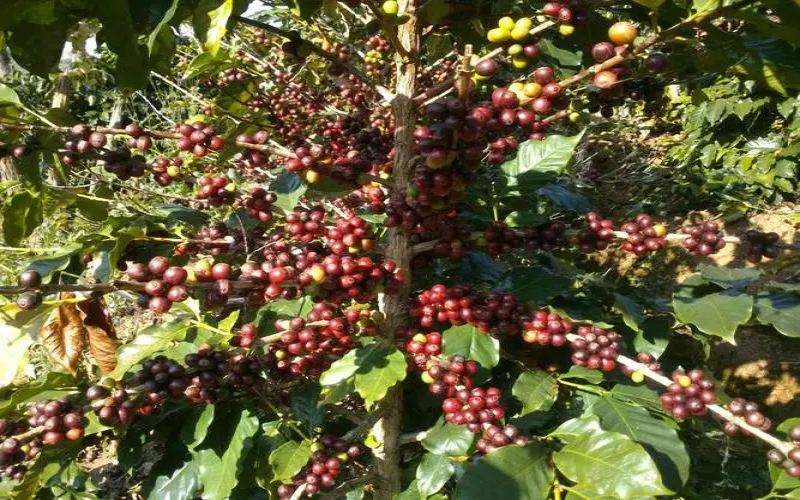
Global Coffee Supply Landscape Shifts: Arabica Prices Fall, Robusta Remains High Due to Vietnam Drought
The global coffee market has recently shown divergent trends. According to International Coffee Organization data, global coffee exports have increased year-on-year, with improved Arabica supply driving prices down, while Robusta remains firm or even hits historic highs due to persistent tight supply amid drought in Vietnam. Colombia's production is recovering after three years of decline, and Brazil's Arabica-producing regions have seen improved rainfall with upward revisions to production forecasts, but its Robusta-producing regions face high temperatures and scarce rain, leaving future output still to be observed. This article will review the specific data and weather impacts across the three major producing regions of Vietnam, Colombia, and Brazil to help coffee enthusiasts grasp the supply and demand logic behind current price fluctuations. [more…]
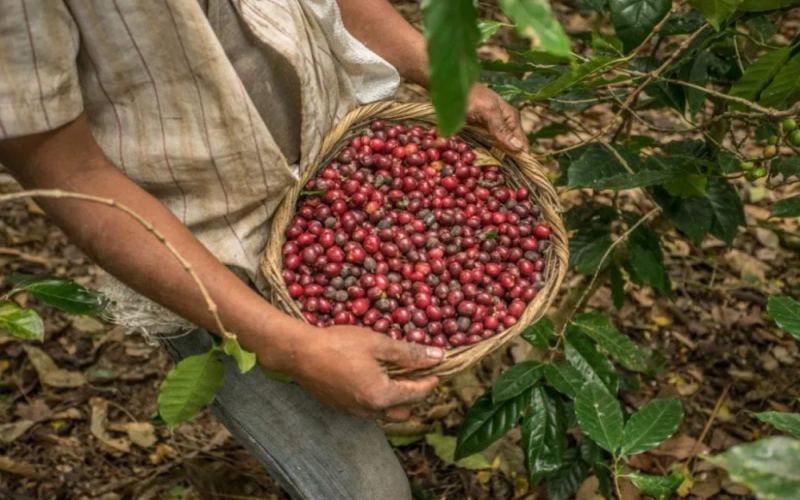
Honduras coffee export volume rises while prices fall, approval for direct supply to China may become a new growth point
Honduras, as the largest coffee producer in Central America, has recently presented a complex situation of rebounding export volumes but declining revenue. In February 2024, Arabica sales increased by 26% year-on-year, yet export earnings fell by 20% in the first four months of this harvest season. Against the backdrop of traditional buyers being concentrated in seven countries across Europe, the Americas, and Asia, Honduras is actively seeking market diversification. As China allows direct imports of its green coffee beans and more companies obtain certification for exports to China, this Central American country's coffee industry has welcomed new opportunities. The expansion of cafes in Chinese cities and rising demand among young consumers have injected strong momentum into Honduras's coffee exports. [more…]
Jamaica Blue Mountain No. 1 Coffee Beans: Typica Variety Characteristics, Historical Origins, and Brewing Flavor Analysis
Blue Mountain coffee was once synonymous with good coffee in people's minds before the specialty coffee wave, regarded as the benchmark for measuring coffee quality. Front Street Coffee believes that the charm of Blue Mountain coffee lies in the high balance of acidity, sweetness, and bitterness. This article will start with the historical origins of Jamaican Blue Mountain coffee, sort out the growing conditions of the Blue Mountains, the background of Clifton Estate, the three key points for identifying authentic Blue Mountain coffee, and the flavor differences brought by the two processing methods of washed and natural, and share Front Street Coffee's complete process and parameters for brewing washed Blue Mountain No. 1, helping coffee enthusiasts gain a comprehensive understanding of this classic and traditional coffee. [more…]