







What Do Rising Global Coffee Exports Tell Us About the Market?
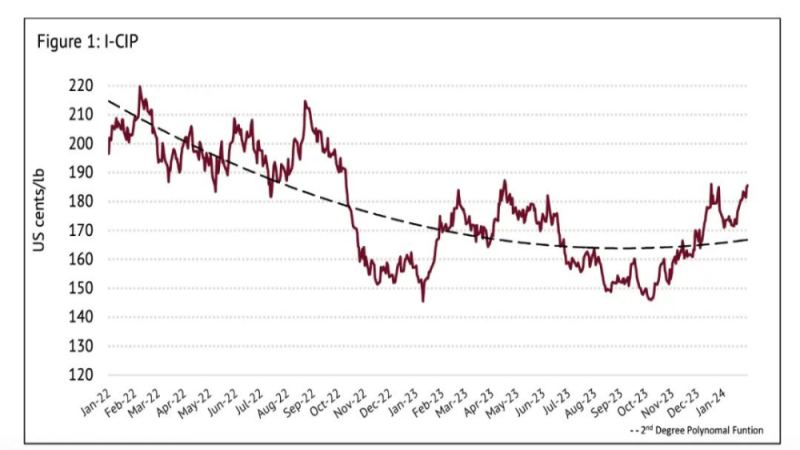
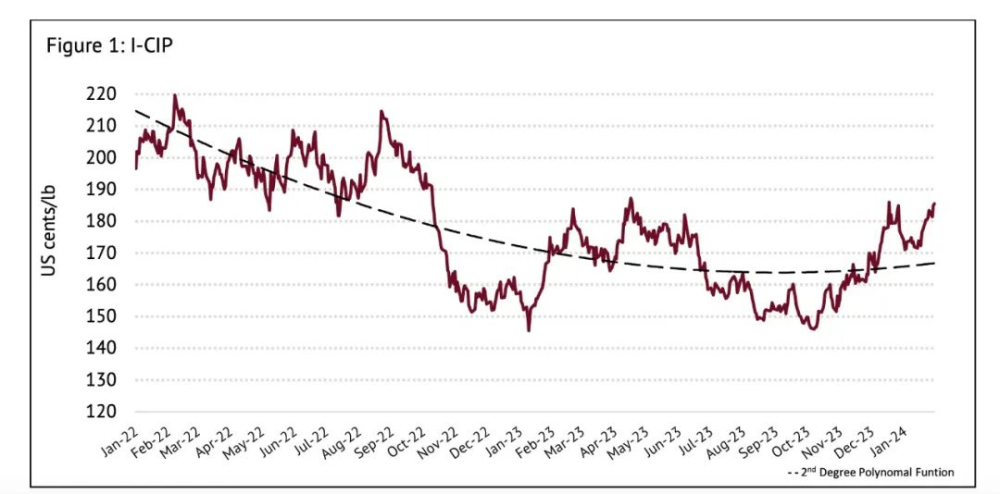
The ICO's January report puts the composite indicator price at 176.41 US cents per pound, up 0.4% from December, with a monthly range of 171.08 to 185.54 cents. Robusta prices reached their highest level since November 1994 at 153.33 cents per pound, driven by tight supply in Vietnam and a contract renegotiation dispute.
Global coffee exports in December rose 13.6% year-on-year to 1.2168 million bags, and October-to-December shipments were up 6.8% at 32.4119 million bags. Dry weather in Brazil persists, with rainfall in Minas Gerais at just 49% of the historical average, yet Safra & Mercado raised its 2023/24 Brazilian crop estimate to 61.1 million bags.
The latest monthly report from the International Coffee Organization (ICO) shows that the composite indicator price for coffee in January was 176.41 US cents per pound, a slight month-on-month increase of 0.4%, but the overall trend continues to fluctuate amid multiple disruptive factors. Robusta coffee prices soared to their highest level since November 1994, with tight supply in Vietnam and a contract renegotiation dispute further intensifying global supply pressure. At the same time, the Red Sea crisis has pushed up shipping costs, and coffee inventories on the US ICE exchange have fallen to historic lows. Although Brazil's coffee-growing regions have suffered drought, some institutions have still raised their production forecasts. With bullish and bearish factors intertwined, the outlook for the coffee market is full of uncertainty.
Recently, several coffee-producing countries have successively released their January coffee reports. Although production in all countries has shown growth, coffee prices remain unstable due to uncertainty in various situations. According to the ICO's January composite indicator price, the figure was 176.41 US cents per pound, up 0.4% from December last year, with prices fluctuating between 171.08 and 185.54 US cents per pound. It is worth noting that Robusta coffee prices reached their highest level since November 1994, when they stood at 153.33 US cents per pound.
The ICO also reported that global coffee exports in December increased by 13.6% year-on-year to 1.2168 million bags; from October to December, global coffee exports rose 6.8% year-on-year to 32.4119 million bags.
In Brazil, the weather remains dry. Somar Meteorologia reported that rainfall in Minas Gerais, Brazil's largest coffee-producing state, was 30.9 millimeters over the past week, only 49% of the historical average. However, Brazilian consultancy Safra & Mercado believes the impact of the drought is limited and raised its estimate for Brazil's 2023/24 coffee crop from the previous 58.9 million bags to 61.1 million bags. In addition, Brazilian crop forecasting agency Conab earlier predicted that Brazil's 2024 arabica coffee production would increase 5.4% year-on-year to 58.1 million bags.
Robusta coffee, meanwhile, has remained at high levels, mainly due to tight supply of Robusta coffee from Vietnam and unfavorable local purchasing prices. According to a report by the Vietnam Coffee and Cocoa Association, recent green coffee prices in the Central Highlands were 77 million to 79 million Vietnamese dong per ton. Vietnamese producers said they refused to supply coffee beans before renegotiating contracts. Because global Robusta coffee prices have recently soared, domestic traders in Vietnam believe that "producers cannot deliver at the prices previously agreed" and are now seeking to renegotiate contracts. It is precisely problems between major producers and buyers that have tightened global supply and pushed prices up further.
In addition, affected by this situation, coffee buyers and traders said they are avoiding purchasing Robusta coffee beans in Vietnam. Apart from this issue, another reason is the ongoing Red Sea crisis. Although US and UK forces have recently struck Houthi targets, this has had no effect. The Houthis have also continued to attack commercial ships, causing shipping companies to suspend services and reroute, sharply increasing transport costs and time.
As a result, coffee inventories on the US ICE exchange and the European ICEU exchange continued to decline in January. Among them, coffee inventories on the US ICE exchange fell 1.5% to 270,000 bags, one of the lowest levels on record. In addition, daily Robusta coffee inventories reached 480,000 bags, down 15.4% since December 2023.
The above content is compiled by CoffeeHunters, a coffee news website.


