







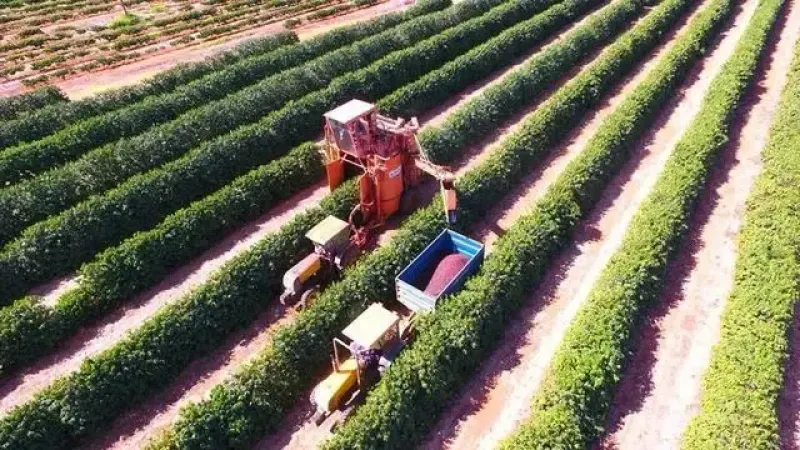
Brazil coffee farm harvest: how fast is the new season moving?
Brazil's new harvest is running ahead of last year. Robusta picking has reached 15% of the new season, against 12% a year earlier, while arabica coffee completion stands at 11% versus 7%. Cecafé expects exports for the 2023/24 season to reach 46.3 million bags of 60 kg each, which would be a record, after 39.3 million bags shipped by April.
Tighter global supply is behind the demand. Vietnam's output has fallen, and Red Sea disruption has lengthened Europe-Asia shipping times and raised logistics costs, pushing buyers toward Brazil. Frost warnings are also pushing each coffee farm to harvest early, and several countries are shipping faster ahead of the EU deforestation rules.
Brazil's new coffee harvest season is accelerating, with both Robusta and Arabica harvest progress surpassing last year's levels, promising relief for the tight global supply situation. Affected by factors such as Vietnam's reduced production and the Red Sea crisis driving up logistics costs, market demand for Brazilian coffee has surged. Cecafé expects exports for the 2023/24 season to reach 46.3 million bags, setting a new historical record. Meanwhile, frost warnings are prompting coffee farmers to rush their harvest, while multiple countries are also accelerating shipments before the EU's deforestation regulation takes effect. Coffee bean price trends are full of uncertainties and deserve close attention from coffee enthusiasts.
Brazil has begun harvesting coffee beans for the new season, with Robusta picking being particularly active.
Statistics show that Brazil's Robusta coffee harvest progress has reached 15% of the new season's production, exceeding last year's 12% for the same period. Arabica coffee harvest completion stands at 11%, also higher than last year's 7%. The accelerated harvest pace can provide some relief to the current tight coffee market supply situation.
On the other hand, global coffee supply continues to tighten. Vietnam's production has declined, and the Red Sea crisis has lengthened shipping times between Europe and Asia while driving up logistics costs, significantly boosting market demand for Brazilian coffee procurement. Brazil's coffee exports have consequently risen.
According to Brazilian local exporters and the Brazil Coffee Exporters Council (Cecafé), Brazil's coffee exports for the 2023/24 season are expected to reach 46.3 million bags (60 kg each), which would set a historic high. Industry insiders believe Brazil's supply volume is sufficient to fill the gap left by reduced production in countries like Vietnam and Indonesia.
Cecafé data shows that as of April in the 2023/24 harvest season, Brazil had exported 39.3 million bags of coffee. Entering May and June, as prices rose, local estates and traders further accelerated their selling pace, so exports are expected to set a new record.
Additionally, the early harvest progress is also related to concerns about future weather. Brazil's meteorological department forecasts that a cold front will sweep across Brazil, with the possibility of frost. Coffee farmers are therefore rushing to harvest, minimizing the damage frost could cause to coffee trees and the risk of reduced production.
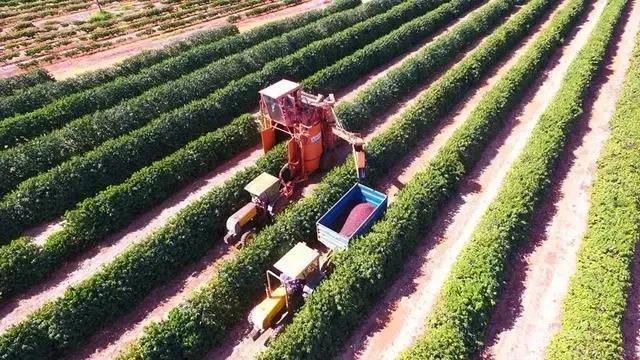
Currently, a polar air mass has reached Rio Grande do Sul in southern Brazil and is advancing toward the central-west region. In the high-altitude areas of Rio Grande do Sul and Santa Catarina, minimum temperatures could drop to -1°C to -2°C, with frost possible.
Beyond Brazil, multiple coffee-producing countries are also accelerating their export pace. According to a report by the International Coffee Organization (ICO), several countries will increase coffee exports in the near term as traders seek to avoid potential problems once the EU's Deforestation Regulation (EUDR) takes effect in December. The ICO noted that as importers rush to ship coffee beans to Europe, coffee stocks in producing countries will decline.
In March of this year, the EU announced plans to postpone the implementation of the Deforestation Regulation (EUDR) and to classify countries by risk category, granting different adaptation periods based on category.
However, EU officials have not yet released updated detailed guidance on the EUDR. Traders worry about uncertainties arising at that time and are therefore accelerating coffee exports. Some industry insiders say that if coffee export volumes increase, coffee bean prices will face downward pressure. After all, the EU remains the world's largest coffee consumption market, and major coffee-producing countries like Brazil, Vietnam, and Colombia will continue to cooperate with the EU.
The above content is compiled by CoffeeHunters, a coffee news website.


