







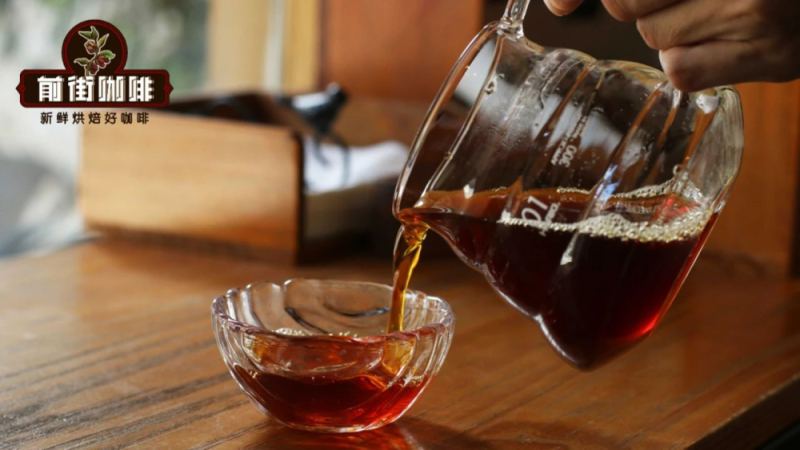
What Does Blue Mountain Coffee Taste Like?
Blue Mountain coffee is known for a high degree of balance among acidity, sweetness and bitterness, which is why it became a benchmark for coffee quality before the specialty coffee wave. The Front Street view is that its charm lies in that balance rather than in any single dominant note, and two authentic lots from Jamaica's Blue Mountain Clifton Farm were recently released to show it.
Jamaica's coffee history reaches back to the 18th century, when Arabica seeds arrived from Martinique and were promoted around St. Andrew before taking root in the Blue Mountains. Altitude divides Jamaican coffee into Blue Mountain, High Mountain and Jamaican grades, and the grade differences show directly in price. Processing method, washed or natural, also shifts the cup.
Blue Mountain coffee was once synonymous with good coffee in people's minds before the specialty coffee wave, and was regarded as the benchmark for measuring coffee quality. Front Street Coffee believes that the charm of Blue Mountain coffee lies in its high degree of balance among acidity, sweetness, and bitterness. This article will begin with the historical origins of Jamaican Blue Mountain coffee, sort out the growing conditions of the Blue Mountains, the background of Clifton Estate, the three key points for identifying authentic Blue Mountain coffee, and the flavor differences brought by the washed and natural processing methods, and share the complete process and parameters of Front Street Coffee brewing washed Blue Mountain No. 1, helping coffee lovers fully understand this classic and traditional coffee.
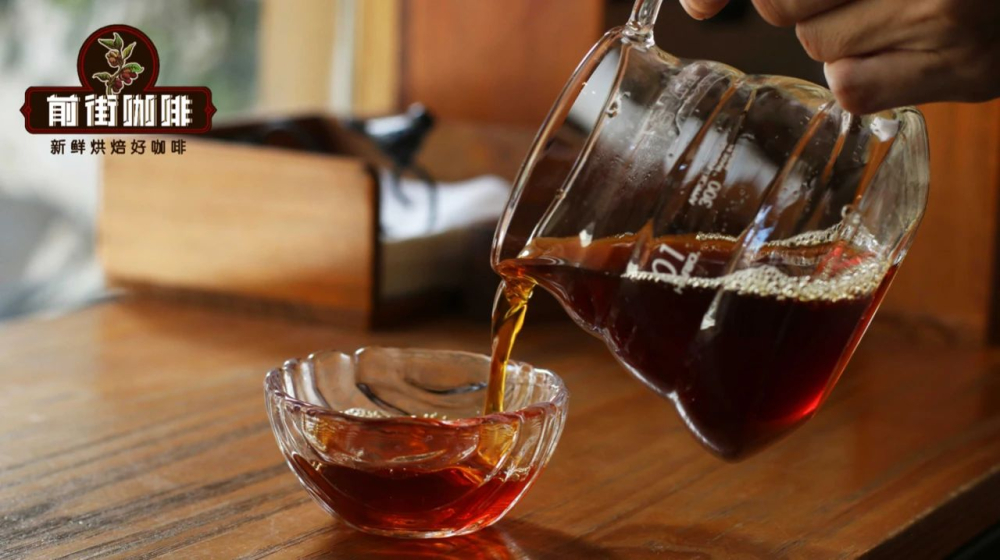
In an era when specialty coffee had not yet risen, Blue Mountain coffee was already one of the first coffee beans the public came into contact with. At that time, many people directly treated Blue Mountain coffee as a yardstick for judging whether coffee tasted good. What exactly does Blue Mountain coffee taste like?
Front Street Coffee's view is that Blue Mountain coffee belongs to the type with a high degree of balance among acidity, sweetness, and bitterness. In order to let today's coffee lovers also taste this traditional and classic bean, Front Street Coffee recently launched two authentic Blue Mountain coffees from Jamaica's Blue Mountain Clifton Farm.
History of Jamaican Blue Mountain Coffee
Jamaica's coffee cultivation history can be traced back to the 18th century. In 1717, King Louis XV of France ordered coffee to be planted in Jamaica; by the mid-1720s, Jamaica's governor Sir Nicholas Lawes introduced Arabica seeds from Martinique and promoted cultivation in the St. Andrew area, bringing coffee trees into Jamaica, where they subsequently took root in the Blue Mountains. According to different altitudes, Jamaican coffee is divided into high-altitude Jamaican Blue Mountain coffee, High Mountain coffee, and Jamaican coffee, and the grade differences are also directly reflected in price.
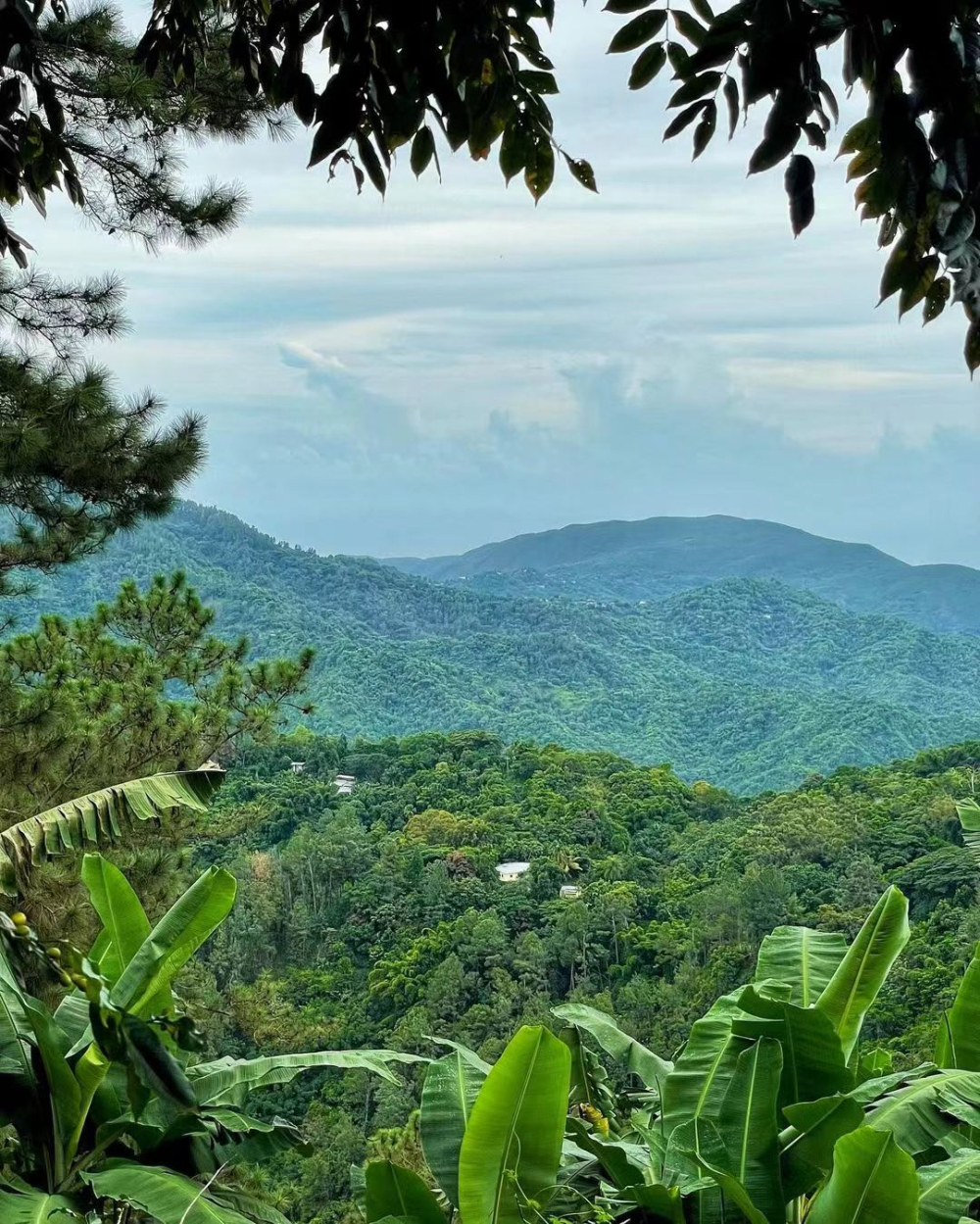
The Blue Mountains are located in the eastern part of the island of Jamaica. Whenever the weather clears, the sea surrounded by the Caribbean is directly illuminated by sunlight, and the peaks reflect the brilliant blue light reflected by the sea, which is how the Blue Mountains got their name.
The highest peak of the Blue Mountains is 2,256 meters above sea level (2,256 m above sea level; coffee can only be grown below 1,700 m, while above that is protected forest). It is the highest peak in the Caribbean region and also a famous tourist destination. This place is located in the coffee belt, with fertile volcanic soil, fresh air, no pollution, a humid climate, and fog and rain all year round. The average rainfall is 1,980 millimeters, and the temperature is around 27 degrees. Such a climate created the world-renowned Jamaican Blue Mountain coffee, and also created the world's most expensive coffee.
Only Blue Mountain coffee grown at an altitude above 800 meters is authentic Blue Mountain coffee. The Blue Mountain coffee on Front Street Coffee's bean list is at an altitude of 1,310 meters and comes from Clifton Estate.
Jamaica Clifton Estate
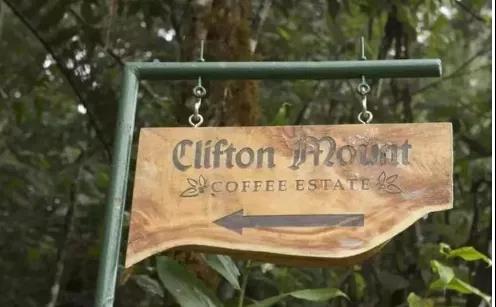
Front Street Coffee's Jamaican Blue Mountain comes from Clifton Estate. Clifton is the oldest coffee-producing site in Jamaica that is still operating normally, and only Clifton Farm in Jamaica has the "Rainforest Alliance Certified" mark. As early as the mid-18th century (around 1750), Clifton Farm began planting and producing coffee. Today's Clifton Farm is the largest estate in the region. By international standards, it also belongs to small-scale cultivation, and many of the estate owners are small landowners.
Because according to CIB standards, the basic standard for No. 1 Blue Mountain green beans is beans of 17 screen size or above, a defect rate below 3%, a moisture content of about 13%, etc.
How to distinguish real Blue Mountain coffee?
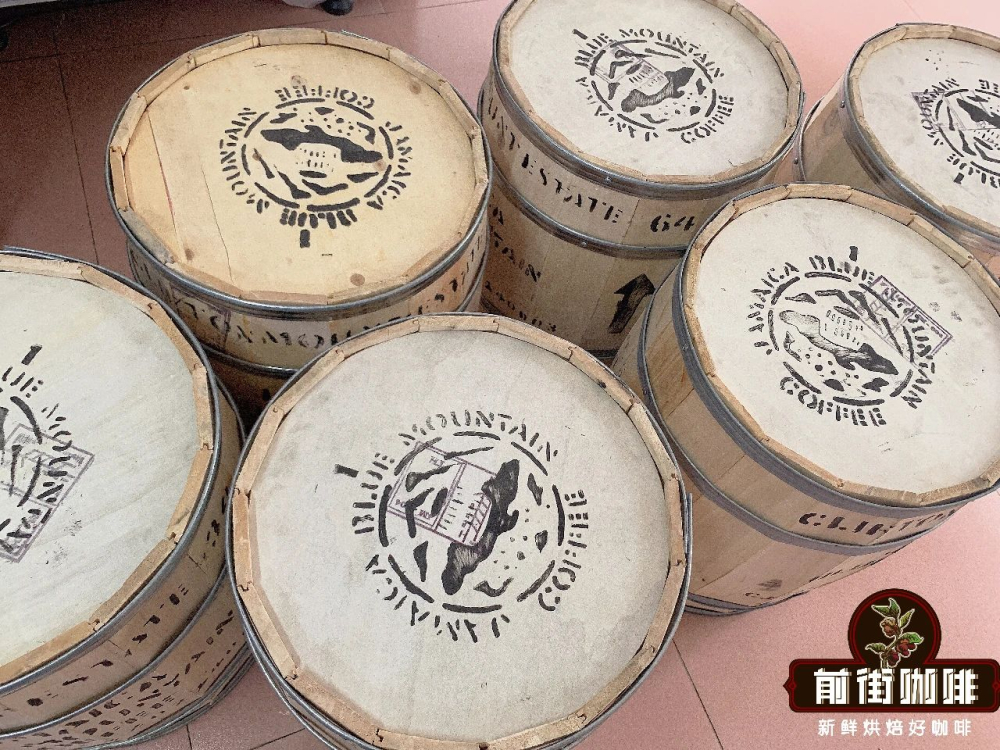
The following will identify true "Blue Mountain coffee" through three major points, including export companies designated by the Coffee Industry Board, the only producing region that packs green beans in wooden barrels, and Clifton's rainforest certification.
Front Street Coffee would like to share some knowledge with everyone here:
1. True Blue Mountain coffee is exported by companies designated by the Coffee Industry Board.
Some authentic Blue Mountain No. 1 coffee beans in the Chinese market are mainly exported to China by Japan, Australia, and Europe through directly operated branches. According to statistics from the International Coffee Organization (ICO) in 2013, Japan accounted for 85% of the allocation, while the United States, Europe, and other countries each accounted for 5%. ICO statistics show that China accounts for 15% of Blue Mountain coffee consumption. It is worth noting that the limited Blue Mountain No. 1 is mostly allocated to Japan, the United States, and Europe. Among them, because Japan invested in Jamaica's coffee industry, most Blue Mountain coffee was bought out by Japan. In 1992, Jamaica sold 688 tons of Blue Mountain coffee to Japan, 75 tons to the United States, and only 59 tons to the United Kingdom.
In 2005, Jamaica's Minister of Agriculture announced that Blue Mountain coffee should remain in Jamaica for roasting, so it was directly allocated through quotas, tending to circulate directly from Jamaica to consuming countries. This allocation system was recognized by the Jamaica Coffee Industry Board (CIB). (ps: CIB's board members are estate owners in Jamaica who own estates above a certain scale.)
In addition, the officially registered logo of the Jamaica Coffee Industry Board is used for certification and inspection of exported Jamaican Blue Mountain coffee. The BLUEMOUNTAINCOFFEE trademark is the mark on the outer packaging of authentic Jamaican Blue Mountain coffee.
Coffee Industry Board (CIB)
2. True Blue Mountain coffee is the only producing region that packs green beans in wooden barrels.
Blue Mountain coffee beans are, to date, the only coffee-producing region among all coffees that uses wooden barrels to pack green beans; other coffee exports all use burlap sacks. During the British colonial period in the mid-18th century, flour shipped from Britain to Jamaica was sent in barrels, and after the empty barrels were recovered, they were used to transport coffee and rum, isolating the coffee aroma and ensuring coffee quality. The barrels used today are all made from wood from American temperate forests. 3. The frog on the lid of the Clifton barrel is rainforest certification.
Clifton Estate is the oldest coffee estate in Jamaica, and only Clifton Farm in Jamaica has the "(RFA) Rainforest Water Frog" mark.
Only those that meet the "Sustainable Agriculture Network standards" can obtain certification, and their wooden barrels bear the rainforest certification mark.
Front Street Coffee's Blue Mountain is Blue Mountain coffee beans that are exported by companies designated by the Coffee Industry Board, packed in wooden barrels, and rainforest certified.
Blue Mountain Coffee Bean Processing Methods
Before 2019, Clifton Estate's Blue Mountain coffee had always used the washed method to process green coffee beans. During processing, the skin and pulp are first removed, and the beans are allowed to ferment for 12-18 hours. Then the fermented beans are placed in a tank and moved back and forth, using the friction of the beans and the force of flowing water to wash the coffee beans until they are smooth and clean. After washing, at this point, the coffee beans are still wrapped in the parchment layer, with a moisture content of 50%, and must be dried in the sun to reduce the moisture content to 12-14%; otherwise, they will continue to ferment and become moldy and spoiled. After that, the coffee beans are screened and then stored in dedicated warehouses. The washed processing method ensures that Blue Mountain coffee has a rich aroma and a balanced taste, without any one flavor standing out or being lacking.
In 2019, Clifton Farm broke through the original established model and used the natural processing method for the first time. Deeply influenced by the market, Blue Mountain coffee underwent natural method trials in 2019, and in 2020 began exporting small batches of natural Blue Mountain for the first time. For Front Street, this natural Blue Mountain coffee, because changing the processing method is equivalent to changing Blue Mountain's inherent flavor structure, Front Street Coffee, whenever introducing coffee beans from a certain producing region to customers, will first recommend washed coffee beans, because washed coffee best represents the flavor of that producing region. Of course, Blue Mountain coffee adopting the natural processing method is more about following market development.
How does Front Street Coffee roast washed Blue Mountain coffee beans and natural Blue Mountain coffee beans?
In order to highlight Blue Mountain coffee's balanced acidity, sweetness, and bitterness and its smooth mouthfeel, Front Street adopted a medium-dark roast level, making these two coffees even richer and fuller.
Washed Blue Mountain Brewing Flavor: The taste is very clean, complex, very mild, with chocolate sweetness and very strong body. The flavor is rich and mellow, and the coffee's sweetness, acidity, and bitterness are perfectly matched, with no bitterness at all, only a moderate and perfect acidity, and a lingering fruity finish.
Natural Blue Mountain Brewing Flavor: Slight berry acidity, reminiscent of smoked plum and mulberry, overall balanced, with black cocoa and nutty flavors, carrying a slight fermented note and smoky note.
By comparison, compared with washed Jamaican Blue Mountain coffee, natural Jamaican Blue Mountain No. 1 shows a slight berry acidity in flavor, reminiscent of smoked plum and mulberry, and carries a slight tea-like note.
Front Street Coffee: Jamaican Blue Mountain No. 1 coffee beans Producing region: Jamaica Blue Mountain producing region Estate: Clifton Altitude: 1,310 meters Variety: Typica Processing method: Washed Flavor description: Washed Blue Mountain coffee has black chocolate and nutty flavors on the palate, high cleanliness, very bright, good body, and balanced acidity, sweetness, and bitterness.
Front Street Coffee Washed Jamaican Blue Mountain No. 1 Coffee Beans Brewing Process Sharing:
Front Street uses a coffee-to-water ratio of 1:15, with a grind size of 75% passing a No. 20 standard sieve. Front Street hopes to highlight Blue Mountain coffee's characteristics: balance, richness, and soft fruity acidity; for water temperature, 88 degrees was used. In terms of dripper selection, the first consideration is to use slower-flow devices such as the KONO dripper, Kalita trapezoid dripper, and flannel.
Front Street Coffee uses the KONO dripper
KONO's ribs stop before reaching half the height of the dripper. This design is actually to ensure that after the dripper is wet, it fits closely against the dripper wall, with the purpose of restricting airflow. This increases the time for coffee grounds to absorb water, thereby making the extracted coffee more uniform overall and enhancing the rich mouthfeel. Also, the groove skeleton at the bottom of the KONO dripper is the key design that allows subsequent brewing to produce a siphon effect.
When brewing Jamaican Blue Mountain coffee beans, Front Street Coffee uses a three-stage pouring method. This is a very simple pour-over method, and everyone can easily learn this pour-over method at home to brew a simple and delicious cup of coffee.
So, let's get started!
First, after everyone has prepared the coffee equipment needed, you can follow Front Street and start brewing coffee. Step one, first use 30 grams of water for blooming. When pouring, there is no need to use too strong a stream of water, otherwise the coffee grounds will be washed apart and the blooming effect will not be achieved.
When pouring in 30 grams of water, the time is exactly 10 seconds, then wait quietly for 20 seconds. When the total time reaches 30 seconds, you can proceed to the second step of brewing Blue Mountain coffee!
Then use a small stream of water to slowly pour in a circle from the center outward for 125 grams. At this time, the total time is about one minute. Then, after waiting for the coffee bed to drop, you can pour water again.
The third step is to pour water again. When the total water amount reaches 225 grams, the time is about two minutes. At this point, the pouring action can be stopped.
Next, wait for all the coffee liquid in the dripper to flow into the server, and then you can remove the dripper. But it's not over yet.
The last action is to shake the server holding the coffee liquid evenly, so that the concentration of the coffee liquid is uniformly mixed, and then you can drink a delicious cup of Blue Mountain coffee!
For more coffee bean information, please follow Coffee Workshop (WeChat public account cafe_style) For professional coffee knowledge exchange, please add WeChat ID kaixinguoguo0925
The above content is compiled by CoffeeHunters, a coffee news website.


