







What defines authentic jamaican coffee from the Blue Mountains?
Jamaican Blue Mountain coffee is grown in the Blue Mountains of eastern Jamaica, where Caribbean Sea breezes and volcanic soil shape its balanced acidity, sweetness, and clean aroma. Jamaican coffee is graded by altitude into Blue Mountain, High Mountain, and Jamaica coffee, and price follows those grade lines directly.
Authenticity comes down to a few checks: the export companies designated by the Jamaica Coffee Industry Board, the tradition of shipping green beans in wooden barrels, and estate marks such as the rainforest certification carried by the Clifton estate. Jamaican planting dates to 1717, when Louis XV ordered coffee planted on the island.
Blue Mountain coffee is widely recognized as the classic benchmark of coffee flavor, and its balanced acidity, sweetness, bitterness, and clean aroma have captivated countless enthusiasts. This article begins with the planting history of Jamaican coffee, sorts out the terroir conditions of the Blue Mountains, the washed processing flow, and the grading and inspection standards, and then takes a closer look at the Clifton estate selected by Front Street Coffee. The article also systematically organizes the three major points for identifying authentic Blue Mountain coffee—the export companies designated by the Jamaica Coffee Industry Board, the tradition of shipping green beans in wooden barrels, and Clifton's unique rainforest certification mark—helping readers fully understand the origin story and quality logic behind this legendary coffee.
For more specialty coffee knowledge, please follow the WeChat public account: Front Street Coffee (FrontStreet Coffee)
In an era before specialty coffee had risen to prominence, Blue Mountain coffee was already one of the coffee varieties the public encountered earliest. At that time, it was almost treated as the yardstick for whether coffee tasted good. What does Blue Mountain coffee actually taste like?
Front Street Coffee's (FrontStreet Coffee) view is that the charm of Blue Mountain coffee lies in the highly coordinated balance of acidity, sweetness, and bitterness. So that today's coffee lovers can also taste this classic and traditional flavor, Front Street Coffee (FrontStreet Coffee) has recently launched two authentic Blue Mountain coffees from Jamaica's Clifton Farm.
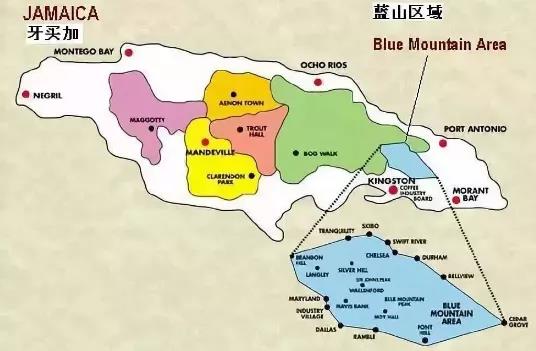
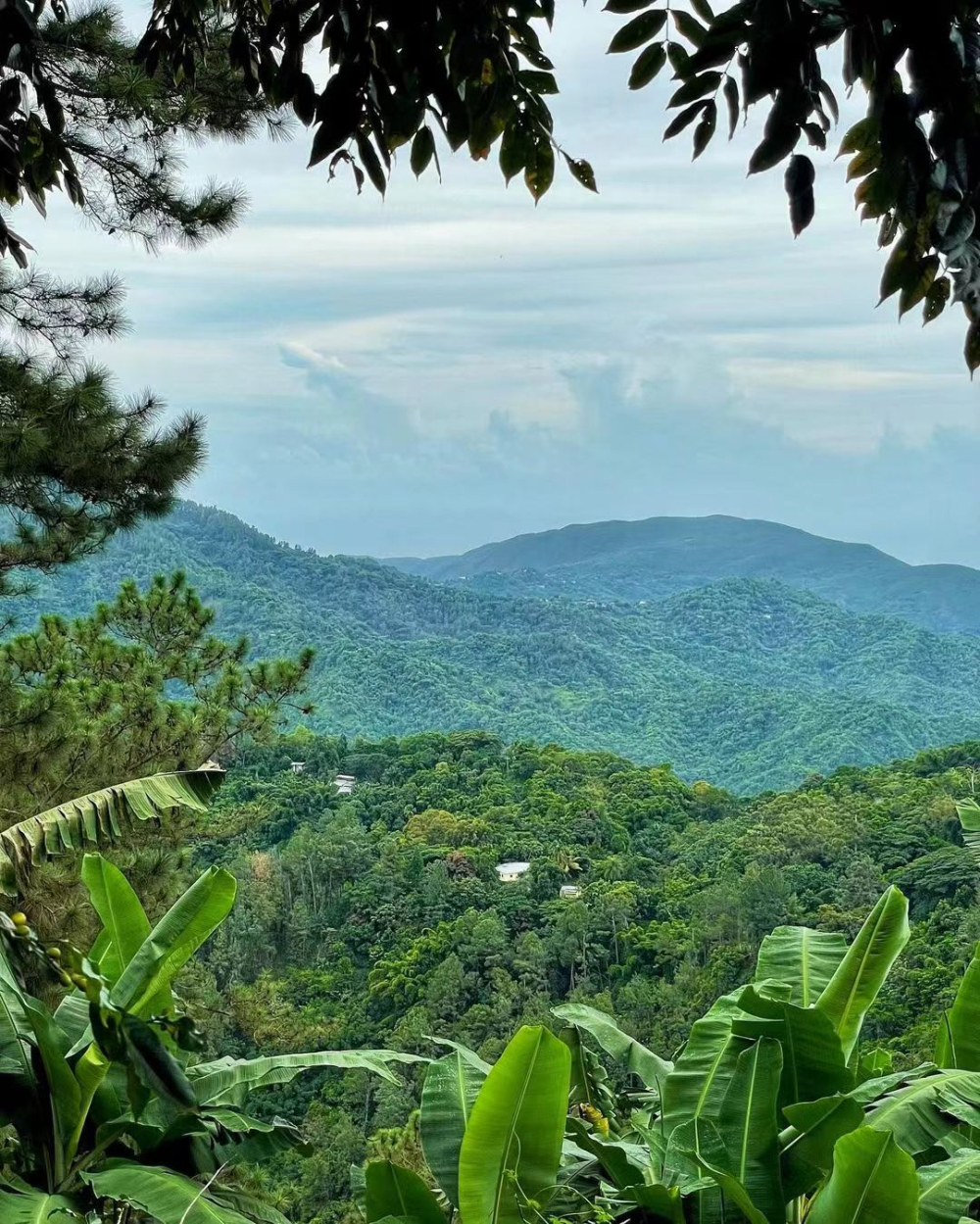
History of Jamaican Blue Mountain Coffee Jamaica's coffee planting history can be traced back to the eighteenth century. In 1717, King Louis XV of France ordered coffee to be planted in Jamaica; by the mid-1720s, Jamaica's governor Sir Nicholas Lawes introduced Arabica seeds from Martinique and gradually promoted them in the St. Andrew area. Coffee trees thus entered Jamaica and took root in the Blue Mountains. According to different altitudes, local coffee is classified into high-altitude Jamaican Blue Mountain coffee, High Mountain coffee, and Jamaican coffee, and the grade differences directly affect the price. The Blue Mountains are located in eastern Jamaica, surrounded by the Caribbean Sea. On clear days, sunlight shines directly on the azure sea, and the peaks reflect the brilliant blue light refracted by the seawater, which is how the Blue Mountains got their name.
The highest peak of the Blue Mountains is 2,256 meters above sea level (2,256 m above sea level; coffee can only be grown below 1,700 m, while above that is protected forest), making it the highest peak in the Caribbean region and also a famous tourist destination. This area lies in the coffee belt and has fertile volcanic soil, fresh air, no pollution, a humid climate, and fog and rain year-round, with average rainfall of 1,980 mm and temperatures around 27 degrees. This climate created the world-renowned Jamaican Blue Mountain coffee and also produced the world's most expensive coffee.
After the Jamaican Blue Mountain coffee cherries are harvested, they are generally processed by the traditional washed method. A machine is used to press and crush the coffee cherries to remove the skin and pulp, and then they are placed in a tank to ferment overnight. The fermented beans are then put into a clean tank and brushed back and forth, using the friction of the beans and the force of flowing water to wash the coffee beans until they are smooth and clean. Finally, the parchment beans are dried for 2 to 3 weeks until the moisture content reaches 12-14%. Because the coffee pulp and mucilage have already been removed before drying, there is no excessive influence from fermentation acidity, making the aroma of the Blue Mountain beans themselves more balanced and clean.
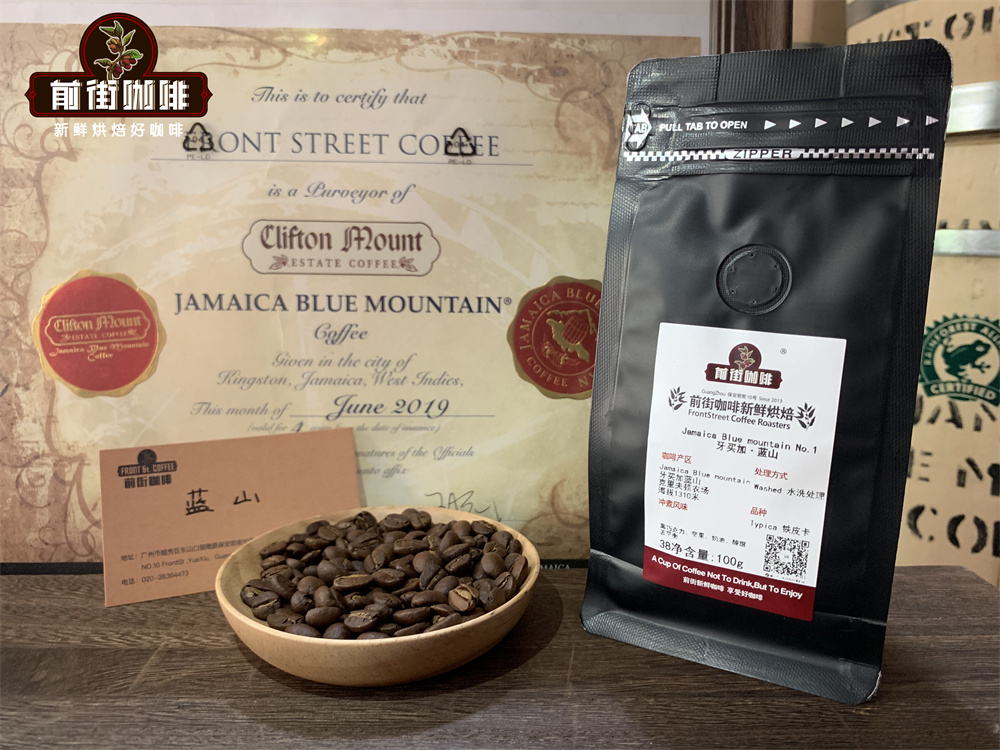
The processed Jamaican Blue Mountain green beans must also undergo multiple quality inspections, including defect ratio, screen size, and cupping score. The highest-grade Blue Mountain No. 1 coffee beans need to meet a 17-18 screen size, have a defect bean ratio of no more than 2%, and possess just the right acidity, sweetness, bitterness, body, and aroma. It is conceivable that the quantity of such exquisite, top-quality coffee beans is extremely small. To taste Blue Mountain's refined flavor, Front Street believes one should choose the best-quality Jamaican Blue Mountain No. 1 coffee. Front Street's Blue Mountain No. 1 coffee beans are exactly washed processed and come from the historically long-established Clifton estate.
Jamaica Clifton Estate Front Street Coffee's (FrontStreet Coffee) Jamaican Blue Mountain comes from the Clifton estate. Clifton is the oldest coffee-producing site in Jamaica that is still operating normally, and in Jamaica only Clifton Farm has the "Rainforest Alliance Certified" mark. As early as the mid-eighteenth century (roughly around 1750), Clifton Farm began planting and producing coffee. Today's Clifton Farm is the largest estate in the region, and by international standards it still counts as small-scale cultivation, with many estate owners being small landholders.
Because according to CIB standards, the basic standard for No. 1 Blue Mountain green beans is beans of 17 screen or above, a defect rate below 3%, a moisture content of about 13%, and so on.
How to distinguish real Blue Mountain coffee?
The following will use three major points—the export companies designated by the Jamaica Coffee Industry Board, the only producing region that ships green beans in wooden barrels, and Clifton's rainforest certification—to identify "Blue Mountain coffee" in the true sense.
Front Street Coffee (FrontStreet Coffee) would like to share some knowledge with everyone here:
1. Blue Mountain coffee in the true sense is exported by companies designated by the Jamaica Coffee Industry Board.
Some of the authentic Blue Mountain No. 1 coffee beans circulating in the Chinese market are mainly exported to China through directly operated branches in Japan, Australia, and Europe. According to 2013 data from the International Coffee Organization (ICO), Japan held 85% of the quota, while the United States, Europe, and other countries each accounted for 5%. ICO statistics show that China accounts for 15% of Blue Mountain coffee consumption. It is worth noting that the limited quantity of Blue Mountain No. 1 mostly flows to Japan, the United States, and Europe. Because Japanese capital is deeply involved in Jamaica's coffee industry, most Blue Mountain coffee has been bought up by Japan—in 1992, Jamaica sold 688 tons of Blue Mountain coffee to Japan, only 75 tons to the United States, and only 59 tons to the United Kingdom.
In 2005, Jamaica's Minister of Agriculture announced that Blue Mountain coffee should remain in Jamaica for roasting, so through direct quota allocation, it tended to circulate directly from Jamaica to consumer countries. This allocation system was recognized by the Jamaica Coffee Industry Board (CIB). (ps: The board members of CIB are estate owners in Jamaica with estates above a certain scale.)
In addition, the officially registered logo of the Jamaica Coffee Industry Board is used for certification and inspection of exported Jamaican Blue Mountain coffee, and the BLUEMOUNTAINCOFFEE trademark is the mark on the outer packaging of authentic Jamaican Blue Mountain coffee.
Coffee Industry Board (CIB)
2. Blue Mountain coffee in the true sense is the only producing region that uses wooden barrels to pack green beans.
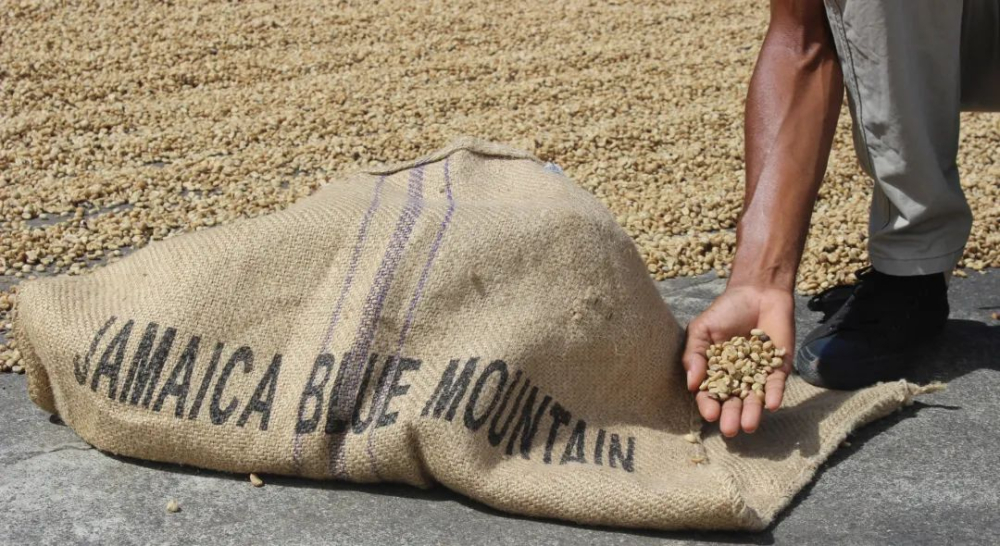
Blue Mountain coffee beans are, to date, the only coffee-producing region among all coffees that uses wooden barrels to pack green beans; other coffee exports use burlap sacks. In the mid-eighteenth century during the British colonial period, flour shipped from Britain to Jamaica was packed in barrels, and after the empty barrels were recovered, they were used to transport coffee and rum, isolating the coffee aroma and ensuring coffee quality. The barrels used today are made from timber from American temperate forests. 3. The frog on the Clifton barrel lid is the rainforest certification. Clifton Estate is the oldest coffee estate in Jamaica, and in Jamaica only Clifton Farm has the "(RFA) Rainforest Water Frog" mark. Only those that meet the "Sustainable Agriculture Standard" can obtain certification, and its wooden barrels bear the rainforest certification mark.
Front Street Coffee's (FrontStreet Coffee) Blue Mountain is Blue Mountain coffee beans that have passed through companies designated by the Jamaica Coffee Industry Board for export, are packed in wooden barrels, and carry rainforest certification.
The above content is compiled by CoffeeHunters, a coffee news website.


