







Search Results for: Frost Tea
Yunnan Coffee Flavor Analysis: From Origin and Variety to Processing Method, Does Pour-Over Really Have a Pu'er Tea Note?
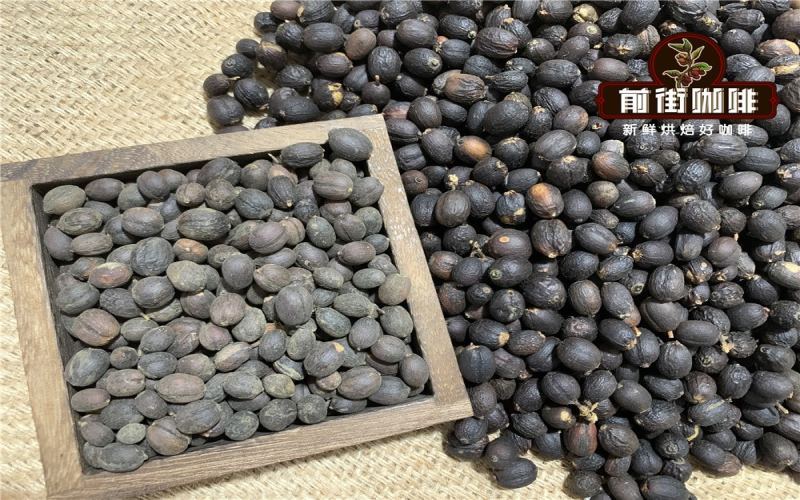
Coffee is often seen as an imported product, but Yunnan, China has long since become a coffee-producing region that cannot be ignored. The movie "Coffee or Tea" introduced more people to Yunnan coffee. How does it actually taste? Does it really carry a Pu'er tea-like flavor? This article starts from Yunnan's main producing regions (Dehong, Baoshan, Lincang, Pu'er), mainstream varieties (Catimor, Typica, Bourbon), and washed and natural processing methods to break down the sources of Yunnan coffee's nutty, brown sugar, full-bodied and balanced flavors, and introduces Front Street Coffee's Yunnan daily-drinker beans and natural Typica, helping you decide whether Yunnan coffee suits your taste. [more…]
Yunnan Small-Bean Coffee Brands Overview: From Typica Origins to Catimor Flavor and Processing Methods by Region
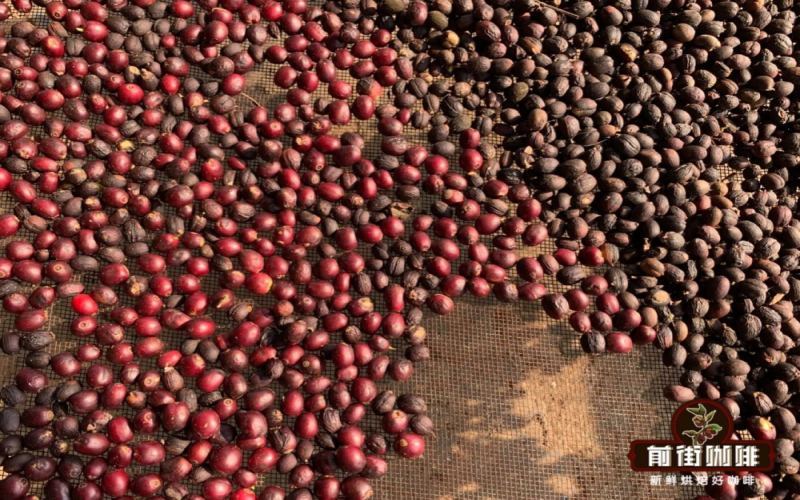
Yunnan coffee is commonly known as Yunnan small bean, with uniform and plump beans and a mellow, moderate taste. Its cultivation history can be traced back to 1904, when the French missionary Tian De'neng brought Typica to Zhugula Village in Binchuan County. Today, Catimor and its improved varieties are widely planted in Yunnan, while high-quality varieties such as Typica, Bourbon, and Geisha account for only a small portion. Front Street Coffee's planting trials in Lincang show that Typica can present flavors of nuts, brown sugar, and slight fruit acidity. Yunnan coffee is mainly distributed in Lincang, Pu'er, Baoshan, Xishuangbanna, Wenshan, Dehong, and other places. Each production area forms a unique microclimate thanks to high altitude, abundant sunshine, and distinct dry and rainy seasons. The processing method is mainly washed. Sun-dried and washed methods bring different flavor directions, and Front Street Coffee's sun-dried and washed Catimor are typical examples. [more…]
Yunnan Coffee Bean Varieties, Processing Methods, Flavor Characteristics Analysis and Pour-Over Grinding Parameters Guide
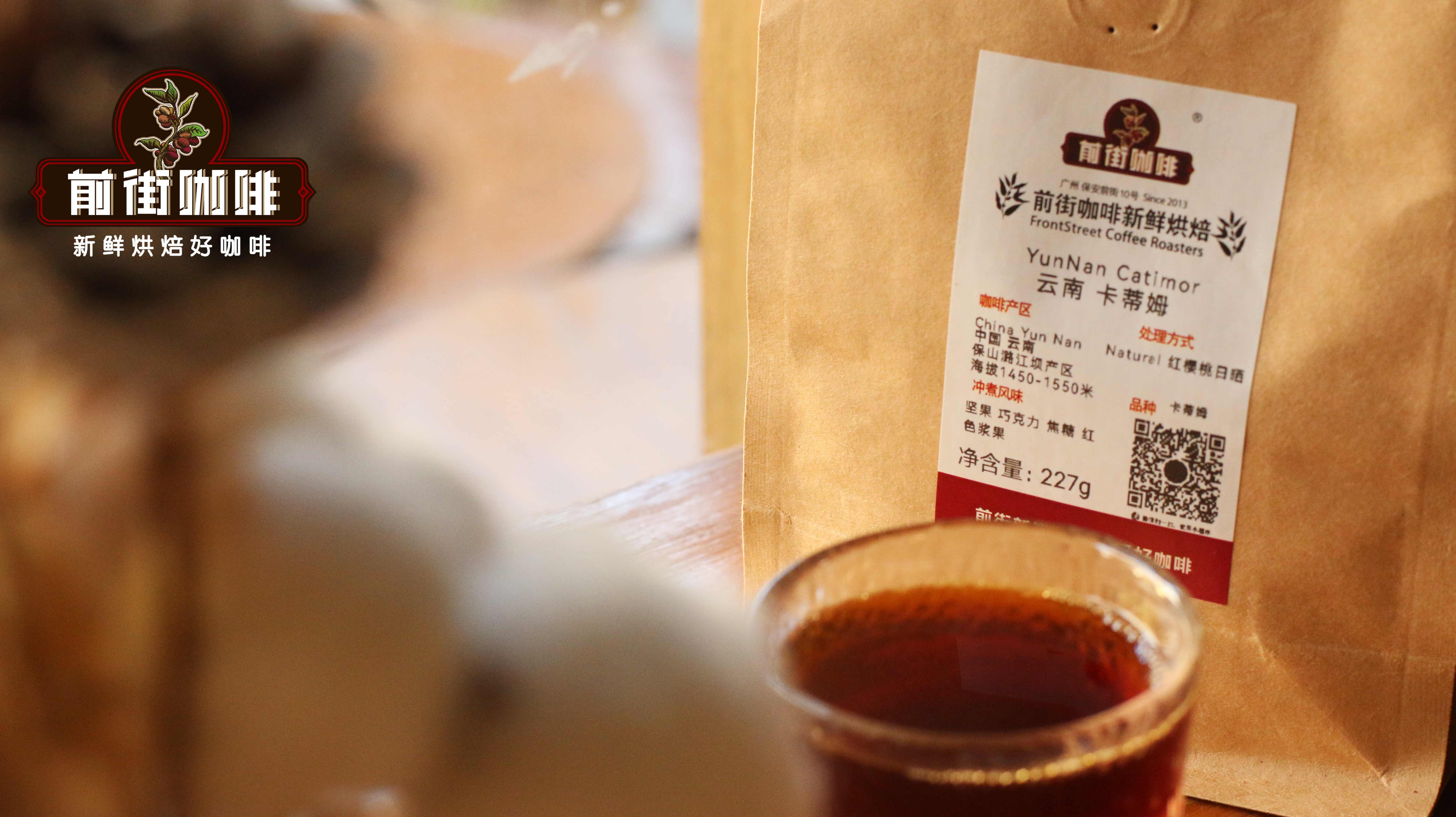
Yunnan, as China's core coffee-producing region, has an annual output of about 26,000 tons, accounting for ninety percent of the national total, mainly distributed in Lincang, Baoshan, Dehong, and Pu'er. Its small-bean coffee is known for being rich but not bitter, aromatic but not harsh, and slightly fruity. The varieties have evolved from the early Typica to the Catimor commonly planted today. Front Street Coffee, drawing on years of cupping and brewing experience, has sorted out the variety lineage, processing characteristics, and pour-over parameters of Yunnan coffee, and compared the flavor differences between Front Street Colombia Huila and Front Street Mandheling, providing coffee enthusiasts with a practical reference for Yunnan coffee tasting and extraction. [more…]
How Does Yunnan Coffee Taste in Pour-Over? An Analysis of Its Origin Story, Small-Bean Varieties, and Processing Characteristics
Coffee is often seen as an imported product, but China also has its own important producing region—Yunnan. With the development of the domestic coffee market and the influence of film and television works, more and more people are beginning to pay attention to Yunnan coffee. Unlike the citrus notes of Yirgacheffe, the floral aroma of Geisha, and the herbal spices of Mandheling, Yunnan coffee shows a balanced style of nuts, brown sugar, and high body. This article will help you understand the source of Yunnan coffee's flavor from three angles: Yunnan's main producing regions, cultivated varieties, and processing methods, and answer the question "Is Yunnan coffee good to drink?" The article also retains Front Street Coffee's representative recommendations in Yunnan's producing regions for coffee lovers' reference. [more…]
Is Yunnan small-bean coffee Arabica? A full analysis of its variety composition, main producing regions, and flavor characteristics
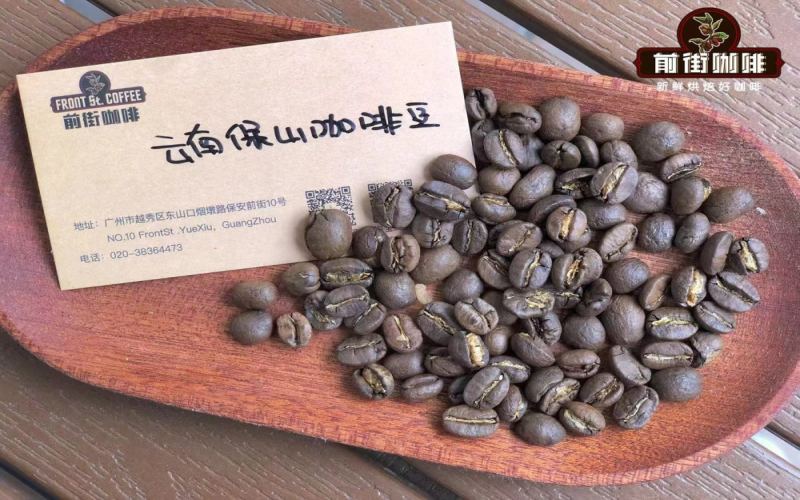
Yunnan small-bean coffee actually belongs to the Arabica species, but what is widely planted locally today is no longer the traditional Typica, but rather Catimor. This article will trace the evolution of coffee varieties in Yunnan, from Typica to the replacement process by Catimor, introduce the current cultivation status of a small number of high-quality varieties such as Geisha and Bourbon, and analyze one by one the climate conditions and flavor trends of major producing regions including Lincang, Pu'er, Baoshan, and Dehong. At the same time, the article will also explain why Yunnan coffee generally adopts the washed processing method, as well as Front Street Coffee's experience growing Typica in Lincang and the brewing parameters and flavor descriptions of several representative products. [more…]
Which producing region of Yunnan small-bean coffee is most worth drinking? An analysis of the flavor characteristics from Baoshan and Dehong to Lincang and Pu'er
Yunnan coffee is gradually moving from a raw material origin to the specialty stage, but what flavor differences do the small-bean coffees from different growing regions actually have? This article focuses on the geographical and climatic conditions of Yunnan's main coffee-growing areas—Dehong, Baoshan, Lincang, and Pu'er—and reviews the planting history and variety composition of Yunnan coffee. It highlights the nutty, brown sugar, and plum-like acidity notes brought by the Catimor variety, and explains why the washed process has become the local mainstream. It also combines Front Street Coffee's estate practices and brewing suggestions in Lincang to provide coffee lovers with a practical reference for understanding Yunnan coffee. [more…]
The Origin of the Name Yunnan Small-Bean Coffee and Authenticity Identification: A Full Analysis from Variety Evolution to Regional Flavor
Why is Yunnan coffee called "Xiaoli"? Behind this name actually lie the dual meanings of variety classification and historical change. As China's core coffee-producing region, Yunnan contributes 95% of the country's coffee output, and between the Catimor now planted on a large scale and the Typica introduced in the early days, what kind of inheritance and trade-offs exist? This article will systematically sort out the identity code of Yunnan Xiaoli coffee, from variety origins, regional terroir, and processing methods to brewing suggestions, while sharing key clues for identifying authenticity, and preserving Front Street Coffee's cultivation and production stories in Lincang and Baoshan, leading you to rediscover this touch of wild mountain flavor from southwestern China in your cup. [more…]
Yunnan, China's Core Coffee Producing Region: Flavor Characteristics of Arabica Coffee and the Art of Balancing Acidity and Bitterness
On China's coffee map, Yunnan occupies a pivotal position. As the country's largest coffee-growing region, Yunnan contributes 95% of the nation's coffee output and is the only province recognized as a production base for high-quality coffee raw materials. The small-bean coffee here is actually the Arabica variety, with a neutral taste and a pleasant mild acidity, achieving a good balance between acidity and bitterness. From the ancient Typica to the widely planted Catimor today, Yunnan coffee has undergone variety replacement and quality upgrading. The four major producing areas—Baoshan, Pu'er, Lincang, and Dehong—each have their own terroir characteristics, and Front Street Coffee has even established its own estate in Lincang. This article will give you a comprehensive understanding of the variety evolution, producing-area terroir, processing methods, and brewing key points of Yunnan small-bean coffee, so you can experience the unique charm of China's local coffee. [more…]
A Comprehensive Analysis of Yunnan Small-Bean Coffee Varieties, Growing Regions, Climate, and Altitude Distribution
Yunnan, as China's core coffee-producing region, grows exclusively Arabica varieties, with Catimor dominating, while Typica, Bourbon, and Geisha are also cultivated in small quantities. These coffees are scattered across prefectures and cities such as Pu'er, Lincang, Baoshan, and Dehong, where high altitude, ample rainfall, and significant day-night temperature differences foster a unique flavor interwoven with nuts and caramel. This article will systematically review the geographical and climatic conditions, cultivation history, and variety characteristics of each producing region, while also introducing Front Street Coffee's practice of establishing its own estate in Lincang to grow Typica, and providing brewing suggestions for Yunnan beans, offering a comprehensive understanding of the varieties, origins, and altitude distribution of Yunnan specialty coffee. [more…]
A Complete Analysis of Yunnan Coffee Bean Varieties, Flavors, and Regional Characteristics: The Taste Code from Catimor to Typica
Yunnan is the most significant name on China's coffee map. From the first coffee tree planted by missionaries a century ago to today's scale, accounting for seventy percent of the nation's planting area and over eighty percent of its output, this land has cultivated a full-bodied, well-balanced small-bean coffee. This article systematically reviews the historical threads of Yunnan coffee, the natural conditions of its main growing regions—Dehong, Baoshan, Lincang, and Pu'er—and the flavor differences among the three major varieties: Catimor, Typica, and Bourbon. At the same time, from washed processing methods to pour-over parameters, it guides you through a complete understanding of Yunnan coffee's nutty and brown-sugar notes, and shares Front Street Coffee's sourcing philosophy and brewing practices in the Yunnan production area. [more…]
Analysis of the Variety Characteristics and Main Producing Region Flavors of Yunnan Small-Bean Coffee, with a Discussion of Front Street Coffee's Typica Cultivation Practices
Yunnan small-bean coffee has undergone a transformation in recent years from instant-coffee raw material to specialty beans. The cultivated varieties are mainly Catimor and Typica among Arabica, with some estates also trying Bourbon and Geisha. Production areas are concentrated in Pu'er, Lincang, Baoshan, Dehong, and other places, where high altitude, large temperature differences, and ample sunshine create unique flavors. Front Street Coffee established its own estate in Lincang in 2013, planting the ancient Typica variety and launching a number of Yunnan coffee products. This article reviews the climate conditions, variety differences, and brewing suggestions of each production area to help coffee lovers gain a more comprehensive understanding of the current situation and potential of Yunnan coffee. [more…]
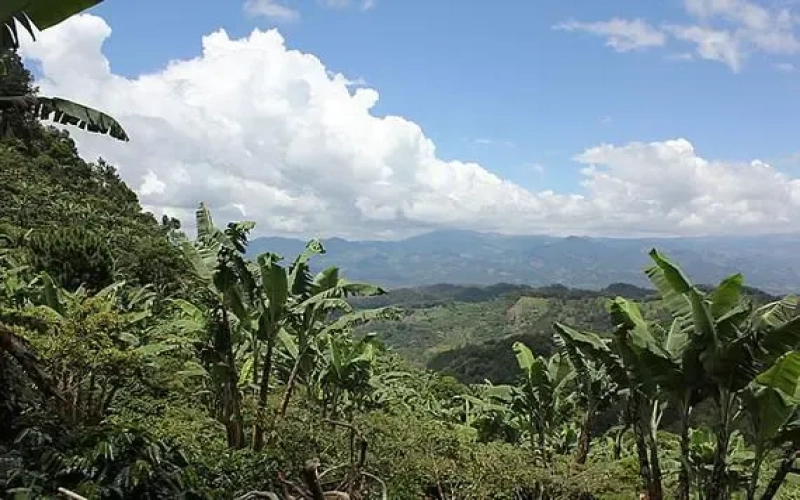
A Beginner's Guide to Guatemalan Huehuetenango Washed Coffee Beans: The Choice of Central American Strictly Hard Bean
Guatemala is an important specialty coffee-producing country in Central America, known for its high-grown Strictly Hard Bean. The country is home to volcanic geology, tropical rainforests, and diverse microclimates, giving rise to coffees with elegant acidity, a clean mouthfeel, and rich layering. Among its many producing regions, the non-volcanic Huehuetenango stands out in particular, where high altitude and unique terroir protect the coffee from frost and create flavors woven with citrus, berries, nuts, and tea-like notes. This article will outline Guatemala's geography and producing regions, introduce the three major varieties Bourbon, Caturra, and Catuai, and present Front Street Coffee's entry-level selection of Huehuetenango washed coffee beans, along with brewing recommendations. [more…]
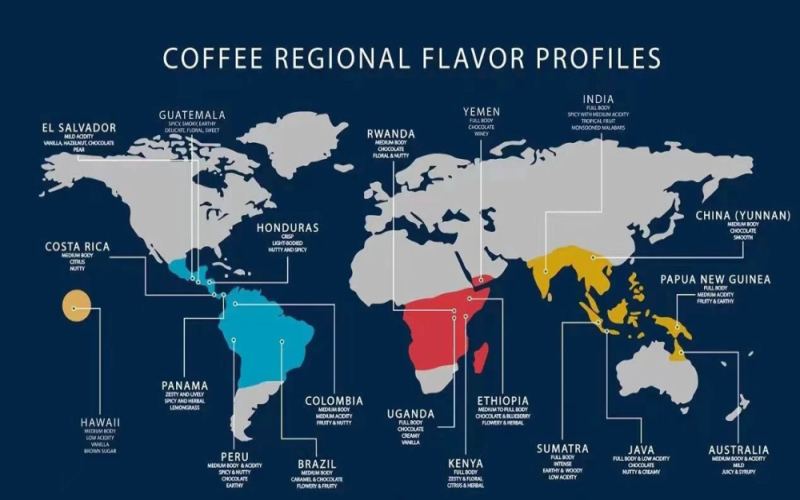
Coffee Region Basics: Flavor Differences and Representative Beans of the African, Central and South American, and Asian Coffee Belts
The Coffee Belt refers to the tropical and subtropical regions where the average annual temperature exceeds 20°C, with warm seasons year-round, frost-free winters, abundant sunshine, and ample rainfall—conditions highly favorable for coffee tree growth. Even among coffees, beans from different origins vary enormously in flavor; even the same variety grown in Panama and neighboring Costa Rica will perform differently. Flavor differences are not only related to variety—altitude, climate, and soil also profoundly influence the formation of coffee flavors, allowing one to identify the origin with a single sip. Front Street Coffee has found in daily cupping sessions that African beans typically have brighter acidity, Central and South American beans have more layered flavors with softer acidity, and Asian beans are full-bodied and steady, with strong taste and low acidity. This article will combine several representative beans from Front Street Coffee to analyze the flavor characteristics of the three major origins. [more…]
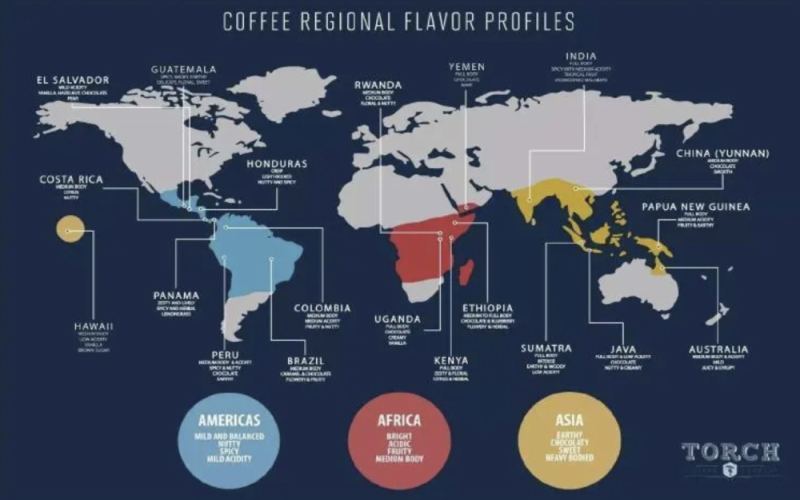
Global Coffee Bean Producing Regions Explained: An Overview of Coffee Belt Climate Characteristics and Flavor Differences Across Three Continents
The growth of coffee trees has strict requirements for the natural environment. The world's major coffee-producing regions are concentrated in a narrow strip between the Tropic of Cancer and the Tropic of Capricorn, known in the industry as the Coffee Belt. This region spans Africa, Central and South America, and Asia, with an average annual temperature above 20 degrees Celsius, warm weather year-round, frost-free winters, abundant sunshine, and ample rainfall, providing ideal growing conditions for coffee trees. Even coffee of the same variety, when grown in different countries or regions, can present completely different flavors in the cup—differences in altitude, climate, and soil give each bean its own unique regional imprint. Front Street Coffee has repeatedly verified this pattern in daily cupping sessions. Starting from the characteristics of producing regions across three continents, this article will sort out their respective flavor trends and representative coffee beans. [more…]
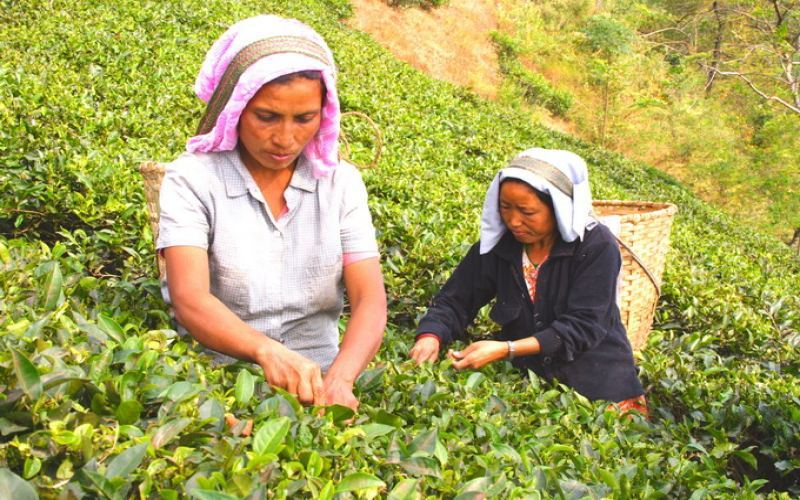
Which country does Nilgiri black tea originate from? Correct brewing steps and practical tips for a single serving of black tea
Nilgiri black tea is produced in southern India and is another world-renowned tea-producing region after Darjeeling and Assam. This tea was mostly made using the CTC process in its early days, but today many tea farmers have shifted to orthodox processing and organic cultivation to meet global demand for high-quality loose-leaf tea. This article will guide you through the history of Nilgiri black tea, its processing characteristics, and how to brew a cup of authentic Nilgiri black tea at home—breaking down everything from choosing a teapot, water temperature, tea quantity, to steeping time, so you can easily master the essentials of brewing a single serving of black tea. [more…]
Terroir and Pour-Over Guide to Arabica Coffee Beans: Specialty Choices from Indonesia to Yunnan
Arabica, the mainstay of global coffee, has stringent requirements for its growing environment, typically needing to be cultivated at high altitudes of 800 to 2,200 meters without frost. The temperature difference between day and night brought by higher altitudes slows down the ripening of the fruit, which is conducive to the accumulation of flavor compounds, making the aroma more solid. The unique microclimates of different producing regions also inject diverse personalities into Arabica, forming distinctive regional flavors. For beginners new to specialty coffee, starting with representative coffees from well-known origins and tasting them via pour-over is an effective path to experiencing coffee's original flavors and regional differences. This article will introduce characteristic coffee beans from producing regions such as Indonesia, Ethiopia, Yunnan in China, and Colombia, along with recommended products from the Front Street brand and suitable brewing methods, to help readers build a preliminary understanding of coffee flavors. [more…]
Yunnan Hand-Brewed Coffee Beans | How Good Is Yunnan Small-Bean Coffee? Recommended High-End Yunnan Single-Origin Coffee Beans Loved by Coffee Enthusiasts for Hand Brewing, Cold Brew, and Ice Drip
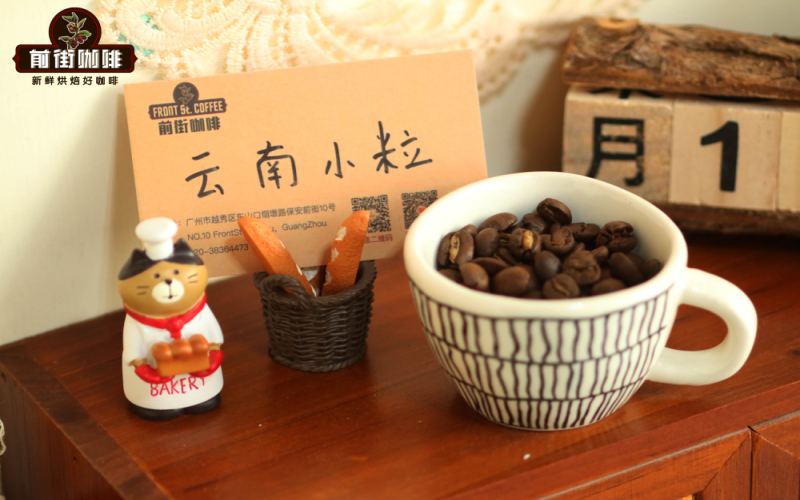
Domestic Yunnan coffee has become one of the topics we frequently discuss, especially regarding the quality and taste of Yunnan coffee. If you are not familiar with Yunnan coffee, you might want to start with Front Street Yunnan Arabica coffee beans, which best represent the flavor of the Yunnan growing region. It has a nutty aroma and a herbal, chocolate taste on the palate, [more…]
A Complete Guide to Arabica Coffee: From Botanical Classification to Variety Characteristics and Origin Distribution
What exactly does a coffee tree look like? What is the essential difference between Arabica and Robusta? Starting from botanical classification, this article systematically sorts out the complete classification system of the genus Coffea and explains in detail the origins, growing conditions, flavor characteristics, and main subspecies of the two major commercial varieties, Arabica and Robusta. You will learn about the anatomical structure of the coffee cherry, the spread paths of classic subspecies such as Typica and Bourbon, and the genetic connections between Yunnan small-bean coffee and Blue Mountain and Kona. Whether you are a beginner enthusiast or a seasoned professional, this basic knowledge about coffee varieties is worth reading. Front Street Coffee will also recommend variety information worth paying attention to in this article. [more…]
A Complete Guide to Yunnan Specialty Coffee Regions: Cultivated Varieties, Processing Methods, and the Flavor of Front Street's Own Sun-Dried Typica
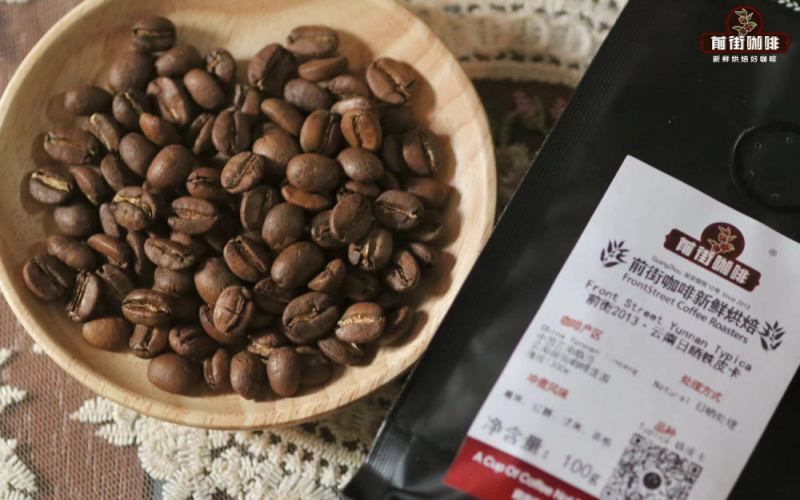
In recent years, Yunnan coffee has attracted much attention in the specialty coffee circle. How good is its quality really? This article systematically reviews the basic landscape of Yunnan coffee from the perspectives of growing regions, variety structure, and processing methods, and uses Front Street Coffee's sun-dried Typica from its own estate in Lincang as an example to present the true flavors that Yunnan coffee can display under traditional processing. The article also introduces the natural conditions of the two representative producing regions, Baoshan and Lincang, as well as the cultivation history, harvesting details, and brewing parameters of Front Street Coffee 2013 coffee beans, helping readers gain a comprehensive understanding of the current status and potential of domestically produced specialty coffee. [more…]
Yunnan small-bean coffee flavor characteristics and quality grade analysis: a complete guide from growing region conditions to pour-over parameters
Yunnan coffee has continuously been a hot topic in coffee circles in recent years, and many enthusiasts are curious: what exactly makes the quality characteristics of Yunnan arabica coffee so good? And what tier does hand-brewed Yunnan bean occupy? Starting from the terroir of the producing region, this article sorts out the cultivation geography, variety composition, and processing methods of Yunnan coffee, and focuses on introducing the Typica variety "Front Street 2013" cultivated at Front Street's own estate in Lincang. The article also includes complete hand-brewing extraction parameters and flavor descriptions to help you build a systematic understanding of coffee from the Yunnan producing region. Whether you are encountering Yunnan beans for the first time or want to gain a deeper understanding of the source of their flavor, you can obtain valuable reference from it. [more…]