







Which Country Does Nilgiri Black Tea Come From and How Is It Brewed?
Nilgiri black tea comes from southern India, a region that joined Darjeeling and Assam on the tea map after the British began cultivating tea plants there in the mid-nineteenth century. Brewing a single serving at home calls for the right teapot, water temperature, leaf quantity, and steeping time.
Most Nilgiri tea was long made by the CTC method, but many farmers have moved to orthodox processing and organic cultivation to meet demand for loose-leaf tea. Orthodox grades such as Orange Pekoe select whole buds and leaves. This mirrors how barista origin country questions trace a drink to its source region.
Nilgiri black tea is produced in southern India and is another world-famous tea-producing region after Darjeeling and Assam. This tea was mostly made using the CTC process in the early days, but today many tea farmers have shifted to orthodox processing and organic cultivation to meet global market demand for high-quality loose-leaf tea. This article will guide you through the history of Nilgiri black tea, its processing characteristics, and how to brew yourself a cup of authentic Nilgiri black tea at home—breaking down everything from choosing the teapot, water temperature, leaf quantity, to steeping time, so you can easily master the essentials of brewing a single serving of black tea.
After Nilgiri frost tea is picked, it first undergoes a relatively intense withering process, allowing the leaves to lose a large amount of moisture, and the leaf edges become dry. These dried leaves are then rolled into their final shape. The brewed tea liquor has a full-bodied flavor while carrying a fresh, sweet aroma.
When was Nilgiri tea discovered?
It was not until the mid-nineteenth century that the British began using tea plant varieties to cultivate tea in the Nilgiri region. Shortly thereafter, it became a well-known tea-producing area alongside Darjeeling and Assam on the tea map. Local tea production mainly follows two routes.
For quite a long time, most smallholder farmers used the crush, tear, curl (CTC) method to produce Nilgiri tea. However, this highly mechanized method produces tea of relatively low quality, and most of the product is not suitable for sale as loose-leaf tea. Of all tea production, more than half ultimately goes to export tea bags or blended teas.
As competition from other countries intensified, the price of CTC tea was driven lower and lower, and Nilgiri tea farmers began investing funds in organic tea production or orthodox processing, hoping to carve out a differentiated path in the global tea market. Black tea grades like Orange Pekoe are now made using traditional methods. These grades select complete, high-quality buds and leaves from the top of the tea plant. If you take the trouble to seek out these rare teas, you will taste something very unique. They may be pricey, but good tea is worth the investment.
Additional benefits
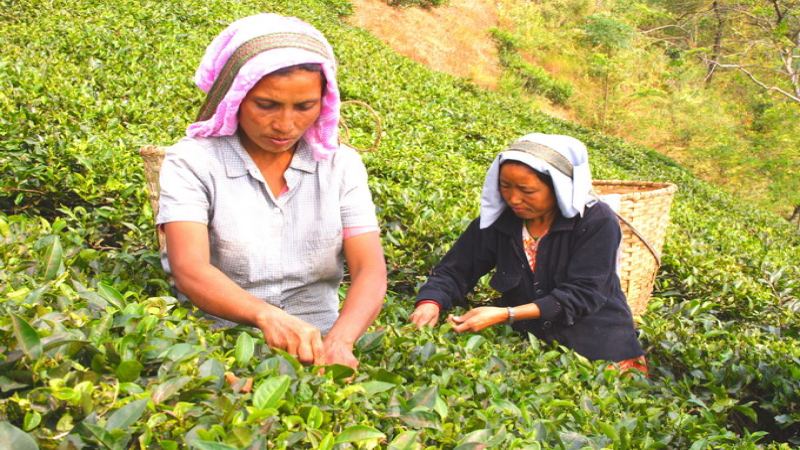
In November 2006, Nilgiri tea won the "highest honor," setting a world record at the first tea auction held in Las Vegas with a price of $600 per kilogram. Although the Indian tea industry is often criticized for labor issues, in Nilgiri one can see locals and migrant workers living in unity and developing together.
These migrant workers come from various parts of India, such as Odisha, Bengal, Assam, and Jharkhand. Neighboring Nepal has also made a significant contribution to the local labor supply.
Buying tea is never just a simple transaction from start to finish. If you travel to Nilgiri yourself, you will meet the people who make the tea, hear their stories, and feel the local culture.
How to prepare a special cup of Nilgiri tea for yourself:
When brewing Nilgiri tea, it is recommended to use a large round teapot to give the tea leaves ample space to unfurl, tumble, and release their flavor. First, rinse the teapot and teacups with hot water, and once the vessels feel warm to the touch, pour the water out. Use one teaspoon of Nilgiri loose-leaf tea per cup of water (250 ml). Bring the water to a boil or near boiling, then pour it into the teapot. Be sure to use good-quality water, because chemicals or impurities in the water may ruin the taste of the tea. Time it for 3 to 5 minutes to let the tea steep. The longer it steeps, the stronger the flavor. So adjust the steeping time according to your taste. After pouring into the teacup, you can add sugar or not, according to personal preference. Adding a slice of lemon will give the tea a strong flavor. If you prefer milk tea, you can also add milk. To experience the most authentic Nilgiri tea, try at least once a version with no sugar, no milk, and no lemon. Oh, and by the way, Nilgiri tea is also great for making iced tea, because it does not become cloudy after chilling! That way, your summer refreshing drink is also healthy! Isn't Nilgiri tea a delicious drink to enjoy all year round? Speaking of which, have you seen our Nilgiri tea?
The above content is compiled by CoffeeHunters, a coffee news website.


