







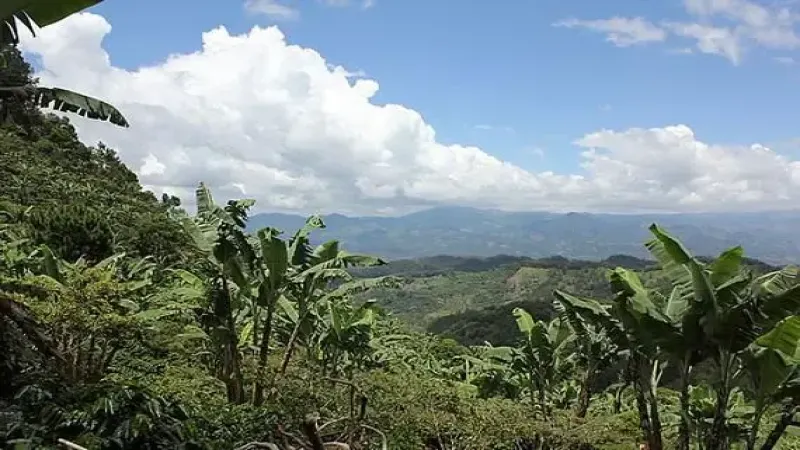
Where Coffee Beans Grow in Huehuetenango, Guatemala
Guatemalan coffee grows across 20 of the country's 22 departments, mostly above 1,500 meters, and the non-volcanic Huehuetenango region is known for high-grown strictly hard beans. Its altitude and microclimates protect the crop from frost and produce citrus, berry, nut, and tea notes with elegant acidity and a clean mouthfeel, making it a solid entry point for washed Central American coffee.
Guatemala ranks as the world's ninth-largest coffee producer, with volcanic soil, tropical rainforest, and distinct dry and wet seasons. Bourbon, Caturra, and Catuai are the main varieties grown. Anyone asking where do arabica coffee beans come from will find Guatemala among the leading Central American origins, alongside Panama, Costa Rica, and Honduras.
Guatemala is an important specialty coffee-producing country in Central America, known for its high-grown strictly hard beans. The country possesses volcanic geology, tropical rainforests, and diverse microclimates, nurturing coffees with elegant acidity, a clean mouthfeel, and rich layers. Among its many producing regions, the non-volcanic Huehuetenango stands out in particular, where high altitude and unique terroir protect the coffee from frost and create flavors interwoven with citrus, berry, nut, and tea notes. This article will outline Guatemala's geography and producing region layout, introduce the three major varieties of Bourbon, Caturra, and Catuai, and present Front Street Coffee's entry-level selected Huehuetenango washed coffee bean recommendation along with brewing suggestions.
Coffee is grown in many countries around the world, and Central America is likewise home to quite a few bean-producing nations, such as Guatemala, Panama, Costa Rica, and Honduras. These regions are known for high-quality high-grown strictly hard beans, among which Guatemala currently ranks as the world's ninth-largest coffee producer.
Guatemala is located in southern North America and has both ocean and land neighbors. It borders Mexico, Belize, Honduras, and El Salvador, faces the Gulf of Honduras of the Caribbean Sea to the east, and looks out onto the Pacific Ocean to the south.
About two-thirds of Guatemala's territory consists of mountains and plateaus. The western and southern parts belong to a volcanic belt, home to more than thirty volcanoes, among which Tajumulco Volcano at 4,211 meters is the highest peak in all of Central America. Because it lies in the tropics, the north and east have a tropical rainforest climate, while the south has a subtropical climate, with the year divided into dry and wet seasons. Tropical rainforests, ample rainfall, volcanic soil, and complex and changeable microclimates together give Guatemalan coffee an elegant and lively acidity, a clean mouthfeel, and distinct flavor layers.
Huehuetenango Producing Region
Guatemala has 22 departments in total, 20 of which produce coffee. The better-known eight producing regions can be divided into five volcanic regions and three non-volcanic regions, with coffee generally grown at altitudes above 1,500 meters. The non-volcanic regions include Huehuetenango, Coban, and Nuevo Oriente. The volcanic regions include Atitlan, Antigua, Acatenango, Fraijanes, and San Marcos. Among them, Huehuetenango and Antigua are more famous, while Nuevo Oriente is a relatively young producing region. FrontStreet Coffee currently also has a Geisha coffee bean from the Nuevo Oriente producing region, which offers a toffee-like sweetness on the palate, with sweet orange and bergamot flavors, light fruit acidity, a honey-like mouthfeel, and a soft, smooth finish.
Huehuetenango belongs to Guatemala's non-volcanic producing regions and is also one of the highest-altitude producing regions. Its name comes from Nahuatl, meaning place of the ancients (or ancestors). The region is located in the west of the country, at the foot of the Cuchumatanes mountains, which are the highest non-volcanic mountain range in Central America. A large amount of hot air blows from the hot tropical plains of Tehuentepec in Tabasco, Mexico, toward this mountain range, protecting the region's coffee from frost and allowing coffee to be planted at higher elevations; combined with the many rivers and bodies of water in the area, it is an ideal growing location capable of cultivating high-quality coffee.
Bourbon, Caturra, Catuai
Bourbon is one of the most important Arabica varieties in coffee culture and genetics. Although Bourbon yields relatively low and is susceptible to the main diseases of the coffee plant, it is widely recognized for its high-altitude cultivation and excellent quality. Caturra is a variant of Bourbon, resulting from a single-gene mutation; the plant is shorter and can be planted more densely, with equally outstanding quality. Catuai is a hybrid of the highly productive Mundo Novo and Caturra, developed by the Agronomic Institute of Campinas (IAC) in São Paulo State, Brazil. Catuai has high yield and small size, making it suitable for dense planting. Because these varieties are high-yielding and suited to high-altitude cultivation, they are very well suited to the Guatemalan highlands, and they are currently grown in many countries, including Brazil, Honduras, and Guatemala.
FrontStreet Coffee's Guatemala Huehuetenango coffee beans are washed-processed and medium-roasted. Front Street uses a V60 with a 1:15 coffee-to-water ratio and a water temperature of 92 degrees for brewing. On the palate, it has light fruit acidity, with citrus, berry, and nut flavors, a soft mouthfeel, and a tea-like finish.
The above content is compiled by CoffeeHunters, a coffee news website.


