








DomesticYunnan coffeehas become one of the topics we often discuss, especially regardingthe quality of Yunnan coffeeand how it tastes.
If you're not familiar with Yunnan coffee, you might want to start with Front Street Yunnan small-batch coffee beans, which best represent the flavor profile of the Yunnan growing region.It smells of nuts, with herbal, chocolate, and caramel notes on the palate, and a subtle fruity acidity in the finish. The overall flavor gives us a basic understanding of Yunnan coffee.

Where is Yunnan small-batch coffeegrown?
The term "small-batch coffee" is used to distinguish it from the medium-bean Robusta grown in China's Hainan region—in plain terms, it belongs to the Arabica variety, just like in many coffee-growing regions. Currently,Yunnan coffeeis mostly planted with the Catimor variety.
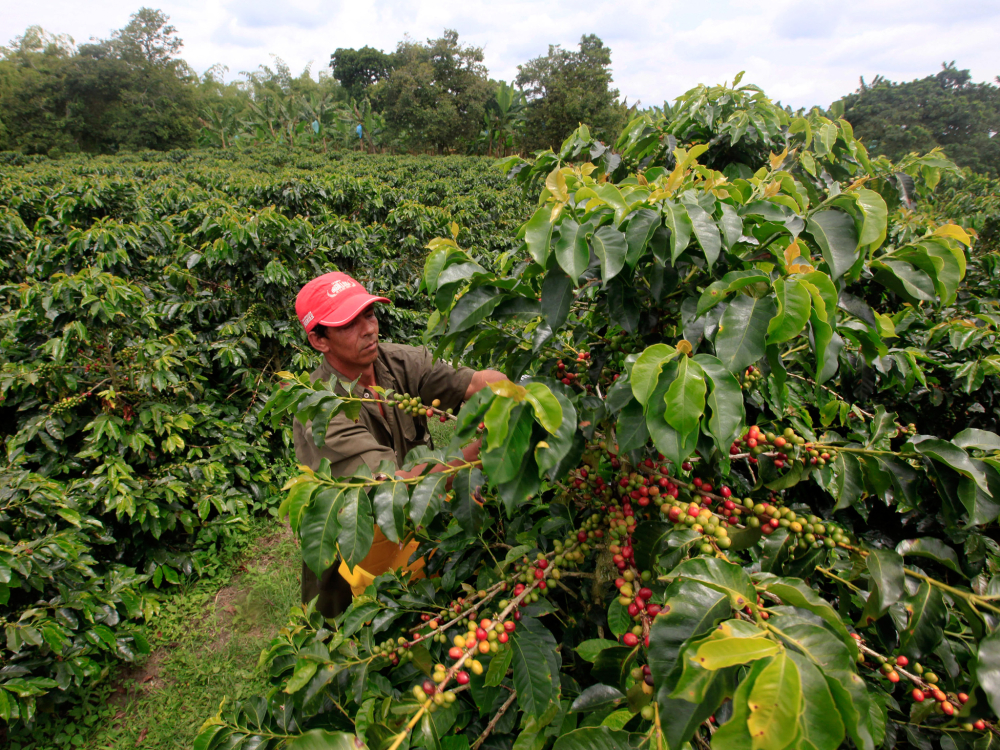
Coffee, as a crop, thrives in warm environments. It tolerates heat but not cold, and ample sunlight favors its growth. The optimal growing temperature is between 16°C and 21°C. Thus, centered on the equator and spanning from 25°N to 25°S, the "World Coffee Golden Growing Belt" is formed. China's Yunnan happens to lie within this golden belt. Most of Yunnan sits at an altitude of 1,000–2,000 meters, with fertile sloping soils, abundant sunshine, plentiful rainfall, and large day-night temperature differences—all favorable conditions for coffee trees.
Yunnan's coffee cultivation is mainly distributed across the southwestern part of the province, including four major production areas: Baoshan, Dehong, Pu'er, and Lincang. The three Yunnan coffee beans on Front Street's bean list come from Baoshan and Lincang respectively.

Coffee cultivation in Baoshan began in the mid-1950s, introduced by the patriotic overseas Chinese Mr. Liang Jinshan. The frost-free warm climate year-round is ideal for small-batch coffee. In particular, the unique dry-hot river valley climate around Lujiangba features little annual temperature variation but significant day-night temperature differences, creating the distinctive sweet aftertaste of Baoshan small-batch coffee. Combined with reasonably low rainfall, this provides highly advantageous conditions for coffee cherry production.
What processing methods are used for Yunnan coffee beans?
In recent years, quite a few Yunnan coffee beans on the market have undergone special processing to enhance flavor and make the aroma more intense. Some friends assume this is what Yunnan coffee tastes like. That's not the case. In reality, most Yunnan coffee farmers work under difficult conditions and don't have access to expensive processing equipment. Therefore, the vast majority of Yunnan coffee beans can only use natural processing methods—namely washed and natural (sun-dried).
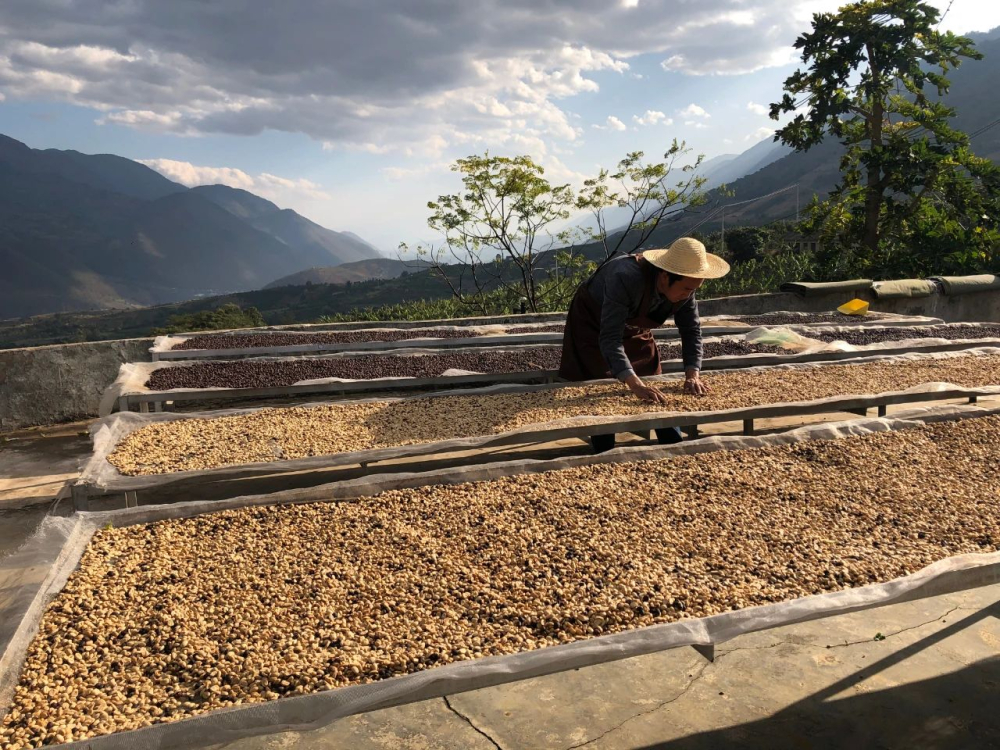
Washed process steps: Pour coffee cherries into a tank and use the buoyancy of water to remove impurities and unripe berries. First, use a pulper to remove the outer skin and most of the pulp, then place the beans in a clean tank for fermentation. The fermentation of the mucilage layer produces acids that separate the mucilage. Then rinse with clean water to remove residual mucilage, obtaining green beans with the parchment layer still on (parchment beans). Finally, dry the green beans according to weather conditions (or machine-dry them), reducing moisture content to around 12%. Then use a huller to remove the parchment layer, yielding the coffee bean itself.
Front Street believes that to understand Yunnan coffee, one should start with the flavor of the coffee itself, rather than masking its original taste through novel processing methods. Therefore, the several coffee beans on Front Street's list all use traditional washed and natural methods. The Yunnan small-batch everyday coffee bean uses the washed method, showcasing the region's distinctive coffee flavor. Front Street also has a popular coffee bean called "Front Street 2013." From the name, you've probably guessed it's an exclusive Front Street product. It comes from Front Street's own estate in Lincang, Yunnan, selects the elegant Typica variety, and uses the natural sun-dried processing method to give the coffee higher sweetness.

Yunnan coffee beans grown by Front Street
In the early years, while exploring coffee knowledge, Front Street had the idea of growing its own coffee. So in 2013, they went to Lincang, Yunnan, to begin the chapter of planting coffee trees. From site selection, seed selection, seedling cultivation, planting, harvesting, processing, to roasting—all handled by Front Street colleagues, from which they gained considerable experience and knowledge about varieties, altitudes, and processing methods.

Lincang, Yunnan, is influenced by the warm, moist air currents from the Indian Ocean and the southwest monsoon. The four seasons are not distinct, but the dry and rainy seasons are clearly divided. There is abundant rainfall, long sunshine hours, short frost periods, and some areas are frost-free year-round. The vertical climate is pronounced, making it very suitable for Arabica coffee cultivation. Front Street specifically chose the most original Typica. Typica has an elegant, pure flavor, but it's also known for low yield and poor disease resistance, so Front Street put considerable effort into cultivation and management. After 5–6 years of nurturing, Front Street finally harvested its first crop in 2020, processed it using the natural method, and named it "Front Street 2013."
When November arrives, the coffee cherries grown by Front Street ripen one after another. Front Street arranges workers to pick the red coffee cherries one by one and spreads the fresh cherries out in the sun to dry naturally. Once the beans have dehydrated to a purplish-red color and reached the target moisture content, they are sent for hulling and roasting.

What does Front Street Yunnan coffee taste like?
Referencing the corresponding flavor profile of Yunnan coffee, Front Street considers Yunnan coffee to have a balanced, neutral flavor—that is, it has both acidity and a rich bitterness. Therefore, a medium roast is used. This way, Front Street 2013 Typica offers aromas of plum, dried fruit, chocolate, nuts, and black tea. The various flavors blend appropriately, with a very pronounced sweetness.
FrontStreet Coffee pour-over parameters:
Dripper: Hario V60
Dose: 15g
Water temperature: 90°C
Grind size: 75% passing a No. 20 sieve
Water-to-coffee ratio: 1:15
Three-stage pouring: Wet the coffee bed with water at twice the coffee's weight, forming a dome, and let it bloom for 30s. Then, using a slow stream, pour in circles from the inside out until reaching 125g, then pause. When the coffee bed drops to half the dripper's height, continue with the same slow stream for the third stage until 225g. Once all the coffee has drained, remove the dripper. Total time is about 2 minutes.

Front Street 2013 coffee bean flavor profile: The dry aroma has subtle caramel and nut notes. On the palate, chocolate is the main note, with brown sugar sweetness and a slight fruity acidity. The finish carries some black tea character. The overall flavor layers are quite rich.
The above content is compiled by CoffeeHunters, a coffee news website.

