







What separates Yunnan coffee from Dehong, Baoshan, Lincang and Pu'er
Yunnan coffee is moving from a raw material origin toward specialty status, and the small-bean lots from Dehong, Baoshan, Lincang and Pu'er each show different flavor. Because western and southern Yunnan sit between 15°N and the Tropic of Cancer, within the coffee belt, the region has high altitude, mountain slopes, fertile soil, abundant sun and rainfall, and wide day-night temperature swings.
Catimor dominates local planting and brings nutty, brown sugar and plum acidity notes, while the washed process has become the mainstream method. Front Street runs a Yunnan estate in Lincang, and its practice and brewing suggestions give drinkers a practical reference for understanding how producing region shapes the cup.
Yunnan coffee is gradually moving from a raw material origin to the specialty stage, but what flavor differences do the small-bean coffees from different producing regions actually have? This article focuses on the geographical and climatic conditions of Yunnan's main growing areas—Dehong, Baoshan, Lincang, and Pu'er—and sorts out the planting history and variety composition of Yunnan coffee, with emphasis on the nutty, brown sugar, and plum acidity notes brought by the Catimor variety, and explains why the washed process has become the local mainstream. At the same time, combined with FrontStreet Coffee's estate practice and brewing suggestions in Lincang, it provides coffee lovers with a practical reference for understanding Yunnan coffee.
Coffee has now entered everyday life and become a daily drink that many people cannot do without. As fondness for it continues to deepen, people's choices are no longer limited to imported beans, and domestic coffee is steadily moving toward specialty quality. Yunnan is not only a popular travel destination and famous for Pu'er tea, but coffee has now also become a new calling card for this land. Yunnan's natural conditions are very suitable for growing coffee, and Front Street Coffee has a FrontStreet Coffee estate in Yunnan.
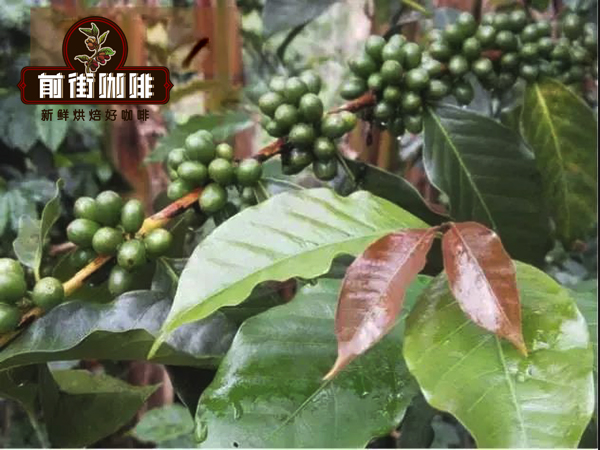
Coffee-producing regions of Yunnan
In FrontStreet Coffee's product line, there is a Yunnan small-bean coffee that sells quite well, which also indirectly shows that domestic consumers' awareness of local coffee has risen to another level. Yunnan coffee has gradually entered the public eye and made many people fall in love with its taste. So why is Yunnan suitable for growing coffee? Front Street's view is: coffee is essentially a crop, just as coconuts suit Hainan but may not suit Guangdong; the climate of each place determines what can be produced. Coffee is usually suitable for growing within the "coffee belt" between the Tropic of Cancer and the Tropic of Capricorn, and western and southern Yunnan happen to lie between 15°N and the Tropic of Cancer. Many areas also have high-altitude conditions, with terrain dominated by mountains and slopes, obvious undulation, fertile soil, abundant sunlight, plentiful rainfall, and large temperature differences between day and night.
In fact, coffee cultivation in Yunnan has a long history. Front Street has learned that it can be traced back as early as 1904, when a French missionary brought coffee seeds into Yunnan from the China-Vietnam border and planted the first coffee tree in a place called Zhukula. He probably never imagined that a century later coffee would become a highlight of Yunnan's plateau characteristic agriculture. Of course, most of that old batch of coffee trees no longer exist, and those that remain are only witnesses to history.
Around 1930, the famous overseas Chinese leader Mr. Liang Jinshan introduced coffee to the Pupiao and Luoming areas for cultivation, and it continued until after the founding of New China. After 1952, under the guidance of expert Ma Guojin from the Baoshan Tropical Economic Research Institute, large-scale coffee planting began in Lujiang and other places. Large-scale cultivation has now lasted for nearly 60 years, which can be regarded as the first explosive period of Yunnan coffee planting. In the 1890s, coffee was introduced to Zhukula, Binchuan County, Dali, China, and since then took root and developed in mainland China. The characteristics of Yunnan coffee beans also gradually became representative of Chinese coffee, so Yunnan coffee is also called "Yunnan small-bean coffee."
Yunnan's coffee-growing areas are mainly concentrated in Pu'er, Xishuangbanna, Wenshan, Baoshan, Dehong, Lincang, and other places.
Dehong
Dehong's climatic resources are equally exceptional. The entire prefecture lies close to the Tropic of Cancer, at a relatively low latitude, and is influenced by the southwest monsoon from the Indian Ocean, belonging to a southern subtropical monsoon climate. The Gaoligong Mountains to the northeast block the dry and cold air flowing south from Siberia. After summer begins, the warm and humid air from the Indian Ocean rises along the windward slopes of the southwest-tilted mountains, forming abundant rainfall; in addition, because the low-latitude plateau has a large solar incidence angle and good air transparency, this is one of the regions with higher light quality in the country.
Annual solar radiation is 137–143 calories/cm², annual rainfall is between 1,400 and 1,700 mm, the average annual temperature is 18.4–20°C, annual sunshine is 2,281–2,453 hours, annual accumulated temperature is 6,400–7,300°C, annual land evaporation is between 1,400 and 1,900 mm, and the aridity index is between 0.4 and 1.2. This creates Dehong's characteristics of no severe cold in winter, no intense heat in summer, abundant rainfall, rain and heat in the same season, dry and cold in the same season, small annual temperature difference, large daily temperature difference, a short frost period, and few frost days, providing good conditions for coffee trees to grow and overwinter.
Baoshan
Coffee cultivation in Baoshan began in the mid-1950s, and the first coffee seedling was introduced from Southeast Asia by the late patriotic overseas Chinese Mr. Liang Jinshan. In recent years, with the continuous expansion of international trade, the small-bean coffee of Lujiangba has become even more widely known.
Baoshan has a low-latitude mountainous subtropical monsoon climate. Because it is located on a low-latitude plateau with complex topography and landforms, it forms a three-dimensional climate of "one mountain, four seasons; ten miles, different weather." Its characteristics are: small annual temperature difference, large daily temperature difference, and an average annual temperature of 14–17°C; abundant precipitation, distinct dry and wet seasons, and uneven distribution, with annual rainfall of 700–2,100 mm.
Lincang
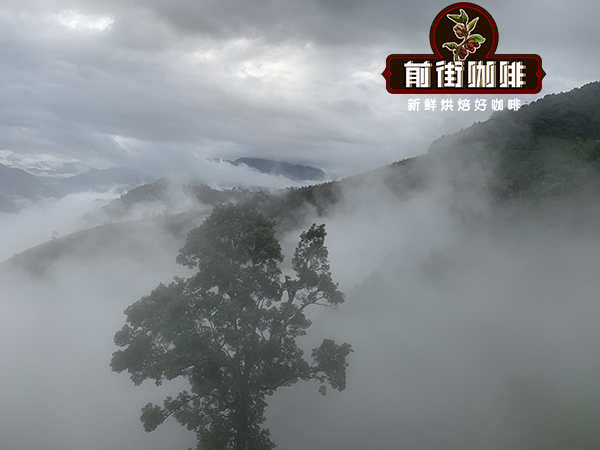
FrontStreet Coffee's estate is located in Lincang. Its unique geographical location and climatic conditions have made Lincang a focus of attention for many coffee enterprises, and high-quality coffee seedling bases of 200 mu and 100 mu were established respectively in Mengding Town, Gengma Autonomous County, and Lincang Xingfu Farm in the city, with coffee cultivation carried out in Gengma, Zhenkang, Yunxian, Cangyuan, Yongde, and other places.
Lincang City has a subtropical low-latitude plateau mountainous monsoon climate. Its topography and terrain are complex, and it is an area where multiple climate types coexist. Lincang is mainly affected by the warm and humid air flow from the Indian Ocean and the southwest monsoon. The distinction between the four seasons is not obvious, but the dry and rainy seasons are distinct. There is relatively more rain, and sunshine duration is long, with an average annual sunshine duration of more than 2,000 hours. The frost period is relatively short, and some areas have no frost all year round; the three-dimensional climate is obvious, with an average annual temperature in mountainous areas of 13–15°C.
Pu'er
Pu'er, a tea township, has a history of coffee cultivation of 150 years. In the early 1990s, Pu'er City began to cultivate coffee as an advantageous backbone industry for adjusting the industrial structure and increasing farmers' incomes. Because Pu'er is affected by a subtropical monsoon climate, most areas here have no frost all year round, no severe cold in winter, and no intense heat in summer. Pu'er City's average annual temperature is 15 to 20.3°C, the annual frost-free period is more than 315 days, and annual rainfall is 1,100 to 2,780 mm.
Coffee varieties of Yunnan
Yunnan coffee and Mandheling coffee both belong to Asian beans, and there is a certain similarity in varieties, so their flavors also share something in common, namely pine and nutty notes. However, Yunnan coffee also has local characteristics, namely plum acidity and a black tea sensation.
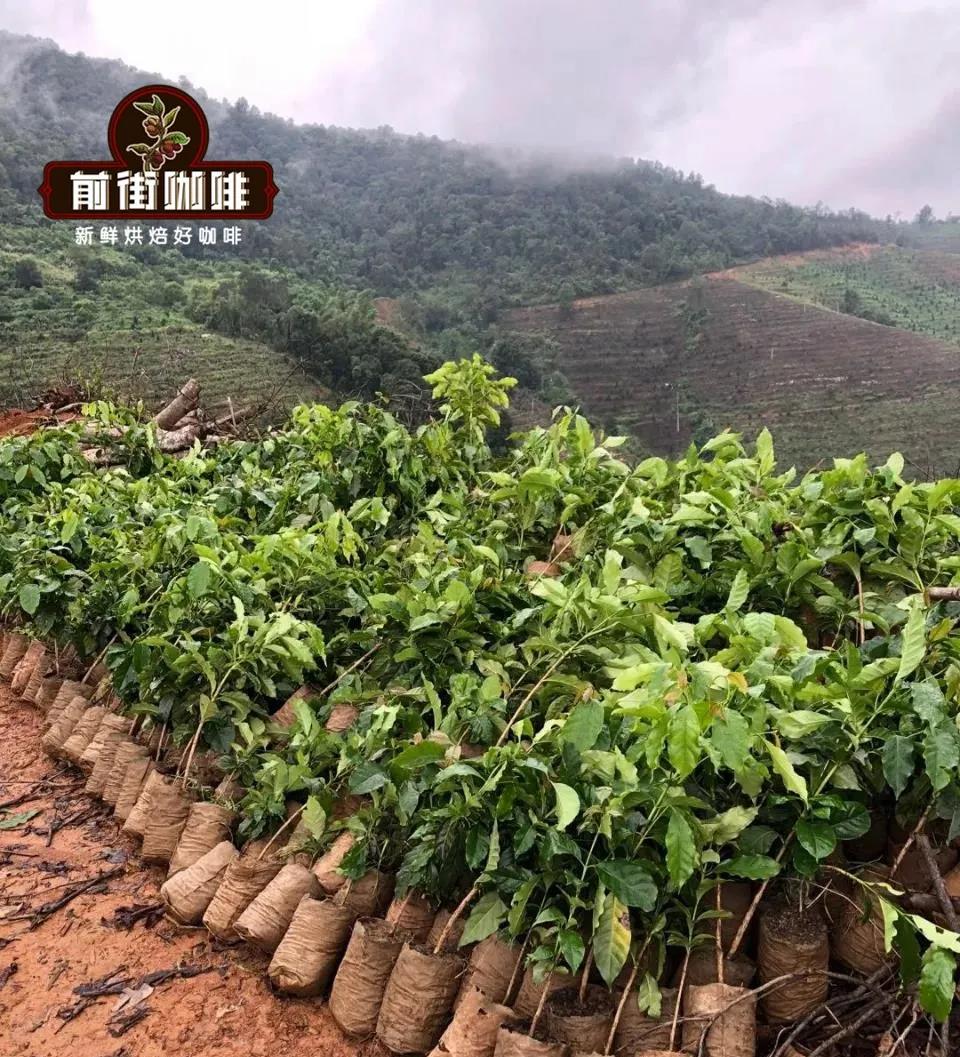
FrontStreet Coffee believes that the taste of Yunnan comes from the Catimor variety, which has been cultivated for many years and is the most widely distributed there, so FrontStreet Coffee chose a Yunnan Catimor as the entry-level everyday bean for the Yunnan producing region, that is, one of FrontStreet Coffee's everyday beans. Its flavor is nuts and brown sugar, with high body and overall balance. Although it is classified under the Arabica species, Catimor is not completely of Arabica lineage. Catimor is a hybrid variety from Timor and Caturra. We know that Caturra is a natural mutation from Bourbon, while Timor is a coffee variety carrying Robusta genes, and the Robusta lineage also gives Catimor higher resistance to disease and pests as well as yield, but it also means the taste lacks refinement.
Processing methods of Yunnan coffee
The flavor characteristics of every coffee bean are inseparable from its processing method. At the same time, a more suitable processing method is adopted according to the climatic conditions at the time. Yunnan's weather is rainy and foggy, so the washed process has become the most commonly used processing method for Yunnan coffee. Yunnan coffee is mainly washed. The characteristics of washed coffee are cleanliness, stability, and higher acidity. What is the process of the washed method? The harvested coffee cherries are put through a machine to remove the peel and pulp, and the peeled coffee beans are placed in a fermentation tank for fermentation, using fermentation to decompose the pectin layer. The fermented coffee beans are repeatedly washed with clean water to wash away the decomposed pectin, and finally the coffee beans are dried. Yunnan coffee beans using the washed process do not have the off-flavors of natural beans in terms of flavor; instead, they have very obvious fruity acidity. Finally, the dried coffee beans can be stored and waiting to be transported to various places.
Almost all of FrontStreet Coffee's everyday beans use the washed process, because the steps of the washed method give it the characteristics of stability, high yield, and fewer defects, and can best reflect the flavor characteristics of the coffee beans. This is also one of FrontStreet Coffee's favorite processing methods. Of course, later, in order to adapt and launch more coffee flavors, processing methods were also innovated on the basis of the original natural and washed methods.
FrontStreet Coffee brewing suggestions
For coffee brewing, Front Street suggests using freshly roasted coffee beans for brewing, so that the rich flavors of the coffee can be experienced to the greatest extent. The coffee beans shipped by FrontStreet Coffee are all within 5 days of the roasting date, because Front Street deeply understands that the freshness of coffee beans has a great impact on flavor. Front Street's roasting philosophy is "freshly roasted good coffee," so that every customer who places an order receives the freshest coffee when they get it. The resting period for coffee is about 4–7 days, so when customers receive it, it is exactly at its best flavor.
Of course, the premise of all this is ensuring that the coffee beans are fresh. FrontStreet Coffee deeply understands that the freshness of coffee beans has a great impact on flavor. Front Street's roasting philosophy is "freshly roasted good coffee," so that every customer who places an order receives the freshest coffee when they get it. Therefore, the coffee beans shipped by FrontStreet Coffee are all within 5 days of the roasting date, and the resting period for coffee is about 4–7 days, so when customers receive it, it is exactly at its best flavor.
Of course, some customers also need Front Street to help grind the coffee, and that is no problem, but Front Street must remind them: once coffee beans are ground in advance, they no longer need resting, because during transportation, the pressure produced by carbon dioxide inside the package can also make the coffee flavor rounder, so once you receive the coffee grounds, you can immediately brew a cup and drink it. However, coffee grounds need to be brewed promptly, because after contact with air, coffee grounds oxidize relatively quickly, which means the coffee's flavor will dissipate relatively quickly and the coffee will not taste as good. Therefore, Front Street recommends buying whole beans and grinding fresh before brewing, so that the coffee's flavor can be better tasted.
Front Street brewing parameters for Yunnan coffee:
In order to preserve the sweet-and-sour sensation and tea-like characteristics of Yunnan coffee, FrontStreet Coffee gives it a medium roast. When brewing, you can use a V60 dripper, a 1:15 coffee-to-water ratio, medium grind (about the size of coarse granulated sugar / 75% passing rate through China standard sieve No. 20), and a water temperature of 88°C.
FrontStreet Coffee Yunnan small-bean coffee flavor : nuts, chocolate, spices, caramel, plum.
Of course, there are also more than fifty single-origin coffees, covering various producing countries and regions, so coffee fans can choose more of their favorite coffees to drink!
For professional coffee knowledge exchange and more coffee bean information, please follow Coffee Workshop (WeChat public account: cafe_style)
For more specialty coffee beans, please add the private WeChat of Front Street Coffee (FrontStreet Coffee), WeChat ID: qjcoffeex
The above content is compiled by CoffeeHunters, a coffee news website.


