







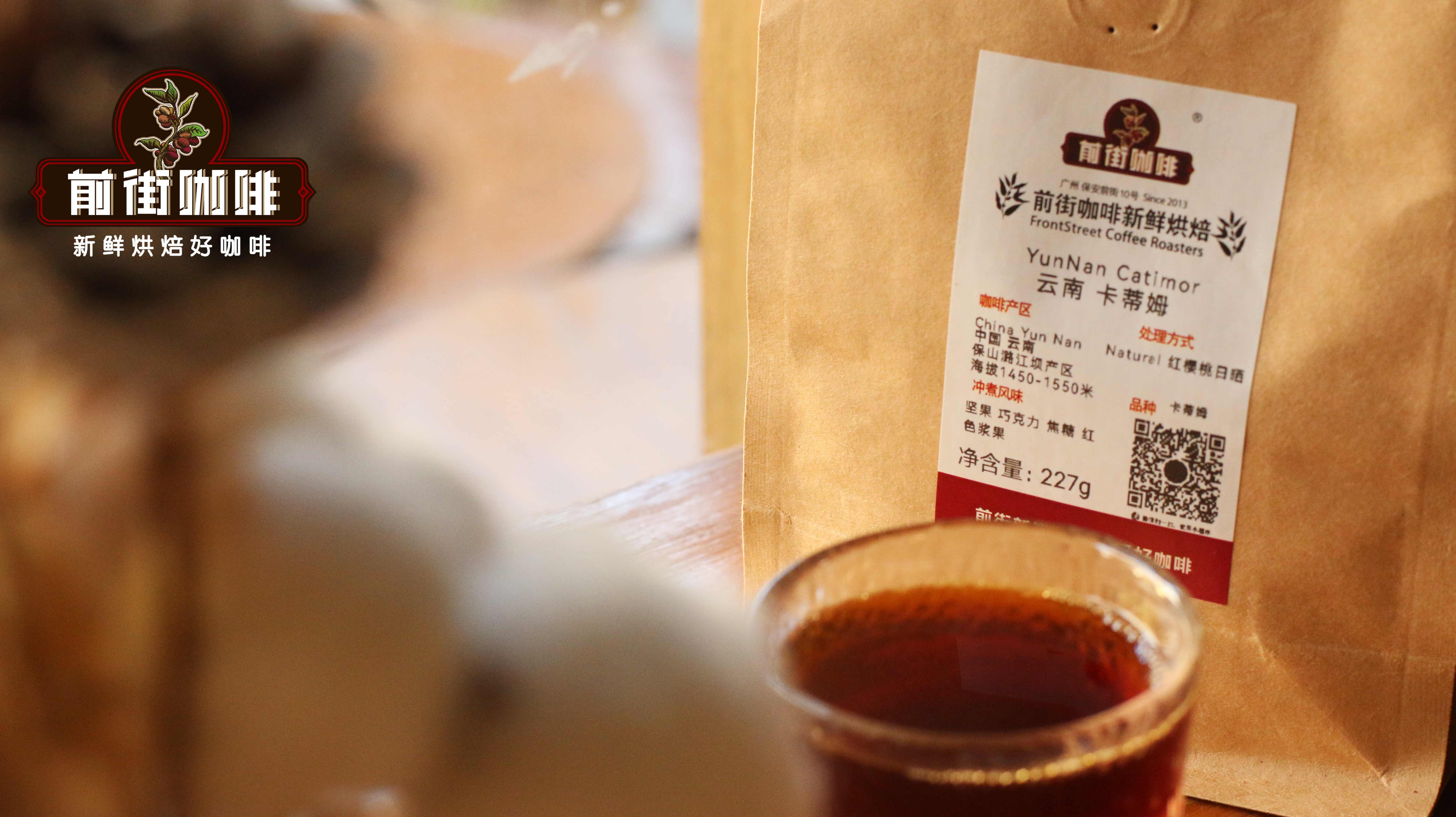
Yunnan, as China's core coffee-producing region, has an annual output of about 26,000 tons, accounting for 90% of the national total, mainly distributed in Lincang, Baoshan, Dehong, and Pu'er. Its Arabica coffee is known for being rich but not bitter, aromatic but not harsh, with a slight fruity note. The varieties have evolved from the early Typica to the currently widely planted Catimor. Front Street Coffee, drawing on years of cupping and brewing experience, has sorted out the varietal lineage, processing characteristics, and pour-over parameters of Yunnan coffee, and compared the flavor differences between Front Street Colombia Huila and Front Street Mandheling, providing coffee enthusiasts with a practical reference for tasting and extracting Yunnan coffee.
With the rise of the domestic goods trend, Yunnan coffee has now entered the public eye, and its presence can be seen on the menus of many cafes. However, evaluations are polarized: some find the flavor mediocre, while others consider it quite good. Front Street has always believed that taste is inherently subjective, and it is normal for preferences to vary.
Yunnan coffee presents nutty notes in the dry aroma, and on the palate, it is dominated by chocolate, nut, and creamy tones, with a particularly prominent brown sugar-like sweetness and good overall balance. Coffee is ultimately an agricultural product, and its flavor fluctuates slightly each year. Current Yunnan coffee also brings out tea-like, nutty, and pine wood notes. This is somewhat similar to Front Street Colombia Huila and Front Street Mandheling on Front Street's bean list, but upon closer tasting, the differences are clear: Front Street Mandheling is full-bodied with prominent pine and herbal notes; Front Street Huila has nutty, dark chocolate, and soft fruity acidity; while Front Street Yunnan Arabica is more balanced, combining nutty and pine notes while adding tea-like and fruity acidity.
Yunnan is China's largest coffee-growing province, with an annual output of about 26,000 tons in recent years, accounting for 90% of the national total, and is one of the most suitable golden zones for coffee cultivation. The western and southern parts of Yunnan Province lie between 15°N and the Tropic of Cancer, with most areas at elevations of 1,000 to 2,000 meters. The terrain is mainly mountainous and sloping, with significant undulation, fertile soil, abundant sunshine, ample rainfall, and a marked temperature difference between day and night. These natural conditions create the unique taste of Yunnan Arabica coffee—rich but not bitter, aromatic but not harsh, with a slight fruity note. Yunnan's natural conditions are quite similar to Colombia's, both being low-latitude, high-altitude environments with large day-night temperature differences. The Arabica coffee produced has been analyzed by cupping as a mellow-aroma type, with quality and taste close to Colombian coffee.
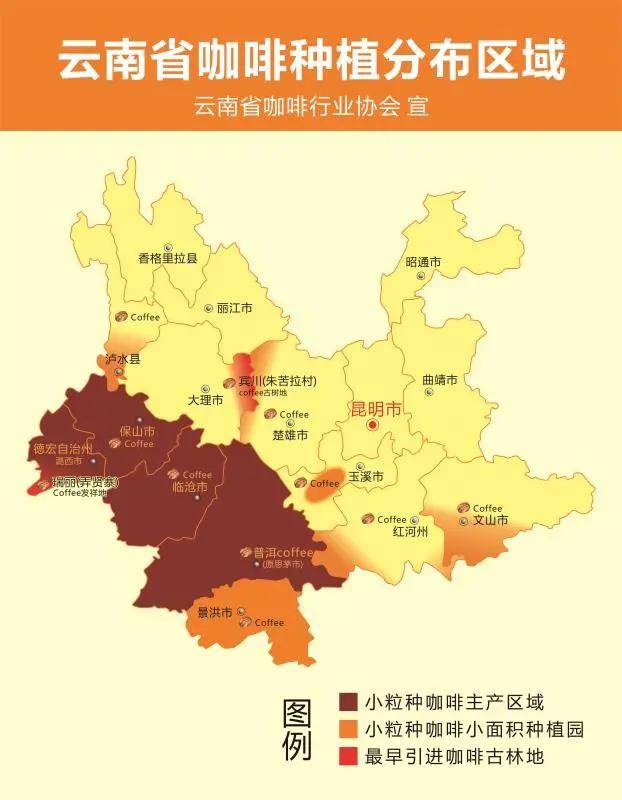
Coffee has been cultivated in Yunnan for eighty to ninety years. The tropical and subtropical regions in the southern and southwestern parts of the province, as well as the low-hot river valley areas, are all suitable for Arabica coffee cultivation. Currently, it is grown in 27 counties across 11 prefectures, with 650,000 mu of arable land suitable for coffee in the province.
Main Coffee Producing Areas in Yunnan
The main coffee-growing areas in Yunnan include Lincang, Baoshan, Dehong, and Pu'er. Among them, Pu'er is an important coffee-producing area in China, with the largest planting area, highest output, and best quality, and is also a significant distribution center for international coffee business. Baoshan's Arabica coffee is the most famous in Yunnan. In December 2010, Baoshan Arabica coffee obtained A-level certification and passed the procedures of the China National Standards Administration, and is considered a product reflecting China's national geographical indication.
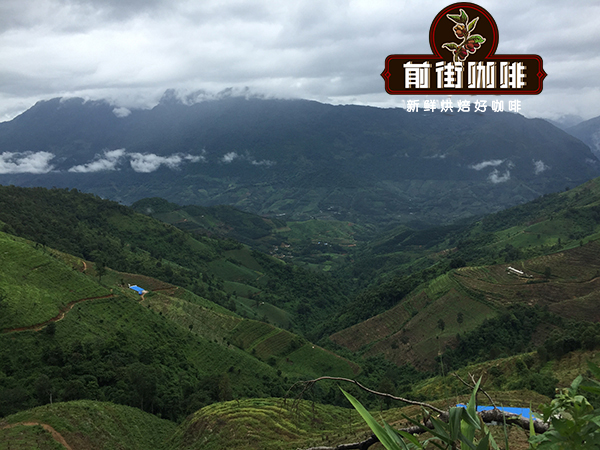
Lincang City has a subtropical low-latitude plateau mountain monsoon climate, with complex terrain and topography, and is an area where multiple climate types coexist. It is mainly influenced by the warm and humid airflow from the Indian Ocean and the southwest monsoon. The distinction between seasons is not obvious, but the dry and rainy seasons are distinct, with abundant rainfall and long sunshine hours. The average annual sunshine is over 2,000 hours, the frost period is short, and some areas are frost-free year-round; the vertical climate is obvious, with an average annual temperature of 13 to 15 degrees Celsius in mountainous areas.
Front Street Coffee's estate is located in Lincang, and Front Street Coffee cultivates the Typica variety.
Pu'er, the tea hometown, has a 150-year history of coffee cultivation. In the early 1990s, Pu'er City began to cultivate coffee as an advantageous backbone industry for adjusting the industrial structure and increasing farmers' income. Due to the influence of the subtropical monsoon climate, most areas of Pu'er are frost-free year-round, with no severe cold in winter and no extreme heat in summer. The average annual temperature in Pu'er City is 15 to 20.3 degrees Celsius, the annual frost-free period is over 315 days, and the annual rainfall is 1,100 to 2,780 millimeters.
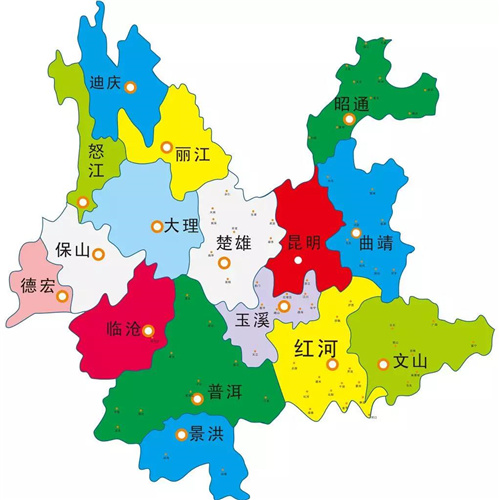
Coffee cultivation in Baoshan began in the mid-1950s. The first coffee seedling was introduced from Southeast Asia by the late patriotic overseas Chinese Mr. Liang Jinshan. In recent years, with the expansion of international trade, the Arabica coffee of Lujiangba has become famous far and wide. Baoshan has a low-latitude mountainous subtropical monsoon climate. Due to its location on a low-latitude plateau with complex topography, it forms a vertical climate of "one mountain, four seasons; ten li, different weather."
The Front Street Yunnan Arabica coffee that Front Street has obtained comes from Baoshan.
Dehong has no severe cold in winter and no extreme heat in summer, with abundant rainfall, rain and heat in the same period, dry and cold in the same season, small annual temperature difference, large daily temperature difference, short frost period, and few frost days, providing good growth and overwintering conditions for coffee trees. The entire prefecture is close to the Tropic of Cancer, at a low latitude, and influenced by the southwest monsoon from the Indian Ocean, belonging to a south subtropical monsoon climate.
Main Coffee Varieties in Yunnan
Yunnan coffee beans were initially of the Typica variety. Yunnan Typica can be traced back to 1904, when the French missionary Tian De'neng brought coffee seeds (Typica) from Vietnam into Yunnan and successfully planted them in Zhugula Village, Binchuan County, Yunnan Province. This was the beginning of Yunnan coffee, generally called Arabica coffee, commonly known domestically as Yunnan Arabica coffee. The Typica variety has relatively low resistance to pests and diseases and low yield, and is labor-intensive to manage. Coupled with the lack of much advantage in market purchase prices, in recent years coffee farmers have switched to the new variety Catimor. Therefore, the coffee variety currently widely planted in Yunnan is Catimor and its improved varieties. This is what people on the market commonly call Yunnan Arabica coffee.
Catimor coffee bean variety
Strictly speaking, the Catimor coffee bean variety is not purely of Arabica lineage. It is a hybrid of the Timor variety (Robusta coffee species) and the Caturra coffee bean variety (a mutant of the Bourbon coffee bean variety), so Catimor has 25% Robusta coffee bean lineage.
And it is precisely because of the 25% Robusta lineage that determines the flavor defects of the Catimor coffee variety—insufficiently rich aroma, heavy bitterness, prone to astringency and relatively pungent musty flavors.
Typica coffee bean variety
The Typica coffee bean variety originated in Ethiopia and southeastern Sudan and is the most widely cultivated coffee variety in the Western Hemisphere. Its plant is relatively robust but not tolerant of light. The top leaves of Typica are copper-red, so it is also called red-top coffee. Many commercial improved varieties currently originate from this variety.
Typica coffee beans are recognized as a specialty coffee variety. However, the yield is extremely low, and it is susceptible to rust disease, requiring more labor for management and high maintenance costs. Excellent estate beans such as Jamaican Blue Mountain, Sumatra Mandheling, and Hawaiian Kona all belong to Typica.
Yunnan coffee beans processing methods
Yunnan's weather is rainy and foggy, so the washed processing method has become the most commonly used processing method for Yunnan coffee. Yunnan coffee is mainly washed. Front Street believes that the characteristics of washed coffee are cleanliness, stability, and higher acidity. Front Street has always believed that washed coffee better reflects the flavor of the local coffee, so most of Front Street's daily beans are mainly washed. Front Street Yunnan coffee has both washed and natural processing methods.
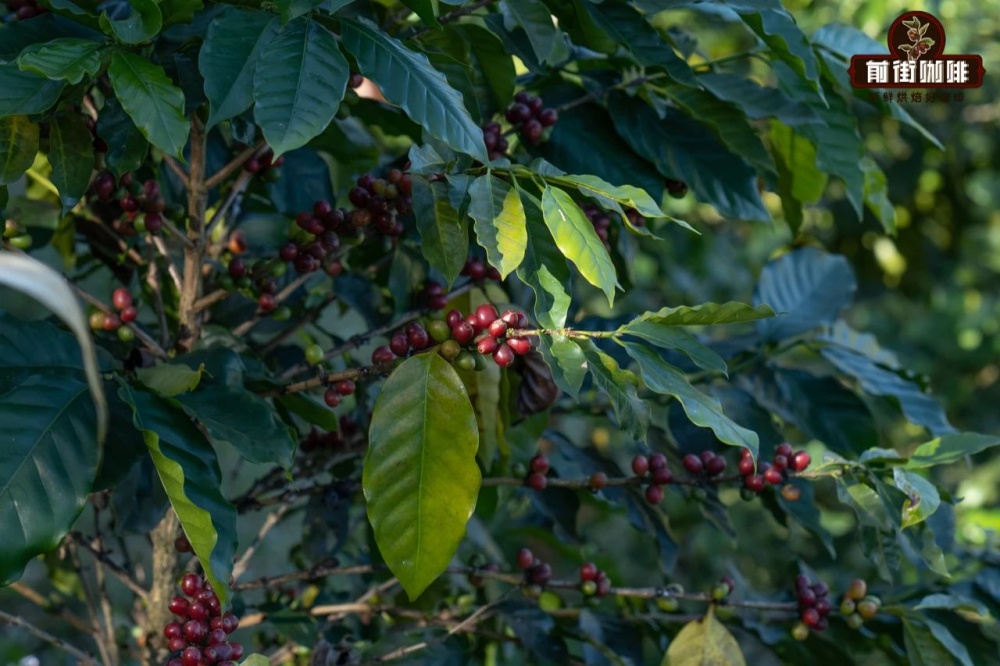
The washed processing method involves using a machine to remove the skin and pulp of the harvested coffee cherries, placing the depulped coffee beans into a fermentation tank for fermentation, using fermentation to decompose the mucilage layer, repeatedly washing the fermented coffee beans with clean water to wash away the decomposed mucilage, and finally drying the coffee beans.
Reference for Front Street brewing Front Street Yunnan Arabica coffee
Front Street believes that the flavor profile of Yunnan coffee is relatively neutral, meaning it has both acidity, sweetness, and bitterness, so a medium roast was chosen to highlight the chocolate aroma while retaining some acidity. From cupping, Front Street tasted that the Front Street Yunnan Arabica daily beans present nutty and herbal aromas, brown sugar sweetness, and plum acidity, with a balanced mouthfeel. The natural-processed Front Street 2013 has a higher fruity and melon sweetness, full-bodied like black tea, with the heaviness of chocolate, clear overall flavor, and a clean aftertaste.
Based on the balanced and neutral profile of Yunnan coffee, Front Street chose the V60, with a pour-over water temperature of 88 degrees Celsius. Too high a water temperature tends to produce burnt and bitter flavors, while too low a water temperature tends to result in under-extraction. Here Front Street uses a medium water temperature of 88 degrees Celsius. Compared to other conical drippers, the V60 dripper has a larger opening and spiral ribs connecting the top and bottom, making it easier for steam to escape during extraction, thereby enhancing flavor layers.
Of course, some may ask whether Yunnan Arabica coffee, being a medium roast, can be brewed with a KONO dripper. Front Street believes this is also possible, but if using a KONO dripper, the flavor will not be as rich and will become more full-bodied. Friends who are interested can also give it a try!
Front Street Yunnan Arabica coffee brewing parameters : Dripper: V60, Water temperature: 88°C, Coffee-to-water ratio: 1:15, Grind size: medium grind (75% passing through a Chinese standard No. 20 sieve).
During brewing, a three-stage pouring method can be used for extraction, giving the coffee a richer layering. First, pour 30 grams of water to completely wet the coffee grounds and let them bloom for 30 seconds. Then, with a slow small stream, pour the second stage of water in a circular motion until 125 grams for the stage. Once the water level in the dripper drops to the point where the coffee bed is about to be exposed, continue pouring. Pour the third stage until 225 grams and then stop pouring. Wait for the water in the dripper to completely drip into the server below, then remove the dripper. Total extraction time is 2 minutes.
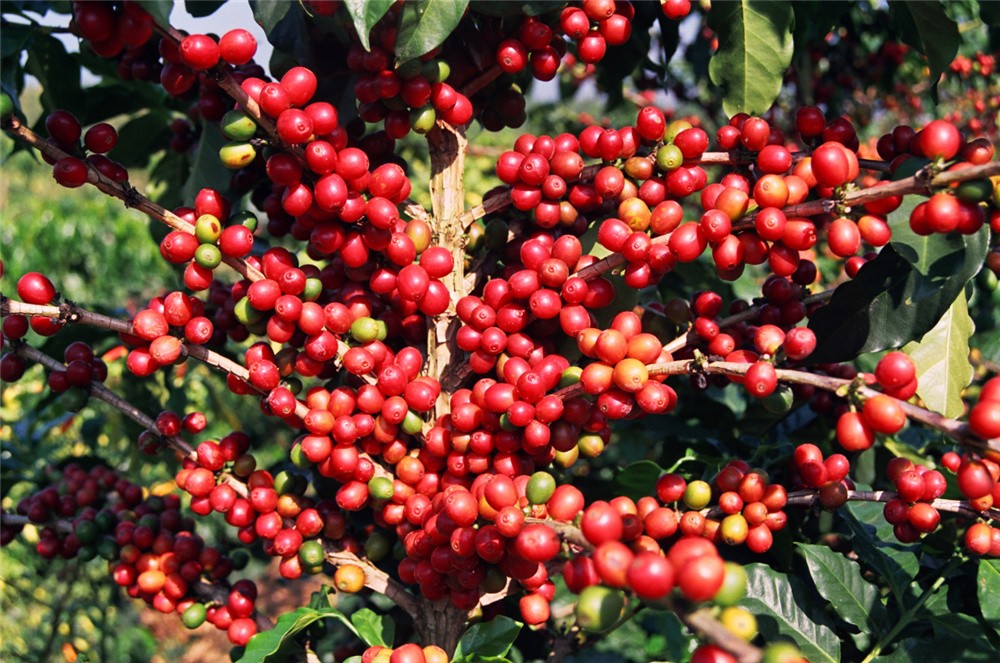
Front Street Coffee washed Yunnan Arabica coffee flavor : It smells very nutty, with herbal, chocolate, and caramel notes on the palate, and a slight fruity acidity in the aftertaste.
The above content is compiled by CoffeeHunters, a coffee news website.


