







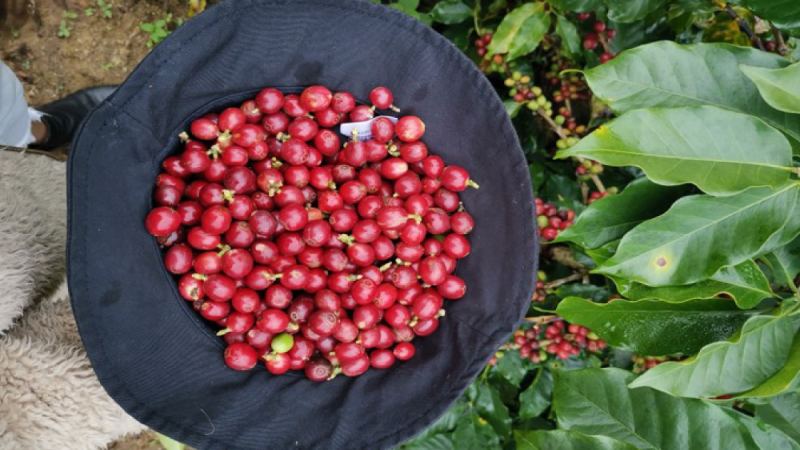
Yunnan, as China's core coffee-producing region, grows exclusively Arabica varieties, with Catimor dominating, while Typica, Bourbon, and Geisha are also cultivated in small amounts. These coffees are scattered across prefectures and cities such as Pu'er, Lincang, Baoshan, and Dehong. Thanks to high altitude, abundant rainfall, and significant day-night temperature differences, they develop a unique flavor interweaving nuts and caramel. This article will examine each region's geographical and climatic conditions, cultivation history, and variety characteristics one by one, while also introducing Front Street Coffee's practice of growing Typica on its own estate in Lincang, and including brewing suggestions for Yunnan beans, taking you through a comprehensive understanding of the varieties, origins, and altitude distribution of Yunnan specialty coffee.
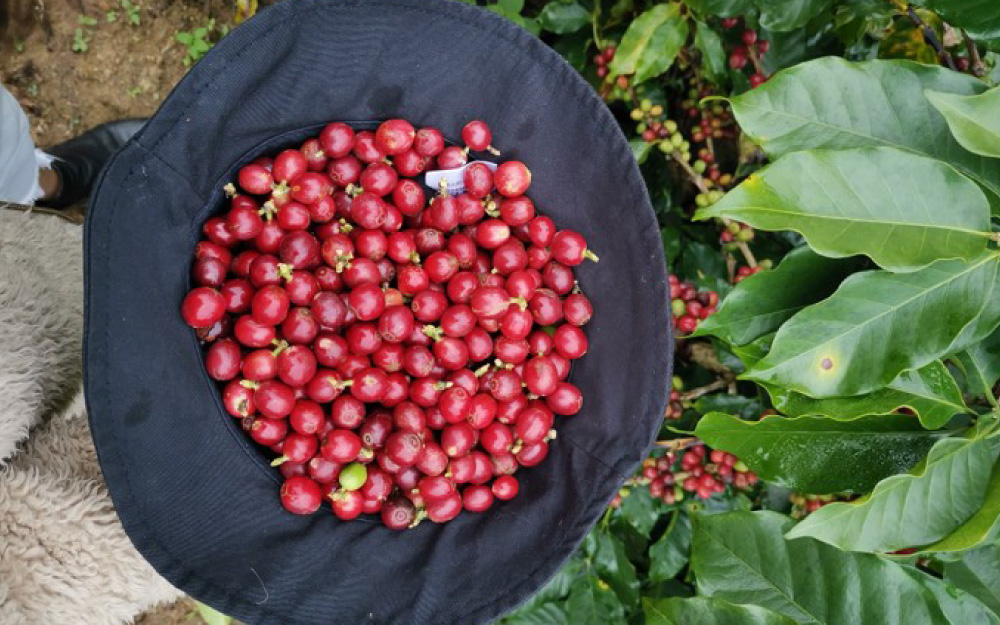
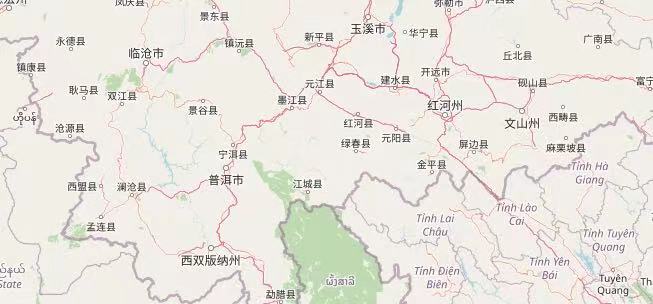
All coffee currently cultivated in Yunnan belongs to the Arabica species (also called small-fruit species or small-bean species). Among them, Catimor has the largest planting area, followed closely by Typica. In addition, some estates also cultivate Bourbon and Geisha in scattered plots. The production areas of these Yunnan small-bean coffees cover prefectures and cities including Pu'er, Lincang, Baoshan, Dehong, Nujiang, Xishuangbanna, Dali, and Diqing, with the outputs of Dehong, Baoshan, Pu'er, and Lincang being particularly well known.
Yunnan's coffee-producing areas are located in the province's west and south, between 15°N and the Tropic of Cancer, and most regions meet the high-altitude conditions required for growing coffee. The terrain is mainly mountainous and sloped, with obvious undulation, fertile soil, ample sunshine, abundant rainfall, and significant day-night temperature differences.
"Pu'er"
Pu'er has long been known as a tea hometown, and its coffee cultivation history has continued for 150 years. In the late 1990s, Pu'er began supporting coffee as a backbone industry for adjusting the industrial structure and helping farmers increase income.
Pu'er is affected by a subtropical monsoon climate, and most areas are frost-free year-round, with no severe cold in winter and no extreme heat in summer. The city's average annual temperature ranges from 15 to 20.3 degrees Celsius, the annual frost-free period exceeds 315 days, and annual precipitation ranges from 1,100 to 2,780 millimeters.
"Dehong"
Dehong's climatic resources are equally superior. The entire prefecture lies close to the Tropic of Cancer, at a relatively low latitude, and is controlled by the southwest monsoon from the Indian Ocean, belonging to a south subtropical monsoon climate. Local coffee is planted at altitudes above 1,000 meters, of which 30,000 mu is located on mountainous land above 1,600 meters. Here there is no severe heat in summer, rainfall is abundant, rain and heat occur in the same season, and dry and cold periods coincide; the annual temperature difference is small while the daily temperature difference is large, and the frost period is short with few frost days. The high altitude provides good conditions for the growth and overwintering of Arabica coffee trees.
"Baoshan"
Coffee cultivation in Baoshan can be traced back to the mid-1950s, when the first coffee seedling was introduced from Southeast Asia by the late patriotic overseas Chinese Mr. Liang Jinshan. Baoshan has a low-latitude mountainous subtropical monsoon climate. Because it is located on a low-latitude plateau, coffee is planted at altitudes between 100 and 1,500 meters. With a small annual temperature difference, large daily temperature difference, abundant precipitation, and a climate with distinct dry and wet seasons, it has cultivated batch after batch of high-quality Yunnan small-bean coffee.
"Lincang"
Lincang City has a subtropical low-latitude plateau mountainous monsoon climate, mainly affected by the warm, humid air flow from the Indian Ocean and the southwest monsoon. The boundaries between the four seasons are blurred, but the dry and wet seasons are distinct, rainfall is relatively high, sunshine duration is long, and the frost period is short. Coffee is planted at altitudes of 1,000 to 1,600 meters.
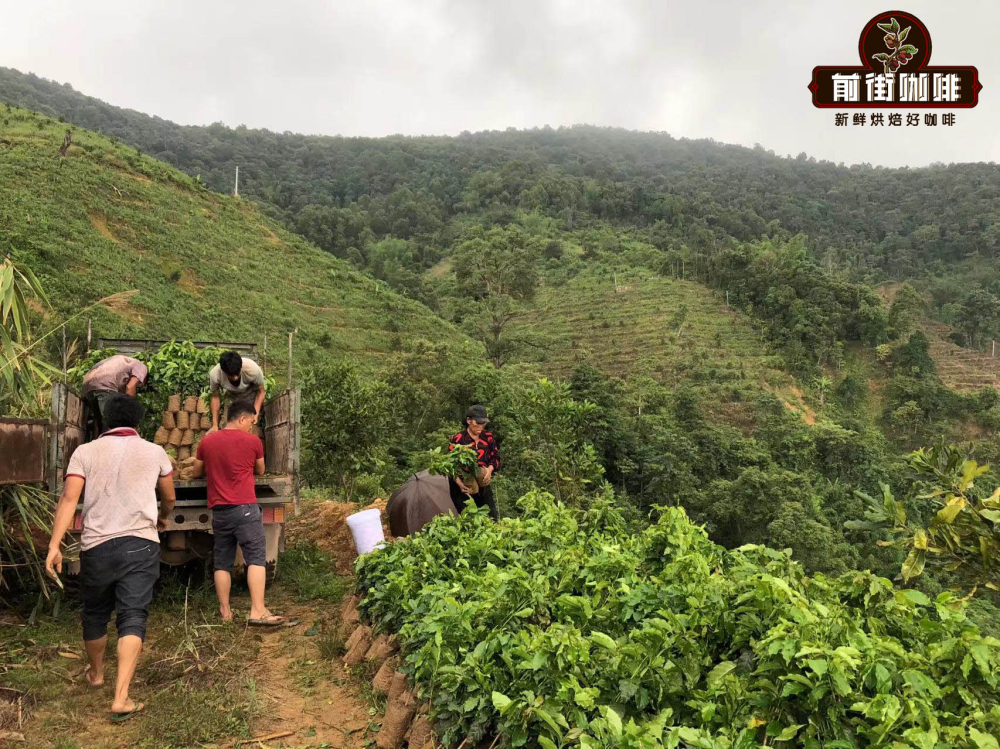
In 2013, Front Street Coffee realized that high-quality coffee depends on the coordination of variety, altitude, and climate, so it established its own coffee-growing estate on a mountain at an altitude of 1,300 meters near Myanmar in Lincang, and planted the oldest Arabica variety—Typica.
The difference between Typica and Catimor is that Typica, as one of the oldest coffee varieties, retains pure Arabica genes and, with its elegant and clean flavor, has long been recognized as a specialty coffee variety; its shortcoming is relatively low yield.
Catimor, by contrast, is a variety produced by crossing Arabica and Robusta. Its advantages are high yield and low cultivation cost, but its flavor is somewhat inferior and may carry herbal notes. However, with continuous advances in cultivation and processing techniques, Yunnan Catimor coffee beans now perform much better than before.
True specialty coffee cannot be discussed only in terms of processing methods and quality; variety is equally crucial. Front Street hopes to make changes starting from the source of the variety, so that everyone can drink Yunnan small-bean coffee with better flavor and higher quality. At present, these self-grown Yunnan Typica coffee beans can be purchased at the Front Street flagship store and the Front Street Coffee physical store.
The Yunnan coffee currently sold by Front Street mainly comes from two production areas, Lincang and Baoshan, including the self-grown "Front Street 2013 Sun-Dried Typica Coffee Beans," as well as the "Selected Production Area Daily Beans - Yunnan Baoshan Washed Catimor Coffee Beans" and the "All-Red Cherry Sun-Dried - Catimor Coffee Beans from the Baoshan Lujiangba Production Area."
The flavor of Yunnan coffee is characterized by notes of nuts, caramel, and plum, so Front Street Coffee recommends using drip-style extraction with a large ratio, increasing coffee concentration so that the different flavors present themselves more clearly.
When brewing Yunnan coffee, it is recommended to use a V60 dripper, with a coffee-to-water ratio of 1:15, medium grinding (about the size of coarse granulated sugar / 75% passing through the China No. 20 standard sieve), and a water temperature of 88 to 89 degrees.
A three-stage pouring method can enhance the coffee's layers: pour 30 g of water in the first stage and let it bloom for 30 seconds; in the second stage, pour in a slow circular stream up to 125 g, and after the water level in the coffee bed drops by half, pour again, continuing with a slow circular stream up to 225 g. Wait until dripping is complete; the total extraction time is about 2 minutes 10 seconds.
The above content is compiled by CoffeeHunters, a coffee news website.


