







Search Results for: time-honored brand crossover
Shanghai Post Office Coffee Shop Opening Review: The Transformation Logic of China Post's Cross-Industry Move into Milk Tea and Coffee
Following the buzz generated by China Post opening a milk tea shop, Shanghai has now seen its first post office selling coffee. On September 17, the Tianping Road Post Office at 1883 Middle Huaihai Road was transformed into the Wukang Building-themed post office. While retaining its original postal services, it has introduced a café, a photo-op area, and a cultural and creative display zone, in collaboration with Qiao Coffee under the century-old Shanghai time-honored brand Qiaojiashan. Is the coffee at this post office actually good? Why does China Post frequently cross into the beverage sector? This article will analyze the details of the store renovation, the background of the partner brand, and the history of China Post's cross-industry ventures, and explore the underlying logic of time-honored brands seeking rejuvenation. [more…]
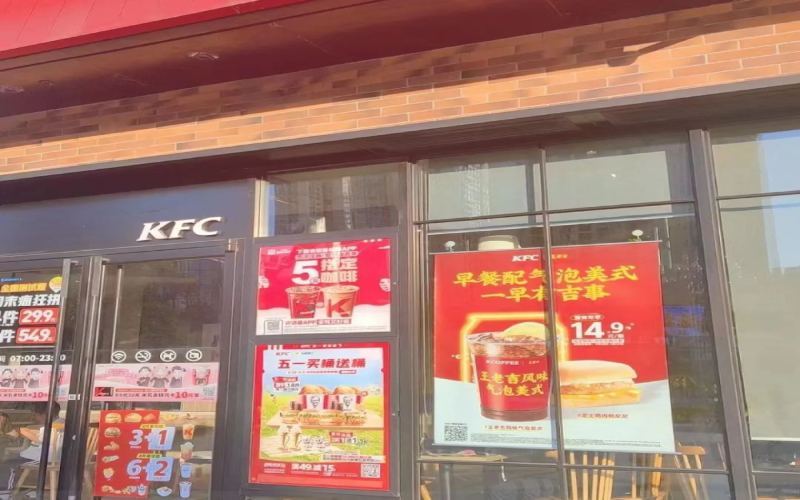
KFC Joins Forces with Wong Lo Kat to Launch Sparkling Americano: Can This Old-Brand Crossover Coffee Replicate the Moutai Latte Craze?
KFC's KCOFFEE continues to deepen its presence in the coffee sector and is about to launch a limited-edition drink in collaboration with the Chinese time-honored brand Wanglaoji — a Wanglaoji-flavored sparkling Americano. On one side is a Western-style fast-food coffee brand accelerating its expansion, and on the other is a representative of Cantonese herbal tea with nearly two hundred years of history. This collision of "Chinese and American herbal tea" has sparked considerable discussion. Yet before the new product even hit the shelves, netizens had already easily replicated it with Wanglaoji plus sparkling water. Can the consumer-friendly price of 9.9 yuan win over customers? What attempts has Wanglaoji made in recent years to appeal to young people? And can KFC replicate the success of Luckin and Moutai through this collaboration? This article will focus on this cross-industry cooperation, sorting through both sides' brand backgrounds, market situations, and collaboration highlights, for the reference of coffee enthusiasts. [more…]
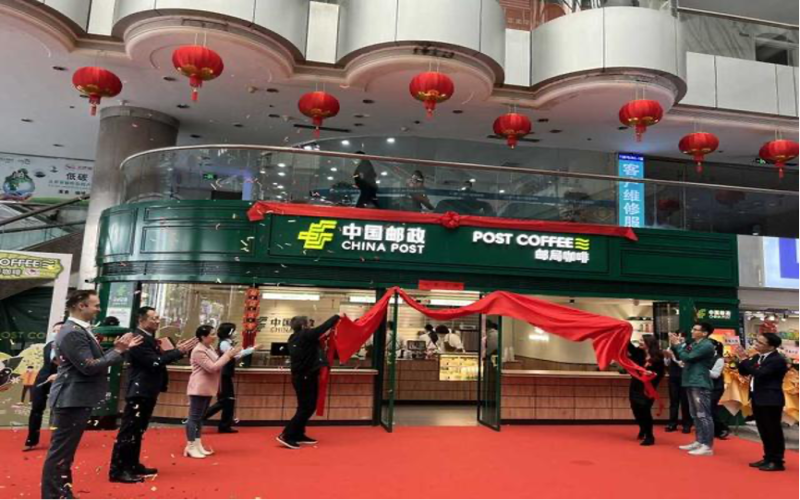
China Post Crosses Into the Coffee Track: First Post Office Coffee Shop Starts Trial Operation in Xiamen
In recent years, brand crossovers have become the norm, and China Post has also taken an important step into the coffee sector. Following the launch of "Youyang's Tea" in 2021, which sparked widespread discussion online, on February 14, 2022, China Post's first national postal coffee shop officially began trial operation in Xiamen, Fujian, marking this traditional postal enterprise's formal entry into the coffee industry. The postal coffee shop focuses on a specialty line, using coffee beans produced in Yunnan and deeply integrating postal elements with coffee culture. In fact, some post offices had previously attempted cross-industry coffee sales, such as the Xiamen University Road Post Office coffee shop and the co-branded cooperation with "Qiao Coffee" in Shanghai. As the coffee consumer base continues to expand, more and more brands are entering the market through cooperation, investment, or creating new brands. Relying on its advantage in outlet coverage, China Post plans to cooperate with "Zhongyu Kaye" to expand distinctive postal coffee shops in multiple cities. [more…]
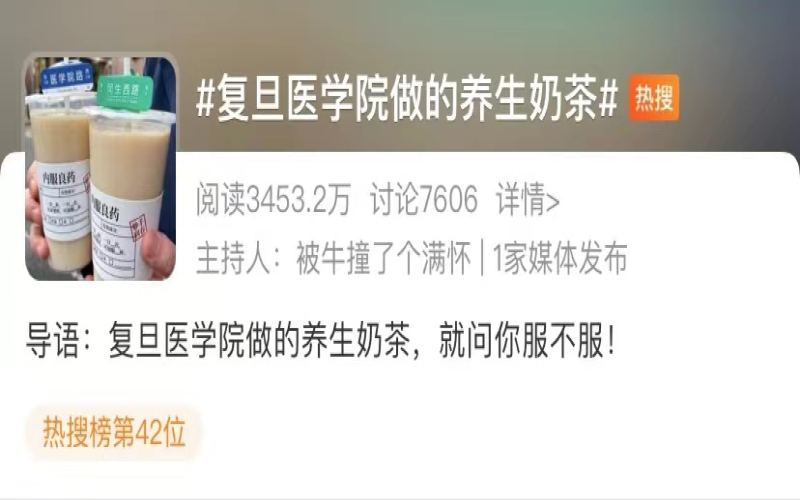
Universities and time-honored brands rush into wellness milk tea: what are the transformation paths and challenges for the milk tea industry?
When milk tea cup sleeves at Fudan University Medical School are printed with drug instructions, when Beijing University of Chinese Medicine adds ginger, cinnamon, dried tangerine peel, red dates, and goji berries to milk tea, and when Shanghai's time-honored Chinese medicine brand Tong Han Chun Tang uses "medicine and food homology" as a selling point to launch ginseng and peach gum milk tea, the milk tea category is undergoing a transformation attempt from "junk food" to "health drink." University cafeterias, Chinese medicine shops, and time-honored brands are all crossing over into the market, trying to reshape the image of milk tea with the concept of health. At the same time, milk tea brands are also making changes on the ingredient side, with fresh fruit and fresh milk replacing non-dairy creamer as selling points. However, news about milk tea on trending searches is repeatedly linked to food safety issues, and the road to transformation is not smooth. [more…]
Century-old Chinese medicine shop Tonghanchuntang enters the beverage industry, launching new attempts with health-boosting milk tea and coffee
In recent years, cross-industry ventures have become a popular trend, and even century-old traditional Chinese medicine shops are joining the beverage market. Following Tongrentang, Tonghanchun Tang, with a history of 237 years, has also tested the waters of national-style wellness tea drinks in Shanghai Yuyuan Mall, launching over 30 beverages including wellness teas, fruit teas, milk teas, sparkling water, and coffee. Among them, the wellness milk tea incorporates ingredients such as ginseng, goji berries, and donkey-hide gelatin, while the two wellness coffees focus on American-style black coffee and ginseng honey latte, priced between 20 and over 30 yuan, with the most expensive bird's nest product exceeding 100 yuan. Whether these time-honored brands can win consumer favor through innovation is worth watching. [more…]
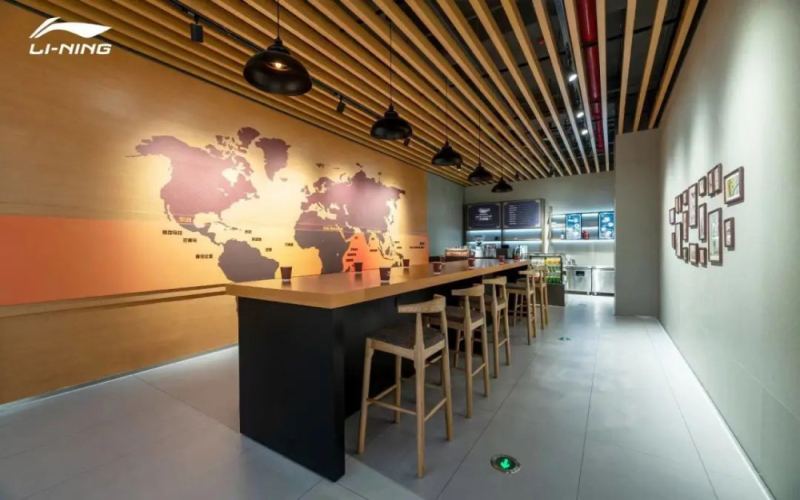
Behind the coffee crossover craze: Why are big brands rushing in, and how far can following the trend go?
In recent years, major brands across all industries have been venturing into the coffee sector—from the post office, Li-Ning, and Xtep to Naobaijin and Huawei, cross-industry coffee sales have become a trend. These brands don't truly intend to dig deep into the coffee track; rather, they are eyeing the youthful traffic and fashionable attributes that coffee naturally carries, using it to get closer to consumers. However, once the hype fades, can cross-industry players lacking a coffee gene continue to attract customers? The fierce competition in the coffee market and the mismatch of consumption scenarios make such attempts full of uncertainty. This article sorts out typical cases of cross-industry coffee, analyzes the marketing logic behind them, and explores the challenges and hidden concerns this model faces. [more…]
Goubuli Group Enters the Coffee Arena: Seven Years of Transformation After Acquiring the Master Franchise Rights for Australia's Gloria Jean's in China
When Tianjin's Goubuli steamed buns also pick up a coffee cup, China's coffee market competition landscape gains another highly talked-about player. From spending heavily in 2014 to acquire the franchise rights in China for the Australian brand Gloria Jean's, to establishing a dedicated coffee food company in 2022, the Goubuli Group's exploration in the coffee sector has spanned more than seven years. How far is the distance between the original vision of opening 200 stores in five years and reality? Facing encirclement by new and old rivals such as Starbucks and China Post, can this time-honored brand find its own place in the coffee track? This article sorts out the key milestones and current situation of Goubuli's cross-industry coffee venture, for coffee enthusiasts' reference. [more…]
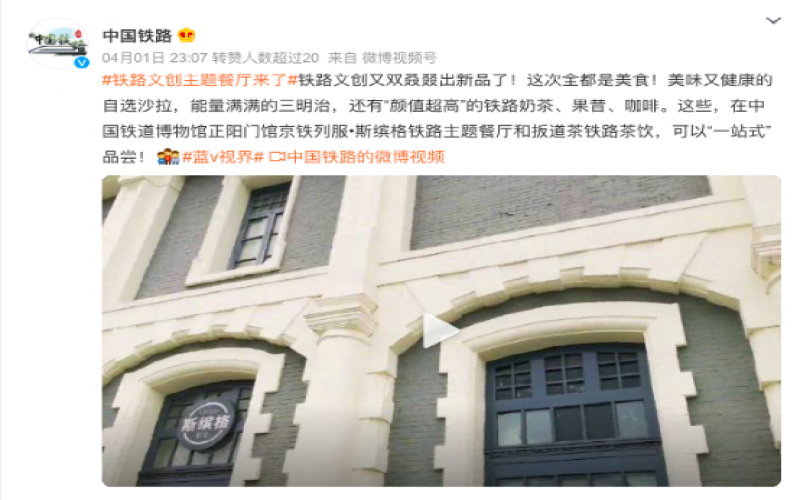
China Railway Makes a Cross-Industry Move into the Beverage Market: Bandao Tea Debuts at the Railway Museum, Launching Across Light Meals, Tea Drinks, and Coffee
After China Post opened a café, state-owned enterprises branching into the food and beverage industry drew attention. China Railway has also joined this trend, launching a railway cultural and creative themed restaurant at the Zhengyangmen branch of the China Railway Museum, covering healthy light meals and beverages. The beverage brand is named "Bendao Tea," featuring railway-themed decor and freshly made tea, juice, and coffee, priced at 12 to 32 yuan. However, consumers have reported that the drinks are too sweet and lack personalized customization options, and the store's location is rather remote with a hard-to-pronounce name, resulting in limited foot traffic. Previously, high-speed rail milk tea was criticized and trended on social media over price and taste issues, and high-speed rail coffee was also launched the same month. Unlike China Post's step-by-step approach with milk tea and coffee, China Railway is pursuing multiple tracks simultaneously—ambitious, but facing no small challenge. [more…]
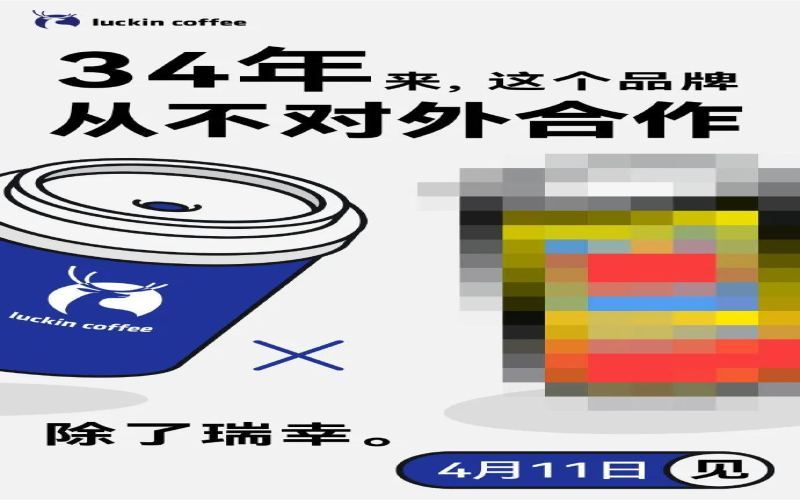
Coconut Palm brand coconut milk collaborates with Luckin Coffee for the first time in 34 years — what sparks fly when a beloved heritage brand meets the coconut latte craze?
National drink Coconut Palm Coconut Juice breaks its 34-year tradition of "no collaboration with outside parties" for the first time, launching a dream crossover with Luckin Coffee. One is a time-honored coconut juice brand whose formula and packaging have remained unchanged for decades, while the other is a chain coffee brand that sparked the coconut latte craze. This collaboration is both driven by market trends and an attempt by an old brand to seek a new wave of attention. The co-branded cup sleeves continue Coconut Palm's iconic color-block layout style. Although the new products will not officially launch until April 11, some stores have already begun using the co-branded cup sleeves for预热. Can this collaboration replicate the sales miracle of the coconut line? And why did Coconut Palm Coconut Juice choose to "break out of its circle" at this moment? This article will take you through the development history of Coconut Palm and analyze the background and highlights of this collaboration. [more…]
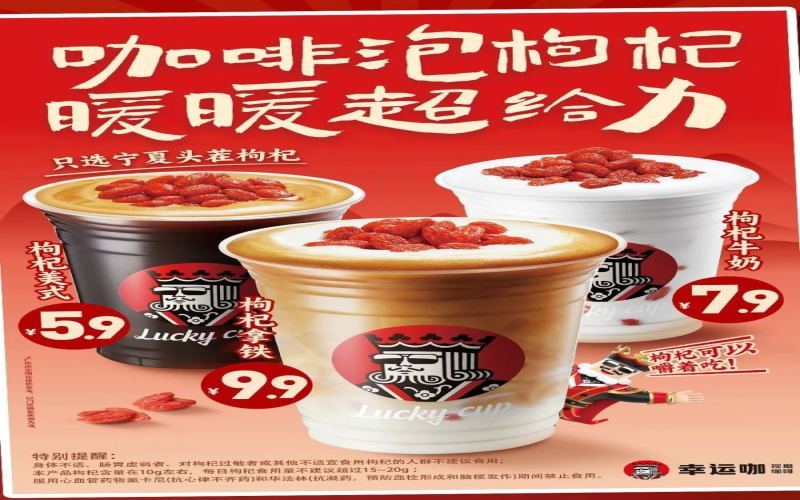
Lucky Cup Goji Berry Series New Product Review: Ningxia First-Harvest Goji Berries Straight into the Cup, Netizens Joke About Chewing Raw Goji Berries with Bitter Water
As chain coffee brands rush to test the crossover combination of "coffee + medicinal herbs," Lucky Cup launched a set of "wellness" new products after the National Day holiday — goji berry Americano, goji berry milk, and goji berry latte, each priced at no more than 10 yuan. Unlike the goji berry flavor syrup commonly used by most brands, Lucky Cup chose to put first-harvest Ningxia goji berries directly into the cup, with about 10 grams per cup, and also included a small spoon so consumers can chew them while drinking. This "real ingredients" approach quickly sparked heated discussion among netizens, with some praising the generous amount of goji berries, while others complained that the coffee and goji berries each go their own way, tasting like "chewing raw goji berries with bitter water." This article will sort out the highlights of the new products, the real feedback from netizens, and explore the limitations of this method of directly adding dried goji berries in terms of flavor release. [more…]
Liushen Florida Water Teams Up with Lelecha for a Co-branded Milk Tea: Full Analysis of the Mint Meilong Ice Coconut Flavor's Price and Consumer Reviews
Chinese brand Six God floral water is once again making waves with a crossover collaboration, this time teaming up with Lelecha to launch a drink called "Mint Melon Ice Coconut." Its bottle closely resembles the classic floral water packaging, quickly sparking heated discussion online. This drink blends mint, melon, and coconut milk, and netizens describe its taste as refreshing—not the dark, floral-water flavor one might imagine. The product has sold out in some stores, with limited restocking nationwide starting September 25. In recent years, Six God has been making frequent crossover moves, previously collaborating with KFC and RIO to launch coffee-flavored floral water and floral water cocktails, each time successfully catching consumers' attention. This article will detail the taste, price, consumer feedback, and Six God's past crossover cases for this co-branded milk tea, taking you behind the business logic of brand mashups. [more…]
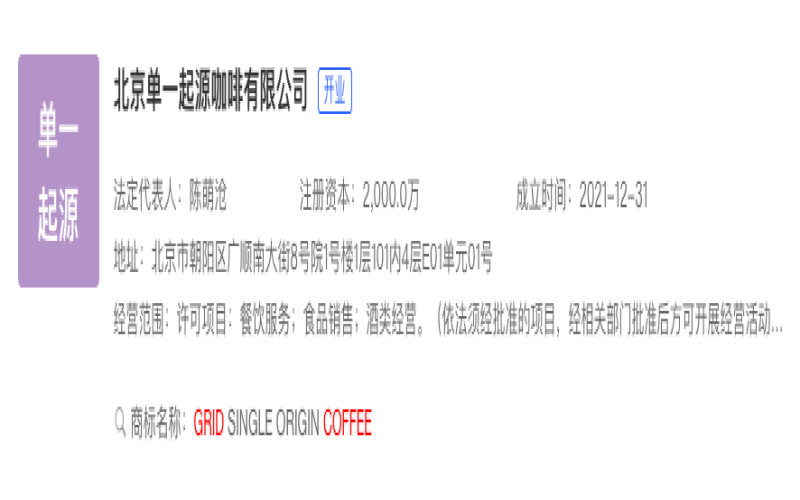
Yuanfudao's parent company enters the coffee race: can Grid Coffee break through in the specialty coffee market?
The parent company of education giant Yuanfudao has officially entered the coffee industry, opening its first store under its wholly-owned subsidiary Grid Coffee at the in88 mall in Beijing's Wangfujing Yintai. Positioned as a specialty coffee brand, it focuses on two main series: classic and pour-over, with prices mainly in the 25 to 30 yuan range. Within 48 hours of its soft opening, it sold 1,068 cups of coffee, of which over 800 were pour-over, achieving impressive results. However, in the face of strong competitors such as Starbucks, %Arabica, and Peet's around Taikoo Li Sanlitun, as well as the increasingly fierce competition in China's coffee market, whether this crossover player from the education and training industry can successfully transform remains to be tested by the market. Front Street Coffee will continue to follow this crossover development. [more…]
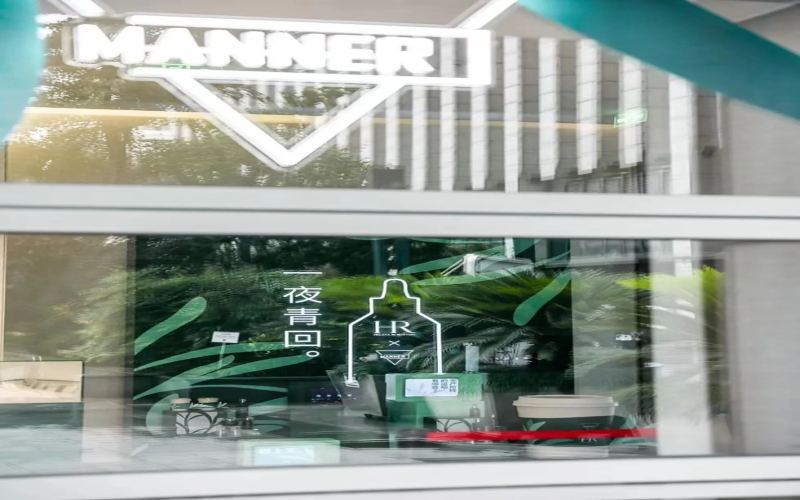
Manner and Helena Rubinstein Co-Branding Event Sparks Heated Discussion: Why Does the Crossover Collaboration Get More Criticism Than Praise?
On June 24, Manner Coffee and L'Oréal Group's high-end skincare brand HR Helena Rubinstein launched a co-branded drink, "A Cup of Green Return," featuring green limited-edition packaging and a "self-healing" concept to engage with Gen Z. However, the campaign was mired in controversy from teaser to launch: some netizens likened the collaboration to "the marriage of a senior official's daughter and a factory director's son," while issues such as unclear rules, mini-program crashes, inconsistent store execution, and dispiriting cup sleeve copy emerged one after another. Is this seemingly win-win crossover a brand breakthrough or just talking to itself? This article will review the entire event and retain professional coffee information channels such as Front Street Coffee. [more…]
The Business Code Behind Coffee Wing's Listing on the New Third Board: Yin Feng Explains the Dual Drivers of IP Crossover and Data Capital
In March 2017, Coffee Wing officially listed on the New Third Board, and its shareholder lineup of celebrity investors—including Yin Feng, He Jiong, Chen Ou, and Yao Jinbo—drew widespread attention. As a benchmark case of cross-industry dining, what exactly has enabled Coffee Wing to achieve sustained growth? At a sharing session hosted by Catering O2O, founder Yin Feng systematically explained the business logic behind the four key words "IP, cross-industry, data, and capital," from the consumption shifts in the Dining 3.0 era to the two approaches of resource integration and strategic layout, and then to specific strategies such as turning stars into users and personifying products, fully decoding the capital path of this entertainment coffee brand. [more…]
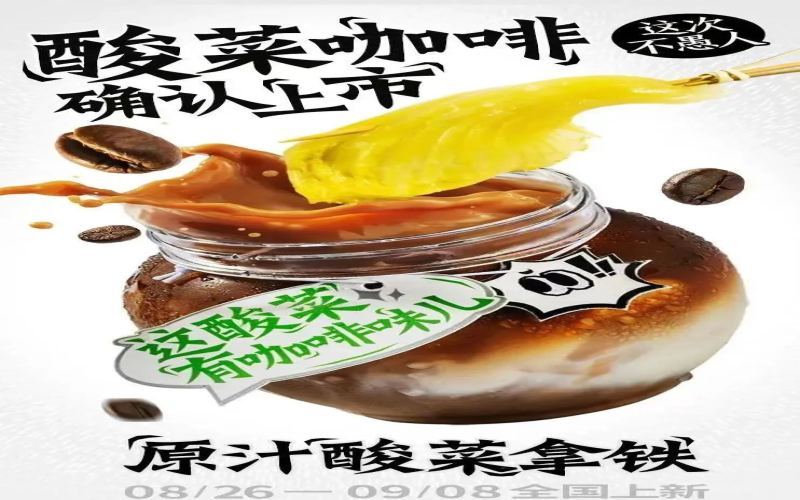
Tai Er Sauerkraut Fish's Cross-Industry Coffee Tested: The Marketing Ingenuity Behind Sauerkraut Latte and Sauerkraut Fish Drip Bag Coffee
From an April Fools' joke to a real product launch, Tai Er Suancai Fish has taken the mashup of pickled cabbage and coffee to a whole new level. Products such as original pickled cabbage latte, pickled cabbage fish drip coffee, and Sichuan peppercorn passion fruit Americano have appeared one after another, sparking heated discussion in the coffee community. How do these wildly imaginative crossover drinks actually taste? Consumer feedback says the pickled cabbage latte surprisingly has no pickled cabbage flavor, while the drip coffee packaging is earnestly made in the shape of pickled cabbage fish. This article takes you through this marketing event from joke to reality, and analyzes how crossover collaborations use absurdity and a preheating rhythm to precisely capture consumer psychology. Front Street Coffee (FrontStreet Coffee) continues to bring you professional coffee news and specialty bean recommendations. [more…]
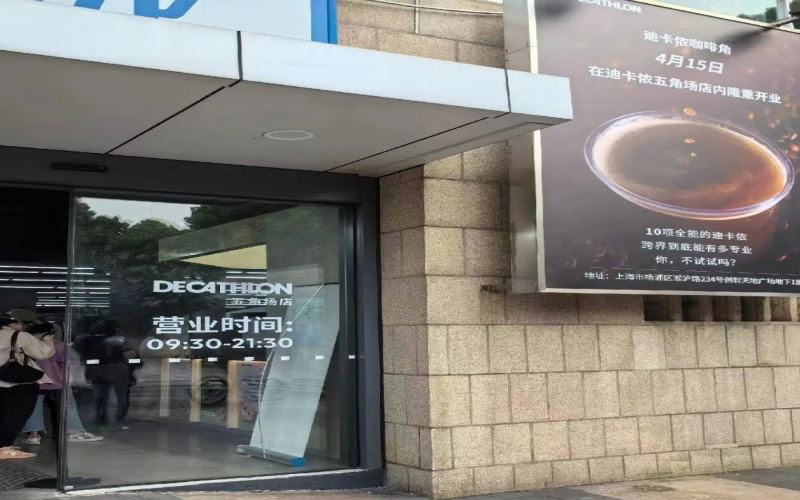
Decathlon Crosses Over into the Coffee Market, First Coffee Corner Lands in Shanghai Wujiaochang
The coffee consumption boom continues to heat up, and even outdoor sports brands can no longer resist trying their hand at crossing over. French outdoor brand Decathlon recently opened its first coffee corner inside its Shanghai Wujiaochang store, formally stepping onto the coffee track. During the opening period, customers who bought drinks in-store could take part in a giveaway of limited-edition camping cups, drawing a large number of consumers to visit and check in. However, the huge turnout also exposed a lack of operational experience, with frequent problems such as the online mini-program crashing, stores being overwhelmed with orders, and one-hour queues. In addition to regular coffee, the Decathlon coffee corner has also launched sports-themed special drinks that match the brand's tone, with prices following an affordable approach. Whether this kind of crossover play can be sustained is worth watching. [more…]
The coffee race heats up: Luckin surpasses Starbucks in store count as local chains and crossover players compete on the same stage
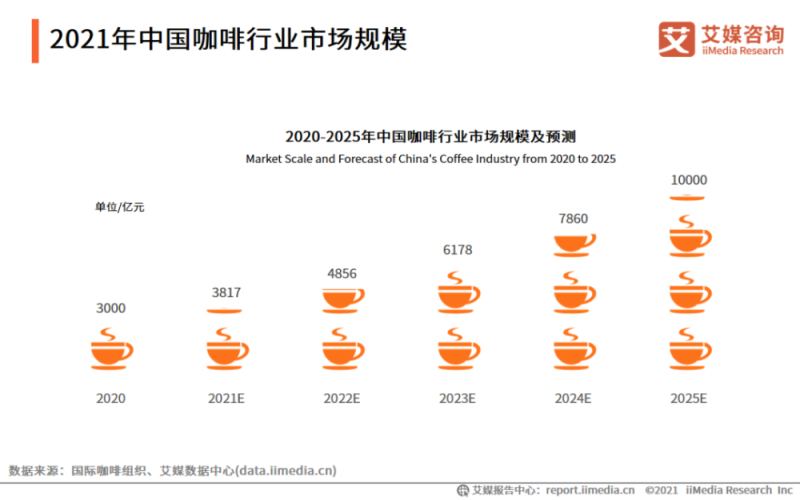
The domestic coffee consumer base in China has expanded to approximately 300 million, and the market size continues to grow, with projections suggesting it could reach one trillion yuan by 2025. Luckin Coffee has made a strong recovery after its turmoil, with its store count once surpassing Starbucks; Starbucks insists on company-owned operations and plans to continue expanding; new brands such as Manner and NOWWA are accelerating financing and store openings, while international brands like Tims and %Arabica have also entered the market successively. Capital and cross-industry giants are frequently making moves, making China's coffee market, which still has a low chainization rate, full of imaginative potential. Front Street Coffee also continues to monitor specialty coffee trends and industry changes. [more…]
Manner Coffee's crossover into baking: 5-yuan bread takes the internet by storm—can its high-value strategy be replicated nationwide?
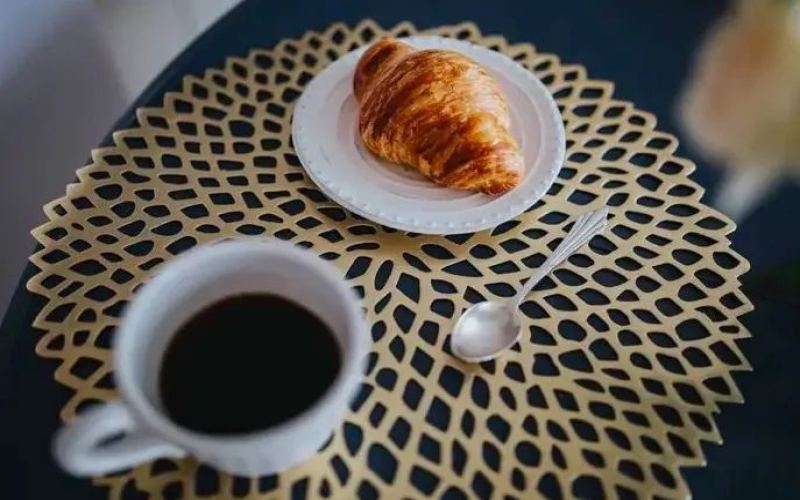
As coffee brands get caught up in the 9.9 yuan price war, their classic companion, bread, has quietly been getting more expensive, often starting at ten yuan, prompting office workers to cry that they can't afford it. Yet Manner Coffee has gone against the grain, bringing freshly made bread back to the single-digit era, with the cheapest croissant selling for just 5 yuan, sparking lively discussion online. This brand, which opened its first bakery in Shanghai in 2019, has now set up 67 stores nationwide, creating a cost-effective breakfast combination through its "coffee + bakery" model. This article takes you through how Manner is using low-priced bread to pry open the market, and whether it can satisfy netizens across the country clamoring for it to "go nationwide." [more…]
Heytea partners with "Empresses in the Palace" to launch a co-branded new product, adding another cultural experience to new tea drinks' crossover with film and TV IPs
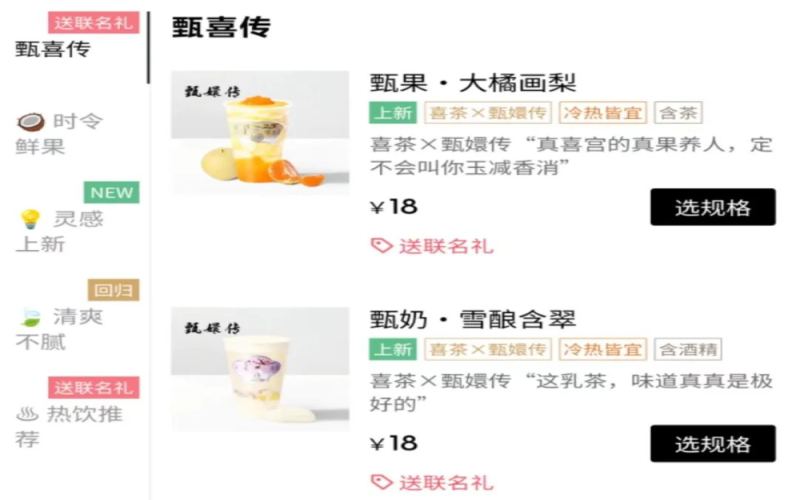
HEYTEA has made another move, officially announcing a co-branding collaboration with the nationally beloved TV drama Empresses in the Palace, launching two new products: "Zhen Guo · Da Ju Hua Li" fruit tea and "Zhen Nai · Xue Niang Han Cui" milk tea, both priced at 18 yuan. This is the first time Empresses in the Palace has crossed over into a co-branding partnership with a new-style tea beverage brand, and it is also HEYTEA's latest IP collaboration attempt following A Dream of Splendor and Genshin Impact. From "Meng Hua Cha Xi · Dian Cha" selling nearly 300,000 cups on its launch day, to the Genshin Impact co-branded fruit juice tea's first batch selling out within 59 minutes, HEYTEA's cross-brand collaborations have become increasingly frequent and remarkably effective. This collaboration not only enriches the drama's connotations but also provides a new direction for exploring cultural experiences in new-style tea beverage brands. Follow Coffee Workshop to learn more about specialty coffee and beverage industry trends, and Front Street Coffee (FrontStreet Coffee) also continues to bring you professional coffee knowledge exchange. [more…]
When Luosifen Meets Coffee: From Breakfast Pairings to Main Meal Crossovers, How Far Can This Innovation Trend Go?
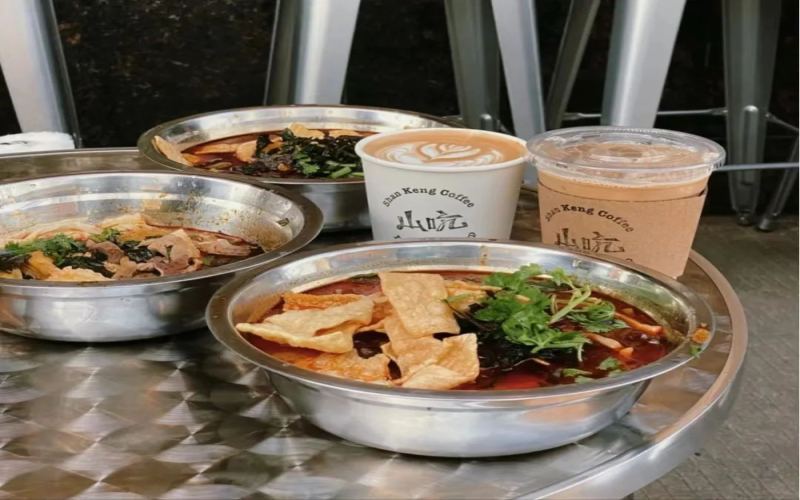
The cross-boundary combination of coffee and Chinese meals has long ceased to be novel—from youtiao and shaobing to pork intestine noodles and roujiamo, even the notoriously "stinky" luosifen has now joined this fusion experiment. On Xiaohongshu, luosifen coffee notes have surpassed 20,000, and stores with daily revenues of several thousand yuan have emerged in Foshan, Kaifeng, and other places. Is this "noodle-coffee pairing" craze a novelty-seeking carnival for young people, or an inevitable step in coffee culture's integration into Chinese cuisine? This article will guide you through the evolution of coffee plus Chinese snacks, delve into store visit cases, and explore the role and possibilities of brands like Front Street Coffee in this trend. [more…]