







Is Mixing Coffee With Chinese Meals a Lasting Trend?
Luosifen coffee has moved from experiment to bestseller in parts of China. Notes on Xiaohongshu about the pairing have passed 20,000, and shops in Foshan, Kaifeng and other cities report daily revenue in the thousands of yuan. The drink follows a longer line of coffee and Chinese food combinations, from fried dough sticks and baked flatbreads to fatty intestine noodles and meat-stuffed buns.
What separates this wave from earlier attempts is scale. Most previous pairings stayed isolated cases without much reach, while luosifen coffee has drawn younger customers in cities including Jingmen, Changsha, Qingdao and Liuzhou, the hometown of luosifen itself. The open question is whether mixing coffee with main meals becomes a durable part of street coffee culture or fades as a novelty.
Cross-border combinations of coffee and Chinese meals have long ceased to be novel. From fried dough sticks and baked flatbreads to fatty intestine noodles and meat-stuffed buns, even the notoriously "stinky" luosifen has now joined this mashup experiment. On Xiaohongshu, luosifen coffee notes have surpassed 20,000, and stores in Foshan, Kaifeng, and other places are emerging with daily revenues of several thousand yuan. Is this craze for "noodle-coffee pairings" just a novelty frenzy among young people, or an inevitable step in coffee culture integrating into Chinese cuisine? This article will guide you through the evolution of coffee plus Chinese snacks, delve into case studies of store visits, and explore the roles and possibilities for brands like Front Street Coffee in this trend.
Luosifen, like durian, cilantro, and fish mint, is a food that polarizes people—devotees flock to it, while detractors avoid it at all costs. It is this aggressively flavored snack that has finally been targeted by those "innovative" coffee enthusiasts keen on mixing coffee with everything. Thus, a bowl of luosifen coffee with the aroma of sour bamboo shoots has confidently stepped into the public eye.
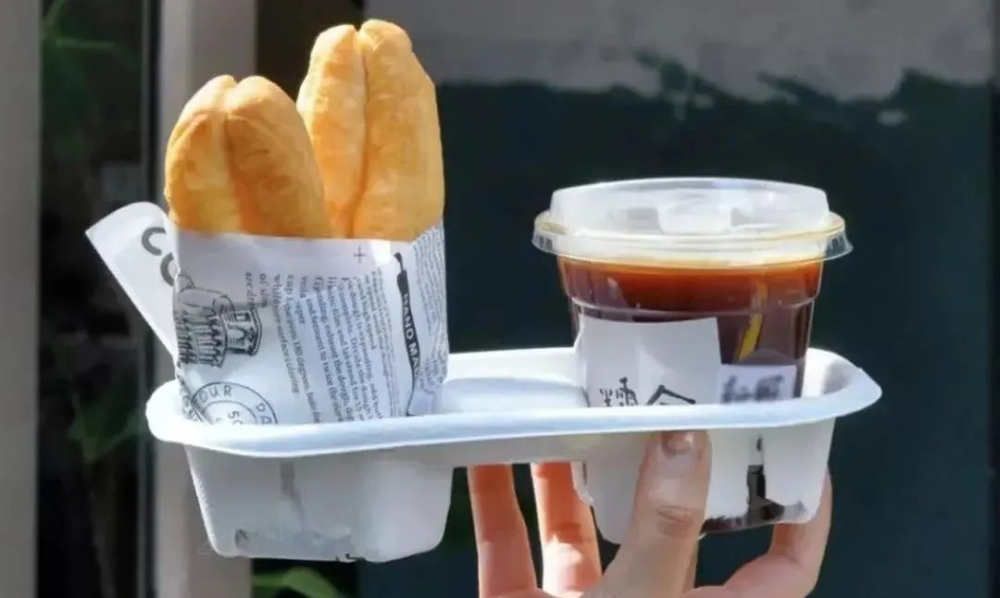
The coffee world has long explored "East-meets-West" combinations. In recent years, breakfast options like coffee with fried dough sticks, coffee with baked flatbreads, coffee with steamed buns, and coffee with rice noodle rolls have appeared. The snack sector hasn't lagged behind either, with coffee paired with beef offal, coffee with jianbing guozi, and coffee with meat-stuffed buns taking turns on the stage. Now, new ways of pairing coffee with Chinese main meals are quietly gaining momentum.
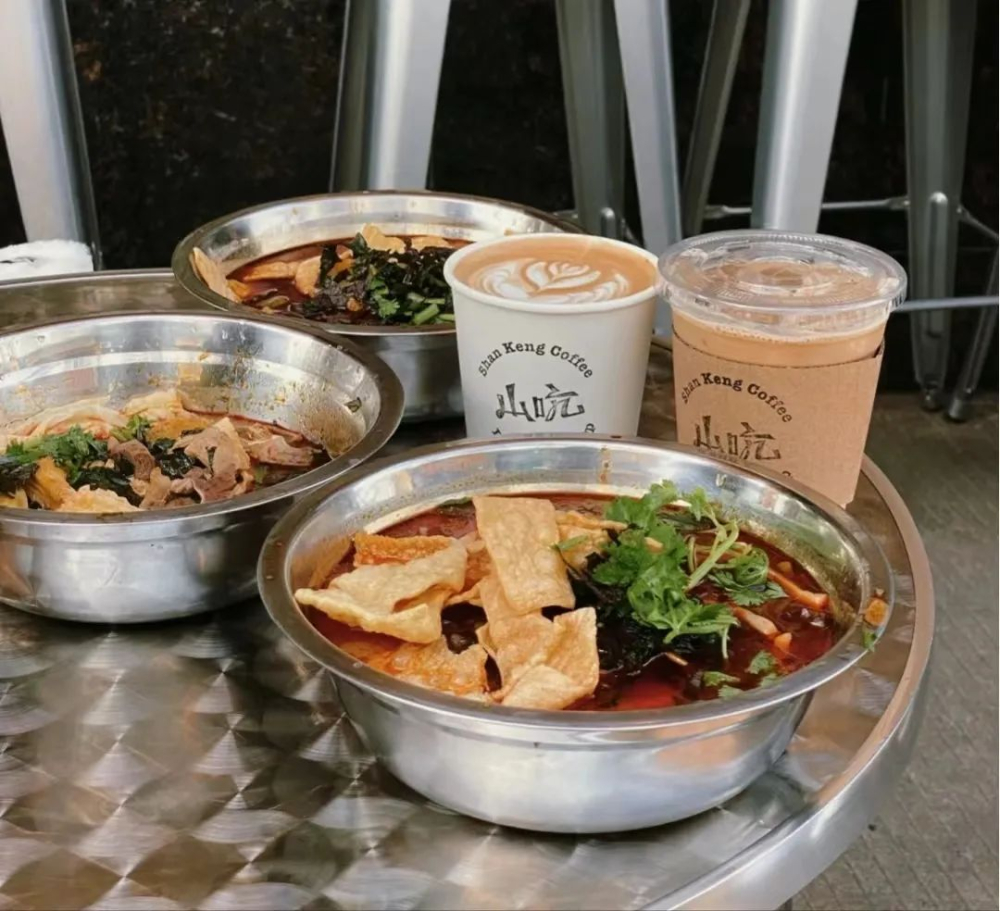
Before luosifen, coffee had sparked connections with street foods like fatty intestine noodles, tossed noodles, and braised pork rice with pickled vegetables, but most were isolated cases that didn't create much of a splash. This time, though, luosifen plus coffee has genuinely won over many young people and even become a bestseller benchmark.
A search for "luosifen coffee" on Xiaohongshu yields over 20,000 related sharing notes. Browsing the content, it's almost unanimously praised as a "dream combination." Check-ins span multiple cities, including Foshan in Guangdong, Jingmen in Hubei, Kaifeng in Henan, Changsha in Hunan, Qingdao in Shandong, and Liuzhou in Guangxi, the hometown of luosifen.
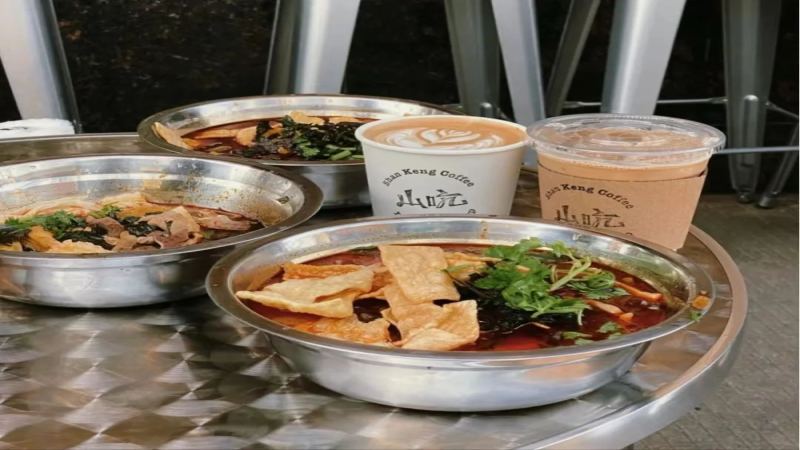
In Foshan, a store called Shan Keng & Coffee, which opened just late last year, has already achieved sales of 300 bowls per day. The owner reveals that most customers come specifically for the "noodle-coffee pairing." The store is divided into a luosifen area and a coffee area. A bowl of original luosifen is priced at 12 yuan, with additional toppings ranging from 3 to 12 yuan. For coffee, they offer two single-origin beans, making regular espresso drinks like Americano, latte, and flat white, priced between 10 and 18 yuan. For under 40 yuan, you can experience this combo, making it quite affordable.
In Kaifeng, Chou Chou Ka Luosifen also features the "trendy-rustic combo" of luosifen and coffee as its main draw, with luosifen priced at 13 to 17 yuan and coffee at 13 to 19 yuan, averaging around 30 to 40 yuan per person. The manager states that daily revenue is about 5,000 yuan. So, is the meeting of coffee and luosifen really that "fragrant"?
In recent years, luosifen, with its unique "stinky" odor, has spread from street stalls in Liuzhou to the whole country, becoming a hit national delicacy. The coffee industry has its "coffee plus" cross-border thinking, and the luosifen industry similarly has "luosifen plus" innovations, such as KFC's Guilin sour bamboo shoot-flavored burger and McDonald's sour bamboo shoot chicken wrap, both fully tapping into the fusion potential of this sour and stinky force.
When coffee and luosifen, these two hit products, collide, it's no surprise they attract young people who spend all day scrolling on their phones in search of novel foods. Since coffee entered the Chinese market, it has gradually become a daily beverage for some, so pairing it with Chinese meals is an inevitable direction for the integration of coffee culture with local Chinese culture.
In the end, one can only say: we're one step closer to coffee with stinky tofu going viral!
The above content is compiled by CoffeeHunters, a coffee news website.


