







Why Does the China Coffee Industry Attract Non-Coffee Brands?
Coffee remains a hot track for capital in China, and companies far outside the category keep opening stores. The postal service launched its first Post Coffee in Xiamen in February 2022 and later expanded to several popular cities with 12 physical stores. Li-Ning, Xtep, Brain Platinum, Huawei, Goubuli Baozi, and Tai Er Sauerkraut Fish have also launched coffee offerings.
These brands rarely intend to build deep coffee expertise. They are drawn to coffee's youthful traffic and fashionable attributes as a way to get closer to consumers, and Tongrentang's Zhima Health used herbal coffee and punk wellness marketing as its hook. Once the hype fades, players without coffee DNA may struggle, since market competition is fierce and consumption scenarios often do not match.
In recent years, big brands across all industries have been venturing into the coffee sector, from the postal service and Li-Ning to Xtep, Brain Platinum, and Huawei—cross-industry coffee sales have become a trend. These brands don't genuinely intend to delve deep into the coffee business; rather, they are drawn to coffee's inherent youthful traffic and fashionable attributes as a way to get closer to consumers. However, once the hype fades, can cross-industry players lacking coffee DNA continue to attract customers? The fierce competition in the coffee market and the mismatch in consumption scenarios make such attempts full of uncertainty. This article reviews typical cases of cross-industry coffee ventures, analyzes the marketing logic behind them, and explores the challenges and hidden concerns this model faces.
Today, big brands dabbling in cross-industry coffee sales is no longer novel. Besides fellow food and beverage companies, last year well-known enterprises such as the postal service, Li-Ning, Xtep, Brain Platinum, and Huawei also entered the fray one after another, presenting a lively scene of "everything can be coffee."
Cross-industry coffees in various styles
As in previous years, coffee remains a hot track favored by capital, with more and more giants personally opening stores.
In February 2022, the nation's first Post Coffee opened in Xiamen, and has since expanded into multiple popular cities, currently with 12 physical stores. Post Coffee co-founder and CMO Dong Kexin also proposed a "Hundred Store Plan," aiming to build a new generation of "national coffee brand."
When it comes to cross-industry coffee, what impressed me most was Tongrentang's "Zhima Health" launched in 2019, which used "punk wellness" as its selling point, focusing on herbal coffee and attracting many curious young people.
Besides time-honored brands, sports brands, internet companies, and chain restaurants are also not to be outdone. Li-Ning's "NING COFFEE" and Xtep's "XTEP COFFEE" appeared one after another, Goubuli Baozi and Tai Er Sauerkraut Fish also launched custom coffees, along with "Grid Coffee" invested by Yuanfudao, e-cigarette brand RELX's "Xingke ON," and even Brain Platinum, which targets the elderly demographic, joined in...
These cross-industry players come from all walks of life, with no connection to coffee whatsoever, yet they all rush into the coffee market. Is coffee really that tempting?
"Selling coffee" is merely the surface
The purpose of cross-industry brands entering the coffee sector is simply to leverage coffee—a youthful element with inherent traffic—to strengthen brand image and thereby retain more customers. "Coffee+" allows big brands to easily gain exposure, and personalized styles may even become trendy spots sought after by young people.
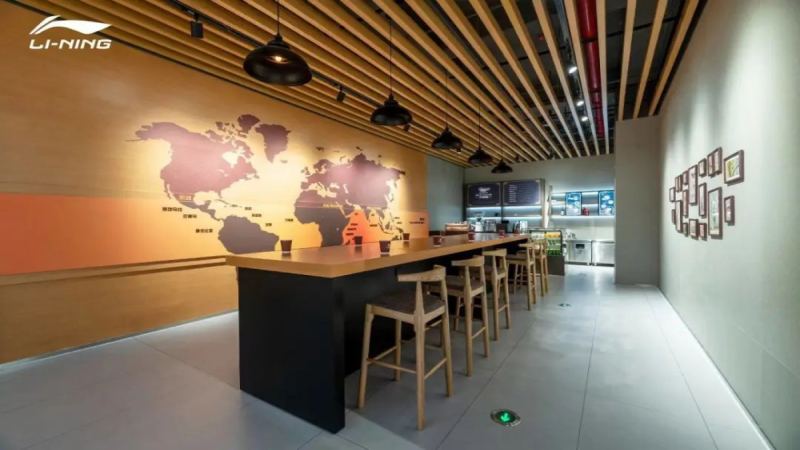
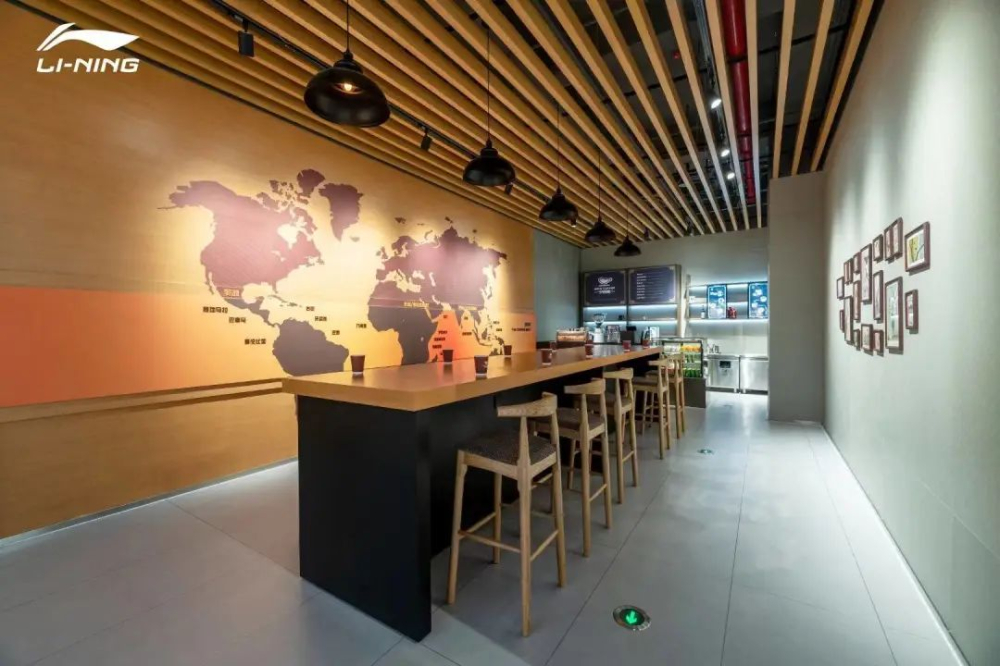
Take Li-Ning's "NING COFFEE" as an example. Before it even officially opened, check-in guides appeared on social platforms: "Spend at least 499 yuan in-store to get a free cup of 'NING COFFEE.'" It's clear that as long as big brands are associated with coffee, they can always attract a wave of attention. At the same time, coffee's light-luxury attributes make the brand appear more fashionable and give it broader promotional reach.
Why are big brands so obsessed with coffee?
The "China Coffee New Wave—2022 China Coffee Industry Development Report" points out that coffee consumption has shifted from "chasing trends" to "coffee for survival," with young people developing the habit of drinking coffee, and coffee is becoming an everyday beverage.
With the popularization and mainstreaming of coffee, not only the beverages themselves but also sales of related products have grown considerably. Big brands have precisely recognized the coffee market's popularity, believing that competition in the coffee circle is relatively small and potential greater, plus the gimmick of online marketing helps deepen the connection between brands and consumers. For example, "sauerkraut latte" may not be something anyone wants to drink, but someone will always take a photo and post it on Moments.
However, once the hype fades, coffee "can't save them" either
Back within the coffee circle, major chain brands stand everywhere, and competition is extremely fierce. To survive, "involution" tactics emerge endlessly. These cross-industry brands, as "outsiders," have product audiences that don't overlap with coffee consumers, so ultimately they may only get one-time check-in traffic.
Consumers going to a Li-Ning store to buy clothes and going to a coffee shop to drink coffee are seeking completely different spaces, and their consumption purposes will ultimately diverge.
Besides, how many people are willing to spend a full 499 yuan just for a free cup of coffee?
Overall, the coffee market has a bright future, with enormous scale and potential, and many entrants. But blindly following the trend of cross-industry ventures just to chase momentary hype will only damage the good image accumulated over years. Therefore, cross-industry coffee still requires careful consideration before acting.
The above content is compiled by CoffeeHunters, a coffee news website.


