







How Are Osmanthus Coffee and Wellness Milk Tea Changing?
University cafeterias, Chinese medicine shops and time-honored brands are entering the milk tea market with health-oriented products. Fudan University's medical school prints drug-instruction cup sleeves, Beijing University of Chinese Medicine adds ginger, cinnamon, dried tangerine peel, red dates and goji berries, and Shanghai brand Tong Han Chun Tang sells ginseng and peach gum milk tea.
Reviews describe the Fudan drinks as light and low in sweetness, with osmanthus coffee and osmanthus oolong showing prominent floral aroma and clear oolong character, while caramel milk tea is smooth with a full caramel note. Brands are also swapping non-dairy creamer for fresh fruit and fresh milk, though food safety issues keep surfacing and complicate the shift toward health positioning.
When the milk tea cup sleeves at Fudan University's medical school are printed with drug instructions, when Beijing University of Chinese Medicine adds ginger, cinnamon, dried tangerine peel, red dates, and goji berries to milk tea, and when Shanghai's time-honored Chinese medicine brand Tong Han Chun Tang launches ginseng and peach gum milk tea with "medicine and food from the same source" as its selling point, the milk tea category is undergoing a transformation attempt from "junk food" to "health drink." University cafeterias, Chinese medicine shops, and time-honored brands are all entering the market across sectors, trying to reshape the image of milk tea with the concept of health. At the same time, milk tea brands are also making changes on the ingredient side, with fresh fruit and fresh milk replacing non-dairy creamer as selling points. However, milk tea news trending on social media is repeatedly linked to food safety issues, and the road to transformation is not smooth.
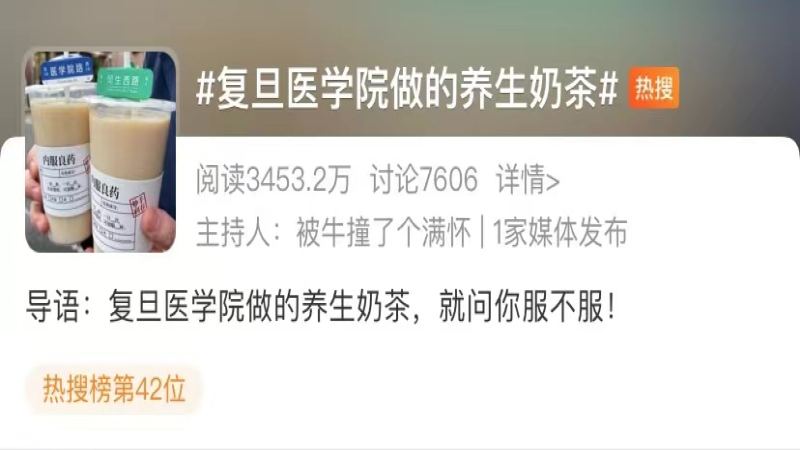
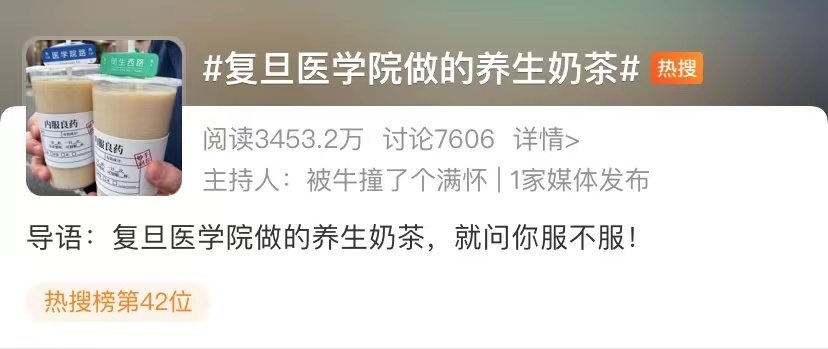
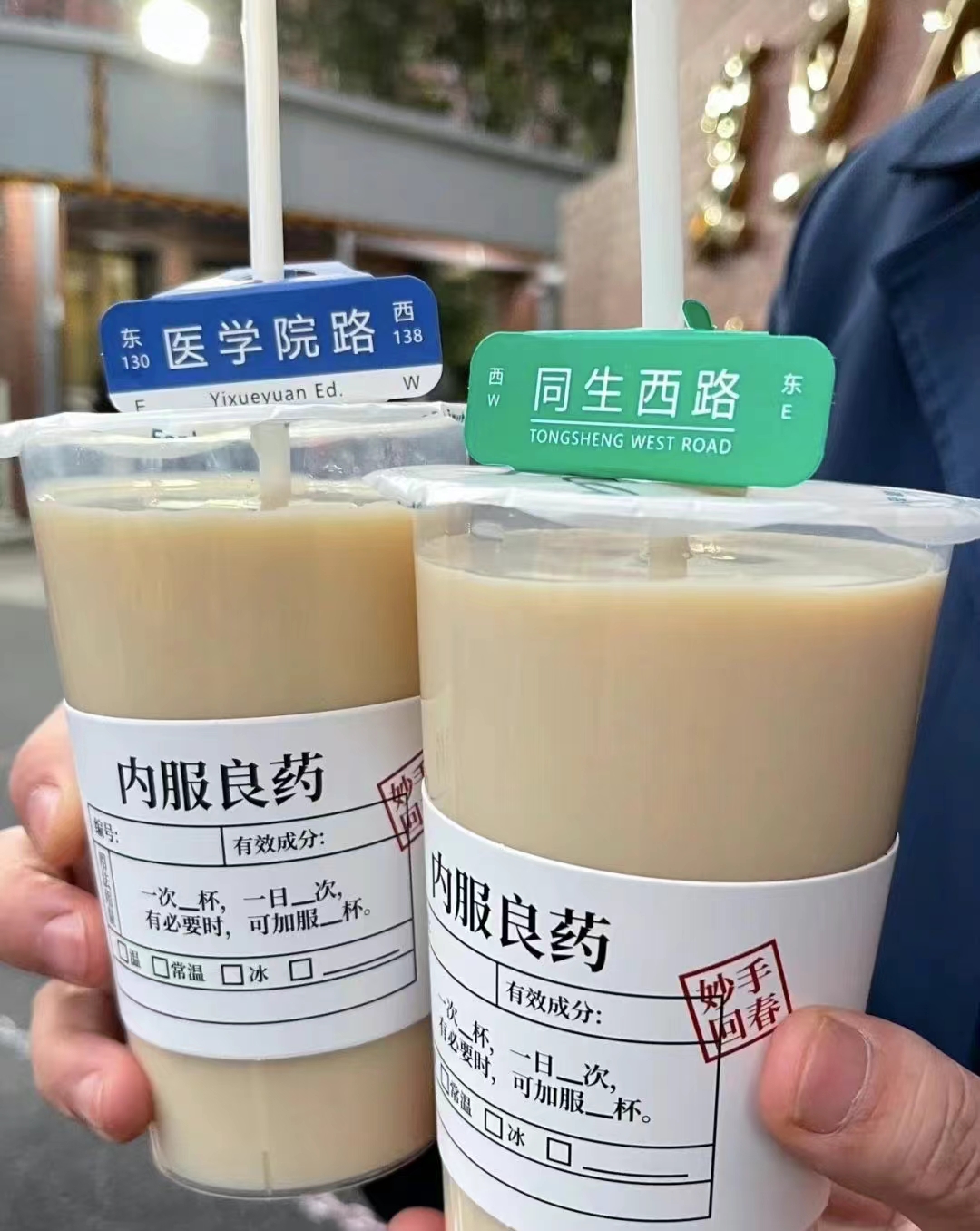
Fudan University's health-preserving milk tea—just ask yourself, do you accept it or not? "Taken orally as good medicine, with a wonderful hand that brings spring back." I'm afraid you have no choice but to accept it.
As can be seen from the image, each cup of milk tea comes with a cup sleeve that says "Taken Orally as Good Medicine," printed in the format of a drug instruction leaflet, which fits perfectly with its identity as a "medical school." In a video uploaded on October 30 by well-known food blogger [Foodie Zhu Limi], a brief review was made of the caramel milk tea and osmanthus oolong milk tea. Overall, these two milk teas taste relatively light, with sweetness controlled very low, making them easy to drink without feeling weighed down. In the osmanthus oolong milk tea, the osmanthus fragrance is prominent, and the charm of the oolong tea is also clearly recognizable. The caramel milk tea is smooth on the palate, with a full caramel aroma. The lighter flavoring instead makes what would easily be overly sweet and cloying milk tea refreshing, making you want to drink more with every sip.
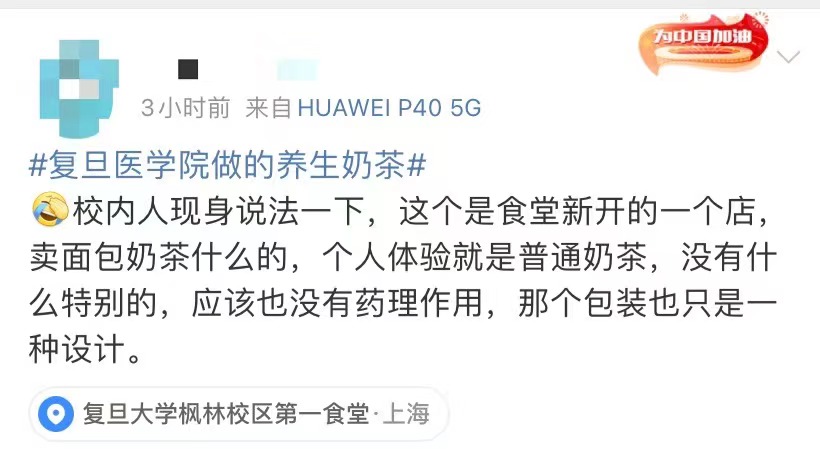
Of course, Fudan's medical school is more of a marketing gimmick. On Weibo, a well-meaning person on campus came forward to explain: this milk tea is merely a product of a newly opened milk tea shop at the No. 1 Cafeteria on the Fenglin Campus of Fudan University Shanghai Medical College, and is essentially ordinary milk tea. Although the packaging is designed to look like medicine, it does not have any pharmacological effects.
Because this milk tea shop is located inside the campus, you must swipe your student ID to enter the school and buy it. In a sense, this threshold also led netizens to joke that nowadays even drinking a cup of milk tea requires a degree. It is reported that in addition to milk tea, the shop also offers coffee, ice cream, and other choices.
Do you think Fudan University's medical school is the pioneer of health-preserving milk tea? Not necessarily. Beijing University of Chinese Medicine also has similar milk tea products, and they may even be a cut above. Judging from photos posted on Weibo by netizens, several drinks at this milk tea shop include health-preserving ingredients such as ginger, cinnamon, dried tangerine peel, red dates, and goji berries. Although the information available is not yet complete, based on existing clues, the author speculates that these products likely come from a milk tea shop in the innovation and entrepreneurship space on the west campus of Beijing University of Chinese Medicine.
In addition to well-known universities, many time-honored Chinese medicine shops also seem to have entered the milk tea business one after another. Shanghai's time-honored Chinese medicine brand [Tong Han Chun Tang], with its long history, has transformed into a health-preserving milk tea shop, focusing on the concept of "medicine and food from the same source" and incorporating nourishing natural ingredients such as ginseng and peach gum into milk tea. Similarly, Coffee Workshop previously reported that Tongrentang had跨界 launched a health-preserving late-night drink brewed from Chinese medicinal herbs. Zhang Zhongjing Pharmacy has also crossed over into selling milk tea, adding ejiao, monk fruit, aloe, Chinese yam—whatever is nutritious, they add it.
In recent years, "milk tea" has been constantly striving to shed the label of junk food and trying to overturn the stereotype in the public mind that "drinking milk tea equals being unhealthy." Rather than saying that time-honored brands are flocking to join the milk tea camp for innovative development and to broaden their track, it is more accurate to say that milk tea itself is transforming in the direction of health products. The reason milk tea is considered unhealthy mainly lies in sugar and trans fats; long-term excessive consumption will inevitably lead to obesity or pathological health problems. The first step major fruit tea brands have taken in transformation is to standardize the use of fresh fruit, which has reassured consumers considerably. The choice of milk is also particular. As the public rejects non-dairy creamer products, fresh milk has become almost the only choice, and many milk tea shops specifically label products that use milk.
Milk tea brands have made many efforts to break through the dilemma—innovating product content, upgrading packaging design, carrying out co-branded sales, and closely following health trends—but who could have expected it? Within just a few months, the reasons milk tea has trended on social media have almost all been food safety issues. And the milk tea trending today is actually riding on the coattails of a university medical school. I wonder what thoughts you, the reader of this article, have about this?
Image source: Weibo
The above content is compiled by CoffeeHunters, a coffee news website.


