







How is the arabica coffee market in China shifting?
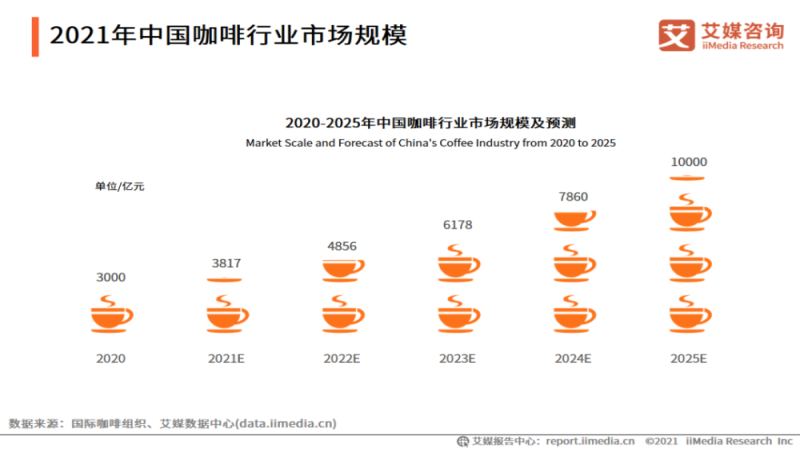
China's coffee consumer base has grown to about 300 million people, and the market was worth roughly 381.7 billion yuan in 2021, with projections of one trillion yuan by 2025. Luckin surpassed Starbucks in store count in the fourth quarter of 2021, becoming the largest chain coffee brand in China with more than 7,000 stores after recovering from its financial fraud turmoil.
Starbucks continues to insist on self-operated stores and further expansion, while Manner and NOWWA raise financing and open outlets quickly. International brands including Tims and %Arabica have entered the market, and arabica remains the base for most of their espresso and milk drinks. Chain-store penetration in China stays low, leaving room for continuing competition among local and crossover players.
The domestic coffee consumer base in China has expanded to about 300 million, and the market continues to grow, with projections suggesting it could reach a trillion yuan by 2025. Luckin has made a strong comeback after its turmoil, with its store count once surpassing Starbucks; Starbucks insists on self-operation and plans to continue expanding; new brands like Manner and NOWWA are accelerating financing and store openings, while international brands such as Tims and %Arabica have also entered the market one after another. Frequent moves by capital and cross-industry giants have filled China's coffee market, which still has a low chain-store rate, with imaginative potential. Front Street Coffee also continues to monitor specialty coffee trends and industry changes.
For professional coffee knowledge exchange and more coffee bean information, please follow Coffee Workshop (WeChat public account: cafe_style)
For more specialty coffee beans, please add the private WeChat of Front Street Coffee: qjcoffeex
Coffee culture is becoming increasingly popular, consumption levels are rising, and people's recognition and understanding of coffee are deepening accordingly, with more and more people enjoying coffee. Previous statistics showed that the domestic coffee consumer base is about 300 million. Against this backdrop, many well-known enterprises have entered the field across sectors, accelerating their layout in coffee.
The coffee sector continues to heat up. In 2021, China's coffee market size was about 381.7 billion yuan; iiMedia Research predicts that by 2025 this figure will rise to 1 trillion yuan, equivalent to three times the current volume. In 2020, the overall size of China's coffee market was only 86.1 billion yuan. For a long time, chain coffee has occupied the largest share of the overall market, but the expandable space for chain coffee in China is clearly far from its ceiling.
After experiencing financial fraud, internal team conflicts, and the departure of the founding team led by Lu Zhengyao, Luckin achieved a "resurrection" in two years and turned a profit. In addition to the rapid recovery in performance, Luckin also maintained strong growth in store count: in the fourth quarter of 2021, it successfully overtook veteran player Starbucks and became China's largest chain coffee brand with more than 7,000 stores.
As of the third quarter of 2022, Luckin Coffee's total number of stores nationwide reached 7,846, with revenue of 3.895 billion yuan, a year-on-year increase of 65.71%; the average monthly number of transacting customers increased by 70.5% year-on-year to 25.1 million. In the first three quarters of 2022, Luckin launched 92 new products, and hit items such as Thick Milk Latte, Coconut Latte, and Coconut Cloud Latte continued to attract consumer attention. However, the battle for the top spot in the coffee market is far from settled.
Starbucks closed all of its franchised stores in China in 2018, and currently all are managed in a standardized and refined manner as self-operated stores. Adopting a fully self-operated format not only reflects Starbucks' high regard for the Chinese market, but also lays the foundation for building a high-level "self-operated + franchise" system in the future. According to the plan, Starbucks' total number of stores in mainland China will exceed 9,000 by 2025.
In recent years, a number of emerging domestic chain brands such as Manner, M Stand, and NOWWA Coffee have also been growing rapidly. In June this year, NOWWA Coffee, which has more than 1,500 stores, announced the opening of 100 stores at once; in November, it announced again the opening of 120 stores at once. Boosted by capital, Manner Coffee has been gaining momentum, completing four financing rounds in just half a year, and its current valuation has reached the level of 10 billion yuan.
In addition, Tims Coffee, priced between Starbucks and Luckin, as well as international chain brands such as %Arabica, have also entered the Chinese market one after another...
Companies such as Sequoia Capital, Black Ant Capital, IDG, Tencent, Meituan, and ByteDance, whether seeing the trend in the coffee market or not, have all invested substantial funds in China's coffee industry. A few years ago, many people still thought coffee had little future in China; in just a few short years, coffee has become a new trend in investors' eyes, and it can even be said to have broad prospects.
However, the current proportion of chain operations among domestic coffee shops is still less than 13%, and the chain-store rate remains relatively low compared with the U.S. market. If cross-industry giants such as Li-Ning and China Post also enter chain operations, they will certainly become a force in China's coffee chain sector that cannot be underestimated.
Whether they are professional players accelerating their layout, emerging chain brands that have risen in recent years, or cross-industry players making disruptive moves, all are proving that China's coffee industry chain is rising rapidly, and competition is becoming increasingly fierce along with it.
Image source: Internet
The above content is compiled by CoffeeHunters, a coffee news website.


