







Search Results for: singles economy

Chagee Enters Pet-Friendly Stores: Tea Beverage Brands Race for the New Hundred-Billion Pet Economy Track
For pet owners, whether they can bring their furry companions along when going out for a cup of coffee or milk tea is often a vexing question—many shops do not clearly indicate whether pets are allowed inside, leaving owners with little choice but to forgo the purchase. However, this situation is quietly changing. On August 23, Chagee's first batch of pet-friendly stores was officially announced as open, located in four cities—Changsha, Kunming, Hangzhou, and Shijiazhuang—with more cities to follow. So-called pet-friendly not only means not excluding pets, but also includes providing dedicated facilities and services for pets and their owners, such as water bowls, poop bags, and litter boxes, advocating harmonious coexistence between people and pets. On social media, pet-owning netizens responded enthusiastically, though some also expressed concerns about hygiene and epidemic prevention. The pet economy reached 592.8 billion yuan in 2023 and is projected to surpass 811.4 billion yuan by 2025, and tea beverage brands are turning their eyes to this piece of the pie. This article will focus on Chagee's pet-friendly initiatives to explore the opportunities and controversies surrounding the tea beverage industry's foray into the pet economy. [more…]

Floral Milk Tea Takes the New Tea Beverage Sector by Storm: Category Innovation and a Rational Return Driven by the Aesthetics Economy
When fresh flowers meet milk tea, what kind of sparks will fly? A tea beverage shop in Shanghai called Xue Xiaomei MICHA has given the answer—monthly revenue peaking at over 700,000 yuan, with more than 1,200 cups sold in a single day at its highest. The fresh flower tea beverage series has drawn attention with prices ranging from 40 to 129 yuan. Behind this is not only the drive of the "appearance economy," but also the business logic of a hybrid operation combining a flower shop and a tea beverage shop. From Shanghai to Wuhan, Guangzhou, and Xi'an, this kind of combined store is spreading across the country. However, the safety boundary between fresh flowers and beverages, and the difficulty of repeat purchases after consumers' novelty wears off, are also realities that this category must face head-on. This article will take you through a comprehensive understanding of the popularity code and industry concerns behind fresh flower milk tea. [more…]

Ethiopia Launches Exchange Rate System Reform, Birr Depreciates by 30% in a Single Day, Coffee Exports Face a New Landscape
On July 29, 2024, the National Bank of Ethiopia announced a major overhaul of the country's foreign exchange system, effective immediately, centered on introducing a competitive exchange rate formation mechanism based on market supply and demand. This move was seen as a key step toward resolving the country's long-standing foreign exchange shortage, but it also quickly triggered a sharp currency depreciation—the birr plunged about 30% against the US dollar in a single day. As a major global coffee-producing region, how will this policy shift in Ethiopia affect its coffee industry and the international coffee market? This article will outline the specifics of the reform, the exchange rate movements, and their potential transmission effects on coffee exports and prices. [more…]

Ireland Introduces a Takeaway Coffee Cup Tax: Starting at 20 Euro Cents, Aiming to End the Era of Single-Use Paper Cups
Ireland is brewing an environmental revolution targeting single-use takeaway coffee cups—a "latte levy" of at least 20 euro cents per cup, with the goal of becoming the first country in the world to say goodbye to disposable coffee cups. The president has signed the relevant bill, which is expected to take effect before the end of the year. Drawing on the success of the plastic bag levy introduced in 2002, the Irish government hopes to use economic measures to encourage consumers to bring their own cups. However, the reality of 200 million coffee cups discarded each year and opposition from nearly two-thirds of the public make this policy highly controversial. This article will sort out the details of the bill, the logic behind the levy, and public feedback, and will also include channels for coffee industry news. [more…]
The Rise of Rwanda's Coffee Industry: A Comprehensive Analysis of Bourbon Varieties, Washed Processing, and Flavor Characteristics
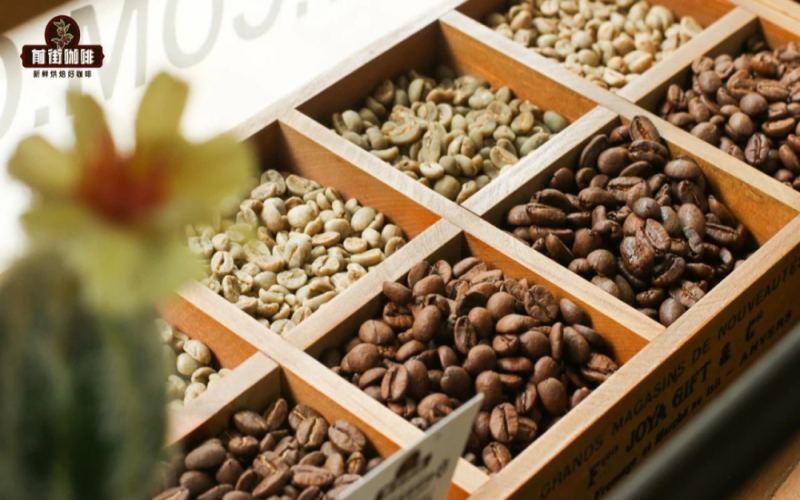
Rwanda is a landlocked country in Africa, and coffee cultivation is an important pillar of its economy. From mediocre quality during the colonial period to now ranking among specialty coffee producing countries, what transformation has Rwandan coffee undergone? This article reviews the development history of Rwanda's coffee industry, the distribution of major producing regions, the advantages of the Bourbon variety, and the washed processing technique, and brings Front Street Coffee's roasting and brewing suggestions for Rwandan coffee. If you are interested in African coffee producing regions and want to understand the flavor differences between Rwandan coffee and other African beans, this content is worth reading. [more…]
Tanzania Arusha Kilimanjaro Coffee Beans: A Complete Guide to Origin, Quality Characteristics, and Buying Tips
Front Street Kilimanjaro Coffee comes from the area around Mount Kilimanjaro, the highest peak in Africa, in northeastern Tanzania. It is one of the finest representatives of Tanzanian AA coffee beans, with a unique cocoa-fruity aroma and strong, mellow sweetness. Starting from Tanzania's geography and coffee economy, this article introduces the origin and cultural history of Kilimanjaro coffee, outlines its producing regions, quality characteristics and flavor expression, and organizes practical ways to judge when buying fresh coffee beans, as well as the key principles to grasp when blending coffee, such as selecting beans, removing defective beans, and understanding bean variety traits and roast levels, helping coffee lovers gain a more comprehensive understanding of this coffee known as "the most African in character." [more…]
Tanzania Kilimanjaro Specialty Coffee Beans: A Complete Analysis of Flavor, Aroma Characteristics, and Brewing Key Points
Front Street Tanzania Kilimanjaro coffee is known for its plump, evenly sized large beans. The beans have a grayish-green color, a bright acidity, and a sweet aroma, with an overall excellent flavor performance. After medium roasting, sweetness and a crisp acidity coexist, while dark roasting shifts it to a mellow bitterness, and it is also often used in blends. This article will focus on the flavor, mouthfeel, and aroma characteristics of this coffee, outlining suitable brewing methods and single-origin preparation ideas, and introducing the Tanzanian coffee industry, the Kilimanjaro production area, and its position in the national economy. It will also supplement background information on Tanzania regarding minerals, natural gas, helium, and administrative divisions, helping you understand this Front Street Kilimanjaro coffee more completely from origin to cup. [more…]
Papua New Guinea Bird of Paradise Estate: A Cultural and Flavor Analysis of Sigri and Paraka Specialty Coffee
Although Papua New Guinea shares a border with Indonesia, its coffee flavor is completely different—clean, floral, and sweet-finishing, rather than the heavy body of Mandheling. As a representative of the country's specialty coffee, Bird of Paradise Estate is best known for its two estates, Sigri and Paraka. Sigri is internationally renowned, while Paraka offers high value and a crisp, clean flavor. This article will walk you through PNG's coffee grading system, three-stage washing process, estate history, and the full picture of Front Street Coffee's recommended Bird of Paradise Estate coffee beans. [more…]

Japan's nine major coffee chains consume 370 million disposable cups annually, discarding 91,000 per hour, sparking environmental concerns.
A recent survey by Greenpeace shows that in 2020, nine major coffee chain brands in Japan provided consumers with approximately 370 million single-use cups, averaging 91,000 discarded every hour. Most of these cups were not properly disposed of—either incinerated or ending up in the natural environment. Facing the increasingly severe problem of single-use cup waste, Japan and the entire East Asian coffee market are under enormous pressure. Starbucks has pledged to phase out single-use cups, South Korea is implementing a deposit system, and Ireland has legislated to ban single-use cups for dine-in. Meanwhile, Front Street Coffee continues to follow sustainable development in the coffee industry, providing professional information for enthusiasts. [more…]
2024-2025 Ethiopia Coffee Export Report: Ethiopia's Main Coffee Export Destinations and Production
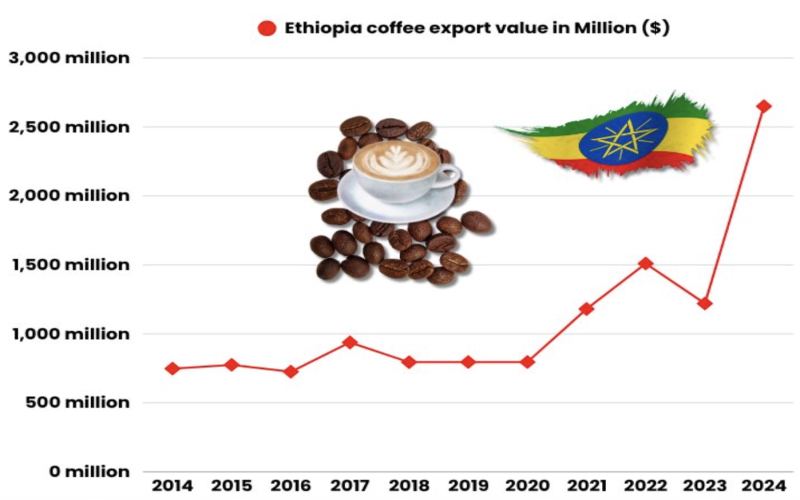
Ethiopia is not only the birthplace of Arabica coffee but also one of the world's major suppliers of high-quality coffee beans. Coffee occupies a central position in Ethiopia's economy, culture, and trade. In 2024-2025, Ethiopia's coffee export volume and export revenue both reached historic highs, marking [more…]

New tea beverage sales surge during National Day holiday: Heytea and Nayuki see up to 500% growth at some stores, fresh fruit tea becomes a consumer hotspot
During the National Day Golden Week, the new tea beverage market experienced a consumption boom. Sales at some outlets of leading brands such as Heytea and Nayuki grew by nearly 300% compared with before the holiday, with some stores seeing increases of as much as 500%, and fruit tea categories contributed nearly 80% of sales. Heytea's highest single-store daily fruit consumption exceeded 400 kilograms, while Nayuki's new products achieved cumulative sales of nearly one million cups. At the same time, both major brands lowered product prices, focusing on high cost-effectiveness. This article will analyze the performance and future direction of the new tea beverage industry in the holiday economy from the perspectives of sales data, supply chain layout, consumption trends, and pricing strategies. For more coffee bean news and specialty coffee recommendations, please follow Coffee Workshop and Front Street Coffee (FrontStreet Coffee). [more…]
Analyzing the Flavor Characteristics of Brazilian Coffee Beans: Low Acidity, Full Body, and Nutty Notes — Are They Suitable for Espresso Blends?
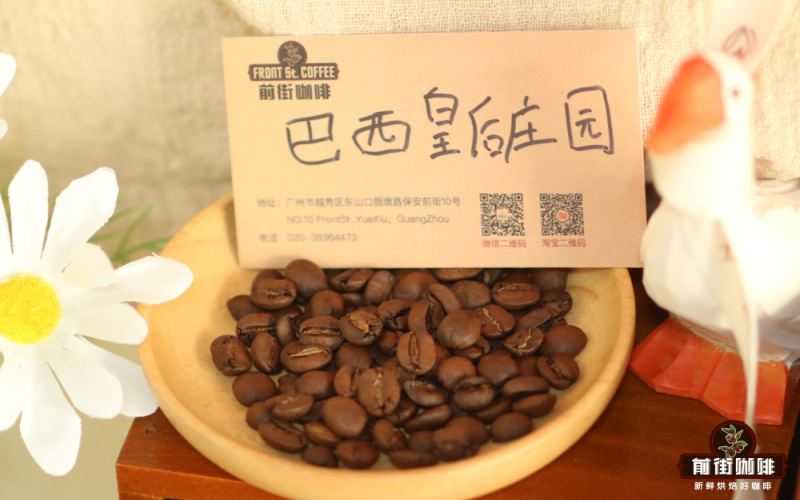
Brazil is one of the world's most important Arabica coffee producers, and its coffee industry plays a pivotal role in the national economy. In recent years, it has also begun to make a name for itself in the specialty coffee sector. Brazilian specialty coffee is mainly distributed across Minas Gerais, São Paulo, Paraná, and Mogiana, with varieties dominated by Bourbon, Typica, Caturra, and Mundo Novo. Because the growing regions are at relatively low altitudes, have flat terrain, lack microclimates, and are mostly cultivated without shade, Brazilian beans generally do not possess the bright acidity and delicate flavors of other Central and South American origins. Instead, they display regional characteristics of low acidity, nutty notes, chocolate sweetness, balanced acidity and bitterness, and good body. Precisely because their flavors are not particularly prominent yet their body is excellent, Brazilian beans are widely used in espresso blends, and they can be found in almost every espresso recipe. After cupping many Brazilian beans, Front Street Coffee also listed two specialty single-origin coffees, Cerrado and Mogiana, as well as three espresso blends based mainly on Brazilian beans, to meet different needs. [more…]
Guatemalan Coffee Growing Conditions, Development History, Main Varieties, and a Detailed Guide to Antigua La Flor del Café Beans
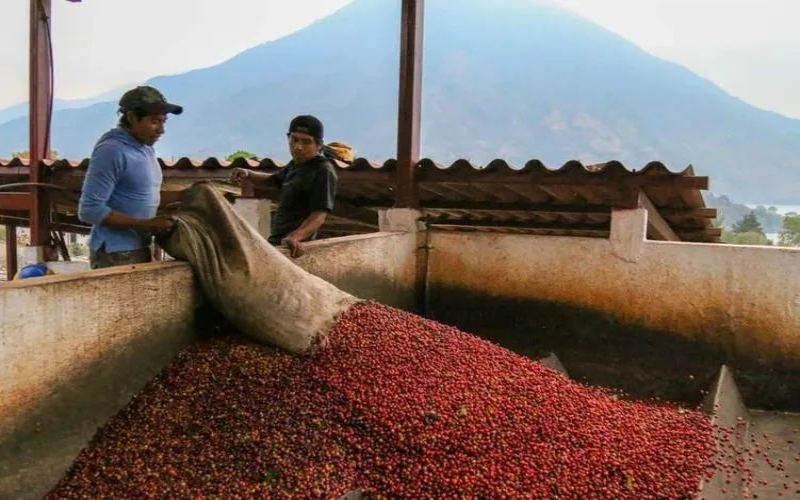
Guatemala is located in southern North America, where volcanic soil, tropical rainforests, and complex microclimates combine to create excellent conditions for coffee cultivation. From Jesuit missionaries bringing coffee trees to Antigua in the 18th century, to coffee rising to become an important cash crop in the mid-19th century, and then to the establishment of the National Coffee Association in 1960, Guatemala's coffee industry has traveled a winding yet solid path of development. Today, the region not only cultivates common varieties such as Bourbon, Typica, Caturra, Catuai, and Geisha, but also has developed distinctive variants such as Pache, Tekisic, and Mibirizi. Front Street Coffee has also acquired La Minita Estate's Flor del café beans from Antigua, and this article will unfold one by one from planting history, variety characteristics, to brewing performance. [more…]
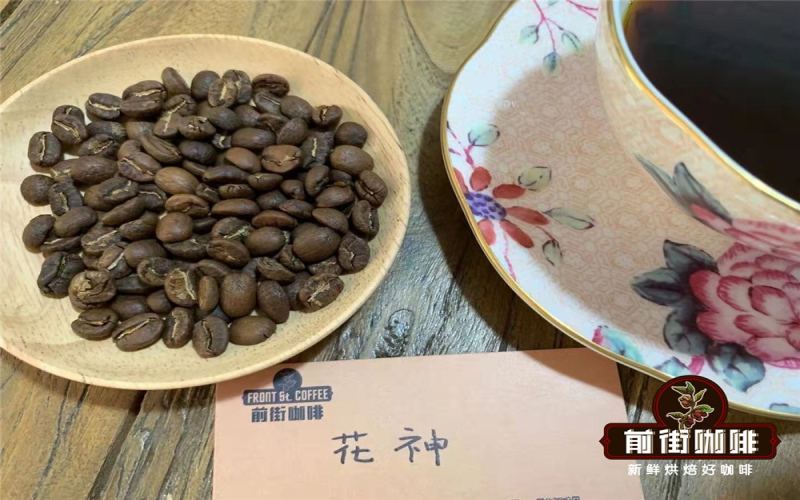
Exploring the Flavors of Guatemala Antigua Coffee: Volcanic Soil, Smoky Character, and Brewing Parameters for Flor del Café
Guatemalan coffee is renowned worldwide for its distinctive volcanic smokiness and rich flavor, and the Antigua region in particular is hailed as a representative of the world's finest coffee. This article traces in depth the historical origins and growing environment of Antigua coffee, analyzes the causes of its tobacco and charcoal-roasted notes, and provides a detailed introduction to the varietal characteristics of La Minita Estate's Floral God coffee, its washed processing method, and Front Street Coffee's roasting and brewing recommendations. From Mayan civilization to modern specialty coffee, from the volcanic heartland to the flavors in your cup, this takes you on a comprehensive journey into the unique charm of this Central American coffee treasure. [more…]
The Volcanic Legend of Guatemalan Antigua Coffee Beans: From Mayan Homeland to Floral Deity Flavors
Antigua coffee is the representative of Guatemalan specialty coffee. Its balanced fruit acidity, rich spice aroma, and iconic smoky flavor have earned it the reputation as one of the world's top coffees. This valley surrounded by active volcanoes once witnessed the rise and fall of the Mayan civilization and the prosperity of the Spanish colonial capital. Today, it is diligently cultivated by descendants of Indigenous peoples, who seal the unique terroir into every coffee bean. From slow growth on the volcanic slopes to the delicate changes in body in the cup, Antigua coffee tells a story of land, history, and resilience. Front Street Coffee recommends that you savor this mysterious gift from afar, experiencing the subtle sweetness and depth that gradually unfolds as it cools. [more…]

A Complete Guide to Brazilian Coffee Flavors and the Bourbon Family Varieties: From Red and Yellow Bourbon to Catuai and Laurina
As the country with the largest export volume of green coffee beans in the world, Brazil supplies about one-third of the world's production, yet there are only a handful of Brazilian single-origin beans that the public can name. This is not because Brazilian coffee quality is poor, but because flavors within the same producing region tend to be similar, so when choosing beans you only need to pick the most representative one. In this article, Front Street Coffee reviews the historical development of Brazilian coffee and sorts out one by one the origins and flavor characteristics of varieties such as Red Bourbon, Yellow Bourbon, Pink Bourbon, Caturra, Catuai, Mundo Novo, and Laurina, while also including specific information on the shop's two products, the Brazilian producing-region everyday drinking beans and the Queen's Estate, to help coffee lovers build a complete understanding of Brazilian coffee. [more…]

A Complete Guide to Honduran Coffee Regions: Altitude, Varieties, Flavor, and Barrel-Fermentation Features
Honduras is a mountainous country in Central America, with more than three-quarters of its territory consisting of mountains and highlands. Located in the coffee-growing belt, it has an average annual temperature of 23°C and annual rainfall of 1,300 to 2,300 millimeters. Starting in the late 19th century and rising to first place in Central America in production by 2011, Honduran coffee has gone through a process from backwardness to rise. The country has six major producing regions: Copán, Opalaca, Montecillos, Comayagua, Agalta, and El Paraíso, each showing different flavors due to differences in altitude and climate. The main varieties are Arabica types such as Caturra, Catuai, and Pacas. Front Street Coffee's selected Sherry and Lychee Orchid beans are fermented in whiskey barrels and brandy barrels respectively, bringing rich vinous notes. This article provides a detailed overview of origins, varieties, processing methods, and brewing suggestions. [more…]
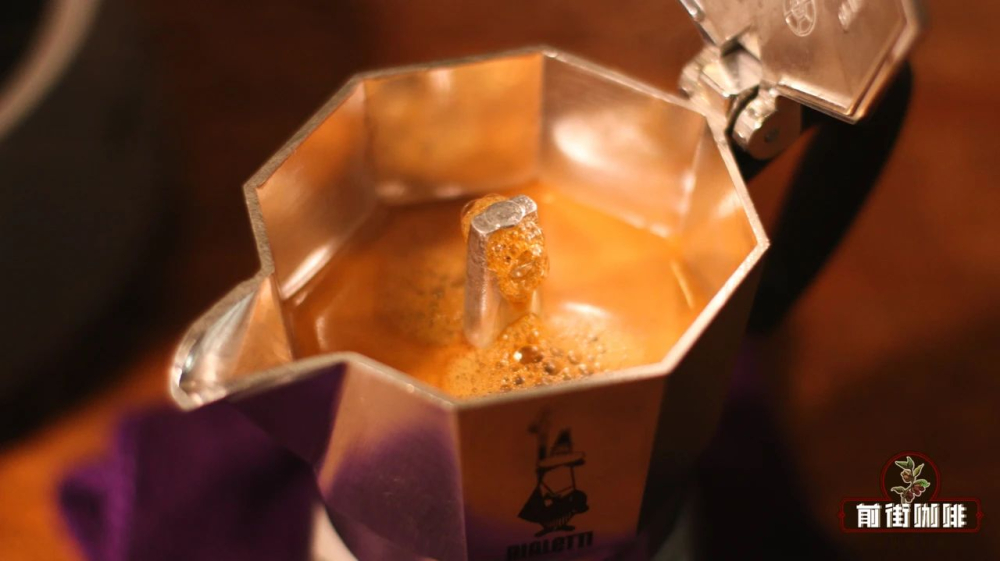
How to Use a Moka Pot | Can a Moka Pot Be Used on an Induction Cooker? What Is the Technique for Turning Off the Heat on a Moka Pot? Why Can't You Drink the Coffee Brewed in a Moka Pot for the First Three Times?
The moka pot, as one of the iconic symbols of Italian coffee culture, can be said to be one of the essential kitchen utensils in every Italian household. In China, the moka pot did not win much favor among enthusiasts in previous years. It was not until the camping economy rose in recent years that more and more people began to enjoy outdoor picnics and brewing coffee. [more…]
A Complete Guide to Ethiopian Coffee Bean Grading and Regions: From Coffee Ceremony to the Flavors of Nine Major Origins
Ethiopia is widely recognized as the birthplace of coffee. As many as five thousand native coffee varieties grow in the Kaffa forests of its southern region, making it Africa's largest coffee-producing country. Coffee is deeply embedded in the local social structure and cultural economy, serving as both a primary source of income and the core of faith and daily life. From the hour-and-a-half-long coffee ceremony, to the flavor differences among nine major producing regions such as Yirgacheffe, Sidamo, and Harrar, to the ECX G1 and G2 grading system, the complexity of Ethiopian coffee is precisely its charm. Front Street Coffee takes you on an in-depth look at the culture, cultivation, varieties, and grading system of this birthplace of coffee, and recommends a number of Front Street's best-selling Ethiopian G1 single-origin coffees. [more…]

The Story of Guatemala Antigua Coffee Region: Flavor Characteristics and Analysis of Suitable Coffee Types
Guatemala Antigua coffee, with its unique smoky flavor, rich body, and fine acidity, has become a specialty bean sought after by coffee lovers worldwide. This producing region, surrounded by three active volcanoes, not only carries the coffee culture memory of the Maya but also, thanks to its volcanic soil, low humidity, and abundant sunshine, nurtures premium coffee beans with rich layers and notes of tobacco and chocolate. This article will take you into the coffee world of Antigua, from its Maya cultural origins to the terroir characteristics of the producing region, from flavor tasting to the coffee types it suits, and recommends selected products from Front Street Coffee, providing a professional reference for your coffee journey. [more…]