







What can a coffee origin country learn from floral milk tea?
A Shanghai tea shop called Xue Xiaomei MICHA pairs fresh flowers with milk tea, reporting monthly revenue above 700,000 yuan and more than 1,200 cups sold in a single day at its peak. Its fresh flower tea series includes six items priced from 40 to 129 yuan. Similar hybrid flower-and-tea stores have spread from Shanghai to Wuhan, Guangzhou, and Xi'an.
The format leans on visual appeal and a combined flower shop and tea shop setup. Questions remain over the safety boundary between fresh flowers and drinks and whether customers return after the novelty fades. For any coffee origin country watching China's beverage market, the case shows how presentation and category blending drive attention, but repeat purchase is the harder test.
What kind of sparks fly when fresh flowers meet milk tea? A tea shop in Shanghai called Xue Xiaomei MICHA has the answer—monthly revenue peaking above 700,000 yuan, with more than 1,200 cups sold in a single day at its best. The fresh flower tea series has drawn attention with prices ranging from 40 to 129 yuan. Behind it lies not only the pull of the "looks economy" but also the business logic of combining a flower shop with a tea shop. From Shanghai to Wuhan, Guangzhou, and Xi'an, this kind of hybrid store is spreading across the country. Yet the safety boundary between fresh flowers and drinks, and the challenge of repeat purchases after consumers' novelty wears off, are realities this category must confront. This article will give you a comprehensive look at the secrets behind the rise of fresh flower milk tea and the industry's hidden concerns.
In many desserts, fresh flowers are often used as a garnish; adding a scattering of petals can significantly enhance the visual appeal and thus make the product more appealing to customers. But have you ever imagined what it would look like to pair fresh flowers with milk tea?
The answer is clear—it becomes a hit. Type the keyword "fresh flower milk tea" into Xiaohongshu, and a large number of探店 bloggers are enthusiastically recommending a Shanghai tea brand: Xue Xiaomei MICHA. Like many internet-famous stores, this shop's interior design precisely targets the "girly heart" crowd. From the photos that have circulated, the space uses gray, white, and pink as its base tones, with pink planet and meteorite installations paired with large-scale floral decorations, making the overall atmosphere more refined. The transition from light to deep colors also makes a space otherwise dominated by pink appear soft and neutral.
However, what truly sets it apart is not the decor but the breakthrough at the product level. The shop's most recognizable offering is precisely the Xue Xiaomei fresh flower tea series. According to Kamen reports, the store's highest monthly revenue can reach over 700,000 yuan, with peak daily sales exceeding 1,200 cups. Since opening, Xue Xiaomei has consistently maintained high attention, and business has remained booming. This tea shop, with fresh flowers as its core theme, is located in North Bund Raffles. Currently, the fresh flower tea series includes six items, priced from 40 to 129 yuan. Judging by price alone, those who have not seen the products would mostly think it is far more expensive than ordinary milk tea, but once the cost of fresh flowers and packaging is taken into account, this pricing seems reasonable.
Don't think fresh flowers plus milk tea is just this one shop's original gimmick. A search on Xiaohongshu reveals that besides Shanghai, similar combinations have appeared in Wuhan, Guangzhou, Xi'an, and other places. Even near the author's home, there is a tea shop jointly operated with a flower shop. This is not a coincidence but a manifestation of a compound effect—combining milk tea with fresh flowers is essentially the overlay of a flower shop and a tea shop.
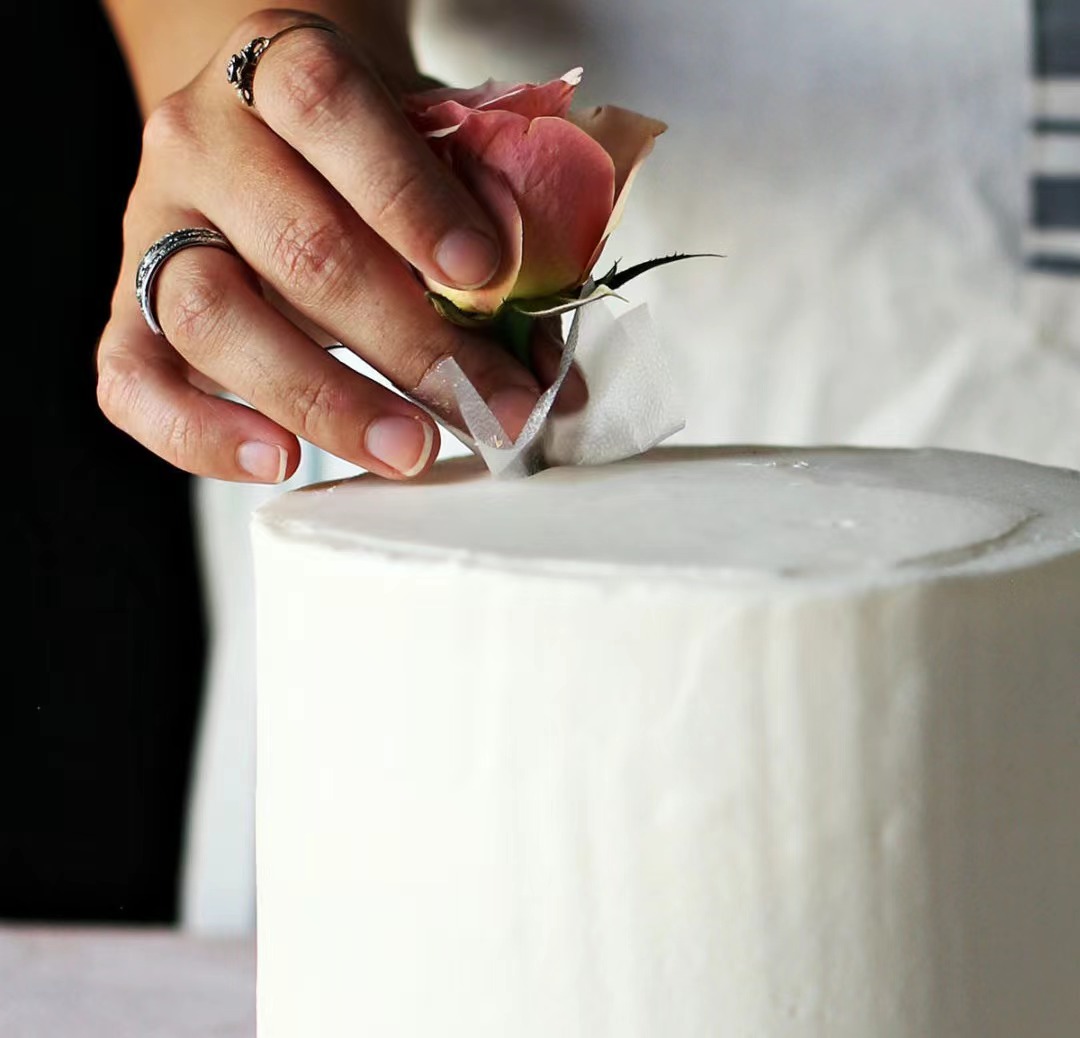
One plus one is far greater than two. Compared with those conventional milk tea shops, why is fresh flower milk tea more likely to break out? The reason is that the audiences for fresh flowers and milk tea overlap heavily. Young women often buy flowers because of "beauty," and how many girls can resist milk tea? When visiting an internet-famous store to check in, most people's purpose is to take photos; stores that produce better photos are naturally more competitive, and fresh flower milk tea pushes the sense of ritual almost to the extreme. You buy a cup of milk tea and get a bouquet of fresh flowers as a bonus—who wouldn't be tempted?
In today's society, giving flowers has evolved into a social behavior through which people express care, celebrate special occasions, or convey goodwill to those around them. During festivals, flower prices rise sharply, which also creates business opportunities for fresh flower milk tea shops. Seasonal limited-edition strategies can effectively drive product sales. Despite its creativity, controversy follows. Some netizens point out that certain flowers, though beautiful, are somewhat toxic, and have expressed concerns about this. Usually, however, the cups for flower-added milk tea are elongated, with a cup holder placed about ten centimeters from the rim and foam inserted inside to secure the floral materials. In this way, the drink and the fresh flowers are completely separated. Of course, businesses should still try to avoid toxic varieties when choosing floral materials.
If you look carefully at these tea shops, you will find that fresh flower milk tea accounts for only a small part of the product line; regular drinks remain indispensable. This is because operators know well that consumers will not keep paying just for ritual and novelty; in the end, products compete on cost control and taste performance, and the trend will eventually fade.
Finally, if it were you, would you follow the trend and buy a cup of fresh flower milk tea?
Image source: Xiaohongshu [Ice Cube Chocolate], [Is Yangzhi Ganlu Okay], [BBgirl,] Images used with the owners' permission.
The above content is compiled by CoffeeHunters, a coffee news website.


