







What Makes Guatemala Coffee Cultivation So Distinctive?
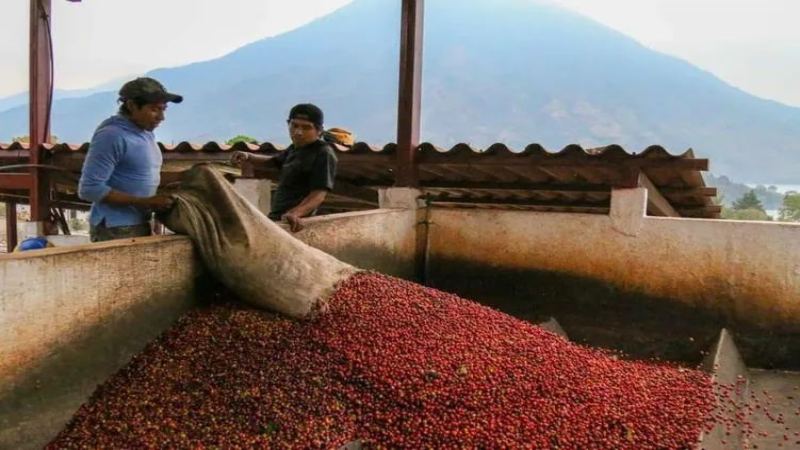
Guatemala's coffee cultivation rests on volcanic soil, tropical rainforest, and varied microclimates, conditions that suit the crop across the country. Jesuit missionaries are widely credited with bringing coffee trees to Antigua in the mid-18th century to decorate monastery courtyards, and coffee became an important cash crop only after 1856, once indigo exports declined.
The National Coffee Association was founded in 1960 to strengthen the economy through coffee production and exports. Today Guatemala grows Bourbon, Typica, Caturra, Catuai, and Geisha, along with variants such as Pache, Tekisic, and Mibirizi. Pache, a natural Typica mutation found on the Brito farm in 1949, gives shorter plants and denser planting but weaker disease resistance. Front Street Coffee sources Antigua Flor del Café beans.
Guatemala is located in southern North America, where volcanic soil, tropical rainforests, and complex microclimates combine to create excellent conditions for coffee cultivation. From Jesuit missionaries bringing coffee trees to Antigua in the 18th century, to coffee rising as an important cash crop in the mid-19th century, to the founding of the national coffee association in 1960, Guatemala's coffee industry has traveled a winding yet solid path of development. Today, the country not only grows common varieties such as Bourbon, Typica, Caturra, Catuai, and Geisha, but also cultivates distinctive variants like Pache, Tekisic, and Mibirizi. Front Street Coffee has also acquired La Minita Estate's Flor del Café beans from Antigua, and this article will walk through the cultivation history, variety characteristics, and brewing performance one by one.
Guatemala is located in southern North America, with tropical rainforests throughout the country, volcanic soil widely distributed, and highly varied microclimates. It is precisely these natural conditions that provide an ideal growing foundation for local coffee.
A fairly widespread account holds that in the mid-18th century, Jesuit missionaries brought coffee trees to Antigua to decorate monastery courtyards. By the early 19th century, records began to appear of Guatemalans drinking coffee. At that time, the country's most important cash crop was indigo, used to extract plant dyes, but locust infestations and the rise of synthetic dyes caused indigo exports to steadily shrink. To boost the economy, the Guatemalan government turned to encouraging the development of other crops, including coffee. It was not until after 1856 that coffee truly became an important crop in Guatemala. In 1960, the National Coffee Association (ANCAFE) was founded, with the goal of strengthening the national economy through coffee production and exports.
Today, the coffee varieties grown in Guatemala are quite diverse, with Bourbon, Typica, Caturra, Catuai, and Geisha all cultivated. In addition to these common varieties, some mutated varieties are also grown locally.
Pache
Pache is a natural mutation of Typica, determined by a single gene, which makes the plant shorter but also brings the advantages of denser planting and higher yield; its drawback is weaker disease resistance. In 1949, this variety was discovered on the Brito farm in Santa Cruz Naranjo, Santa Rosa, Guatemala. It is best suited to areas above 1,200 meters in elevation with annual rainfall below 2,500 millimeters, and it is now widely planted in Guatemala.
Tekisic
Tekisic was selected and bred by the Salvadoran Coffee Research Institute (ISIC) starting in 1949 and officially released in 1977; it is a selected Bourbon variety. Its breeding process is called "mass selection," that is, selecting a group of individuals based on outstanding performance and then repeatedly screening them. The finally selected individuals possess excellent quality potential, and their yield is also higher than unselected Bourbon. In Nahuatl, Tekisic means "work." However, this variety lacks resistance to major diseases such as leaf rust. Guatemala later introduced it, and Tekisic also became one of the main varieties planted locally.
Mibirizi
Mibirizi may be Rwanda's oldest variety, introduced from Guatemala in 1910 by Rwanda's German colonial government. It is very likely related to Typica, because at that time 100% of the coffee grown in Guatemala was Typica. This variety has good quality and also possesses a certain drought tolerance, but it is susceptible to major diseases. Genetic testing today has confirmed that it is related to the Typica genome.
Front Street Coffee currently also has coffee beans from Guatemala, namely La Minita Estate's Flor del Café beans from Antigua; the bean varieties are Bourbon and Caturra, processed by washing. Brewed with a V60 at 1:15, it has citrus and slight chocolate flavors on entry, berry-like acidity, rich layering, and a smooth mouthfeel.
The above content is compiled by CoffeeHunters, a coffee news website.


