








What Defines Brazilian Coffee and Yellow Bourbon?
Brazil supplies roughly one-third of the world's green coffee beans, yet few Brazilian single-origin names are widely known. That is not a quality problem: flavors within the same region tend to be similar, so picking the most representative bean is enough. The guide covers the history of Brazilian coffee and the Bourbon family, from Red Bourbon to Yellow Bourbon, Pink Bourbon, and Laurina.
Coffee flavor depends on three things: origin, variety, and processing method. Brazil's growing areas sit mainly along the southeastern coast, in São Paulo, Paraná, Espírito Santo, and Minas Gerais. Alongside yellow bourbon coffee, the article also reviews Caturra, Catuai, and Mundo Novo, tracing how coffee reached the port of Belém in 1727.
As the world's largest exporter of green coffee beans, Brazil supplies about one-third of the world's production, yet the Brazilian single-origin beans that the general public can name are few and far between. This is not because Brazilian coffee is of poor quality, but because flavors within the same region tend to be similar, so when choosing beans you only need to pick the most representative one. In this article, Front Street Coffee reviews the historical development of Brazilian coffee and goes through the origins and flavor characteristics of varieties such as Red Bourbon, Yellow Bourbon, Pink Bourbon, Caturra, Catuai, Mundo Novo, and Laurina, while also providing specific information on two products—the Brazilian region everyday drinking beans and Queen's Farm—to help coffee enthusiasts build a complete understanding of Brazilian coffee.
Brazil is the world's number one exporter of green coffee beans, with roughly one out of every three bags of green coffee beans in the world produced here. But when it comes to Brazilian single-origin coffee beans, the only name that comes to most people's minds seems to be Queen's Farm. So what flavor does Brazilian coffee actually have? And what varieties are grown locally? Front Street Coffee will now go through them one by one for you.
Coffee beans are, after all, an agricultural crop, and their flavor direction is closely tied to three factors: origin, variety, and processing method. The reason Brazilian single-origin beans are rarely mentioned is not that the region's quality is poor, but that flavor differences within the region are not great. For this reason, Front Street Coffee only selects the most outstanding expression of a given flavor profile to put on the shelf, avoiding an overly repetitive product line.
Brazilian Coffee History
Coffee's arrival in Brazil dates back to after the 18th century. In 1727, coffee was introduced to the port of Belém, Brazil, via Guyana, and from then on it took root and multiplied on this land, with growing areas mainly concentrated along the southeastern coast, including the four states of São Paulo, Paraná, Espírito Santo, and Minas Gerais.
From the late 18th century to the 1920s, Brazil was still under Portuguese colonial rule. To meet the demands of the Western European market, it long pursued a single-crop planting model—that is, growing only coffee. This made coffee serve as Brazil's pillar industry for a considerable period and also brought about the peak stage of the country's coffee production—output once accounted for 75% of the global total. During that period, coffee exports contributed about two-thirds of Brazil's total export revenue, earning Brazil the title of "Coffee Kingdom." However, when the economic crisis broke out in 1929, global coffee consumption shrank sharply, and Brazil's coffee economy suffered a heavy blow.
Since then, the proportion of coffee production in Brazil's export revenue has steadily declined. Over the past three decades, with the rise of modern industry, especially in fields such as steel, shipbuilding, automobiles, and aircraft manufacturing, coffee's weight in the national economy has weakened year by year, but it still ranks among Brazil's pillar industries, and Brazil remains firmly the world's largest coffee producer and exporter.
Brazilian Coffee Bean Varieties
According to what Front Street Coffee has learned, Brazil's current main cultivated varieties include Red Bourbon, Yellow Bourbon, Mundo Novo, and Catuai. In addition, varieties such as Caturra and Laurina are also grown and studied academically. The Campinas Agronomic Institute in São Paulo is a highly respected coffee variety improvement institution in Brazil, and Catimor, the most widely planted variety in the world, is precisely the result of cooperation between Portuguese and Brazilian scientists. Below, Front Street Coffee will introduce the characteristics of each of these varieties.
Red Bourbon
According to Front Street Coffee's understanding, Bourbon is a secondary variety produced after a mutation of Typica, and together with Typica it ranks among the oldest existing coffee varieties, with fruit that is bright red when ripe. Compared with Typica, Bourbon has broader leaves and denser growth. Although its yield is higher than Typica's, its harvest cycle is likewise once every two years, so it still belongs to the lower-yielding category. Fortunately, its taste is excellent, with a red-wine-like acidity and a sweet finish.
Simply put, Bourbon is a branch under the Arabica species and usually bears red fruit, which is called Red Bourbon; besides it, there are also Yellow Bourbon and Pink Bourbon. The fruit color of Red Bourbon goes through a gradual process: green, slightly yellow, slightly orange, ripe red, and then riper dark red, hence the name Red Bourbon. Its flavor often shows good aroma, bright acidity, and on the palate one can even catch a red-wine-like charm. Front Street Coffee also learned that Red Bourbon is currently the most widely planted variety in the Brazilian region.
The Brazilian region everyday drinking beans currently sold at Front Street Coffee stores use precisely the Red Bourbon variety, to represent the typical flavor of the Brazilian region. The reason is that Red Bourbon is both Brazil's highest-yielding variety and its most original variety.
Front Street Coffee: Brazil · Red Bourbon Coffee Beans
Country: Brazil
Region: South Minas
Altitude: 1000m
Variety: Red Bourbon
Processing Method: Pulped Natural
Flavor: Nuts, Chocolate, Cream, Peanut, Caramel
Yellow Bourbon
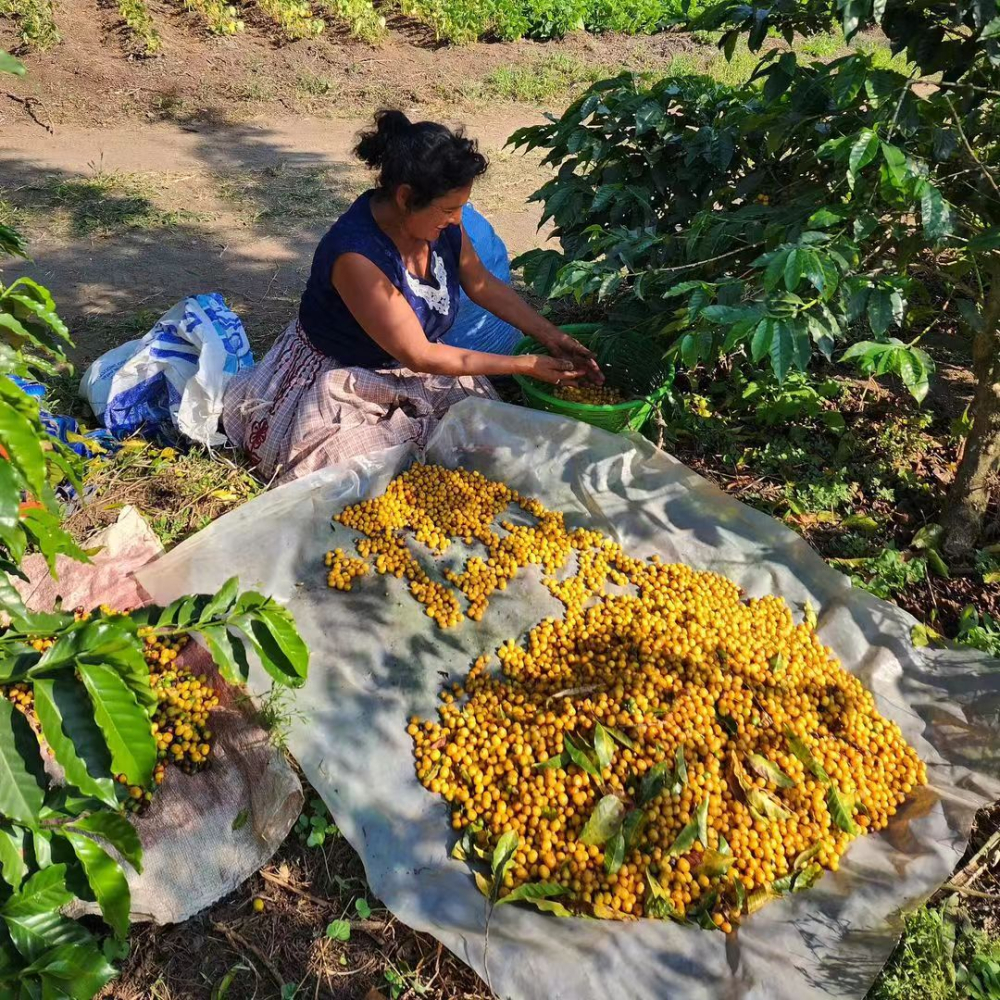
As mentioned above, Yellow Bourbon is likewise a genetic mutation of Bourbon. Bourbon has always been regarded as outstanding among coffees for its high yield and quality, and Yellow Bourbon is a Bourbon variant unique to São Paulo State, Brazil. Its fruit does not turn red when ripe but instead shows orange-yellow, hence the name. Because Yellow Bourbon is mostly grown at higher altitudes, its flavor expression is quite outstanding.
Through cupping, Front Street Coffee found that Yellow Bourbon grown at high altitudes has an excellent flavor. In the Brazil Cup of Excellence competition, the top three awards were almost swept by Yellow Bourbon coffee beans for two consecutive years, and this bean thus rose to fame in the specialty coffee circle. Yellow Bourbon usually carries nutty and chocolate notes, with balanced and gentle acidity, weak and clean bitterness, and an overall bright and refreshing character.
The Brazilian Queen's Farm coffee beans introduced by Front Street Coffee stores use precisely the Yellow Bourbon variety.
Front Street Coffee: Brazilian Queen's Farm Coffee Beans Country: Brazil
Region: São Paulo State (Queen's Farm)
Altitude: 1400-1950m
Variety: Yellow Bourbon
Processing Method: Pulped Natural / Natural
Flavor: Nuts, Cream, Peanut, Fermented Fruit, Cane Sugar
Pink Bourbon
Pink Bourbon, as the name suggests, has coffee fruit that turns a romantic pink when ripe and belongs to a rare variety. However, according to Front Street's understanding, the place where Pink Bourbon first appeared was not its place of origin, Brazil, but rather it was first recorded in the town of Palestine in Huila Department, Colombia, so it is currently mainly grown in Colombia's Huila region.
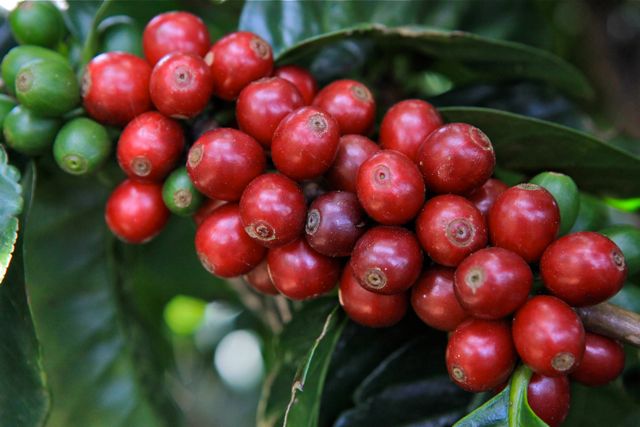
Front Street also learned that Pink Bourbon is the product of natural hybridization between Yellow Bourbon and Red Bourbon. Yellow Bourbon and Red Bourbon are dominant traits expressed by dominant genes and have relatively strong reproductive stability, whereas Pink Bourbon, produced by crossing the two, is a recessive trait expressed by recessive genes, and hybrid offspring are highly prone to trait segregation.
Regarding the genetic source of Pink Bourbon, another view holds that it is the result of natural hybridization between Bourbon and Caturra. Caturra itself is a Bourbon variant, and Caturra is a coffee tree variety heavily promoted in Colombia, carrying some Robusta genes, with obvious advantages—high yield and resistance to leaf rust. Unfortunately, its flavor expression is mediocre and lacks delicate sweet-and-sour layers.
The key reason Front Street Coffee classifies Pink Bourbon as a rare variety is that maintaining this beautiful pink color is quite difficult. Artificial hybridization sometimes produces Orange Bourbon, because the color of the coffee fruit is ultimately determined by recessive genes within the pollen grains. Among these pollen grains, there are both yellow genes leaning toward Yellow Bourbon and red genes leaning toward Red Bourbon, all of which are recessive and easily interfere with each other, causing Pink Bourbon's yield to be extremely scarce and its price relatively high.
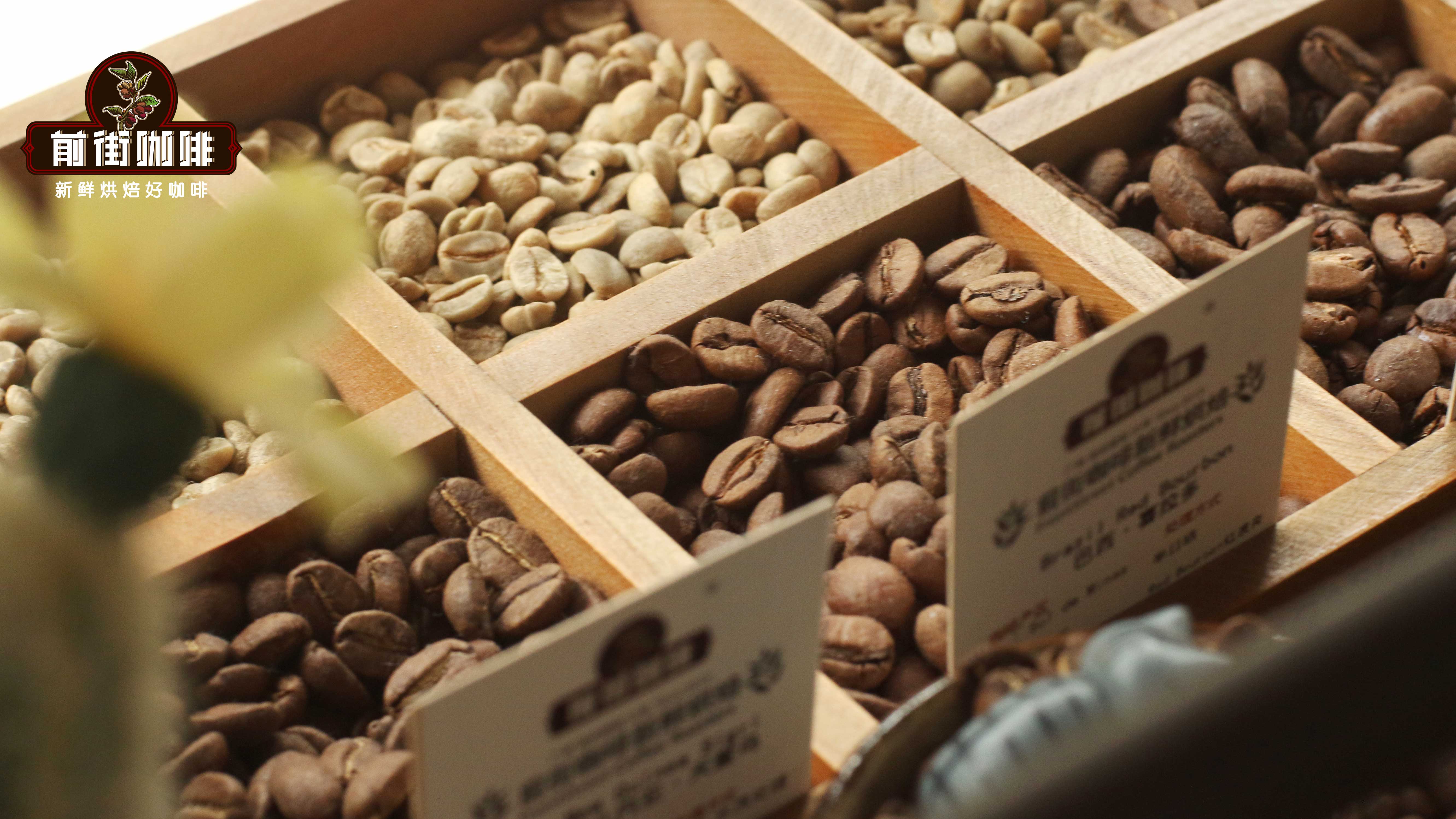
Front Street once purchased a lot of Pink Bourbon coffee beans produced in Huila, Colombia, and here shares them with coffee-loving friends. This bean has a unique cherry tomato flavor that easily brings to mind berry-like acidity, along with notes of vanilla and dark chocolate, with an overall cane-sugar sweetness in the finish and distinct flavor layers.
Front Street Coffee: Colombia Isabella Coffee Beans
Country: Colombia
Region: Huila
Altitude: 1760m
Variety: Pink Bourbon
Processing Method: Semi-Washed
Flavor: Cherry Tomato, Citrus, Floral, Honey, Fruit
Caturra
Caturra is a single-gene variant of Bourbon, discovered in Brazil in 1937. Its productivity and disease resistance are both superior to Bourbon, and the tree is shorter, making picking convenient. Unfortunately, like Bourbon, it has the cyclical problem of fluctuating productivity every two years. In terms of flavor, Caturra is comparable to or slightly inferior to Bourbon beans. What stands out more is its extremely strong adaptability: it needs no shade trees and can thrive even when directly exposed to the scorching sun, hence its common name "sun-grown coffee." It is suitable for high-density planting, but requires more fertilizer, which increases costs, so early coffee farmers did not accept it very readily.
This variety is currently mainly grown in Latin America, and most of the Costa Rican coffee beans at Front Street Coffee stores use the Caturra variety.
Catuai
Catuai is an Arabica hybrid variety, produced by crossing the Robusta subspecies Mundo Novo with Caturra. It has strong resistance to natural disasters, especially wind and rain. It inherits the advantage of Caturra's low tree height and improves on Mundo Novo's shortcomings; another strength is that its fruit holds firmly and is not easily knocked off by strong winds, making up for the weakness of Arabica fruit being delicate. However, its overall flavor is more monotonous than Caturra's, and also more monotonous than Mundo Novo's and lacking in body—this is its greatest regret. In addition, its fruit-bearing and harvesting lifespan is only about ten years, and its relatively short lifespan is also one of its weaknesses.
Mundo Novo
Mundo Novo is a natural hybrid of Bourbon and Sumatra varieties discovered in Brazil, and it began to be planted in Brazil around 1950. It has strong environmental adaptability and resistance to pests and diseases. Although it is a high-yielding variety, its growth speed is slow and its beans are relatively large. A tree height exceeding 3 meters is its drawback (this height already exceeds the reach of harvesting machines, so it is not suitable for mechanized harvesting), and the top branches and leaves of the coffee tree must be pruned every year. Mundo Novo shows a good balance of acidity and bitterness.
Laurina
Laurina can be called one of the rarest coffees in the world, discovered in 1810 by coffee farmer Leroy on Réunion Island (formerly known as Bourbon Island). Its preciousness has its own reasons: in addition to its unique appearance, the trait of being naturally low in caffeine makes Laurina a special variety. Common Arabica beans such as Typica or Bourbon have a caffeine content of about 1.2%, while Robusta beans have an even higher caffeine content of about 2.8% (poor in flavor, often used to make instant coffee), whereas Laurina has only 0.6%. Not only is its caffeine content low, its rich fruit flavors and body are not diminished in the least.
The above is Front Street Coffee's compiled explanation of Brazilian coffee bean varieties, hoping to help coffee enthusiasts understand Brazilian coffee more deeply, so that in the future they can select Brazilian variety coffee beans that suit their own taste.
For more specialty coffee beans, please add the private WeChat of Front Street Coffee, WeChat ID: kaixinguoguo0925
The above content is compiled by CoffeeHunters, a coffee news website.


