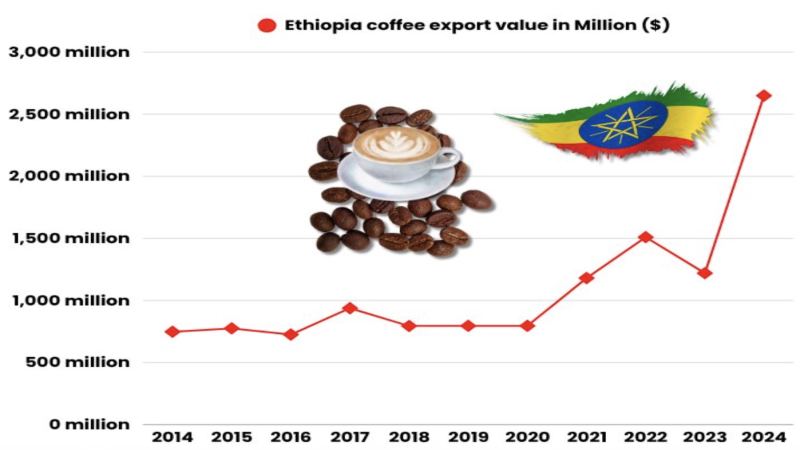
Ethiopia is not only the birthplace of Arabica coffee but also one of the world's major suppliers of high-quality coffee beans. Coffee occupies a central position in Ethiopia's economy, culture, and trade. In 2024-2025, Ethiopia's coffee export volume and export revenue both reached historic highs, marking a turning point for its agricultural export industry. According to Ethiopian export data and customs coffee export data, Ethiopia's total coffee export value reached a record $2.65 billion in 2024, an increase of 9% over the previous year. According to Ethiopian coffee export data and customs data, Ethiopia's coffee export volume exceeded 7 million bags in 2024-2025. According to global trade data, Ethiopia is the world's ninth-largest coffee exporter. This report provides a detailed analysis of Ethiopia's coffee production, export data, main export destinations, and the top exporters and suppliers leading the industry's development.
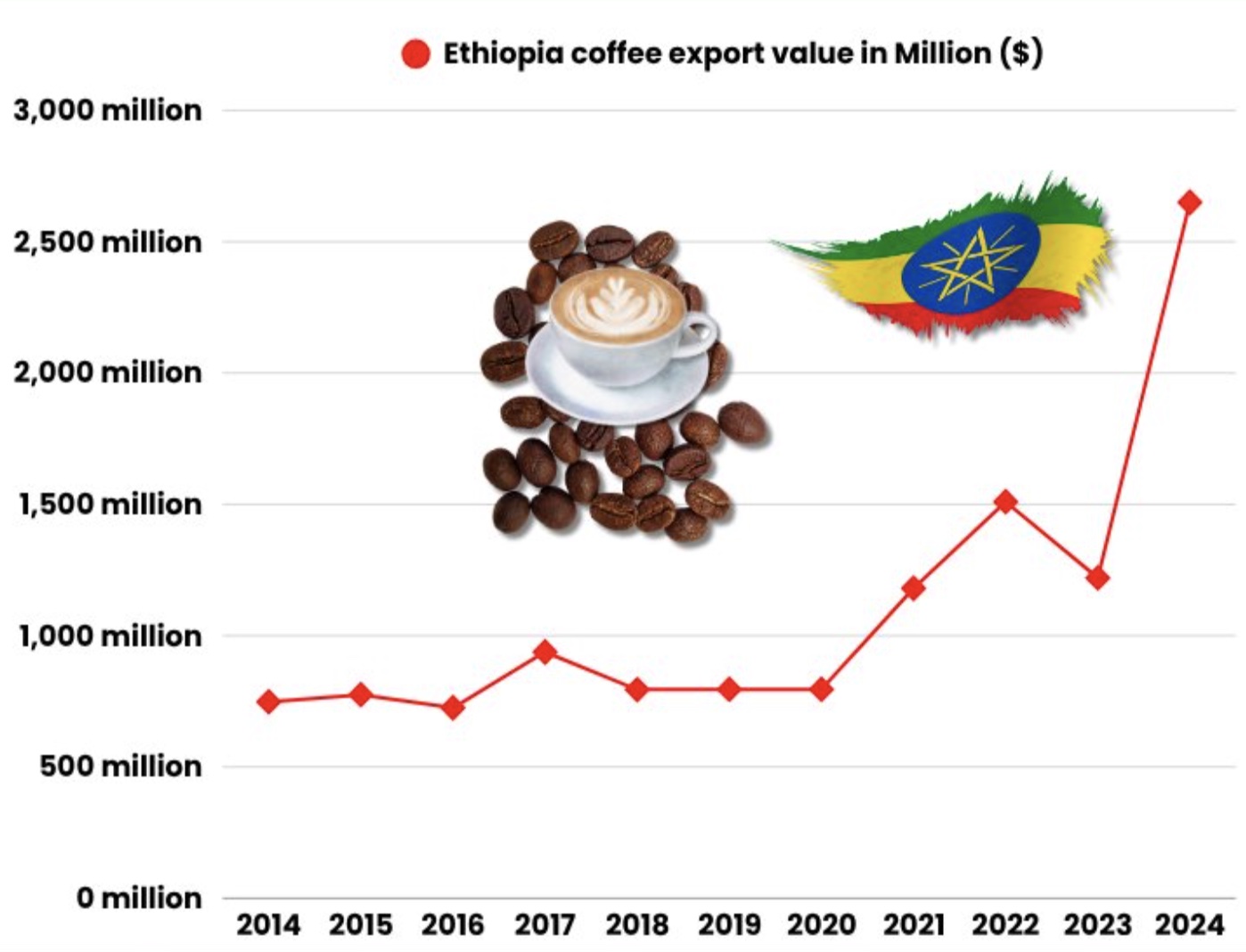
Ethiopia's Coffee Export Performance in 2024-2025
Analyzing the performance of Ethiopia's coffee industry, it is clear that, according to Ethiopian export data, every Ethiopian coffee supplier has played a vital role in boosting Ethiopia's overall coffee exports. The strength of Ethiopian coffee exporters lies in the dual guarantee of scale and quality, which is reflected in the record-breaking Ethiopian coffee export performance in 2024. Detailed Ethiopian coffee export data shows that both export volume and export value grew significantly, bringing unprecedented coffee export revenue to the country. A comprehensive directory of Ethiopian coffee exporters highlights the diversity of exporters, covering various participants from cooperatives to private enterprises, with the top ten Ethiopian coffee exporters accounting for a significant share of total trade.
Meanwhile, Ethiopia's coffee production has grown steadily, driven mainly by smallholder farmers in Sidama, Yirgacheffe, Harar, and Guji regions. These dynamics indicate that Ethiopia's major coffee exporters have already gained a strategic advantage, capable of supplying high-quality coffee beans to the world, once again proving the importance of Ethiopian coffee exporters to the national economy and the global specialty coffee market. The 2024-2025 fiscal year was a milestone for Ethiopia's coffee industry.
Export volume: 468,967 metric tons of coffee exported this year.
Export revenue: Revenue reached approximately $2.65 billion, a historic high for coffee export earnings.
Compared with 2023-24 (298,500 tons, valued at $1.43 billion), production increased by nearly 170,000 tons, and revenue increased by more than $1.2 billion.
This performance consolidated Ethiopia's position among the world's top coffee suppliers, especially in premium Arabica coffee beans.
Ethiopian Coffee Export Destinations: Which Countries Does Ethiopia Export Coffee To?
Ethiopia is renowned for its celebrated coffee production and exports coffee around the world. Known as the birthplace of coffee, Ethiopia is one of Africa's largest coffee producers. The main export destinations for Ethiopian coffee include Germany, Japan, Saudi Arabia, the United States, and Belgium. These countries appreciate the unique flavors and high quality of Ethiopian coffee, making it a highly sought-after commodity in the global market. With its distinctive and diverse coffee-growing regions, Ethiopia continues to play an important role in international coffee trade, showcasing the country's rich coffee culture and traditions. According to Ethiopia's 2024-2025 shipment data and Ethiopian coffee export statistics by country/region, the top ten destinations for Ethiopian coffee exports include:
1. Saudi Arabia: $238.98 million (19.5%)
Saudi Arabia is one of the main importers of Ethiopian coffee, with imports reaching $238.98 million, accounting for 19.5% of Ethiopia's total coffee export value. Rich-flavored Ethiopian coffee beans are highly favored in the Saudi market, making Saudi Arabia a lucrative export destination for Ethiopian coffee producers.
2. United States: $144.21 million (11.8%)
The United States is another major importer of Ethiopian coffee, with total imports of $144.21 million, accounting for 11.8% of Ethiopia's total coffee export value (data from U.S. customs codes for Ethiopian coffee export statistics). American coffee enthusiasts appreciate the unique and diverse flavors of Ethiopian coffee, making it a popular choice for cafes and homes across the United States.
3. South Korea: $111.73 million (9.1%)
South Korea has become an important market for Ethiopian coffee, with imports reaching $111.73 million, accounting for 9.1% of Ethiopia's total coffee export value. South Korea's demand for specialty coffee has driven the growth of Ethiopian coffee imports, making it a significant player in the coffee industry.
4. Germany: $111.64 million (9.1%)
Germany is a major importer of Ethiopian coffee, with imports reaching $111.64 million, accounting for 9.1% of Ethiopia's total coffee export value (data from Ethiopian coffee export statistics to Germany). The German market values high-quality and ethically sourced coffee, which aligns with Ethiopia's coffee production philosophy, giving Ethiopian coffee a pivotal position in the German market.
5. Japan: $89.69 million (7.3%)
Japanese consumers have a strong preference for premium coffee, making Japan an important market for Ethiopian coffee. Ethiopia's total coffee imports from Japan reached $89.69 million, accounting for 7.3% of its total coffee export value, making Japan a key market for Ethiopian coffee producers seeking to satisfy discerning coffee lovers.
6. China: $72.71 million (5.9%)
As China's coffee market continues to grow rapidly, Ethiopia seized this trend and exported $72.71 million worth of coffee to China, accounting for 5.9% of its total coffee export value. The unique flavors of Ethiopian coffee are deeply loved by Chinese consumers, driving market demand and making Ethiopia an important player in China's coffee market.
7. Belgium: $71.76 million (5.9%)
Belgium is known for its love of coffee and is a significant importer of Ethiopian coffee. Belgium imports $71.76 million worth of coffee from Ethiopia annually, accounting for 5.9% of Ethiopia's total coffee export value, making Belgium an attractive market for Ethiopian coffee producers looking to expand into international markets.
8. United Arab Emirates: $43.01 million (3.5%)
The UAE has become an important export destination for Ethiopian coffee, with total imports reaching $43.01 million, accounting for 3.5% of Ethiopia's total coffee export value. The UAE's affluent and diverse population has created demand for premium coffee, making Ethiopian coffee widely popular in the country.
9. Sudan: $38.42 million (3.1%)
Sudan is a growing market for Ethiopian coffee, with imports reaching $38.42 million, accounting for 3.1% of Ethiopia's total coffee export value. The geographical proximity of the two countries, combined with Sudanese consumers' growing interest in specialty coffee, has driven increasing consumption of Ethiopian coffee in Sudan.
10. Italy: $35.90 million (2.9%)
Italian consumers are known for their discerning taste in coffee, making Italy an important market for Ethiopian coffee. Italy imports $35.90 million worth of Ethiopian coffee annually, accounting for 2.9% of Ethiopia's total coffee export value, providing a platform for Ethiopian coffee to showcase its rich history and unique flavors.
Top Ten Ethiopian Coffee Exporters List: Ethiopian Coffee Exporter Database
The Ethiopian coffee exporter database showcases the leading companies in Ethiopia's coffee export industry, highlighting the country's excellence as a major coffee producer. The database provides a valuable resource for businesses interested in trading coffee with Ethiopia, helping them gain in-depth understanding of the key companies driving the country's coffee export market. Every Ethiopian coffee supplier contributed to Ethiopia's record-breaking coffee export growth in 2024, thereby boosting Ethiopia's total coffee export revenue.
Overview of Ethiopian Coffee Production
In 2024-2025, Ethiopia's coffee production still relied heavily on smallholder farmers, who typically cultivate coffee on plots of less than two hectares. Despite the fragmented structure, according to Ethiopian coffee production reports, the national coffee production scale is enormous.
Production methods: Approximately 70-80% of coffee is naturally processed (sun-dried/unwashed), while 20-30% is washed (wet-processed).
Coffee type: Nearly 100% of Ethiopia's coffee production is Arabica coffee.
Altitude and climate: Ethiopian coffee grows at high altitudes (1,500-2,200 meters), where fertile volcanic soil and unique microclimates give the coffee beans distinctive flavors.
2025-2026 Forecast
Looking ahead, production is expected to reach 11.6 million bags (60 kg per bag, approximately 694,000 tons). Assuming stable climate conditions and continued market demand, export volume could reach 7.8 million bags.
Ethiopia's Major Coffee-Producing Regions
The diversity and reputation of Ethiopian coffee are attributed to its various producing regions, each producing coffee beans with unique flavors:
Yirgacheffe: Known for its floral, tea-like, and citrus flavors. Widely exported as washed specialty coffee.
Sidama: Features fruity and wine-like flavors, available in both washed and natural forms.
Harar: Distinctive flavor with wild, fruity, and berry notes in natural coffee.
Guji: Produces coffee with complex flavors, featuring tropical fruit and floral notes, increasingly popular in the specialty coffee market.
Limu and Jimma: Balanced body with chocolate and spice notes.
These regional differences consolidate Ethiopia's advantage in the specialty coffee sector, earning its coffee premium prices globally.
Coffee Export Destinations
Ethiopian coffee is sold to more than 60 countries. However, in terms of volume and value, a few countries dominate.
Saudi Arabia: The largest coffee importer, accounting for more than 20% of total exports. Coffee plays an important cultural and social role in the Middle East, making Ethiopia a key coffee supplier.
Germany: A major European coffee export destination, importing both commercial-grade and specialty-grade coffee.
United States: Growing demand for single-origin and specialty Ethiopian beans.
Japan and South Korea: Steady buyers of washed coffee, often purchasing at premium prices.
Other markets: Italy, France, the United Kingdom, China, and Australia are also expanding destinations.
Saudi Arabia, Germany, and the United States together account for nearly half of Ethiopia's coffee export volume.
Ethiopian Coffee Export Trends Driving Growth
Global Arabica coffee bean demand: Due to climate fluctuations tightening Brazilian Arabica coffee bean supply, demand for Ethiopian Arabica coffee beans has surged. Buyers are turning to Ethiopia to secure stable quantities of high-quality coffee beans.
Specialty coffee boom: Specialty coffee roasters in Europe, North America, and Asia have increased imports of traceable washed Ethiopian coffee. Micro-lot coffees and certified organic coffees command higher prices.
Policy reforms: Government reforms in licensing systems, trade facilitation, and farmer cooperatives have improved export efficiency and reduced bottlenecks.
Infrastructure investment: More washing stations and drying beds are being built to improve quality consistency.
Challenges Facing Ethiopia's Coffee Industry
Despite record-breaking results, Ethiopia still faces structural challenges:
Climate risk: Coffee is highly sensitive to rainfall variability and temperature fluctuations. Drought or irregular rainfall can reduce production.
Limitations of smallholder farmers: Fragmented production makes product quality difficult to guarantee. Farmers often lack capital, fertilizer, and modern agronomic techniques.
Value-added gap: Almost all exports are green coffee beans. Roasted coffee exports account for less than 5% of total exports, meaning Ethiopia captures only a fraction of the potential value.
Compliance costs: Complying with EU deforestation regulations and sustainability certifications adds new costs for exporters and cooperatives.
Ethiopian Coffee Exporters in 2024-2025
There are hundreds of registered coffee exporters in Ethiopia, but a few companies dominate in terms of scale, quality, and international influence. The following are the main exporters and suppliers in 2024-2025.
Specialty Coffee and Niche Markets
Organic certification: Exporters like Metad and Testi Trading have built strong reputations in organic and certified coffee, especially among European buyers.
Micro-lots: Exporters are increasingly offering traceable micro-lot coffee beans from single washing stations, which can command premiums up to twice the price of bulk Arabica coffee beans.
Fair Trade and cooperative coffee: Export alliances representing smallholder farmers are gaining access to Fair Trade and specialty markets, especially in Germany, Scandinavia, and the United States.
Ethiopia's Position in the Global Coffee Market
Ethiopia is Africa's largest coffee producer and one of the world's top five coffee producers.
Ethiopia is the world's ninth-largest coffee exporter.
In 2024-25, Ethiopia's record production of 468,967 tons of coffee beans made it a stronger competitor to Brazil, Colombia, and Vietnam in global supply, especially in the Arabica coffee bean segment.
Ethiopia is unique because of the genetic diversity of its Arabica coffee varieties, which no other producing country can replicate.
2025-2026 Outlook
Exports will remain strong: Ethiopia's 2025-26 production is expected to reach 11.6 million bags, with export volume projected to approach 8 million bags.
Growing specialty coffee demand: More roasters worldwide are seeking Ethiopian single-origin coffee. Specialty coffee exports could account for 30% of total value.
Shift toward value-added: Government incentives may encourage more exporters to roast products domestically and export finished goods.
Climate adaptation needed: Research into adaptable coffee varieties and improved irrigation methods is crucial.
Market diversification: Ethiopia is expected to expand in Asia (China, South Korea, Malaysia) while consolidating its traditional buyer base in the EU, Middle East, and the United States.
Conclusion and Closing Remarks
The 2024-2025 fiscal year was a historic year for Ethiopia's coffee industry, with exports of nearly 469,000 tons and revenue of $2.65 billion. Smallholder farmers, regional diversity, and premium Arabica coffee beans continue to consolidate Ethiopia's dominant position in the global coffee market. Top Ethiopian coffee exporters such as Daye Bensa, Testi Trading, Kerchanshe, and Tracon are shaping Ethiopia's reputation as a source of both bulk and specialty Arabica coffee.
Despite challenges in climate risk, infrastructure, and value-added processing, Ethiopia's coffee industry shows strong momentum in 2025-2026. With growing demand for sustainable, traceable, and high-quality coffee beans, Ethiopia is not only poised to maintain its leading position in the African coffee market but also to play an increasingly important role in the future development of global coffee trade.
The above content is compiled by CoffeeHunters, a coffee news website.