







What does the Irish takeaway coffee cup tax change?
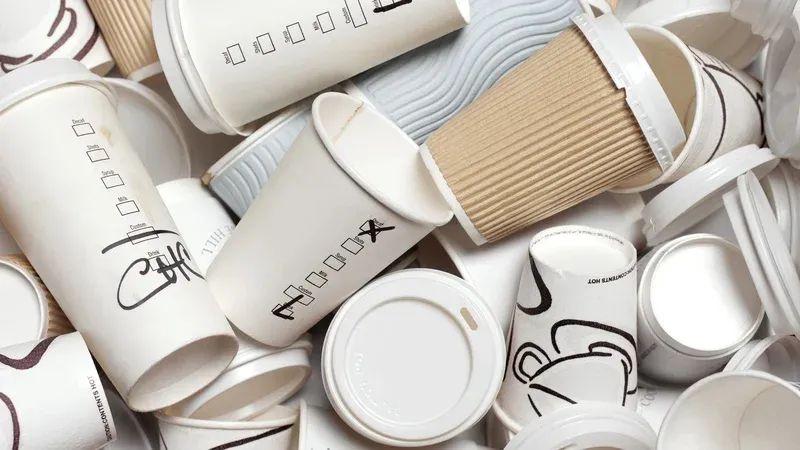
Ireland has signed a circular economy bill that adds at least 20 euro cents to every takeaway coffee sold, with the aim of becoming the first country to phase out single-use coffee cups. President Michael D. Higgins signed the act on July 22, and the levy is expected to take effect before the end of the year.
The policy borrows from the 2002 plastic bag tax. About 200 million coffee cups are discarded in Ireland each year, and roughly two-thirds of the public opposes the charge. A public consultation on the draft regulations is planned for this autumn, running about 90 days, and the same levy could later extend to other single-use takeaway food containers.
Ireland is brewing an environmental revolution against single-use takeaway coffee cups—a "latte levy" of at least 20 euro cents per cup, with the goal of becoming the world's first country to bid farewell to disposable coffee cups. The president has signed the relevant bill, which is expected to take effect before the end of the year. Drawing on the success of the plastic bag tax in 2002, the Irish government hopes to use economic measures to encourage consumers to bring their own cups. However, the reality of 200 million coffee cups discarded each year and the opposition from nearly two-thirds of the public make this policy highly controversial. This article will outline the details of the bill, the logic behind the tax, and public feedback, along with channels for coffee industry news.
Coffee is one of the most popular beverages in the world. These days, more and more people no longer sit in cafes to savor it slowly; cafes have become energy stations for urbanites, with customers walking out the door one after another with coffee in hand. "A large latte to go, please"—it's that simple. But before long, Irish consumers will have to pay extra for this convenience.
BBC reported on July 23 that Ireland plans to become the first country in the world to completely phase out single-use coffee cups, and will introduce a "latte levy" for this purpose: every takeaway coffee sold will cost at least 20 euro cents more. The recently signed circular economy bill indicates that this environmental levy is only the beginning, and that a similar tax may be imposed on all single-use takeaway food containers in the future.
Irish President Michael D. Higgins formally signed the Circular Economy and Miscellaneous Provisions Act 2022 on July 22, aimed at promoting the use of reusable and recyclable packaging and other items, and gradually phasing out single-use products.
The core goal of the bill is to make Ireland the first country in the world to stop using single-use coffee cups. Specifically, in cafes or restaurants, consumers will be prohibited from using disposable paper cups; at the same time, takeaway coffee cups will incur an additional charge; customers can bring their own reusable cups to avoid this cost.
This autumn, the Irish government will seek public consultation on the draft regulations for the disposable paper cup levy, lasting about 90 days, and the bill is expected to formally take effect before the end of the year.
Ossian Smyth, Minister of State at the Department of Public Expenditure and Reform, pointed out on the Irish Morning News radio program that the bill is not only aimed at coffee cups but covers all food or product packaging.
"If we find suitable reusable alternatives and determine that it is feasible to do so, we can impose a small levy on certain single-use items to encourage consumers to change their habits."
"We started with coffee cups. Twenty years ago, we already went down the same road with plastic bags and set a precedent."
As early as 2002, Ireland imposed an environmental tax on plastic bags, charging 15 euro cents per bag. At the time, plastic bags were everywhere, accounting for 5% of the country's total waste. In 2007, the tax per plastic bag was raised to 22 euro cents, and under the pressure of the heavy tax, plastic bag usage plummeted by 95%.
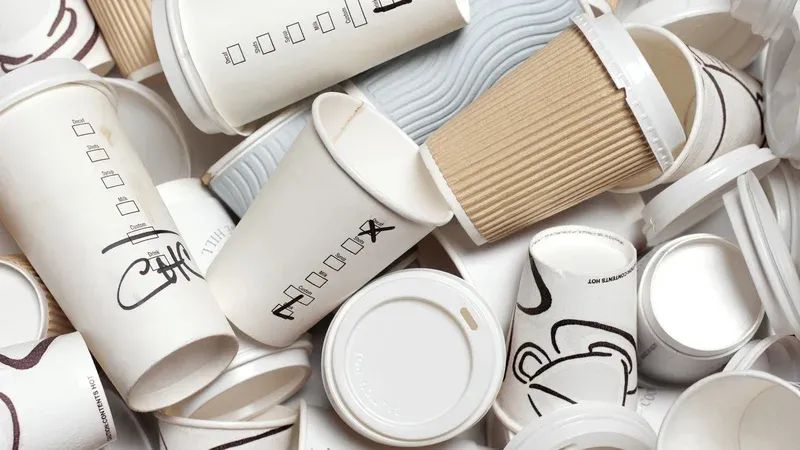
Ireland's proposal of the "latte levy" this time is not a spur-of-the-moment idea. According to data released in 2018 by the Irish recycling list project under MyWaste, Ireland's official waste management guidance website, Ireland wastes about 200 million coffee cups each year, equivalent to consuming 22,000 per hour.
Since 2019, environmental groups and Irish officials have suggested adding a "latte levy" to the environmental tax list to address the pollution problem caused by the difficulty of recycling large numbers of disposable paper cups.
Even if these disposable paper cups are printed with the "Recycled" label, they are actually very difficult to recycle; only the insulating paper sleeve meets the recycling criteria. The reason is that paper cups are made from a composite of two very different materials: the inside of the cup has a polyethylene film for waterproofing, which also keeps the paper cup from falling apart when holding beverages.
Since the outbreak of the pandemic, consumer price indices in many countries have remained high, and the cost of living has continued to rise. The additional 20 euro cent "latte levy" is not good news for many consumers and businesses.
According to the Irish Examiner, a poll shows that nearly two-thirds of Irish consumers oppose the "takeaway coffee cup ban," with 63% believing that recyclable and compostable cups should be excluded from the "latte levy."
Image source: Internet
For more coffee bean news, please follow Coffee Workshop (WeChat public account: cafe_style) For professional coffee knowledge exchange, please add WeChat ID: kaixinguoguo0925
(Front Street Coffee recommendation: If you want to try reusable coffee equipment, Front Street Coffee offers a variety of pour-over kettles, French presses, and travel cups. You are welcome to purchase.)
The above content is compiled by CoffeeHunters, a coffee news website.


