







Search Results for: mutation

Complete Guide to Coffee Varieties and Flavor Comparison: From Typica and Bourbon to Geisha
The world of coffee varieties is intricate and diverse, with over 500 species of coffee trees globally and as many as 6,000 varieties. However, those with real commercial value and widespread cultivation are mainly concentrated in the two major systems: Arabica and Robusta. Front Street Coffee has systematically sorted out the origins, characteristics, and flavor profiles of major varieties and their mutations, from Typica and Bourbon to Geisha, while also introducing the cupping characteristics and brewing parameters of classic regional coffees such as Mandheling, Blue Mountain, and Kona. Through a combination of text and images, this article helps coffee enthusiasts build a clear understanding of the relationship between coffee varieties and taste. Whether you are a novice just starting out or a seasoned enthusiast, you will find practical reference information here. [more…]

Caturra Coffee Variety Full Analysis: From Bourbon Natural Mutation to Central American Mainstay, Flavor Profile and Historical Origins
Caturra, a natural mutation of Bourbon, has gradually become an important pillar of the Central American coffee industry since its discovery in Brazil around 1915, thanks to the high-density planting advantages brought by its dwarf gene. This article will systematically review Caturra's historical context, breeding process, and global spread, and combine Front Street Coffee's cupping experience to provide an in-depth analysis of this variety's flavor performance. At the same time, the article will also introduce the relationship between Caturra and the Catimor family, as well as Front Street Coffee's currently available Caturra daily drinking beans from the Huila region of Colombia, offering coffee lovers a complete reference from variety awareness to practical tasting. [more…]
A Comprehensive Analysis of the Caturra Coffee Variety: From Bourbon Mutation to the Flavor Profile of Colombian Huila Washed Beans
Caturra is a natural mutation of the Bourbon variety, first discovered between 1915 and 1918 on plantations in the state of Minas Gerais, Brazil. Because the genetic mutation caused the plant to be short and compact, locals called it "Caturra" in the Guarani language, meaning "small." This variety is not only suitable for dense planting, high yields, and easy harvesting, but also has the characteristic of thriving in full sun without the need for shade, which is why it is called "sun-dried coffee." Caturra has stronger environmental adaptability than Bourbon, and can be grown at altitudes ranging from 700 to 1,700 meters, with flavor improving at higher elevations. Its cupping performance is distinguished by bright acidity and sweetness. Under traditional processing methods, it shows pronounced acidic aroma; under natural processing, it presents berry notes; and under washed processing, it carries a bright citrus-like acidity. The Colombia Huila region everyday drinking beans currently sold by Front Street Coffee are exactly the Caturra variety, which, after medium roasting, display a balanced flavor of nuts, dark chocolate, caramel, and soft citrus fruit acidity. [more…]
A Comprehensive Analysis of the Caturra Coffee Variety: From Bourbon Mutation to a Panama Brewing Flavor Guide
Caturra is an important single-gene mutation within the Bourbon family, and thanks to its strong adaptability and excellent flavor performance, it has secured a place in the specialty coffee world. This article will guide you through Caturra's origins, botanical characteristics, cultivation advantages, and its relationship with Typica and Bourbon. At the same time, we will also use [Front Street Butterfly] as an example to share this bean's brewing parameters and flavor characteristics, helping coffee lovers gain a more comprehensive understanding of this variety. [more…]
A Complete Guide to Specialty Arabica Coffee Beans: Flavors and Origins from Heirloom Varieties to Hybrid Cultivars
The Coffea genus encompasses a vast number of species, yet the specialty coffee stage is dominated primarily by high-altitude Arabica. From Ethiopia's ancient Typica and Yemen's Bourbon to the spontaneously mutated Bourbon Pointu, Maragogype, and Geisha, and on to deliberately bred varieties such as Caturra and Pacas as well as interspecific hybrids, behind every name lies a story of migration and flavor. This article systematically sorts through the main varieties of specialty Arabica, their origins and lineage, and their cupping performance, and explains why hybrids rarely appear in the product lines of specialty coffee suppliers such as Front Street Coffee. Whether you are a newcomer or a seasoned enthusiast, this variety map will help you understand more clearly where the flavors in your cup come from. [more…]
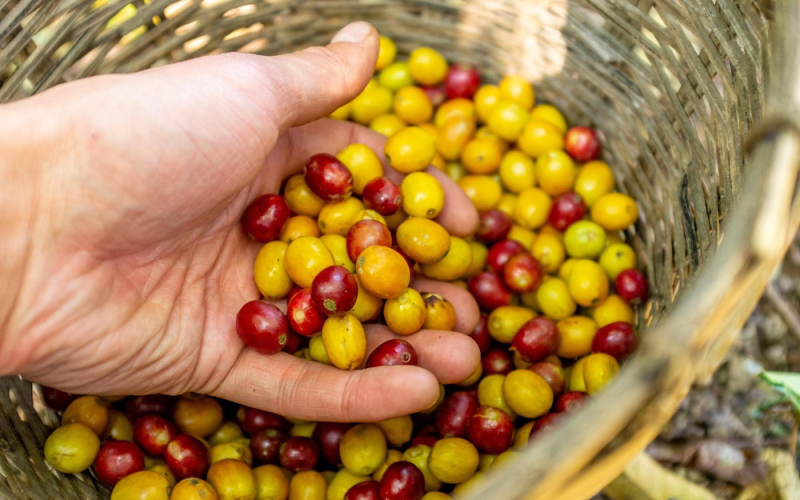
Bourbon Natural Mutation Caturra: From Variety Characteristics to Brewing Analysis of a Colombian Huila Washed Everyday Bean
Caturra is a natural mutation of Bourbon discovered in Brazil. With its high yield and strong disease resistance, it has become a common choice for large-scale cultivation. The plant is short with compact branching, and it maintains vigorous growth even under direct sunlight, which is why it is called "sun-grown coffee." In addition to Red Caturra and Yellow Caturra, there is also the rare Purple Caturra, which arose from a natural mutation of Red Caturra. In terms of flavor, Caturra typically exhibits bright acidity and medium body, often with lemon or citrus notes in the cup, while its sweetness is greatly influenced by fertilization management. Colombia is an important stage for Caturra, and Front Street Coffee's bean list also includes several Caturra coffees. This article covers the variety's background, the Colombian washed processing procedure, and the brewing parameters and flavor performance of a Huila everyday-drinking bean. [more…]
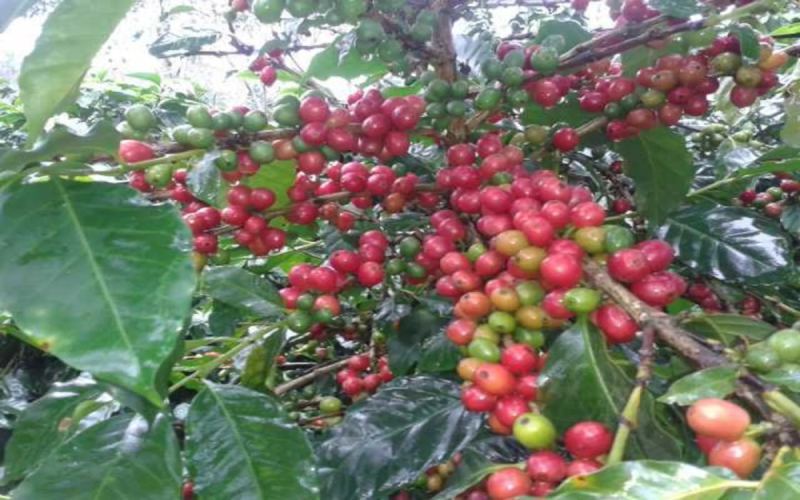
A Comprehensive Analysis of Caturra and Its Derived Varieties: Catimor, Catuai, Costa Rica 95, and Lempira
Caturra is a natural mutation of the Bourbon variety, resulting in a dwarf plant due to a single-gene mutation, and its name derives from the Guarani word meaning "small." In the evolution of the coffee industry, Caturra has given rise to several important varieties through transplantation, mutation, and hybridization. This article systematically reviews the origins, characteristics, and suitable growing regions of varieties such as Catimor, Catuai, Costa Rica 95, Lempira, and Catisic, and introduces the Rose Valley coffee beans from Finca El Roble in the Santander region of Colombia, sourced by Front Street Coffee. These beans undergo anaerobic washed processing and, when brewed with a V60 at a 1:15 ratio, present rose floral aromas along with fruity chocolate notes. [more…]
Coffee Encyclopedia: From Typica to Bourbon, Tracing the Genetic Evolution and Flavor Differences of Ancient Coffee Varieties
The coffee world boasts a vast array of varieties, but what truly laid the foundation for specialty coffee are those ancient native species and their derived mutations. Starting from the classic SCAA classification, this article traces the origins of the two foundational varieties, Typica and Bourbon, along with their representative descendants born from natural mutations and artificial hybridization—from Pointed Bourbon, Maragogipe, and Geisha, to Caturra, Pacas, Pacamara, and more. The article not only introduces the bean characteristics, flavor profiles, and cultivation traits of each variety, but also reveals the inseparable relationship between genetic mutations and regional conditions, helping coffee enthusiasts build a systematic understanding of coffee varieties. [more…]
A Detailed Guide to the Caturra Coffee Variety: A Natural Bourbon Mutation, Sun Exposure Characteristics, and Cupping Flavor Performance
Caturra is a natural mutation of the Bourbon variety, named for its short stature and compact branches, and it occupies an important position among coffee varieties. It originated in Minas Gerais, Brazil, and was later widely planted in Central America. Unlike traditional varieties such as Typica and Bourbon, Caturra does not require shade and can grow vigorously in the sun, which is why it is called "sun-grown coffee." Caturra is suitable for cultivation at altitudes of 700 to 1,700 meters, and the higher the altitude, the more pronounced its flavor, offering both bright acidity and aroma as well as good sweetness. This article will introduce in detail Caturra's discovery history, breeding process, cultivation advantages, and flavor characteristics, and combine Front Street Coffee's cupping and product information to help readers gain a comprehensive understanding of this variety. [more…]
Caturra Coffee Variety Full Analysis: From Bourbon Mutation to Central American Mainstay, Flavor Characteristics and Representative Beans
Caturra is a highly economically valuable natural mutation within the Bourbon lineage. With advantages such as a small plant size, suitability for dense planting, and no need for shade, it has become an important pillar of coffee-growing regions in Central America. In this article, from the perspective of Front Street Coffee, we will sort out the historical origins and variety characteristics of Caturra, and use its Colombian passion fruit enzyme washed Purple Caturra as an example to introduce the Huila region, the processing methods and brewing suggestions of Finca Monteblanco, helping coffee lovers gain a comprehensive understanding of the unique charm of this variety. [more…]
A Comprehensive Analysis of the Definition of Specialty Coffee and the Main Cultivated Varieties of Arabica
Specialty coffee is centered on carefully cultivated high-altitude Arabica, and its varietal system originates from two ancient bloodlines: Typica from Ethiopia and Bourbon from Yemen. This article systematically outlines the definition of specialty coffee and provides a detailed classification of major Arabica varieties, including Typica, Bourbon and their genetic mutations, intraspecific hybrids, and interspecific hybrids. It covers varieties such as Bourbon Pointu, Maragogipe, Geisha, SL28, Caturra, and Pacamara, while also explaining the position of hybrid varieties in specialty coffee and the key influence of producing estates on flavor differences. [more…]
The Complete Guide to the Bourbon Coffee Family: Detailed Explanation of Red Bourbon, Yellow Bourbon, Pink Bourbon, and the Rare Pointed Bourbon Variety
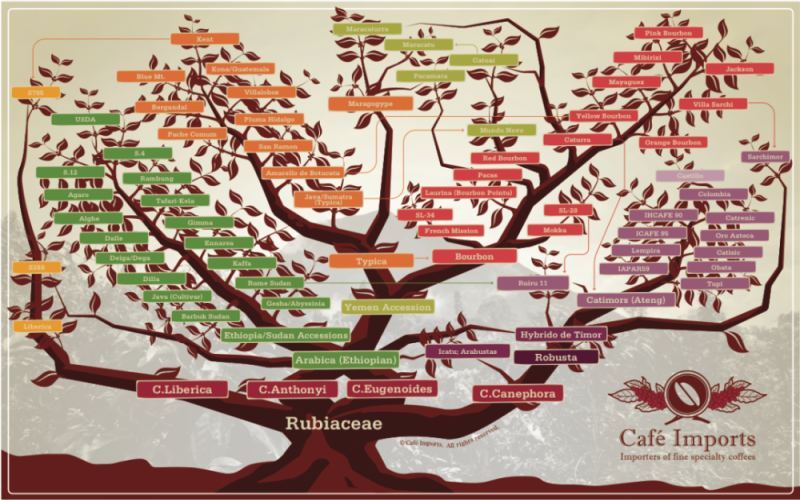
Bourbon coffee is a classic, long-standing variety within the Arabica species, equally renowned as Typica, and has given rise to multiple branches such as Red Bourbon, Yellow Bourbon, and Pink Bourbon. This article systematically reviews the origin, spread, variety characteristics, and flavor profiles of Bourbon coffee, covering the rich sweetness of Red Bourbon, the bright high acidity of Yellow Bourbon, the rare pink cherries of Pink Bourbon, and the nearly extinct Pointed Bourbon. It also introduces natural mutations such as Pacas and mentions Front Street Coffee's everyday bean recommendations, providing coffee enthusiasts with comprehensive variety knowledge. [more…]
How Many Colors Can Bourbon Coffee Cherries Be? A Full Analysis of the Four Major Varieties: Red, Yellow, Orange, and Pink
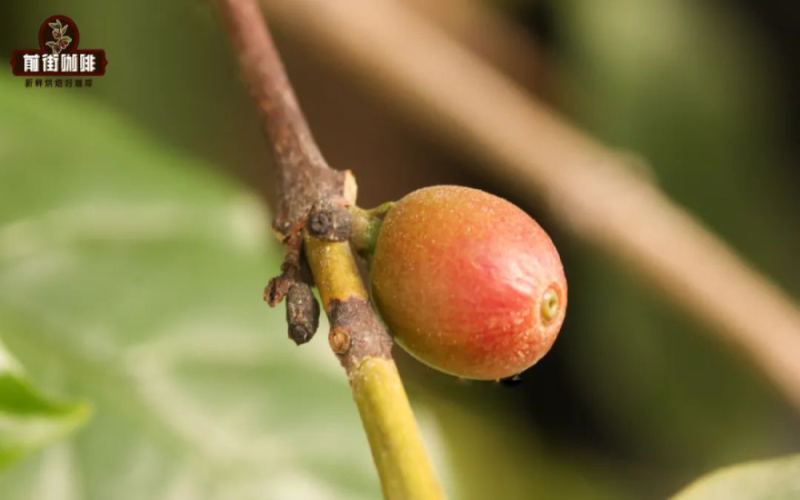
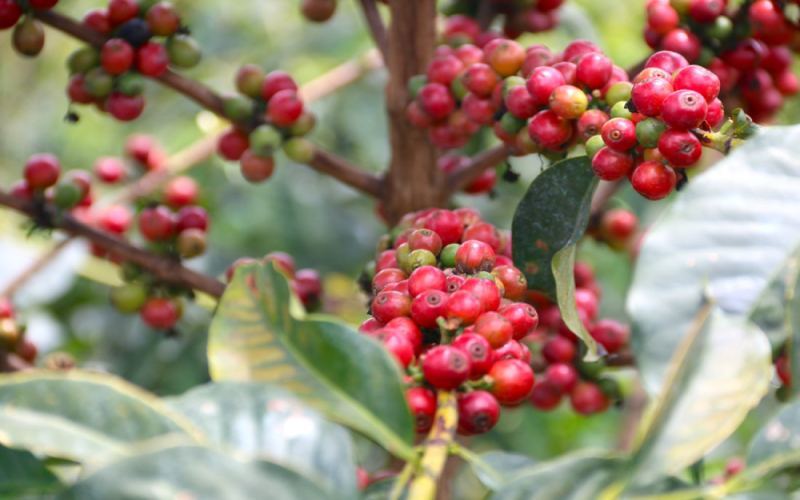
Bourbon is a genetically significant ancient variety within Arabica, attracting more attention than Typica, partly because of its rich color mutations. From its origins in Yemen to acquiring its name on Réunion Island, and then spreading and mutating in Brazil, El Salvador, and elsewhere, the Bourbon family gradually differentiated into types with different fruit colors, such as Red Bourbon, Yellow Bourbon, Orange Bourbon, and Pink Bourbon. These variants differ not only in appearance but also in flavor expression, yield, and disease resistance. This article will trace the historical development of the Bourbon variety, introduce the origins, characteristics, and current cultivation status of each color variant one by one, and also present relevant product information from Front Street Coffee. [more…]
What coffee variety does Yellow Bourbon actually belong to? What is its genetic relationship with Red Bourbon and Typica?
In the vast family of Arabica coffee, Bourbon and Typica are the two most representative ancient varieties, while Yellow Bourbon is a special branch of the Bourbon line discovered due to a genetic mutation. Its fruit ripens to a bright yellow rather than the red common to Bourbon, making it highly recognizable in the field. What exactly is the genetic relationship between Yellow Bourbon and Red Bourbon and Typica? Is it an independent variety or a variant of the Bourbon family? This article, from the perspective of Front Street Coffee, will sort out the origin, botanical characteristics of Yellow Bourbon and its connection to Red Bourbon and Typica, helping coffee enthusiasts more clearly understand this variety's position in the coffee lineage. [more…]
A Comprehensive Analysis of the Caturra Coffee Variety: Characteristics, Advantages, Cultivation Distribution, and Flavor Profile of the Bourbon Mutation
Caturra is one of the most common coffee varieties in Central and South America. As a natural mutation of Bourbon, it has become the dominant variety in many producing regions thanks to its compact size, high yield, and ability to adapt to direct sunlight. This article will guide readers through a comprehensive understanding of this variety, covering Caturra's origin and discovery, its botanical advantages, its spread across Central and South America, and the typical flavors presented by the pure Caturra coffee beans from the Alasitas estate in Bolivia selected by Front Street Coffee. Whether you are just beginning to learn about coffee varieties or want to gain a deeper understanding of the relationship between Caturra and Catuai, this article offers clear and practical reference. [more…]
A Complete Guide to Coffee Bean Varieties: From Typica to Hybrids, Understanding the Family Tree and Flavors of Specialty Coffee in One Article
The coffee plant family is vast, with over a hundred known species, but the ones that truly take the stage in specialty coffee are mainly Arabica and its many derived varieties. From the ancient Typica of Ethiopia, to the Bourbon mutation of Yemen, to the pointed Bourbon born in laboratories, and the Geisha that has dominated cupping competitions in recent years, behind each variety lies a story of migration and domestication. This article systematically organizes coffee's botanical classification, the origins and flavor characteristics of major varieties, and explains in detail the differences between genetic mutations, intraspecific hybrids, and interspecific hybrids, helping coffee enthusiasts build a complete framework for understanding varieties. The article also specifically points out that even the same variety can perform vastly differently on different estates, which is one of the reasons specialty coffee emphasizes traceability of origin. [more…]
The Origins of Yellow Bourbon Coffee and Its Comparison with Red Bourbon: From a Brazilian Mutation to the Rise of Specialty Coffee
Yellow Bourbon is a unique and precious presence on the Brazilian coffee map—its ripe cherries take on a bright yellow color, and its flavor is renowned for sweetness, citrus acidity, and nutty-chocolate notes. It originated from a natural mutation of Red Bourbon and, over nearly a century, has moved from being a novelty variety to the specialty coffee stage. This article provides a complete overview of Yellow Bourbon's origins, genetic principles, and flavor characteristics, compares it with Red Bourbon, and also introduces you to the Yellow Bourbon of Fazenda Rainha as well as Front Street Coffee's roasting and flavor expression. [more…]

Exploring the Bourbon Coffee Family: The Origin Stories, Variety Characteristics, and Brewing Flavor Comparison of Red Bourbon and Yellow Bourbon
Bourbon is one of the oldest varieties of Arabica coffee, having mutated from Typica and given rise to numerous popular varieties. The red bourbon and yellow bourbon pair, "same origin, different colors," have each traveled vastly different paths of propagation and cultivation. From the perspective of Front Street, this article traces the origins of Bourbon coffee, telling how the French "borrowed" coffee seedlings from Yemen, and how a mutation on Bourbon Island created this legendary variety. It also takes a deep dive into comparing red bourbon and yellow bourbon in terms of flavor, cultivation difficulty, and yield, and presents detailed flavor descriptions of the Rwanda washed red bourbon and the Brazil Queen's Farm yellow bourbon from Front Street's bean list, helping coffee enthusiasts more clearly understand the unique charm of these two varieties that have "made a comeback." [more…]
A Comprehensive Analysis of the Caturra Coffee Variety: From a Natural Bourbon Mutation to the Reasons for Mixed Harvesting in Central America and Its Flavor Characteristics
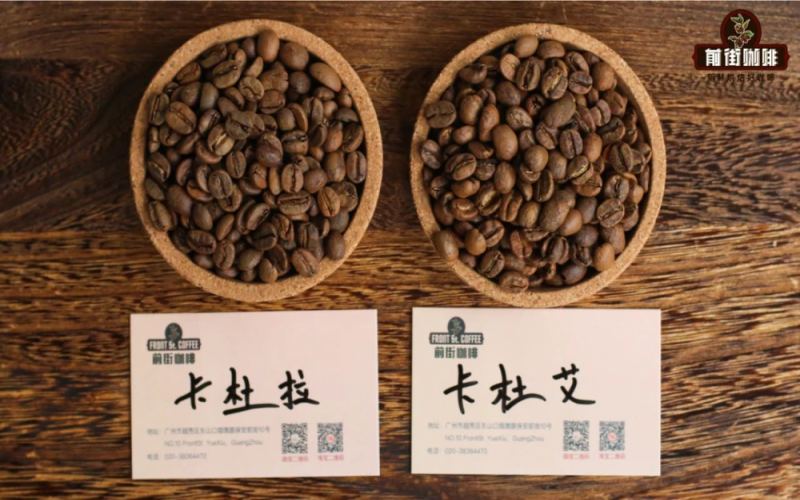
When purchasing coffee beans from Central American origins, the variety column often shows Caturra and Catuai listed side by side. What exactly is the relationship between these two similarly named varieties? Caturra is a natural Bourbon mutation discovered in 1915 in the state of Minas Gerais, Brazil, named for its short stature, and offers advantages such as suitability for high-density planting, tolerance to full sun, and adaptation to altitudes of 700 to 1700 meters. Catuai, on the other hand, was bred by crossing Yellow Caturra with Mundo Novo, inheriting traits of high yield, resistance to wind and rain, and excellent acidity. In this article, Front Street Coffee will systematically sort out the origins, plant characteristics, bean shape differences, and cupping flavor performance of the two, and explain why Central American estates commonly plant and harvest the two together, while also listing well-known coffee products that include this pair of varieties. [more…]

Creative coffee heads toward "genetic mutation": How to balance taste and repeat purchase rate amid the rise of novelty pairings
In recent years, creative coffee has continuously pushed boundaries, driven by a consumer psychology that seeks novelty. From early combinations with milk, sugar, and cream, to Irish coffee-style blends of alcohol and coffee, and then to milk coffee, tea coffee, and fruit-based specialty drinks, we now even see surprising combinations like pickled vegetable Americano, tofu pudding latte, and pig trotter ginger specialty coffee. While these products can briefly capture attention, they often sacrifice the rationality of flavor pairing, leading consumers to not repurchase after trying them. This article reviews the evolution of creative coffee, analyzes the reasons and concerns behind these "genetic mutations," and explores how a good creative coffee should balance visual impact with flavor harmony, providing reference for coffee enthusiasts and practitioners. [more…]