







How Do Arabica Coffee Types Differ in Bourbon Cherry Color?
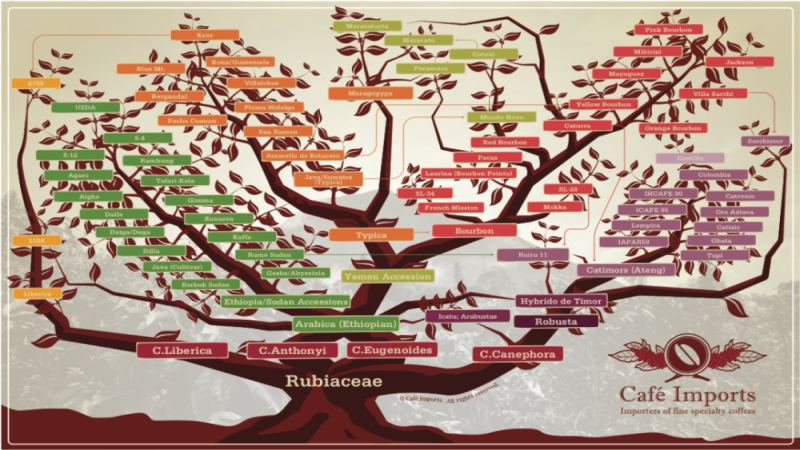
Bourbon is one of the two oldest Arabica varieties still grown, and its main color mutations are Red Bourbon, Yellow Bourbon, Orange Bourbon, and Pink Bourbon, each named for the ripe cherry. These variants differ in appearance, flavor expression, yield, and disease resistance, which is why breeders and roasters track them separately.
The family traces back to Yemen and was carried by French missionaries to Île Bourbon, now Réunion Island, in the early 17th century, then spread in the 19th century to Africa and South America, settling first at Campinas in southern Brazil. Yellow bourbon coffee and its siblings later emerged through replanting, mutation, and hybridization.
Bourbon is an ancient variety of immense genetic importance within Arabica, attracting even more attention than Typica, partly because of its rich range of color mutations. From its origins in Yemen to acquiring its name on Réunion Island, and then to its spread and mutation in places like Brazil and El Salvador, the Bourbon family gradually diverged into distinct fruit-color types such as Red Bourbon, Yellow Bourbon, Orange Bourbon, and Pink Bourbon. These variants differ not only in appearance but also in flavor expression, yield levels, and disease resistance. This article will trace the historical thread of the Bourbon variety, introduce the origins, characteristics, and current cultivation status of each color variant one by one, and also present related product information from Front Street Coffee.
In the Arabica family, the two varieties Typica and Bourbon occupy a pivotal position in coffee genetics, and they are also the oldest coffee varieties still in existence today. However, compared with Typica, Bourbon often receives more attention, precisely because it has given rise to multiple mutant types with different fruit colors.
As for the origins of Bourbon, some sources indicate that it came from Yemen and is a naturally mutated descendant of Typica. In the early 17th century, French missionaries brought it from Yemen to the Mascarene Islands, about 680 kilometers east of Madagascar. After France occupied the island, it was renamed Île Bourbon (French: Île Bourbon, present-day Réunion Island), and this batch of Yemeni coffee accordingly became known as Bourbon coffee.
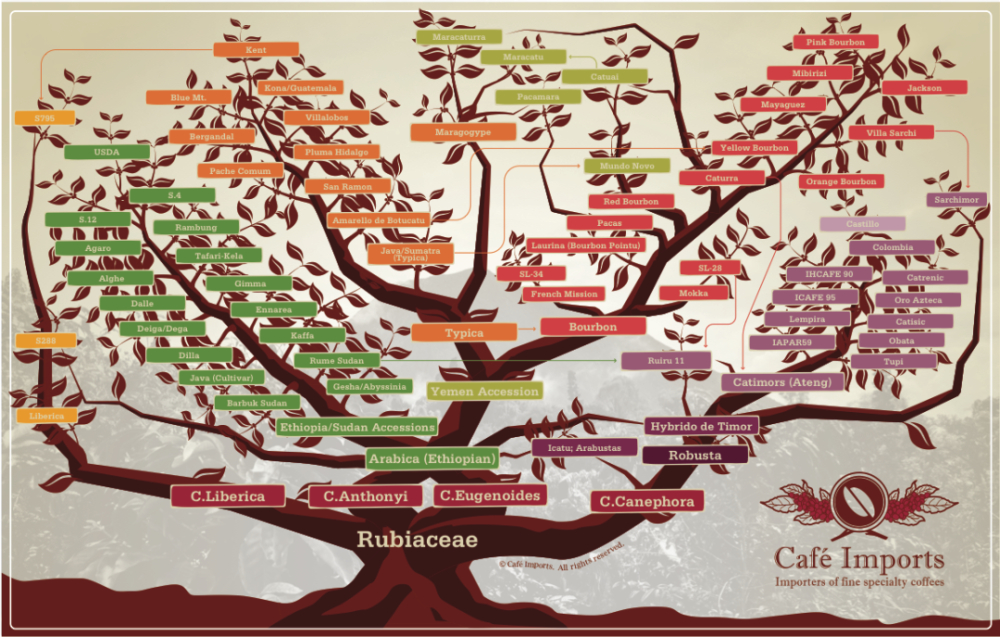
Entering the 18th century, Réunion Island became the base where the French cultivated Yemeni Bourbon coffee. By the mid-19th century, as missionaries of the French Order of the Holy Spirit spread their faith far and wide, Bourbon coffee was gradually introduced to various parts of Africa and South America.
When it was introduced to South America, Bourbon first settled in Campinas in southern Brazil. At that time Brazil mainly grew Typica, but although Bourbon was likewise susceptible to pests and diseases, its yield was higher than Typica, so it quickly spread to other regions of Brazil and further expanded to many countries in South America and Central America.
However, as the coffee industry continued to evolve, through repeated replanting, mutation, and hybridization, more and more new varieties were bred. Today in Latin America, most of Bourbon's cultivation areas have been replaced by its variants, such as Caturra, Catuai, and Mundo Novo, and only countries such as Brazil, El Salvador, and Peru still retain native Bourbon cultivation.
Usually, after a coffee tree bears fruit, the fruit turns from green to slightly yellow, then to orange, and finally at maturity appears red or even deep red. Bourbon, however, is somewhat different: after nearly a century of propagation, mutant types began to appear, and the fruit color also changed, for example Yellow Bourbon, Orange Bourbon, and Pink Bourbon. To distinguish it from these variants, the common Bourbon is called Red Bourbon.
It is recorded that Yellow Bourbon was first discovered in the 1930s on a farm growing Bourbon in the city of Pederneiras, São Paulo State, Brazil. Some believe it is a natural mutation of Red Bourbon, while others believe it originated from natural propagation between Red Bourbon and "Amerelo de Botocatu" (a yellow-fruited Typica mutation discovered in São Paulo State in 1871).
Later, the Campinas Agronomic Institute (IAC) in Brazil conducted research on this coffee and in the 1950s released several commercial Yellow Bourbon varieties. Yellow Bourbon ripens relatively quickly, and its sweetness and aroma are more pronounced than those of Red Bourbon. It also has noticeable citrus acidity, but its yield is lower than that of Red Bourbon and its disease resistance is weaker, so it is planted only in some areas of São Paulo State, Brazil. Front Street Coffee (FrontStreet Coffee) has a Yellow Bourbon coffee bean from Queen Farm in the Mogiana region of São Paulo State, Brazil. After brewing, it presents fruity sweetness, with flavors of sugarcane, chocolate, and peanuts and other nuts; the bitterness is faint and clean, and the mouthfeel is smooth and delicate.
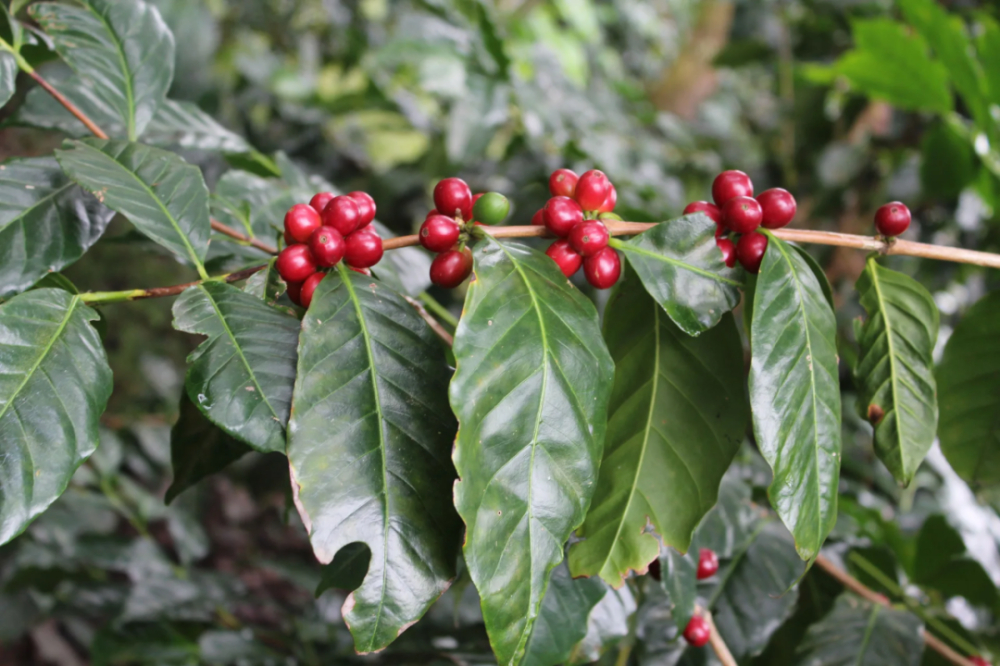
Orange Bourbon was first discovered in El Salvador and is a naturally mutated type of the gene for coffee fruit color, though it is sometimes easily confused with Colombia's "Pink Bourbon."
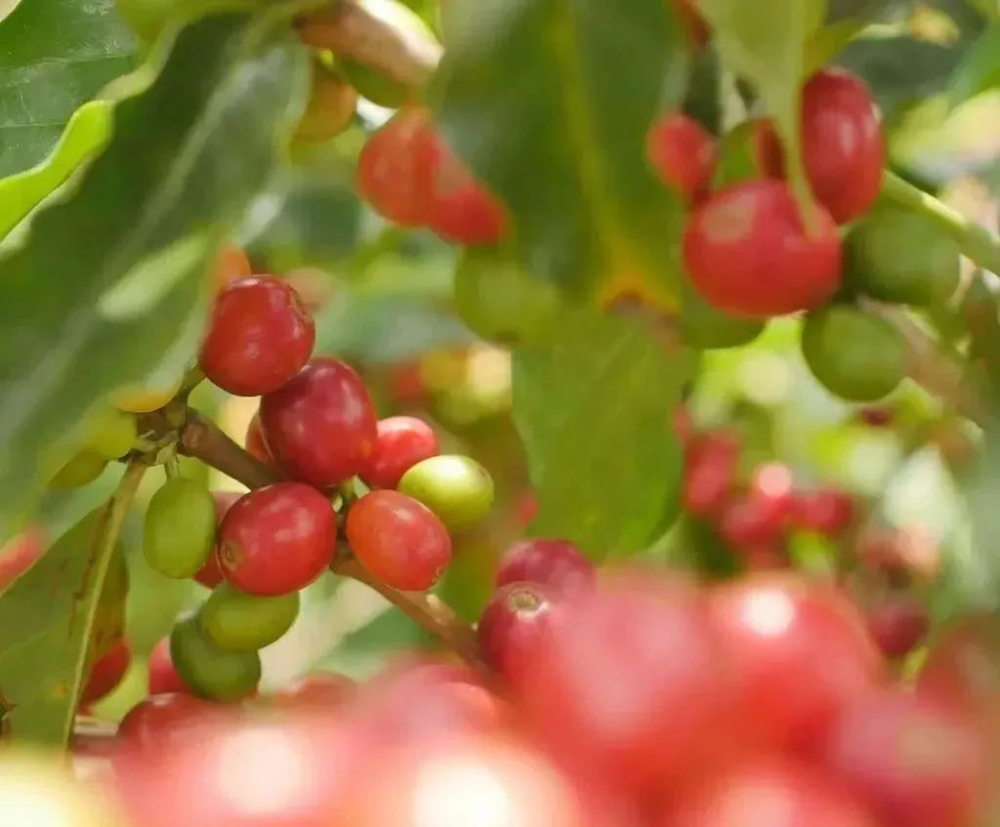
In recent years, at coffee competitions in Colombia, a relatively new variety has often been seen—Pink Bourbon, named for its fruit's elegant and soft pink color. Pink Bourbon was initially bred by crossing Red Bourbon and Yellow Bourbon. Its pink appearance belongs to a recessive gene, and once it encounters dominant genes such as red or yellow, it will be masked and cannot manifest. Therefore, although this variety has extremely strong disease resistance, its yield is extremely low, and stable production is very difficult. It must be planted in isolation from other varieties to reduce the risk of being covered by other colors.
Although everyone generally classifies Pink Bourbon under the Bourbon species, later genetic testing found that it is not purely Bourbon genetically; most of its genes are similar to Ethiopian native varieties. Therefore, the exact origin and true identity of this variety remain undetermined to this day.
To learn more about coffee origin information, please scan the QR code to follow: Coffee Review
Long-press the QR code to follow:
The above content is compiled by CoffeeHunters, a coffee news website.


