







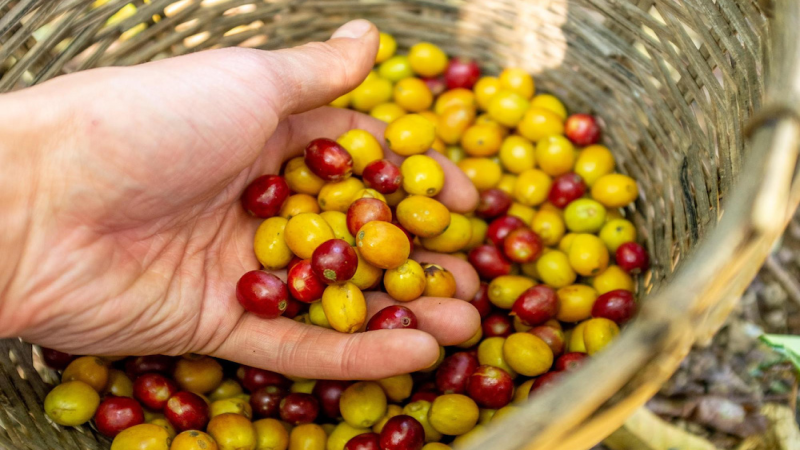
What Is Purple Bean Coffee and How Does Caturra Taste?
Caturra is a natural mutation of Bourbon first noticed in Brazil in 1937, prized for high yield and disease tolerance. Alongside Red and Yellow Caturra there is a rarer Purple Caturra, a low-probability mutation of Red Caturra identified by copper-purple young leaves and dark purple ripe fruit. In the cup, Caturra usually shows bright acidity, medium body and lemon or citrus notes, with sweetness shaped by fertilization.
Colombia is a major stage for this variety, and a washed Huila coffee fits everyday drinking. Purple Caturra survived Colombia's 2012 leaf rust epidemic, carrying strong disease resistance, notable sugar content and distinct flavor. Brewing a Huila washed bean highlights its citrus acidity and clean finish, so keep the recipe simple and consistent to track how roast level and processing shape the cup.
Caturra is a natural mutation of Bourbon discovered in Brazil, and thanks to its high yield and strong disease resistance, it has become a common choice for large-scale cultivation. Its plants are short with compact branching, and it can maintain vigorous growth even under direct sunlight, hence the name "Sun Coffee." In addition to Red Caturra and Yellow Caturra, there is also the rare Purple Caturra, which arose from a natural mutation of Red Caturra. In terms of flavor, Caturra typically displays bright acidity and medium body, often showing lemon or citrus notes in cupping, while its sweetness is greatly influenced by fertilization management. Colombia is an important stage for Caturra, and Front Street Coffee's bean list also includes several Caturra coffees. This article covers the variety's background, Colombia's washed processing flow, and the brewing parameters and flavor performance of a Huila daily-drinking bean.
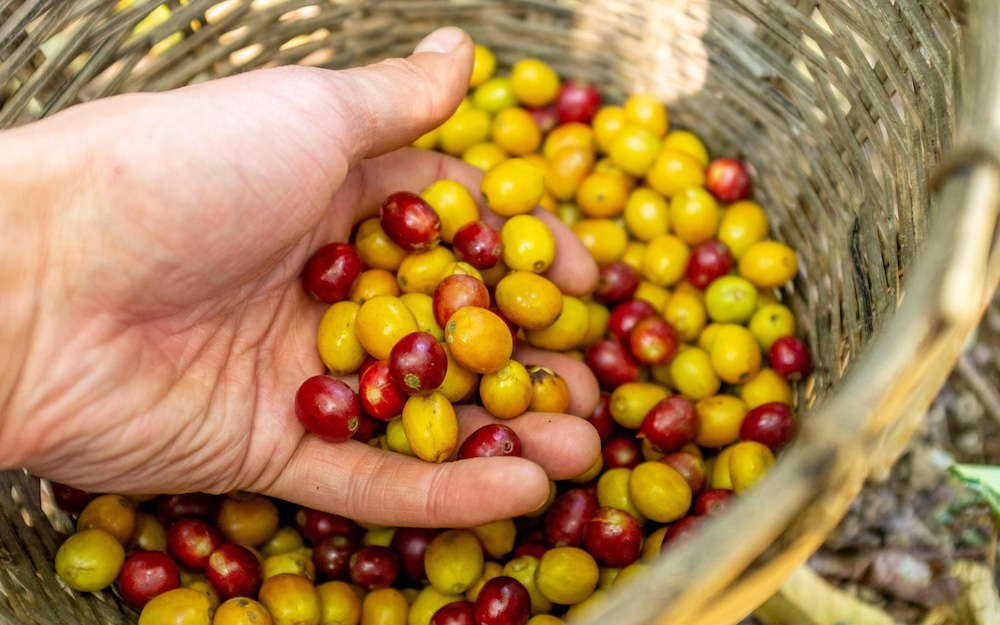
Caturra originates from Bourbon and is a natural mutation of the latter, noticed in Brazil in 1937. Its rapid spread was mainly due to outstanding yield performance and a certain tolerance to disease, making it suitable for large-scale planting. Compared with delicate older varieties such as Typica and Bourbon, Caturra has a shorter tree, making harvesting labor-saving and effort-saving, and it can maintain good condition even when directly exposed to sunlight, so growers often call it "Sun Coffee."
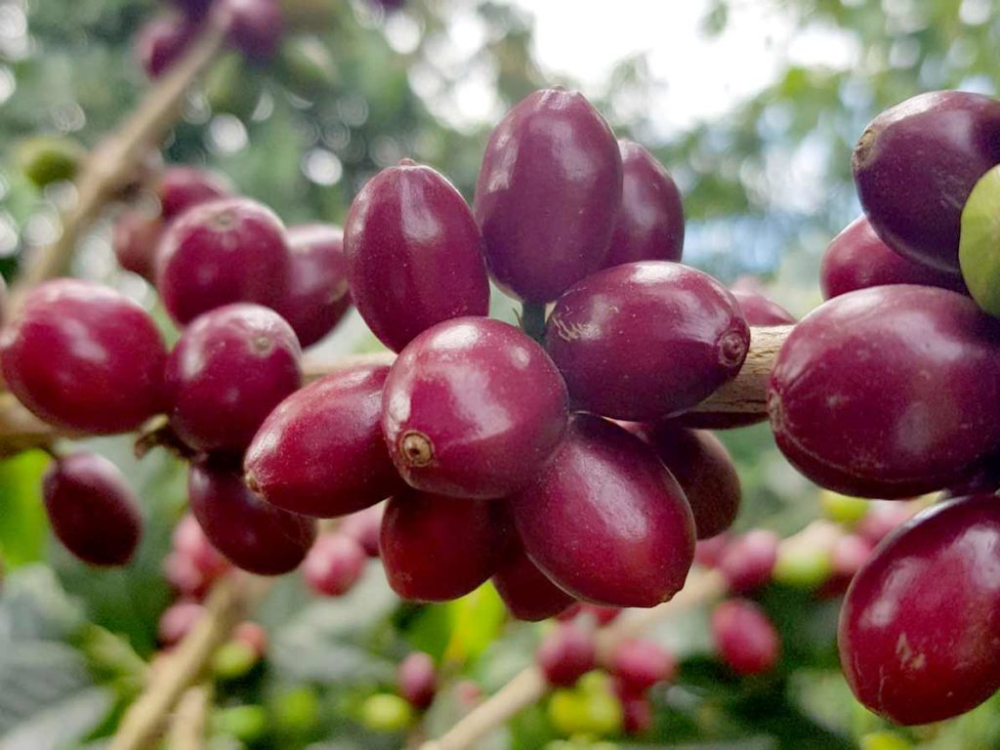
Like Bourbon, Caturra is also divided into Red Caturra, Yellow Caturra, and other types, and there is also a rarer derivative variety—Purple Caturra. It comes from a low-probability natural mutation of Red Caturra. The identifying point of Purple Caturra is that copper-purple young leaves emerge at the tips of new shoots, and the fruit turns dark purple when ripe. This variety survived during the 2012 coffee leaf rust epidemic in Colombia, possessing not only special flavor performance and strong disease resistance, but also high sugar content.
The typical characteristics of Caturra coffee are bright acidity and medium body. During cupping, lemon or citrus-like acidity and aroma can often be perceived. In terms of sweetness, it is usually not as good as Typica and Bourbon, because the level of sweetness in Caturra is closely related to the number and amount of fertilizations by the grower. Although it has high yield, maintaining this productivity requires continuous fertilization and pruning, so the tree shape is relatively short, with dense branching and an overall compact form. While productivity increases, the harvest cycle lasts as long as two years, management costs are also relatively high, and it is susceptible to coffee leaf rust, berry disease, and nematodes, all of which limit Caturra's final yield.
When talking about Caturra, one cannot avoid Colombia, a major producing region. In addition to Caturra, Colombia also grows common American varieties such as Bourbon, Typica, Pacamara, and Geisha, as well as three disease-resistant varieties with local characteristics: Castillo, Tabi, and the Colombia variety sharing the same name as the country, all of which carry Robusta lineage. Caturra can adapt to cultivation environments from low altitudes of 700 meters to high altitudes of 1,700 meters, spanning a wide altitude range, although the higher the altitude, the better the flavor usually is, while yield decreases accordingly. Dozens of coffee beans on Front Street Coffee's bean list contain Caturra, showing the importance of this variety in the specialty coffee field.
If you want to experience the flavor characteristics of Caturra, Front Street Coffee recommends a Colombian daily-drinking bean. The variety is washed Caturra, with a medium-dark roast, showing nutty, dark chocolate, and caramel aromas, with very high cleanliness. The washed Huila daily-drinking bean has both soft acidity and suitable body and sweetness. In order to present the classic Colombian nutty profile while retaining part of the acidity, Front Street Coffee ultimately chose a medium-dark roast.
Colombia is rich in water resources and very suitable for washed processing. Family-based farms are usually equipped with dedicated green bean processing machines (Ecomill or Eco-Pulper). Farmers pour the harvested coffee cherries into the machine, which not only removes the skin and pulp, but also removes most of the mucilage with very little water. The parchment beans with a small amount of remaining mucilage enter a small tank or container, possibly a tiled tank, and rest overnight to ferment so the remaining mucilage falls off. The next day they are rinsed clean with clean water, and finally spread out in the sun to dry to the target moisture content.
Washed processing can both ensure stable coffee quality and allow Huila coffee to present a more authentic flavor profile. This is also why Front Street Coffee prioritizes washed lots when selecting daily-drinking beans, and why the coffee variety chosen is Caturra, which is widely grown locally.
Brewing parameters: KONO dripper, 90°C water temperature, grind size with 75% passing a No. 20 standard sieve, 1:15 coffee-to-water ratio, 15 g dose, three-stage extraction.
Pour the ground coffee into the V60 dripper, wet the coffee bed with twice the amount of water as the coffee grounds to form a dome and bloom for 30s, then pour in a thin stream in a circular motion from the inside out until 125g, pause, wait for the coffee bed to drop to half the height of the dripper, continue pouring the third stage with the same thin stream until 225g, and once all the coffee liquid has filtered through, remove the dripper. The time is about 2 minutes.
This Colombian Huila daily-drinking bean has obvious roasted aromas of chocolate, nuts, and caramel on entry, smooth and sweet, with moderate body, a clean mouthfeel, and as the temperature drops, a pleasant soft acidity can be felt.
For professional coffee knowledge exchange and more coffee bean information, please follow Coffee Workshop (WeChat public account: cafe_style)
For more specialty coffee beans, please add the private WeChat of Front Street Coffee (FrontStreet Coffee), WeChat ID: qjcoffeex
The above content is compiled by CoffeeHunters, a coffee news website.


