








How Did Alcohol and Coffee Pairings Shape Creative Coffee?
Creative coffee has moved from milk, sugar and cream to Irish coffee-style alcohol and coffee blends, then milk coffee, tea coffee and fruit drinks, and now pickled vegetable Americano, tofu pudding latte and pig trotter ginger brew. Such drinks draw attention quickly but often ignore flavor logic, so customers try them once and do not return.
The pattern is not new. In 1683 a Viennese drinker mixed milk into coffee, and by 1950 an Irish bartender combined whiskey with coffee to create Irish coffee. Even that classic spread slowly because few people could make a blended coffee taste good, which is why why does my coffee taste like alcohol questions often point to a poorly balanced drink rather than a single ingredient.
In recent years, creative coffee has continuously pushed boundaries, driven by the consumer psychology of novelty-seeking—from early pairings with milk, sugar, and cream, to Irish coffee-style blends of alcohol and coffee, to milk coffee, tea coffee, and fruit-based specialty drinks, and now even unexpected combinations like pickled vegetable Americano, tofu pudding latte, and pig trotter with ginger specialty brew. While these products can briefly grab attention, they often sacrifice the rationality of flavor pairing, leading consumers to try them once and never repurchase. This article traces the evolution of creative coffee, analyzes the reasons and concerns behind its "genetic mutation," and explores how a good creative coffee should balance visual impact with flavor harmony, offering reference for coffee enthusiasts and industry practitioners.
What kind of creative coffee can truly capture consumers' attention? Is it flavor, layers, or decoration? The answer may be surprising—it's absurdity, the kind of ab(so)lu(tely) ri(di)cu(lous) absurdity.
In recent years, driven by consumers' strong novelty-seeking psychology, creative coffee has already taken on a "genetic mutation" pace. When developing creative coffee, people no longer prioritize flavor pairing—as long as it's absurd enough, it's sure to generate a burst of hype.
Looking back over the past few centuries, humans have continuously tried adding other ingredients to coffee to dilute its bitterness and make it more palatable. In 1683, a Viennese person mixed milk into coffee, and coffee was no longer a pure black drink. As times progressed and food became more abundant, people began adding ingredients beyond milk to coffee—white sugar, cocoa, and cream gradually became classic companions to coffee.
By 1950, an Irish bartender combined whiskey with coffee for the first time, creating what is still regarded as a classic today—Irish coffee. Only after that did people slowly begin experimenting with adding other ingredients to coffee to create richer layers and stronger impact while still preserving coffee's own flavor. However, although Irish coffee is a classic, it wasn't popular when first introduced, because very few people could make this alcohol-coffee specialty taste good—it was more like a work that could only be encountered by chance.
Not everyone can make a blended coffee that is both delicious and classic, nor can everyone accept alcohol. To satisfy consumers' pursuit of new flavors while ensuring every blended coffee retains coffee taste and delivers a different experience, ever-changing "milk coffees" emerged. From early additions of traditional ice cream, to later derivatives with various plant milks, to all kinds of flavored syrups, blended coffee has remained inseparable from milk and sugar for decades.
It wasn't until the past decade, as coffee gradually rose in popularity in China, that these conventional blended coffees could no longer satisfy consumers' desire for uniqueness and novelty, and thus Chinese-style specialty coffees began to appear. The earliest specialty coffees were relatively mild, mostly combined with Chinese-style tea drinks, preserving coffee's unique flavor while delivering the fresh aroma of tea.

Gradually, this kind of specialty coffee's flavor layering no longer attracted consumers, so various fruits and juices were added, giving specialty coffee obvious layers, high aesthetic appeal, and photogenic qualities. But as major coffee shops successively launched juice-based specialty coffees, the addition of juice became increasingly abundant, and coffee instead gradually became a supporting role in these drinks.
Pure juice still wasn't enough, so abstract specialty coffees made their entrance. For example, specialty coffees named after various band names or book titles—they crystallize the inspiration each creative barista draws from somewhere, blending different fruits and spices to express their inner feelings, allowing consumers to associate with the creator's thoughts when drinking the coffee. If you don't get it, then you simply didn't understand the coffee. Soon, these abstract-style specialty coffees gradually faded.
What came next was the era of specialty coffees that all consumers could distinctly feel. How to resonate with consumers? "Localization" is the most direct way. Combining local distinctive flavors or ingredients with coffee, thus pickled vegetable Americano, tofu pudding latte, soy sauce latte, Sichuan peppercorn Americano, and others appeared one after another. Foods that ordinary people could never associate together were forcibly forged into a new path by baristas.
Although these products gained consumer attention, people still found them not attractive enough, because many specialty coffees simply don't show any distinctive features in photos. So, to create greater impact visually and in taste, even stranger combinations began to appear—such as Chinese sausage specialty brew, pig trotter with ginger specialty brew, cold zongzi specialty brew, candied hawthorn specialty brew... These specialty coffees are generally paired with the corresponding ingredients, so that the overall coffee flavor can also integrate with the flavor of the ingredients themselves.
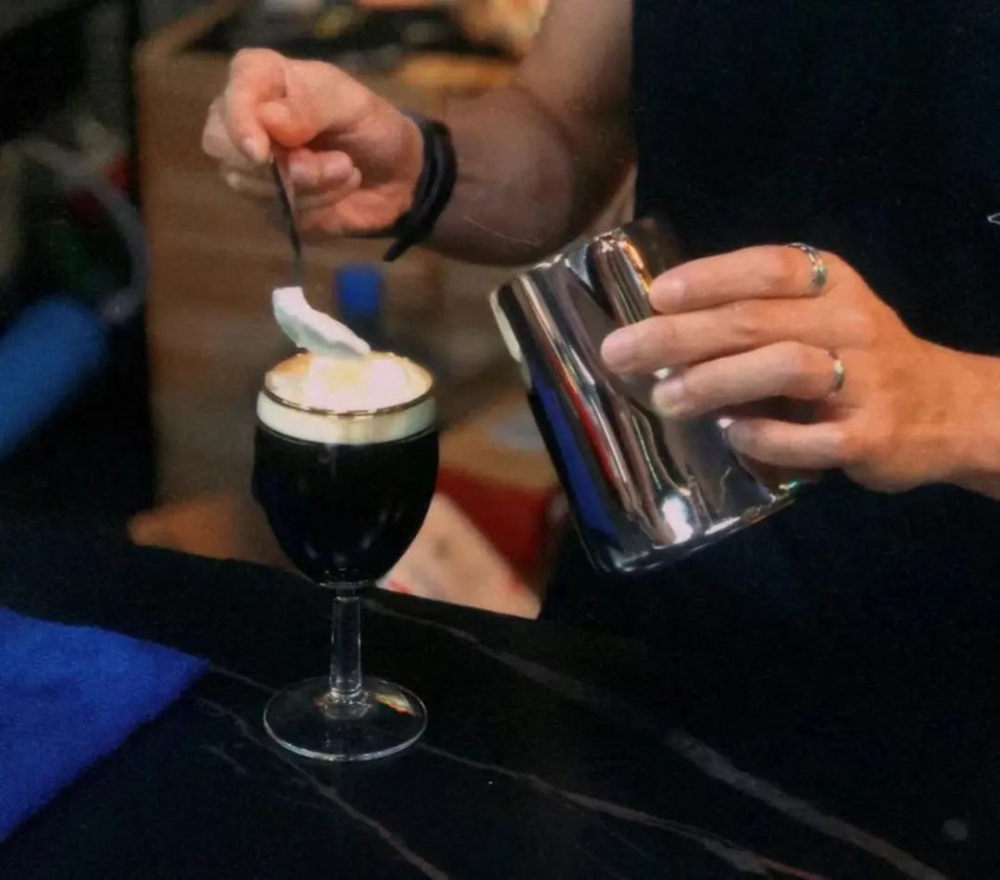
But a tiny bit of ingredients can't fill consumers' stomachs, so turtle shell jelly with goji berry latte, tofu pudding latte, put chai ko (rice pudding cake) latte, fermented rice ball latte, and others appeared in succession. Fear not that you won't drink it—only fear that you won't be full! Coffee is no longer coffee, and specialty coffee is no longer specialty coffee—they're more like a dish.
The emergence of specialty coffee was originally meant to help people who don't like coffee accept it. But today's specialty coffee has coffee yet doesn't taste like coffee. Why did it come to this? Some specialty coffee developers say: people's tolerance for coffee taste is still weak—everyone needs caffeine and needs to socialize through coffee, but doesn't want to taste even a hint of bitterness, and also wants novel things to post and discuss, so whether there's coffee taste or not doesn't matter.
Now the development of specialty coffee is no longer about helping more people accept coffee, but rather that even people unrelated to coffee will still be curious about these strange creative specialty coffees. But this hasn't made consumers genuinely interested in specialty coffee—it has even triggered aversion. Because in the making of some specialty coffees, the ingredients simply don't pair with coffee flavor—one sip leaves you with mixed emotions, and the price isn't cheap, causing specialty coffee to become increasingly something people are cautious about.
From many netizens' discussions about specialty coffee, it's clear that the "genetic mutation" of specialty coffee hasn't made more people accept coffee, and quite a few people have questioned whether the pairings of ingredients with coffee are appropriate. In order to elevate a product's aesthetic appeal and distinctiveness, flavor pairing is sacrificed, using all kinds of inherently unreasonable combinations to create absurd products—what's exchanged is only one-time consumption by a small portion of consumers.
Products without repurchase rates are destined to be replaced and won't be remembered. The R&D cost of a creative coffee is very expensive—a drink that takes a long time to develop yet cannot recoup costs is just a losing investment, and people won't remember a coffee shop because of a momentary surge in traffic. Such rapid iteration cannot make a shop be remembered long-term; only by truly doing one product well can a good reputation accumulate.
Creative coffee can be a shop's signature or its stumbling block. A good reputation requires good products, and good creative coffee also requires consideration of flavor pairing. A good cup of creative coffee demands sufficient knowledge and understanding of both coffee and the ingredients themselves—one must not throw away the most important thing, flavor, just for the sake of looking good.
Image source: Xiaohongshu, Dianping
For professional coffee knowledge exchange and more coffee bean information, please follow Coffee Workshop (WeChat public account: cafe_style)
For more specialty coffee beans, please add the private WeChat of Front Street Coffee (FrontStreet Coffee), WeChat ID: qjcoffeex
The above content is compiled by CoffeeHunters, a coffee news website.


