







How Does Arabica Coffee Bourbon Differ From Typica?
Bourbon is one of the oldest Arabica coffee varieties, a natural mutation of Typica that appeared on Bourbon Island, now Reunion, in the early eighteenth century. French growers obtained seedlings from Yemen, where the coffee trade was tightly controlled and exported beans were boiled or roasted so they could not be planted. Bourbon later became a parent variety for Caturra, SL28, and other popular Arabica types.
Red Bourbon and Yellow Bourbon share the same origin but differ in fruit color, cultivation difficulty, and yield. Flavor also depends on origin, processing method, and roast level, so a direct side-by-side comparison is rarely straightforward. For the coffee enthusiast, the useful context is that washed Red Bourbon from Rwanda and Yellow Bourbon from Brazil show how the same family can taste quite different in the cup.
Bourbon is one of the oldest varieties of Arabica coffee, having mutated from Typica and given rise to numerous popular varieties. The pair of "same-origin, different-color" brothers—Red Bourbon and Yellow Bourbon—each traveled vastly different paths of propagation and cultivation. This article, from Front Street's perspective, traces the origins of Bourbon coffee, telling how the French "borrowed" coffee seedlings from Yemen, and how a mutation on Bourbon Island gave rise to this legendary variety. It also delves into a comparison of Red Bourbon and Yellow Bourbon in terms of flavor, cultivation difficulty, and yield, and provides detailed flavor descriptions of the Rwanda washed Red Bourbon and Brazil Queen's Estate Yellow Bourbon from Front Street's bean list, helping coffee enthusiasts more clearly understand the unique charm of these two "comeback" varieties.
The starting point for this comparison is quite clear—they simply wanted to figure out what differences exist between Bourbons with different fruit colors and what characteristics each possesses. However, since the origins, processing methods, and roast levels all differ, a direct side-by-side comparison may not yield intuitive conclusions. Therefore, Front Street is here today to take everyone back through the historical origins and individual characteristics of these two "comeback" varieties. Once you have a basic understanding of this background and then taste them, perhaps you'll be able to perceive more subtle and interesting layers of flavor.
Bourbon
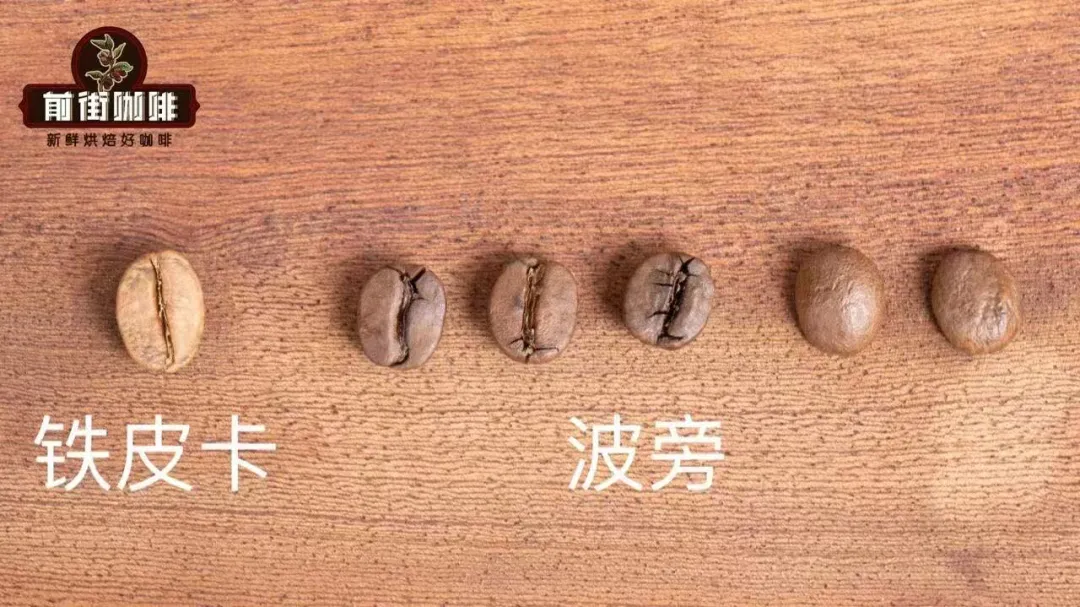
The name Bourbon is a transliteration of "Bourbon." It originated from a mutation of Typica, and together with Typica it ranks among the oldest extant coffee varieties, as well as being an important branch under the Arabica species.
Not only is it ancient, but Bourbon, like Typica, is a "mother variety" for many of today's popular Arabica varieties. For example, SL28, Caturra, and other well-known varieties are all descendants or mutations of Bourbon.
The birth of Bourbon can be traced back to the early eighteenth century. At the time, Europe's demand for coffee had already reached a fever pitch, but the coffee trade was tightly monopolized by Yemen, keeping prices persistently high. So the French hatched the idea of growing it themselves. Put plainly, they just wanted to grow it themselves!
But as Front Street mentioned earlier, coffee was completely controlled by Yemen at the time, and all exported coffee beans had been boiled or roasted, making them utterly unusable for planting. To get coffee that could actually be grown, there was only one option left—what option was that?
That's right! It was to steal —ahem, "borrow"—some coffee from Yemen to plant. Starting in 1708, the French successfully smuggled coffee seedlings out of Yemen three times. Apart from the 1708 batch, which failed to cultivate due to lack of experience, the seedlings obtained in 1715 and 1718 survived successfully thanks to the relevant cultivation techniques.
These seedlings were planted on Bourbon Island (now Réunion) , located 680 kilometers east of Madagascar, where a mutation occurred, producing a new variety with smaller plants and rounder fruit, clearly distinct from Typica. Thus, the coffee that underwent this mutation on Bourbon Island was named Bourbon.
Entering the nineteenth century, French missionaries brought Bourbon coffee to various parts of the world. From Africa to South America, Bourbon coffee took root and multiplied under each country's microclimate and soil conditions, continuously producing new varieties through mutation or hybridization. The Bourbon coffee family thus gradually grew in strength.
Bourbon's advantage lies in its outstanding flavor expression, along with a slightly higher yield than Typica. Because of this, despite lacking resistance to leaf rust just like Typica and being rather demanding regarding growing conditions, it has still been able to replace Typica in many countries and become the local primary cultivated variety.

Front Street's bean list includes a Red Bourbon from Rwanda, Africa—a washed-process, medium-light roast coffee bean. Washed processing does not introduce a deep fermented character, so the beans present more of the variety itself and the local terroir.
Front Street Coffee: Rwanda · Washed Red Bourbon Country: Rwanda Region: Nyamasheke (Nyamasheke) Altitude: 1500–1700 meters Variety: Red Bourbon Processing: Washed
Flavor: Berry, apple, green tea, apricot
Interestingly, Bourbon was originally just called Bourbon, and it wasn't until Yellow Bourbon appeared that, to distinguish between them, Bourbon acquired the alias "Red Bourbon." And the birthplace of Yellow Bourbon is none other than today's major Bourbon-growing country and the world's number one coffee producer—Brazil.
Yellow Bourbon
The first Bourbon took root in Brazil in 1860, and within just ten years, Red Bourbon had already become one of Brazil's primary cultivated varieties. It was precisely because of Bourbon's widespread popularity in Brazil that the conditions were created for Yellow Bourbon to emerge.
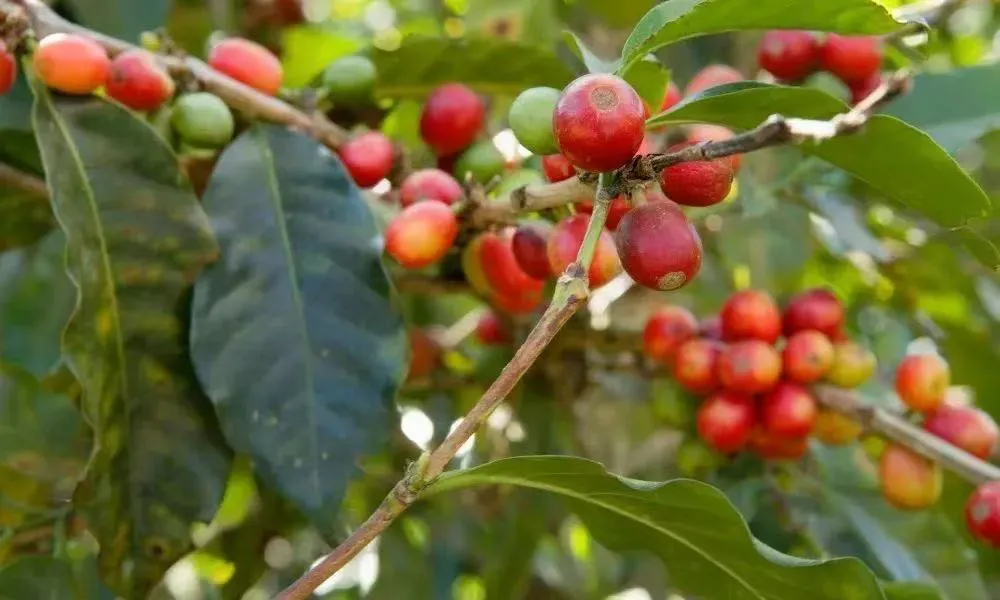
In 1930, on a Bourbon plantation near Pederneiras in northeastern São Paulo state, Brazil, a coffee variant bearing yellow fruit appeared. Since the discovery site was a Bourbon plantation, and since Brazil already cultivated the yellow-fruited Yellow Botucatu (Yellow Typica) locally, people speculated that this coffee plant was a hybrid offspring of Bourbon and Yellow Botucatu, and simply named it "Yellow Bourbon."
For a more detailed story about Yellow Bourbon, you can head over to the article "Yellow Bourbon" , because covering it in full would take considerable space, and Front Street won't go into too much detail here.
Although Yellow Bourbon is a Bourbon variant unique to Brazil, since its discovery it has not been widely planted locally the way Red Bourbon has. Why is that? Because it's difficult to grow and its yield isn't ideal.
Yellow Bourbon fully inherited Typica's delicate side—it can't withstand wind and rain, has weak resistance to leaf rust, and yields are on the low side. As Front Street has always shared with everyone, for coffee farmers, the income brought by yield is more substantial, so Yellow Bourbon was not widely promoted in Brazil.
Despite its low yield and high maintenance, if planted at high altitudes, Yellow Bourbon can display exceptionally outstanding sweetness and flavor. For this reason, some Brazilian estates that pursue flavor still choose to grow Yellow Bourbon, thereby producing coffee of excellent quality. For example, Front Street Brazil · Queen's Estate from Front Street's bean list—this bean is of the Yellow Bourbon variety.
Front Street Coffee: Brazil · Queen's Estate Yellow Bourbon Country: Brazil Region: Mogiana Altitude: 1400–1950 meters Variety: Yellow Bourbon Processing: Pulped natural
Flavor: Chocolate, nuts, caramel, a hint of berry, slight fermented aroma
The Front Street Brazil Queen's Estate Yellow Bourbon from Front Street's bean list is characterized by a very pronounced sweet aftertaste. Front Street uses a medium-dark roast level to draw out nutty aromas and enhance body, so the flavor profile is dominated by the medium-dark roast characteristics of chocolate, nuts, and caramel; and because the roast level isn't too dark, a trace of berry can still be detected in the finish, possibly even with a slight fermented aroma—one could say the layering is quite rich indeed!
- END -
The above content is compiled by CoffeeHunters, a coffee news website.


