







Why Caturra Thrives in Huila Coffee Growing
Caturra is a natural mutation of the Bourbon family, found in Brazil's Minas Gerais between 1915 and 1918. Its compact size, dense-planting suitability and low shade needs made it a pillar of Central American production. The variety fits well in Huila coffee, where estates such as Monteblanco apply enzyme-washed processing to a purple Caturra.
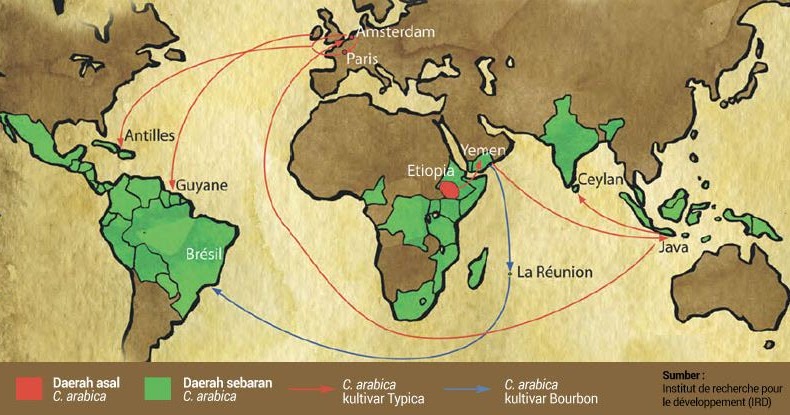
The Bourbon line itself began when Ethiopian Typica reached Yemen, mutated into rounder beans, and was transplanted to Bourbon Island in 1715; Brazil brought it to South America in 1860. Purple bean coffee, as seen in the Huila Purple Caturra example, reflects how processing and terroir build on a variety's genetic base.
Caturra is a highly economically valuable natural mutation within the Bourbon family. With advantages such as a compact plant size, suitability for dense planting, and no need for shade, it has become an important pillar of coffee-producing regions in Central America. This article, from the perspective of Front Street Coffee, will outline the historical origins and varietal characteristics of Caturra, and use its Colombia Passion Fruit Enzyme Washed Purple Caturra as an example to introduce the Huila region, the Monteblanco estate's processing techniques, and brewing recommendations, helping coffee enthusiasts gain a comprehensive understanding of this variety's unique charm.
For more specialty coffee knowledge, please follow: Front Street Coffee (Frontsteet Coffee)
For those who specifically search for articles on the Caturra coffee variety to read, Front Street believes that you should already have a basic concept of coffee bean varieties. Most coffee consumers typically encounter medium-sized coffee species (Robusta is a mutated branch of the medium-sized species), as well as the Arabica species we often discuss. Within Arabica, Typica and Bourbon are the two oldest varieties. The Bourbon family later evolved a variety with significant advantages, which is precisely the Caturra that this Front Street article will discuss.
Historical Context
Front Street just mentioned that Caturra originates from the Bourbon family, so how did Bourbon come about? In earlier years, Ethiopian Typica was introduced to Yemen, where it mutated without modern scientific intervention, with the bean shape changing from slender and pointed to round and plump. In 1715, during the period when the Bourbon dynasty ruled France, the round beans of Yemen Mocha were transplanted to Bourbon Island off the east coast of Africa (renamed Reunion Island after the French Revolution), and thereafter took the name "Bourbon." In 1860, Brazil introduced Bourbon from Bourbon Island to replace the lower-yielding Typica. This was Bourbon's first entry into Central and South America, and it gradually spread across the continent.
According to information Front Street consulted, between 1915 and 1918, on a plantation in Minas Gerais, Brazil, coffee farmers accidentally discovered Caturra. Subsequent research showed that a group of genes in the Bourbon trees on the plantation had mutated, making the coffee trees more compact. Based on this special compact biological form, locals named it "Caturra" in the Guarani language, meaning "small." It is sometimes also called "Nanico."
Starting in 1937, the São Paulo State Agricultural College (IAC) in Campinas, Brazil, began selection and mass selection of Caturra. Front Street noticed a very interesting phenomenon: Caturra was never officially released and promoted in Brazil, yet it has already spread throughout Central America.
In the 1940s, Caturra was introduced to Guatemala, and was then passed from Guatemala to Costa Rica, Honduras, and Panama. Today, Caturra is one of the most important economic coffee varieties in Central America. Until 2008, when the Colombian government encouraged coffee farmers to switch to the leaf-rust-resistant Castillo variety, Caturra accounted for almost half of the country's total production.
Caturra Variety Characteristics
The Caturra plant is small in size, so it can be planted more densely. In addition, Caturra's secondary branches are closely spaced, allowing more fruit to be produced in the same space, greatly increasing yield per unit area. Also because the plant is short, it is more convenient to handle during harvest.
Caturra has another nickname, "sun-exposed coffee," because it does not require shade trees and grows vigorously even under direct sunlight. According to information Front Street consulted, Caturra is suitable for cultivation at altitudes between 700 and 1,700 meters. It has strong environmental adaptability; the higher the altitude, the better the flavor, but the yield decreases accordingly. Like Bourbon, Caturra also has the cyclical problem of fluctuating yields every two years.
The Flavor of Caturra
As Front Street mentioned earlier, Caturra is widely planted in Central and South America, so Caturra can be seen in coffee beans from many producing regions. On Front Street's bean list, for example, Panama's Butterfly, Hacienda La Esmeralda Diamond Mountain, Colombia's Caturra, Rose Valley, and Passion Fruit, Costa Rica's Baja, Monster Estate, and Giant Stone Estate Blueberry, Honduras' Sherry and Lychee Orchid, and Guatemala's Flor del Cafe all have the word "Caturra" marked on the labels Front Street puts on the packaging.
So, Front Street Coffee (FrontStreet Coffee) will use Colombia's Passion Fruit Yeast Anaerobic Washed Caturra as an example to introduce it to everyone in detail!
Front Street Coffee (FrontStreet Coffee): Colombia · Passion Fruit Enzyme Washed Purple Caturra Region: Huila Region, Colombia Estate: Monteblanco Estate Altitude: 1900m Variety: Purple Caturra Processing Method: Passion Fruit Enzyme Anaerobic Washed Processing
【Huila Region】
This Passion Fruit Enzyme Washed Purple Caturra from Front Street comes from Colombia's Huila region. In recent years, the Huila Coffee Committee and the National Federation of Coffee Growers of Colombia have maintained close exchanges, improving local coffee farmers' cultivation standards and processing techniques. In particular, advances in anaerobic processing technology have pushed Colombian coffee in a new direction.
【Monteblanco Estate】
The estate that produces this Passion Fruit coffee from Front Street is Monteblanco Estate, located on the winding mountain road of Vereda La Tocora in the city of Pitalito, operated by estate owner Rodrigo Sanchez Valencia, whose coffee cultivation can be traced back to his grandfather. Monteblanco Estate is located at the top of a hill, with a land area of about 18 hectares. The estate is equipped with complete processing equipment such as a wet mill and dryers.
【Purple Caturra】
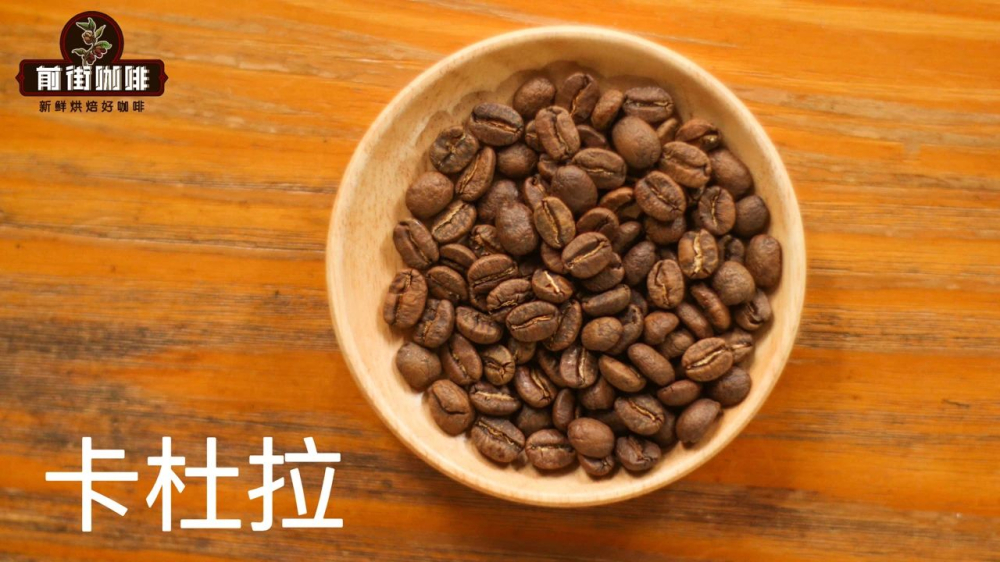
Purple Caturra is a variant of Caturra, naturally mutated from Red Caturra with a relatively low probability. Purple Caturra grows copper-purple young leaves at the top of the plant, and the fruit turns deep purple when ripe. At Monteblanco Estate that year, among more than 20,000 coffee plants, 26 plants with Purple Caturra characteristics were selected. In 2012, leaf rust swept through Colombia, but Purple Caturra successfully survived to this day. This variety has a unique flavor, strong resistance to leaf rust, and relatively high Brix.
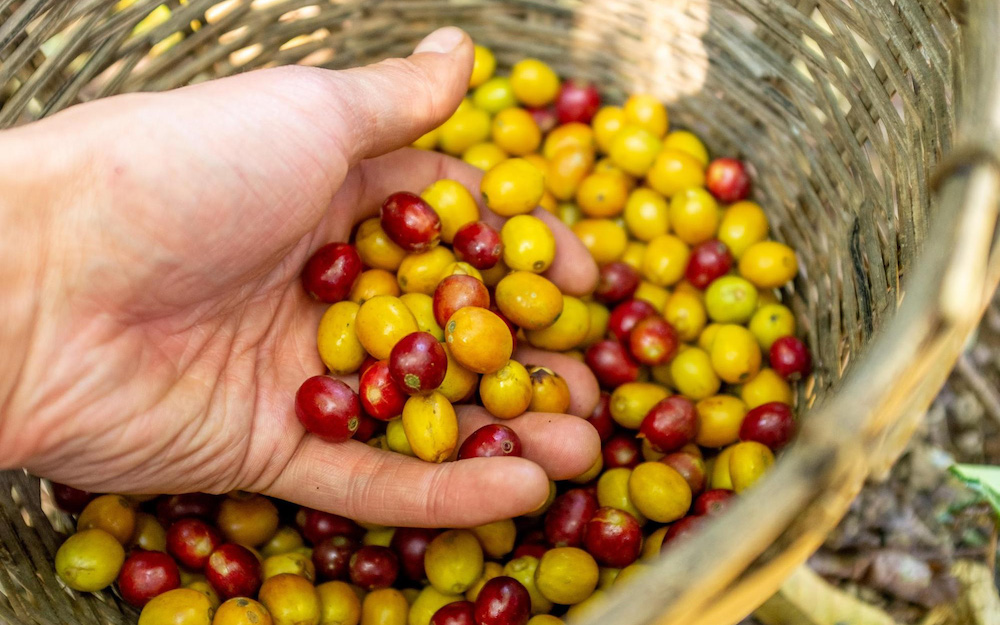
【Passion Fruit Enzyme Anaerobic Washed Processing】 After harvesting the coffee cherries, Monteblanco Estate first measures their Brix, then determines the appropriate processing method based on sugar content. Coffee with a Brix of 24 to 27 degrees is used for washed processing. First, the skin and pulp of the coffee fruit are removed, then the coffee fruit is fermented together with passion fruit. The high sugar content provides a superior environment for microbial growth. After cultivating the microbes, the coffee is left to stand sealed in tanks with parchment beans for anaerobic fermentation. The fermentation time is controlled between 28 and 2 hours, after which it is thoroughly washed with clean water, transferred to a solar dryer for several days, and finally moved to a shaded raised bed to complete drying.
Front Street Coffee (FrontStreet Coffee) Brewing Recommendations
Dripper: V60#01 Water Temperature: 90-91℃ Dose: 15g Coffee-to-Water Ratio: 1:15 Grind Size: EK43s#10 (80% passing through China Standard No. 20 sieve)
Brewing Method: Three-stage extraction. Bloom with 30 grams of water for 30 seconds, then pour in a small stream in circles until 125 grams for the stage break. When the water level drops and is about to expose the coffee bed, continue pouring until 225 grams and stop. When the water level drops and is about to expose the coffee bed, remove the dripper. (Start timing from the beginning of blooming.) Extraction time is 2'00".
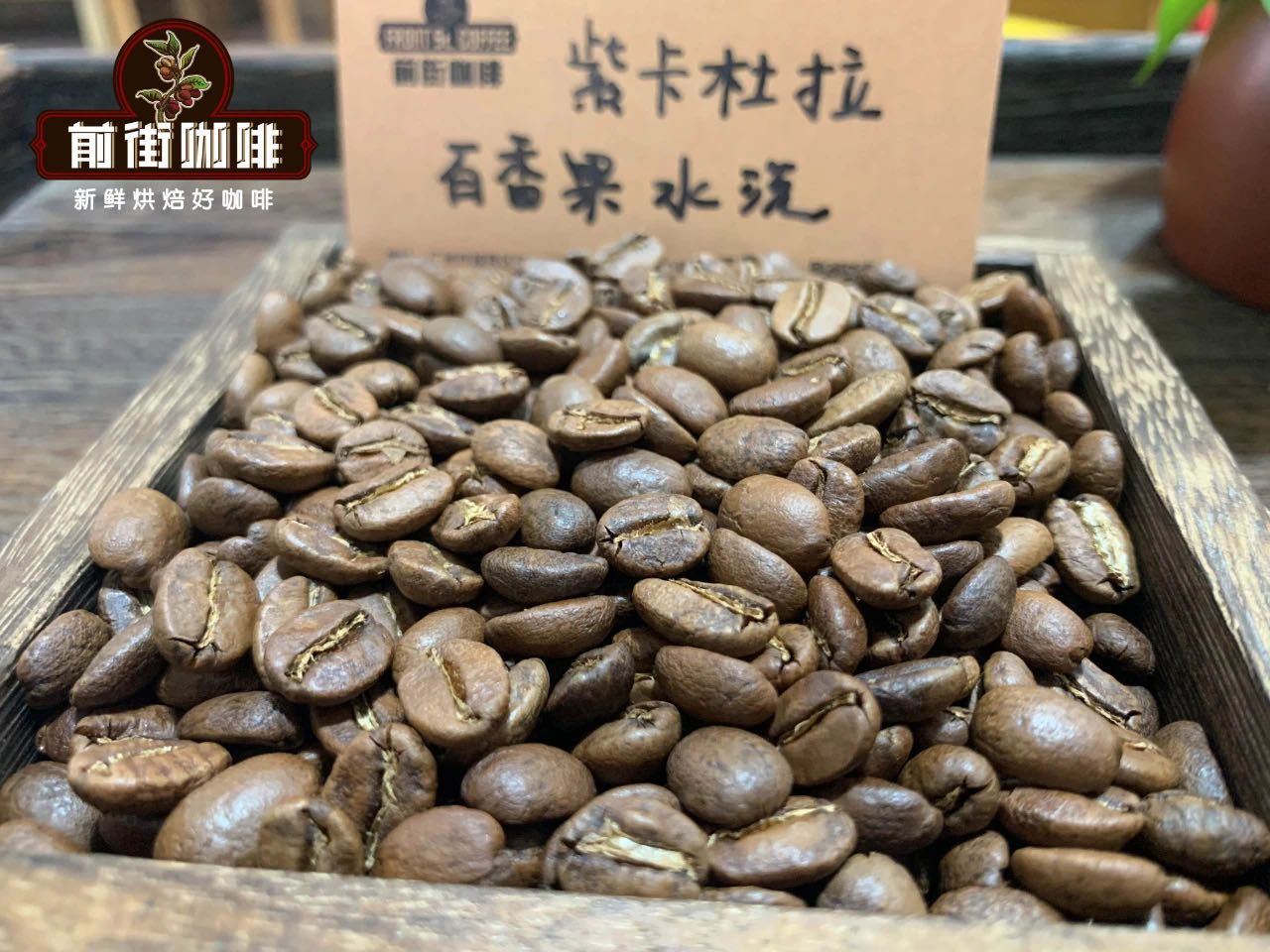
Flavor Description: After grinding into powder, there is a raisin aroma, and during brewing, white floral notes can be smelled. On the palate, there is a distinct passion fruit aroma, grape-like acidity, and a finish like honey.
The above content is compiled by CoffeeHunters, a coffee news website.


