







Why Does Central American Coffee Mix Caturra and Catuai?
Caturra and Catuai are two distinct varieties that frequently appear side by side on the labels of Central American coffee. Caturra is a natural Bourbon mutation found in 1915 in Minas Gerais, Brazil, named for its short stature and suited to altitudes of 700 to 1700 meters. Catuai is a cross of Yellow Caturra and Mundo Novo, bred for high yield and wind and rain resistance.
The two are often planted and harvested together because they share a similar ripening window and complement each other in the field. Caturra's compact size allows dense planting, while Catuai adds yield stability and good acidity. For buyers of Central American coffee beans, recognizing both names helps in reading variety columns and anticipating cup profile differences.
When buying coffee beans from Central American origins, the variety column often shows Caturra and Catuai listed side by side. What exactly is the relationship between these two similarly named varieties? Caturra is a natural Bourbon mutation discovered in 1915 in Minas Gerais, Brazil, named for its short stature, and offers advantages such as suitability for high-density planting, tolerance to full sun, and adaptation to altitudes of 700 to 1700 meters. Catuai, on the other hand, was bred by crossing Yellow Caturra with Mundo Novo, inheriting high yield, resistance to wind and rain, and excellent acidity. In this article, Front Street Coffee will systematically review the origins, plant characteristics, bean shape differences, and cup profile performance of the two, and explain why Central American estates commonly plant and harvest them together, while also listing well-known coffee products that contain this pair of varieties.
For more specialty coffee knowledge, please follow the WeChat public account: FrontStreet Coffee
When buying Central American coffee beans, you can often see both Caturra and Catuai in the variety column. They are extremely widely planted in Central America, so why are they often cultivated together and harvested together? If we look at the two separately, what differences do their appearance and flavor show? In this article, Front Street Coffee will discuss the two varieties, Caturra and Catuai, separately.
Caturra Coffee Variety
Caturra was discovered in 1915 in a coffee garden in Minas Gerais, Brazil, and is a variety produced by natural mutation of Bourbon. What drew people's attention to it was that the Caturra tree is shorter than Bourbon, like a short person standing next to a strong man. Because of its petite stature, locals borrowed the Guarani word "Caturra" (meaning small) to refer to this coffee tree. In 1937, when the Instituto Agronomico de Campinas (IAC) in São Paulo state, Brazil, selected coffee varieties as research subjects, it treated Caturra as a mass selection, that is, selecting a group of individuals based on superior traits to serve as parent plants for breeding new varieties.
The Caturra plant is relatively short, so it can be arranged more densely when planted; at the same time, its secondary branches have very short spacing, allowing it to bear more fruit and produce more coffee beans within the same area. Its advantages do not stop there: compared with ancient varieties such as Typica and Bourbon, Caturra does not have to be planted under shade trees and grows vigorously even under full sun throughout. It can adapt to an altitude range of 700 to 1700 meters, has high environmental tolerance, and the higher the planting altitude, the better its flavor expression often is.
Catuai Coffee Variety
Does the name Catuai sound very close to Caturra? Indeed it does. It was bred by the Instituto Agronomico de Campinas in São Paulo state, Brazil, by crossing Yellow Caturra with the Mundo Novo variety, and Mundo Novo itself is a natural hybrid of Bourbon and Typica. Catuai inherits Mundo Novo's strengths of high yield, strong disease resistance, and excellent flavor, while also combining Caturra's characteristics of short stature, tolerance to full sun, and outstanding acidity.
Because of this, Catuai has strong resistance to disasters, especially wind and rain. Since the tree is not large, it can be planted at double density; the short plant also makes pest and disease control easier. Catuai grows robustly and is relatively short, but it is more susceptible to coffee leaf rust. Because this variety performs more outstandingly than Caturra, locals named it very directly, using the Guarani word "catuai" (meaning very good) to name it.
How to distinguish Caturra from Catuai, and what are their respective flavor expressions?
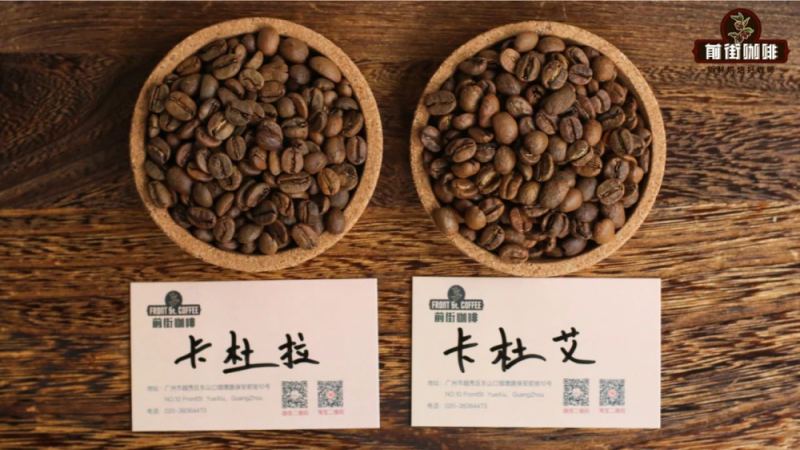
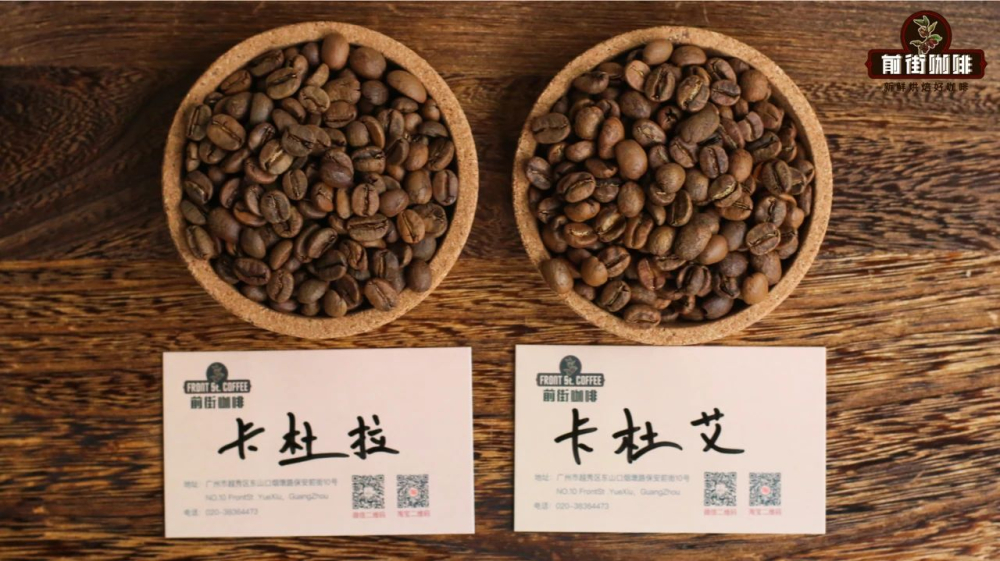
Caturra beans are round and long, with a curved tail end. When Front Street cups Caturra coffee beans on its own, it considers it to have a bright and clean mouthfeel, with a very prominent sweetness.
Catuai beans are oval and flat, with a relatively slender tail end. When Front Street cups Catuai coffee beans on its own, it considers it to have soft acidity, a clean mouthfeel, and rich fruity aromas.
Why are Caturra and Catuai mostly planted as a mix?
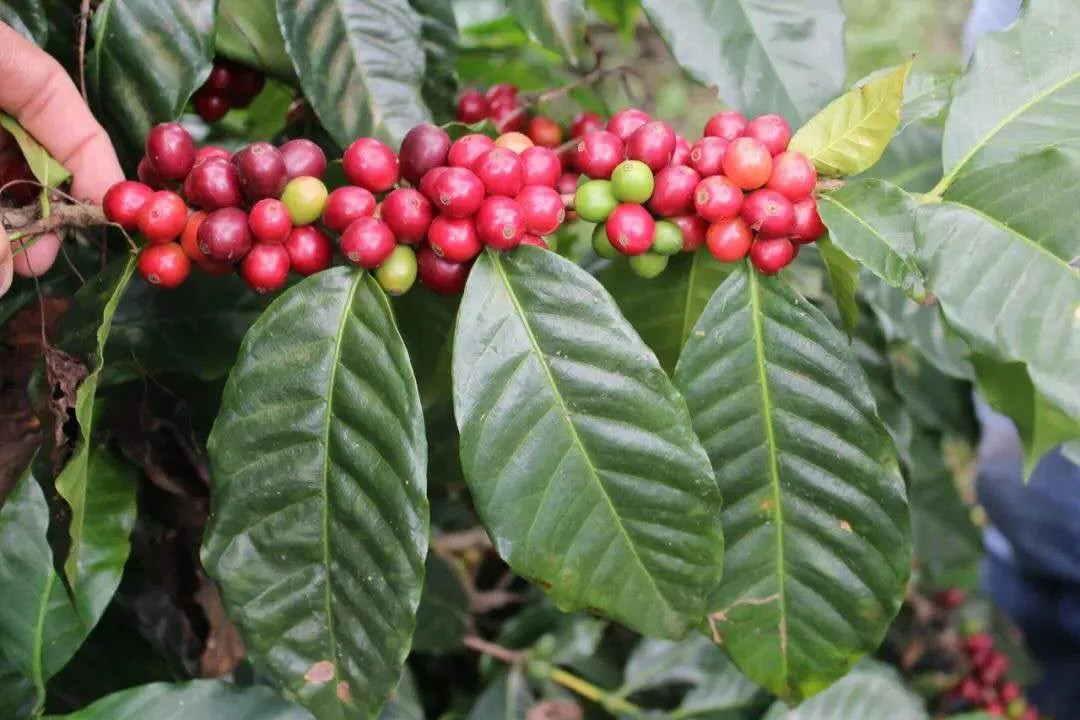
Related research in Honduras and Costa Rica (tests conducted by the Honduran Coffee Institute IHCAFe, selecting two lines for planting) found that Caturra and Catuai did not show obvious yield differences. In Central American coffee estates, Caturra, which had originally been planted to replace Bourbon, was later followed by the introduction of Catuai for localized cultivation; Catuai already carries Caturra's genes, and the biological habits of the two have increasingly become similar. To forcefully distinguish them further would not only be largely meaningless, but would also increase the cost of manual sorting.
Therefore, in Central America, many estates adopt the method of mixed planting and mixed harvesting of the two varieties, and many well-known coffee beans on the market also contain this pair of "brothers," such as FrontStreet Coffee Honduras Barrel-Fermented Sherry Coffee Beans (Pacas, Caturra, Catuai), FrontStreet Coffee Panama Butterfly Coffee Beans (70% Geisha, Caturra, Catuai), FrontStreet Coffee Costa Rica Baja Coffee Beans (Caturra, Catuai), and others.
The above content is compiled by CoffeeHunters, a coffee news website.


