







Search Results for: liquid surface

Can't get latte art patterns to come out? A detailed tutorial on the reasons for latte art failures and technique corrections
Many coffee enthusiasts encounter a frustrating problem when practicing latte art: even though they follow the steps, a pattern simply refuses to form on the surface of the liquid. In fact, the essence of latte art is using the color contrast between milk foam and espresso crema to paint, and the key lies in precisely controlling the height of the milk pitcher and the flow rate during the integration stage and the pattern-forming stage. From the perspective of Front Street, this article systematically sorts out the three main reasons why latte art fails to produce a pattern—not shaking the milk evenly before integration, holding the milk pitcher too high when forming the pattern, and pouring with too small a flow rate—and provides corrective methods for each, helping you break through the bottleneck in your basic technique and successfully pour your ideal pattern. [more…]
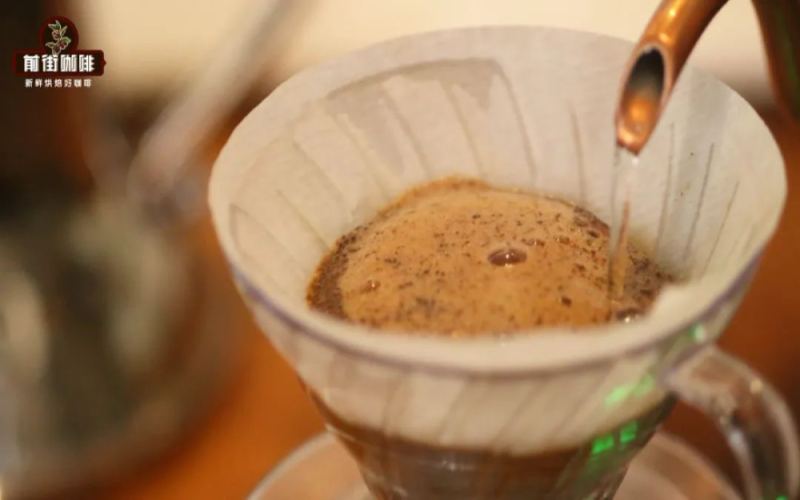
Where does the foam on the surface of pour-over coffee come from? Baking degree and freshness clues behind color and amount
When brewing pour-over coffee, a layer of foam often floats on the surface of the liquid in the dripper, sometimes rich and golden, sometimes thin and whitish. What exactly makes up this layer of foam? What can its color depth and quantity tell us about the brewing? From the perspective of Front Street, this article analyzes the sources of the foam's components, explains how large coffee particles affect the foam's color, and further reveals how the degree of roasting and the freshness of the coffee beans determine the richness of the foam, helping you adjust your pouring technique and judge the characteristics of the beans by observing the state of the foam. [more…]

Why Is Your Latte Art Never Full Enough? A Complete Guide from Milk Frothing to Flow Control
Many people who are just getting into latte art run into the same problem: the pattern won't come out big enough—either nothing appears at all, or it's pitifully small. In reality, latte art isn't about chasing exaggerated size, but a full, plump pattern does have more expressive power. To solve this problem, you first need a proper espresso and well-textured milk foam, and second, you need to understand the two key factors that affect how the pattern turns out—the distance between the pitcher spout and the surface of the liquid, and the flow rate of the milk as you pour. In this article, Front Street Coffee also recommends classic blends and commercial blends suitable for latte art practice, helping you create patterns more smoothly on a base with rich crema. [more…]

A Detailed Explanation of the Principles and Methods of Americano Latte Art: Using Foamed Coffee Liquid Instead of Milk, Including a Practical Guide with Front Street Classic Blend
Latte art has always been regarded as the exclusive domain of lattes, but Americano can actually achieve beautiful patterns too. This article starts from the basic principles of latte art—the proteins in milk wrap around air to form a low-density foam, which floats on the surface of espresso crema to create patterns—and then leads into the feasibility of using the coffee liquid itself to foam instead of milk. We will share in detail how to froth espresso by adding ice water to increase the liquid volume and lower the temperature, and provide a complete hands-on demonstration using Front Street Classic Blend. Finally, we compare the differences in flavor, strength, and mouthfeel between latte-art Americano and regular hot Americano, offering coffee enthusiasts a completely new way to experience Americano. [more…]

The Ultimate Latte Guide | What's the Correct Coffee-to-Milk Ratio for a Latte? How Can Coffee Beginners Make a Delicious Latte at Home?
For a delicious latte, Front Street believes the most important factors are the quality of the coffee beans and milk, the ratio of coffee to milk, and the extraction and integration process. First point: choose suitable ingredients. Why is a latte so simple? Basically, every coffee bean menu has it as a staple, yet every shop's latte doesn't taste exactly the same. [more…]

Always failing at making a waterfall iced Americano in an ice cup? Master the ice wall thickness and espresso pouring technique to break through.
The waterfall iced americano has gone viral online thanks to the visual effect of a slow perforation through the ice cup, with the coffee liquid cascading down like a waterfall, attracting many netizens to try it at home. In practice, however, problems such as the ice cup tipping over, the bottom of the cup being punctured, coffee leaking from the sides, and the liquid coagulating into clumps frequently occur, turning the aesthetic scene into a fail. This article compiles the key tips for success summarized by netizens, including ice cup thickness standards, using crushed ice to help balance, keeping the clip dry, and using room-temperature espresso liquid, and also explains the cause of the waterfall effect from the perspective of physical diffusion. It also analyzes the reasons behind the drink's popularity—its low barrier to entry and the sense of ritual in the process make more people willing to engage with and learn about coffee. The article retains the relevant recommendation information for Front Street Coffee. [more…]
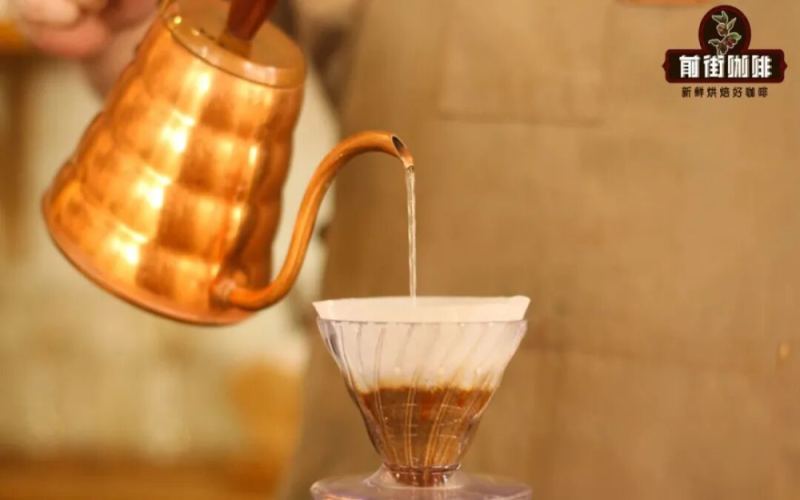
The Principles of Segmented Pour-Over Brewing and an Analysis of the Practical Effects of Pour Height on Flavor
Among the many variables in pour-over coffee, the pouring technique is the one most controllable by human hands, and the pouring height—a seemingly minor parameter—actually has a non-negligible impact on the extraction result. The distance from the kettle spout to the water surface determines the strength of penetration, the extent of agitation, and the degree of heat loss in the hot water, which in turn influences the balance of acidity, sweetness, and bitterness in the coffee. This article will systematically analyze the pros and cons of different pouring heights, explain why it is recommended to keep the height between 0 and 7 centimeters, and use brewing examples with Front Street Coffee . Huakui and Front Street Coffee . Brazil Queen's Estate to demonstrate how to flexibly adjust the pouring height at each stage according to the roast level and bean characteristics, so that the extraction result better matches the expected flavor. [more…]
From Surfactants to Foam Stability: A Beginner's Guide to Latte Art and the Principles of Fluid Dynamics
Latte art is a romantic expression of a barista's skill, with white milk foam blooming into heart or leaf patterns on the surface of dark brown espresso. Latte art is divided into two types: free-pour latte art and etched latte art created after pouring. The wonder of the former lies in the pattern forming simultaneously with the pour, while the latter offers a wider range of designs because the stable foam allows for leisurely drawing. From a physics perspective, the core of latte art lies in surfactants—molecules that possess both hydrophilic and hydrophobic groups, capable of stabilizing the interface between air and liquid to form lasting foam. Milk proteins and coffee lipids act together as surfactants, enabling the two micron-scale foams to remain clearly separated for a long time after mixing, thereby allowing the pattern to persist. This article will guide you from the basic principles of surfactants to understand espresso's crema, the formation of hot milk foam, and why foam mixing rather than liquid mixing is the key to successful latte art, while also revealing the widespread applications of surfactants in daily life and industry. [more…]
What should you do if your latte milk foam isn't fine and smooth enough? A detailed explanation of steam frothing vortex techniques
Many coffee enthusiasts, when making latte art, most often encounter the problem of coarse milk foam that is not fine and smooth enough. In fact, the key to producing ideal dense milk foam lies in understanding how the steam wand works and how to create a stable vortex. This article will start with the principles of steam heating and foaming, gradually break down the core steps of air intake and texturing, and share practical tips for completing steaming and texturing at the same time. Front Street Coffee will also combine everyday operating experience to walk you through key points such as the angle of the milk pitcher, the position of the steam holes, and liquid surface control, so that you can easily recreate silky latte art foam at home. [more…]

The Complete Guide to Making a Dirty Coffee: From Beans to Cup, Learn to Create an Iced-Fire Latte Overflowing with Layers
Dirty Coffee, with its gradient texture formed as espresso slowly seeps into chilled fresh milk and its unique mouthfeel of hot and cold intertwined, has become a popular style for many coffee enthusiasts to challenge themselves with at home. However, many people follow tutorials only to end up with a cloudy "ordinary latte," never achieving the layered effect. Drawing on its store production experience, Front Street Coffee breaks down the key factors affecting Dirty's layering one by one—from coffee bean roast level, cup selection, extraction distance, and coffee liquid concentration to milk texture—and provides specific alternatives and product selection suggestions to help you reliably recreate a beautiful and delicious cup of Dirty. [more…]

Why Does Latte Milk Foam Disappear Right After Steaming? Five Common Causes and Fixes
The milk foam on the surface of a latte begins to break down the moment espresso extraction is complete and milk steaming ends, and the key indicator of its stability is the rate of foam dissipation. By normal standards, a latte made by Front Street Coffee will only show visible, obvious foam dissipation after sitting for about ten minutes. However, if a freshly made latte collapses, curdles, or turns into large bubbles within two minutes, something is wrong, and the causes need to be checked one by one. This article analyzes the reasons for rapid milk foam breakdown from five aspects—crema and foam coarseness, foam thickness, coffee bean freshness, number of pitcher taps, and evenness of integration—and provides the corresponding solutions that Front Street Coffee has summarized through actual practice. [more…]

Dirty Coffee Recipe Tutorial | What Are the Differences Between Dirty Coffee and Iced Latte? What Are the Key Points for Making Dirty Coffee?
For more specialty coffee knowledge, please follow our WeChat official account: Front Street Coffee (FrontStreet Coffee). Dirty Coffee, with its rather playful name, is a unique coffee style; visually, the coffee looks as if it has tainted the white fresh milk, and the blend of hot and cold brings a distinctive layer. [more…]

Espresso Full Analysis: From Crema to Extraction Parameters and Brewing Process
Espresso is a concentrated coffee liquid that Italians extract quickly in a short time using a pressurized coffee machine at high temperature and high pressure, with a layer of golden foam covering the surface. Each store has different flavors due to different bean varieties and extraction schemes, but a standard espresso usually has two major characteristics: dense crema and high concentration. This article will start with the formation principle of Crema and the source of high concentration, then use store practical operations as a reference to explain in detail the steps and key parameters of making Espresso, including dose, liquid weight, extraction time, and ratio control, and explain Front Street Coffee's extraction scheme and the applicable scenarios of classic Italian blend beans, helping enthusiasts stably reproduce a qualified cup of espresso at home. [more…]

How Is Stirred Integration Different from Pre-Integration? An Analysis of Two Integration Techniques Every Latte Art Enthusiast Must Know
Before creating latte art, there is an often-overlooked yet crucial preparatory step—incorporation. The quality of incorporation directly determines whether the latte art pattern is neat and beautiful, as well as whether the flavor is balanced and unified when the coffee is tasted. For milk coffees that require milk foam, mastering the correct incorporation method can greatly reduce the difficulty of operation. This article will focus on two mainstream incorporation techniques: the classic stirring incorporation, and the recently emerging pre-incorporation. The former suits most scenarios but demands a high level of skill proficiency, while the latter can effectively handle tricky situations such as poor crema quality or latte art in takeaway cups. The article will also combine Front Street Coffee's espresso bean recommendations to explain the impact of coffee bean selection on incorporation and latte art, helping coffee enthusiasts flexibly choose the appropriate incorporation method based on actual conditions. [more…]

Latte Art from Beginner to Advanced: A Full Breakdown of Pouring and Design Techniques Plus Practice Tips
Latte art is what draws many people into the world of coffee, but how long does it actually take to master? In this article, Front Street Coffee shares the core principles and practical details of latte art, starting from the two main actions of integration and drawing, breaking down key elements such as height control, the timing of returning the cup, the use of force, the offset of the landing point, and the finishing technique, and offering four practical practice tips to help enthusiasts avoid detours and quickly get the hang of basic patterns like hearts, leaves, and tulips, and even take on more difficult combination patterns. [more…]
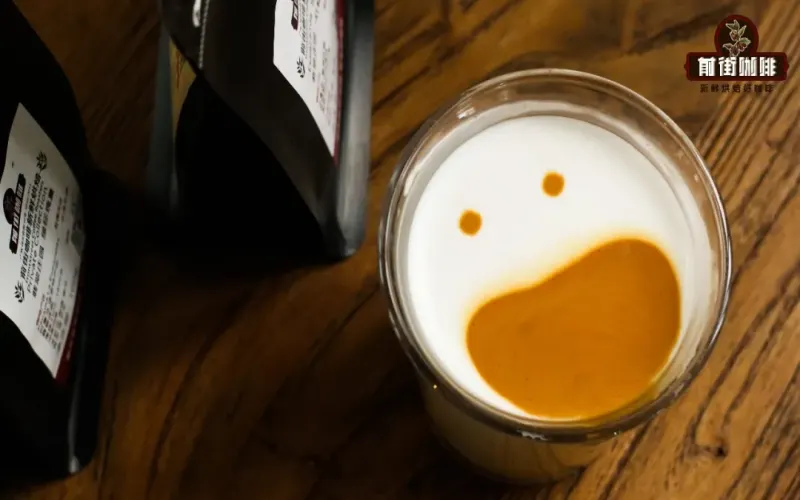
A Complete Guide to Smiley Face Flat White Latte Art: How Milk Foam Thickness and Crema Strength Affect the Design
The smiley face pattern on a flat white may look like it just needs a pour of espresso and a couple of quick strokes, but it is actually far harder to execute than it seems. This article starts from three key details—milk foam thickness, espresso crema strength, and cup size selection—to explain why only a flat white is suited to this pattern, and shares how to improve your success rate by controlling the thinness of the milk foam, choosing dark-roasted beans rich in crema, and matching the cup size to the liquid volume. The article also introduces how Front Street Coffee's classic blend combines Mandheling, Brazilian, and Vietnamese beans to produce rich crema and a full-bodied flavor, helping coffee lovers make an attractive smiley-face flat white at home. [more…]

Espresso Crema | What Is Crema in Espresso? Does Crema Affect the Flavor and Mouthfeel of Espresso?
A deep understanding of the essence of crema will be of great help to baristas in making a delicious espresso. Today, the instructor of the Chongqing Barista Coffee Training Course will give you a detailed analysis of crema to help you understand espresso and improve your coffee-making skills. In searching for a cup that is not bitter and has excellent flavor, a rich [more…]

A Complete Guide to Espresso: Extraction Parameters, Workflow, Flavor Characteristics, and Drinking Guide
Espresso is the foundation of many coffee drinks and an important benchmark for testing a barista's basic skills. Front Street Coffee uses a classic espresso blend, and through precise control of dose, liquid yield, and extraction time, it delivers a stable and outstanding espresso flavor. This article systematically outlines the steps and parameter logic for making Espresso, analyzes the causes and significance of the golden foam Crema on its surface, and explains the extraction principles behind its high-concentration taste. Whether you want to learn how to taste a standard espresso or hope to master the key points for recreating it at home, you can gain practical reference from it. [more…]

Latte Recipe Analysis: Milk-to-Coffee Ratio, Ingredient Selection, and Latte Art Integration Guide
To make a well-balanced latte, the key lies in the choice of ingredients, the ratio of coffee to milk, and the extraction and blending technique. Front Street Coffee believes that the quality of the coffee beans and milk is the foundation. An espresso blend will directly influence the flavor direction of the latte, while the milk should be chosen to pair well with the coffee, avoiding either an overly strong milky taste that masks the coffee's aroma or a thin, watery quality that makes the texture feel weak. There is no fixed ratio for milk coffee; it is generally recommended to float between 1:5 and 1:8, with the specific ratio adjusted according to the flavor performance of the espresso. Only by extracting a qualified espresso, steaming fine and dense milk foam, and mastering the correct blending technique can the coffee and milk fully combine to form a "golden ring" with a uniform surface color and no large bubbles. This article will provide a detailed explanation centered on ingredient selection, ratios, and operational steps. [more…]

What is a Shaken Iced Americano? A Complete Guide from Espresso Whipping to Layered Texture
Iced Americano has always been the best-selling item with the lowest barrier to entry in coffee shops, requiring only a simple combination of espresso, ice cubes, and water. But if you take a few extra steps on this basis, you can get a cup of quicksand iced Americano with a completely different visual effect and taste. Its core lies in using steam to whip the crema of the espresso into a golden, fine foam, which naturally layers after resting, presenting a scene of fine sand slowly sliding down. This article will completely break down this drink from principles, operational steps to flavor performance, and also introduce the presentation method of waterfall iced Americano, as well as the practical suggestions summarized by Front Street Coffee during production, to help coffee lovers replicate at home a creative Americano that combines both visual appeal and drinking pleasure. [more…]