







Why Does Coffee Milk Ratio Depend on Integration?
Integration means mixing part of the milk into the espresso before drawing the pattern. Stirred integration suits most situations but demands steady technique, while pre-integration handles poor crema or takeaway cups more reliably. Done well, the pattern stays clean and the coffee tastes balanced from the first sip; done poorly, the background looks messy and the drink separates into layers.
Getting the coffee milk ratio right matters as much as the technique. Insufficient mixing leaves the crema bitterness on top, so the first sip tastes harsh and the milk blend arrives late. Pre-integration lifts the liquid surface and blends the two liquids first, which makes later pours easier. Bean choice also affects crema quality, so a suitable espresso bean helps the milk and coffee combine evenly.
Before creating latte art, there is an often overlooked yet crucial preparatory step—incorporation. The quality of incorporation directly determines whether the latte art pattern is clean and beautiful, and whether the coffee's flavor is balanced and unified upon tasting. For milk coffees that require milk foam, mastering the correct incorporation method can greatly reduce the difficulty of operation. This article will focus on two mainstream incorporation techniques: the classic stirring incorporation, and the recently emerging pre-incorporation. The former is suitable for most scenarios but demands high proficiency in technique, while the latter can effectively handle tricky situations such as poor crema quality or latte art in takeaway cups. The article will also combine Front Street Coffee's espresso bean recommendations to explain the impact of coffee bean selection on incorporation and latte art, helping coffee enthusiasts flexibly choose the appropriate incorporation method based on actual conditions.
In pour-over coffee, there is a blooming phase; similarly, when making latte art, there is also a key preliminary action. What is it?
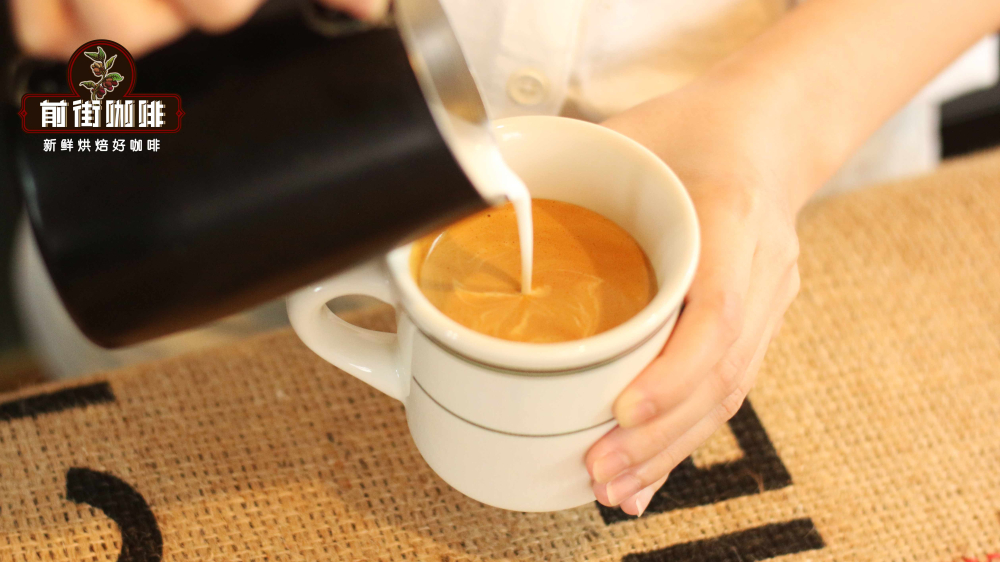
The answer is—incorporation. So-called incorporation refers to mixing a portion of milk with espresso before formally drawing the latte art pattern. This allows the milk and coffee to blend more fully, making the overall taste more consistent, while also raising the liquid surface to create conditions for subsequent latte art. Although this step may seem inconspicuous, the quality of incorporation directly affects the final quality of the product.
When incorporation is done well, the latte art pattern appears clean and pleasing to the eye, and the coffee maintains a balanced taste throughout, with every sip being just the right combination of coffee and milk; conversely, if incorporation is insufficient, the pattern background will appear messy, and the taste may also become layered. As Front Street Coffee often says, the first sip brings the bitterness of espresso crema, and only afterward do you taste the blend of coffee and milk.
For this reason, for all milk coffees that require latte art or use milk foam, controlling the quality of incorporation is extremely crucial. To improve incorporation skills, the most fundamental approach is of course to practice more, relying on proficiency to achieve high-quality incorporation. However, in addition, in different situations, we can also choose appropriate incorporation techniques to reduce the difficulty of achieving perfect incorporation.
That's right, incorporation also comes in different methods, and this is the little trick that baristas all use: switch incorporation methods based on the actual situation. This is what Front Street Coffee is sharing today! Different incorporation techniques each have their advantages, and as long as they are used flexibly, they can maximize their effectiveness and achieve perfect incorporation. So first, what Front Street Coffee will introduce is the most classic incorporation method—stirring incorporation.
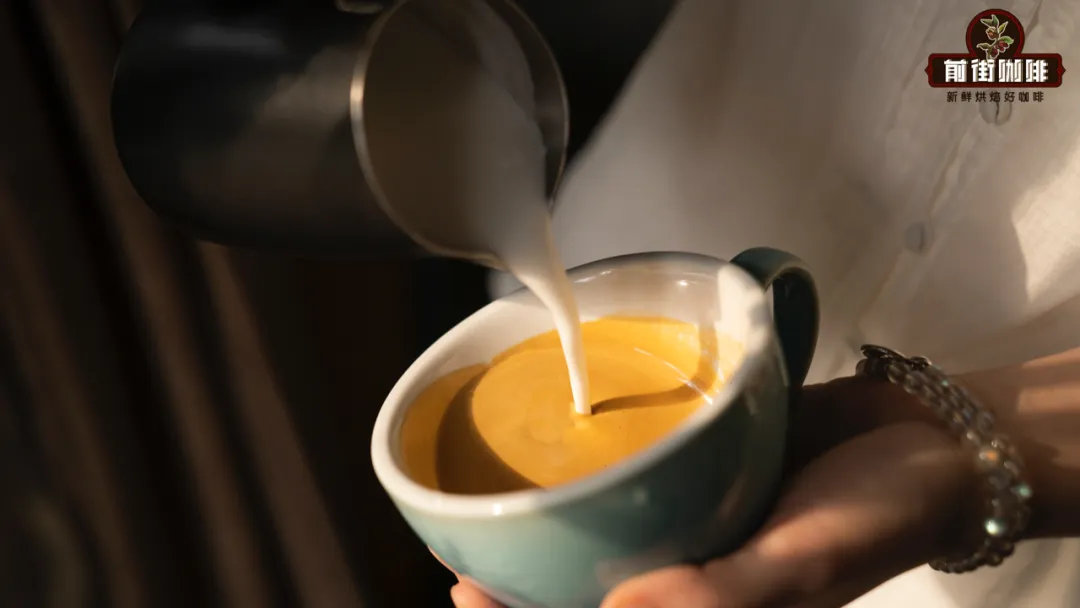
To make beautiful latte art, the prerequisite is having a perfect espresso, so the choice of coffee beans is especially important. Front Street Coffee believes that espresso with fine, smooth, and rich crema is the most ideal standard, and you can choose Front Street Classic Blend and Front Street Commercial Blend, these two best-selling products. One blends the wild character of Brazil and Mandheling, while the other is rich in various nutty aromas, and both add a small amount of Robusta on this basis to enhance the richness and golden color of the crema.
Stirring Incorporation
When beginners first start learning latte art, the incorporation method they most likely encounter first is stirring incorporation, because it is both classic and practical. It not only speeds up production, but the incorporated liquid surface can also be used to create various complex patterns.
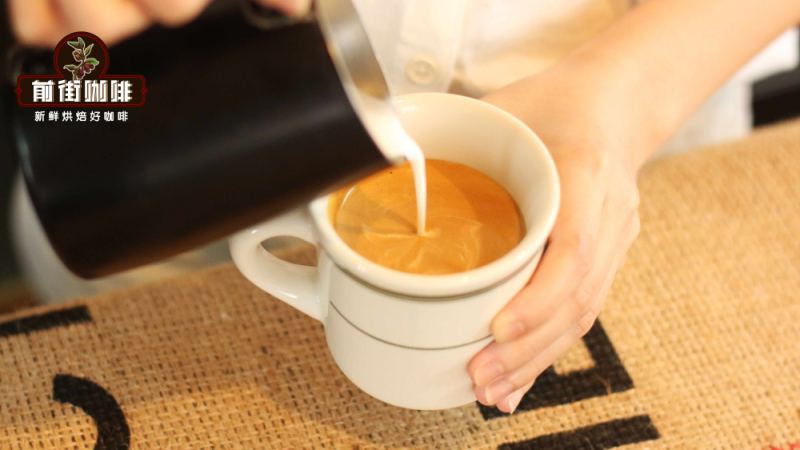
The technique of stirring incorporation is actually somewhat like the circular pouring of pour-over coffee. We pour milk foam into the coffee liquid in a thin stream from a higher position. During the process, we continuously make circular motions to stir the coffee liquid, allowing the milk foam to mix evenly with it, until the liquid surface rises to the ideal height.
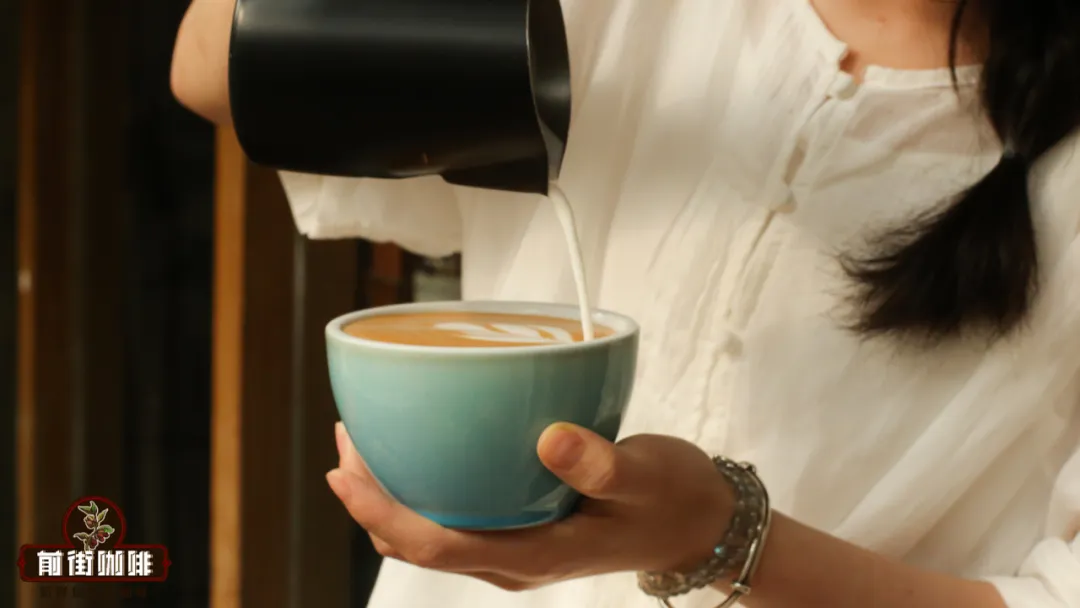
The reason for pouring from a high position in a small stream while stirring is mainly to prevent the milk foam from leaving traces on the surface. By increasing the pouring distance, the milk foam gains stronger force to penetrate directly into the coffee. Combined with a small stream, this can reduce the contact area with the coffee liquid while increasing the number of stirring motions, allowing the milk and coffee to mix fully.
Although it doesn't sound complicated, after actually trying it, everyone will find that it is still somewhat difficult, because it depends heavily on the barista's proficiency.
Because while controlling the flow rate and pouring distance, we also need to continuously stir in circular motions, with both hands needing to move in sync. This leads to situations during incorporation where either the pouring distance and flow rate cannot be controlled, or the circular motion range goes out of control. The final incorporated coffee surface has messy lines, the background of the latte art pattern is dirty and disordered, lacking aesthetics, and the coffee's taste is also prone to fluctuation as a result.
So this is one difficulty of stirring incorporation, which must be overcome through repeated practice (if there is no latte art production requirement, it can be ignored). Stirring incorporation also has another drawback: it is not very suitable for taller cups, such as takeaway cups.
Because takeaway cups are taller, the pouring distance during incorporation is increased. When the pouring distance is too large, the impact force brought by the milk causes it to rebound after hitting the bottom, and the coffee surface tends to turn white, looking even messier. In this situation, besides carefully performing stirring incorporation, we can also switch to another incorporation method to reduce difficulty, namely—pre-incorporation.
Pre-incorporation
It can be said that pre-incorporation is an incorporation method that has only become popular in recent years. It actually also includes the action of stirring incorporation, except that before stirring incorporation, a small amount of milk needs to be pre-mixed with the espresso. The specific method is to first pour a small amount of milk into the coffee liquid (equal to or less than the amount of coffee liquid), then shake the entire coffee cup to allow the poured milk foam to fully mix with the espresso, and then proceed to the stirring incorporation step. The advantage of doing this is that it can weaken the impact of coffee crema while reducing the difficulty of incorporation.
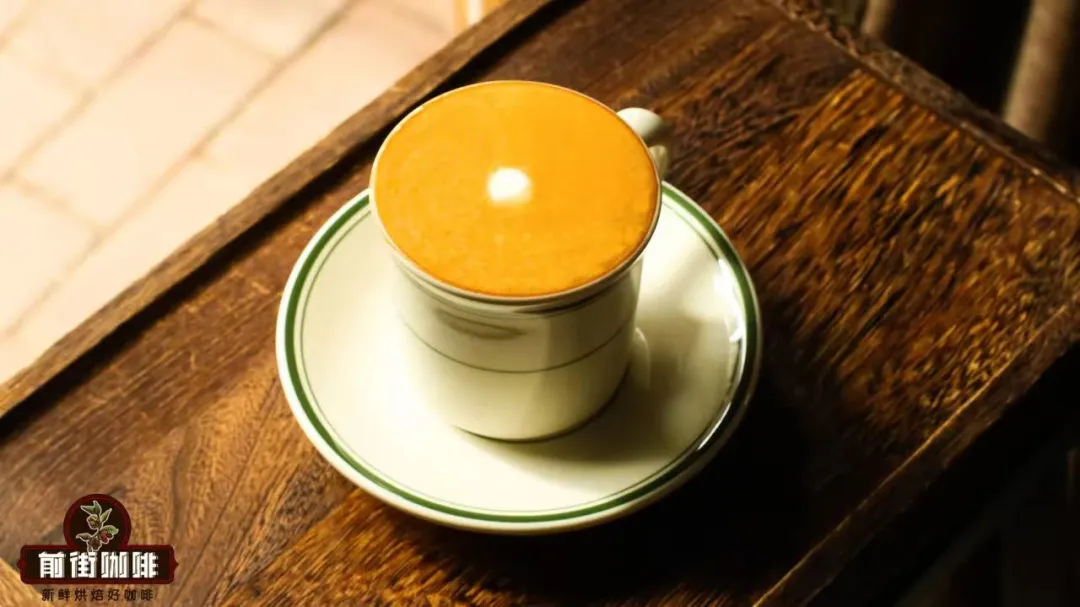
What impact does coffee crema have? Front Street Coffee has previously shared that the quality of the crema directly affects the difficulty of latte art, and crema that is too rough or too thin will make latte art more difficult.
The former is because the crema is too rough, making it prone to clumping and layering, all of which reduce fluidity during latte art, making it difficult for us to draw fine and delicate lines; the latter is because the crema is too thin, making fluidity too high, and during latte art it is prone to pattern shifting and irregular patterns.
Besides affecting the latte art pattern, both situations also affect the quality of incorporation. And their appearance indicates the freshness of the coffee beans used, either too fresh or left for too long. Since Front Street Coffee often mentions this, we will not elaborate further here.
In short, in both situations, using pre-incorporation can effectively eliminate the negative effects of insufficient crema quality. The addition of a small amount of milk can reduce the fluidity of the coffee, while the shaking action can effectively break up the clumps in the coffee crema and improve the degree of integration between the crema and the coffee liquid. In this way, we can better perform incorporation and latte art, thereby improving coffee quality.
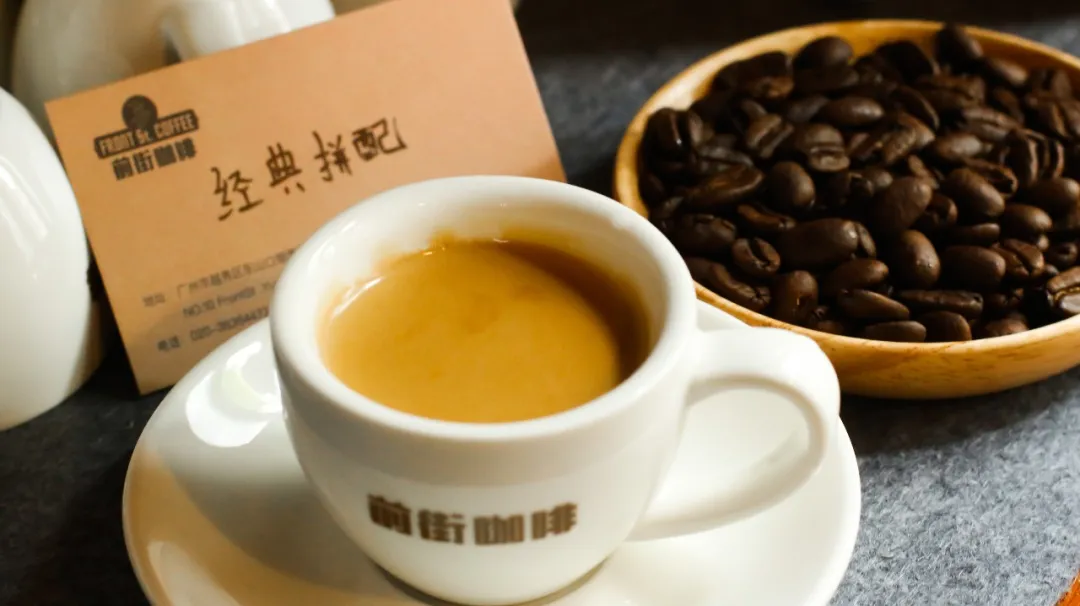
The same principle applies when making latte art in takeaway cups. Pour a certain amount of milk along the edge of the cup in advance, thereby raising the liquid surface height and shortening the pouring distance, making it less likely for us to encounter whitening and a messy surface during incorporation.
However, pre-incorporation also has its drawbacks. First, latte art patterns will be limited, and it is difficult to create overly complex combined patterns. The reason is that the pre-addition of milk foam reduces overall fluidity, and the extra action of shaking during incorporation delays the latte art timing, increasing the separation of milk and milk foam in the pitcher and further reducing fluidity. So after using pre-incorporation, some complex combined patterns become relatively difficult to complete.
Second, because the milk and coffee are fully incorporated in advance, the surface color will be lighter than with stirring incorporation, and the final pattern's color contrast will also be lower. Everyone can see this by comparison.
(The left is conventional stirring incorporation latte art, and the right is latte art using pre-incorporation.)
But no matter which drawback it is, neither affects the taste of the coffee, so everyone can choose the incorporation method they like. Or, as Front Street Coffee mentioned earlier, use them in combination according to different situations.
The above content is compiled by CoffeeHunters, a coffee news website.


