








How does frontstreet coffee latte art form a pattern?
Latte art depends on the color contrast between white milk foam and espresso crema. When the pitcher is held high, foam dives under the surface and leaves no visible lines; lowering the spout keeps foam floating so it gathers into shapes. Three common faults stop patterns forming: not shaking the pitcher evenly before the integration pour, holding the pitcher too high during the drawing stage, and pouring at too low a flow rate.
Fix them one at a time. During integration, keep the spout raised with a steady, concentrated stream so foam mixes in and the surface stays brown. Then lower the spout, tilt the cup, and pour at a higher flow rate to push the white foam across the crema. Beginners often ask how do i froth milk for a latte; the answer is to keep the foam fine, glossy, and fluid enough to flow rather than blob.
Many coffee enthusiasts encounter a frustrating problem when practicing latte art: despite following the steps, they simply cannot form a pattern on the surface of the liquid. In fact, the essence of latte art is using the color contrast between milk foam and espresso crema to paint, and the key lies in the precise control of pitcher height and flow rate during the integration stage and the drawing stage. From Front Street's perspective, this article systematically sorts out the three main reasons why latte art fails to produce a pattern—not shaking evenly before integration, holding the pitcher too high during drawing, and pouring at too low a flow rate—and provides corrective methods one by one to help you break through the bottleneck in your basic technique and successfully pour your ideal pattern.

Latte art seems to carry an inherent appeal that intoxicates onlookers and makes learners increasingly addicted the more they practice. For beginners just starting out, the most satisfying moment is probably the first time they pour a formed pattern—even if it is not refined enough, it is enough to keep them practicing, repeatedly refining milk frothing, integration, pushing the pattern, wiggling, and returning the cup.
However, some friends get stuck at the very first hurdle during self-study: they try hard to follow every movement, but no matter how they "pour," no pattern appears on the surface. Don't worry—Front Street will help you analyze it one by one.
Why does the pattern fail to appear?
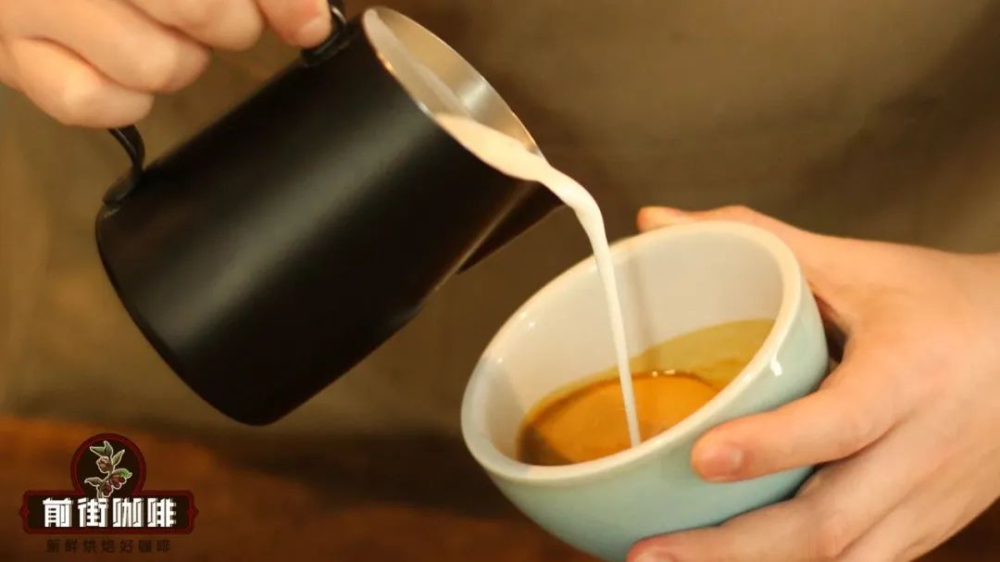
Actually, what we call a "pattern" is ultimately the color contrast formed between white milk foam and espresso crema. With the same pitcher of milk foam, when we raise the liquid column to pour, the milk foam rushes into the coffee interior and leaves no white lines on the surface; but once we lower the pitcher spout and shorten the liquid column, the milk foam floats on the surface along the trajectory of the pour and gradually gathers into various shapes.

Therefore, during the integration stage, we need to raise the pitcher spout and pour with a stable and concentrated flow so that the milk foam fully mixes into the coffee and the surface does not turn white; when it comes to the drawing stage, we then lower the pitcher spout and tilt the angle appropriately so that the "white" stays on the surface in an orderly way and is wrapped by the golden crema. In the end, these combined lines are the pattern we want.
In Front Street's view, if the milk foam has already been steamed well but no pattern can be poured, it ultimately comes down to three factors: insufficient liquid fluidity, the pitcher being too high during drawing, and the pouring flow rate being too low. If you still have questions about steaming milk foam, you can refer to this Front Street article, "To steam fine milk foam, you only need to pay attention to these key points!"
1. Before integration, the milk was not shaken evenly
Integration means using milk to "stir" the coffee liquid, and it is a preparatory action before formally creating the pattern. As the saying goes, beautiful latte art is built on perfect integration, just as a house must first have a solid foundation. Doing integration well is not only about mixing the espresso and milk, but also about allowing the milk foam and crema to fully blend.
To avoid getting flustered, many people are used to extracting the espresso first and setting it aside, then steaming the milk foam; or they steam the milk foam first and leave it there, then extract the coffee, and only finally mix the two. Because of this sequence, the fluidity of both changes with standing time—the milk foam may coagulate into lumps and separate from the liquid below, while the crema becomes thinner and unevenly distributed, "clumping together" like in the picture below. If you try to pour latte art at that point, the pattern mostly will not come out.
Therefore, Front Street suggests that before pouring latte art, it is best to gently swirl the pitcher and the coffee cup until a smooth liquid surface forms before beginning integration. On one hand, this allows the lighter foam to distribute evenly inside the container; on the other hand, it also ensures that it maintains relatively consistent fluidity with the liquid below, resulting in a better pattern.
2. When starting to draw, the pitcher is held too high
If you still cannot pour a pattern after swirling, then the problem should lie in your technique—that is, the movements are not being executed properly. Front Street has seen some beginners who like to keep the pitcher at a relatively high position (above 8 cm) from integration through drawing, so the liquid column directly pierces the surface and rushes to the bottom of the cup, leaving only a small white dot on the surface and forming no pattern at all.
As mentioned earlier, if you want the "white" to stay on the surface, you must lower the pitcher spout appropriately so that when pouring the milk, the bubbles can land gently on the coffee. In other words, after integration ends, the role of the latte art pitcher is no longer to "stir" but becomes the "brush" for painting. So the closer the pitcher's pouring point is to the liquid surface, the easier it is for the white milk foam to stay stable and not be washed apart, which is more conducive to pushing out the ideal pattern.
3. During the drawing process, the pouring flow rate is too low
People with latte art experience should understand that when drawing a pattern, as the milk foam pours in and the crema gradually slides backward, the white path being poured continuously surges back from both sides while supporting the foam poured in afterward, thus forming a full pattern.
On the contrary, if the flow rate of the milk being poured is very low (the liquid column is too thin), the milk foam cannot flow out quickly, and basically only liquid can be poured from the pitcher into the espresso, so no white will remain on the surface, and in the end it may even become a "blob" left at the bottom of the pitcher.
So whether you want to pour the beginner-standard "big white heart," the no-wiggle "tulip," or the more advanced textured "leaf" or "multi-layered heart," the first step after integration when starting the pattern must be to lower the pitcher spout, maintain maximum flow, and then push forward.
- END - Front Street Coffee (FrontStreet Coffee)
No. 10, Bao'an Qian Street, Yandun Road, Dongshankou, Yuexiu District, Guangzhou, Guangdong Province
The above content is compiled by CoffeeHunters, a coffee news website.


