








Why Should You Avoid Lightly Roasted Beans for Dirty Coffee?
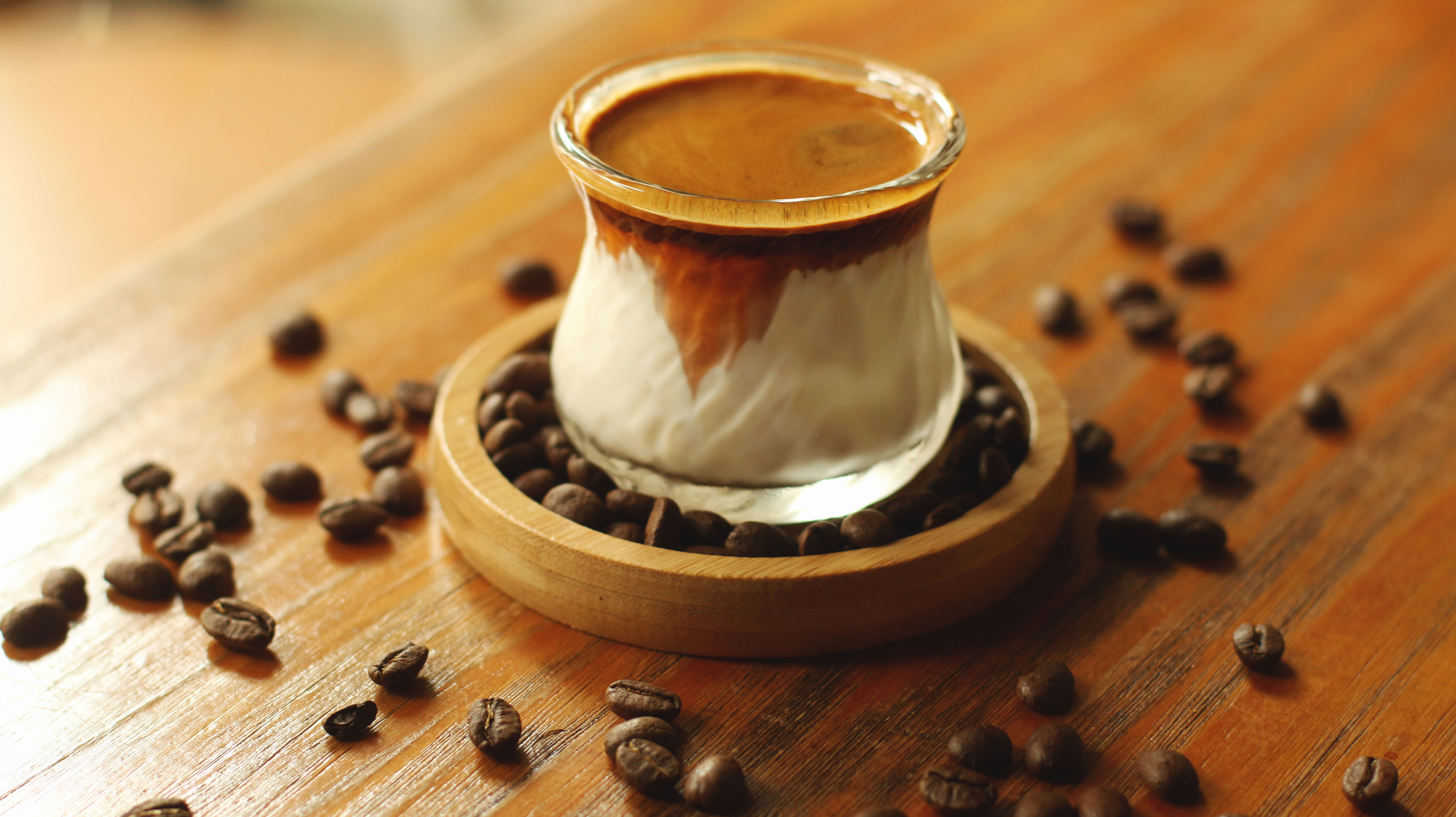
A Dirty Coffee is an iced latte where hot espresso floats on cold fresh milk, creating a gradient and a hot-cold contrast. The layering fails when the shot sinks and blends in, and lightly roasted beans are a common cause because they give thin body and weak crema.
Choose a darker roast with full crema, such as a blend of Brazil semi-washed, Indonesian Mandheling and Vietnam washed beans with caramel notes. Cup shape, extraction distance, coffee concentration and milk texture also decide whether the gradient holds; each is adjusted one at a time.
Dirty Coffee, with its gradient texture formed by espresso slowly seeping into iced fresh milk and its unique mouthfeel of hot and cold interweaving, has become a popular choice for many coffee enthusiasts to challenge themselves with at home. However, many people follow tutorials and end up with a murky "ordinary latte," never achieving the layered effect. Front Street Coffee, drawing on its in-store production experience, breaks down the key factors affecting Dirty layering one by one—from coffee bean roast level, cup selection, extraction distance, coffee liquid concentration, to milk texture—and provides specific alternatives and product selection advice to help you consistently recreate a beautiful and delicious Dirty.

For more specialty coffee knowledge, welcome to follow our WeChat official account: Front Street Coffee (FrontStreet Coffee)
The name Dirty Coffee itself carries a hint of jest, and its biggest appeal lies in how the espresso "dirties" the white fresh milk in the cup, with the collision of hot and cold creating a distinctly layered drinking experience. This coffee is also a long-term bestseller at Front Street stores. Many friends who enjoy tinkering with coffee at home always take Dirty as one of their challenges. Today we'll systematically sort out its key production points.
What exactly is Dirty?
Simply put, Dirty is an iced latte with outstanding looks and a special way of drinking. Its popularity is largely due to its alluring layered appearance. But some friends, after following tutorials, find that the coffee liquid doesn't float on the milk surface but directly merges with the milk, and the layering completely disappears. Front Street has summarized several high-frequency causes.
1. Coffee bean selection
The core of Dirty lies in preserving the crema of the espresso and presenting a gradient layering effect, so when choosing beans, you shouldn't pick lightly roasted varieties, otherwise the whole cup will taste thin and bland. To make the espresso release abundant golden crema while giving Dirty a rich mouthfeel, Front Street's classic Italian blend coffee beans are a recommended choice. This bean is composed of three beans: Brazil semi-washed, Indonesia Mandheling, and Vietnam washed. It is a dark roast style with prominent caramel notes, and the key is that the crema performance is quite full.
2. Cup selection
The shape of the cup plays an important role in whether layering can form. Generally speaking, cups with a taller body and narrower rim make it easier to achieve a layered effect. If you use a cup with a wide rim and short body, it takes longer for the coffee liquid to cover the entire surface, and there isn't enough space for the coffee liquid to "dirty" downward, which diminishes the visual effect.
The cup is best pre-frozen, as this both slows down the speed at which the coffee liquid seeps downward and helps maintain the flavor and mouthfeel.
3. Distance between the portafilter and the cup
The most common problem is that the portafilter is too far from the cup. When extracting espresso, the coffee liquid gathers into a thin stream with strong impact force, which easily pierces the milk surface, making it naturally difficult to float on top and form layering. To create beautiful layering, keep the cup as close to the portafilter as possible—the closer to the liquid surface, the better the effect.
If machine limitations prevent you from placing the cup directly under the portafilter to catch the liquid, you can first catch the freshly extracted espresso in a small cup, then hold a small spoon just above the milk surface as a buffer. Note to keep the spoon's concave side facing up, slowly pour the coffee liquid into the spoon, and the coffee liquid overflowing from the spoon's edge will float on the milk surface.
4. Insufficient coffee liquid concentration
Many friends ask Front Street whether a moka pot can achieve the effect of an espresso machine. Unfortunately, the coffee liquid brewed by a moka pot differs significantly from a coffee machine in concentration, and in terms of crema, it can't even be mentioned in the same breath. So coffee brewed by a moka pot is not suitable as a Dirty base.
It is generally believed that espresso with rich and fine crema makes a more ideal Dirty layering, as the coffee liquid seeps into the milk more slowly, leaving ample time for photos.
5. Milk that is too thin
You can choose a richer milk with a stronger milky aroma. Milk that is too thin can't hold up the coffee liquid—the two merge together on contact, not only looking murky but also lacking the rich mouthfeel you get in stores.
Based on Front Street's production experience, several common milk brands on the market such as Vitasoy, Weichuan, and Bright Fresh Pasture all perform well. Of course, if you have time, you can also make your own purified milk as a base—what cafes commonly call Ice Breaker. Front Street has previously published an article specifically explaining the production steps. Dirty made with purified milk more easily forms a stable layering, has a longer drinking window, and carries a unique salty cheese flavor.

Of course, some friends mix "Ice Breaker + fresh milk" to create milk of moderate concentration, which is also worth trying.
The above content is compiled by CoffeeHunters, a coffee news website.


