







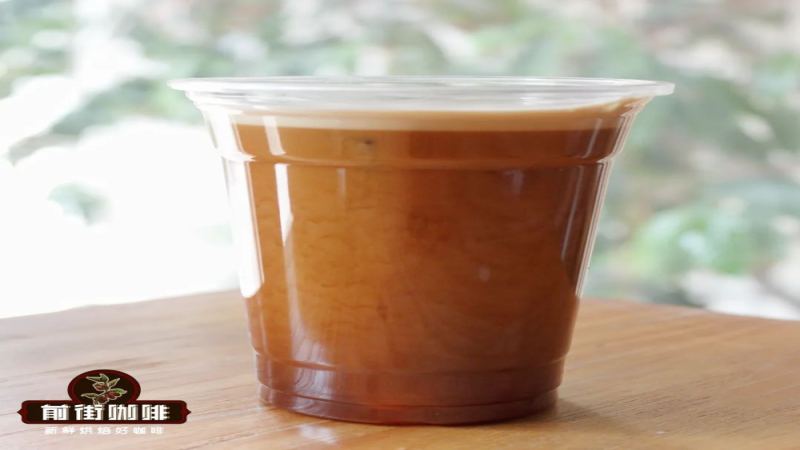
What Makes a Quicksand Americano Layer Instead of Settle?
A shaken iced Americano starts like any other: espresso, ice, and water. The difference is steam. Whipping the espresso breaks apart its oils into a fine golden foam. Poured with the coffee liquid and left to stand, that foam separates into visible layers, giving the drink the slow, sliding look known as quicksand.
To make it, extract 38g of double espresso, pour it into a pitcher holding about 100g of ice, add 50g of room-temperature water, and shake gently to chill the liquid. Steam works because coffee oils carry vegetable oils, proteins, sugars, and aromatics; proteins wrap air into bubbles, and the smallest pale ones rise while water settles, darkening the base.
Iced Americano has always been the lowest-barrier bestseller in cafés, requiring only a simple combination of espresso, ice, and water. But if you add a few extra steps on this basis, you can get a Quicksand Iced Americano with a completely different visual effect and taste. Its core lies in using steam to whip the oils in the espresso into a golden, fine foam that naturally layers upon standing, presenting a scene of fine sand slowly sliding down. This article will fully break down this drink from principle, operational steps to flavor performance, while introducing the presentation of Waterfall Iced Americano, and practical tips summarized by Front Street Coffee in production, helping coffee enthusiasts replicate at home a creative Americano that is both visually appealing and enjoyable to drink.
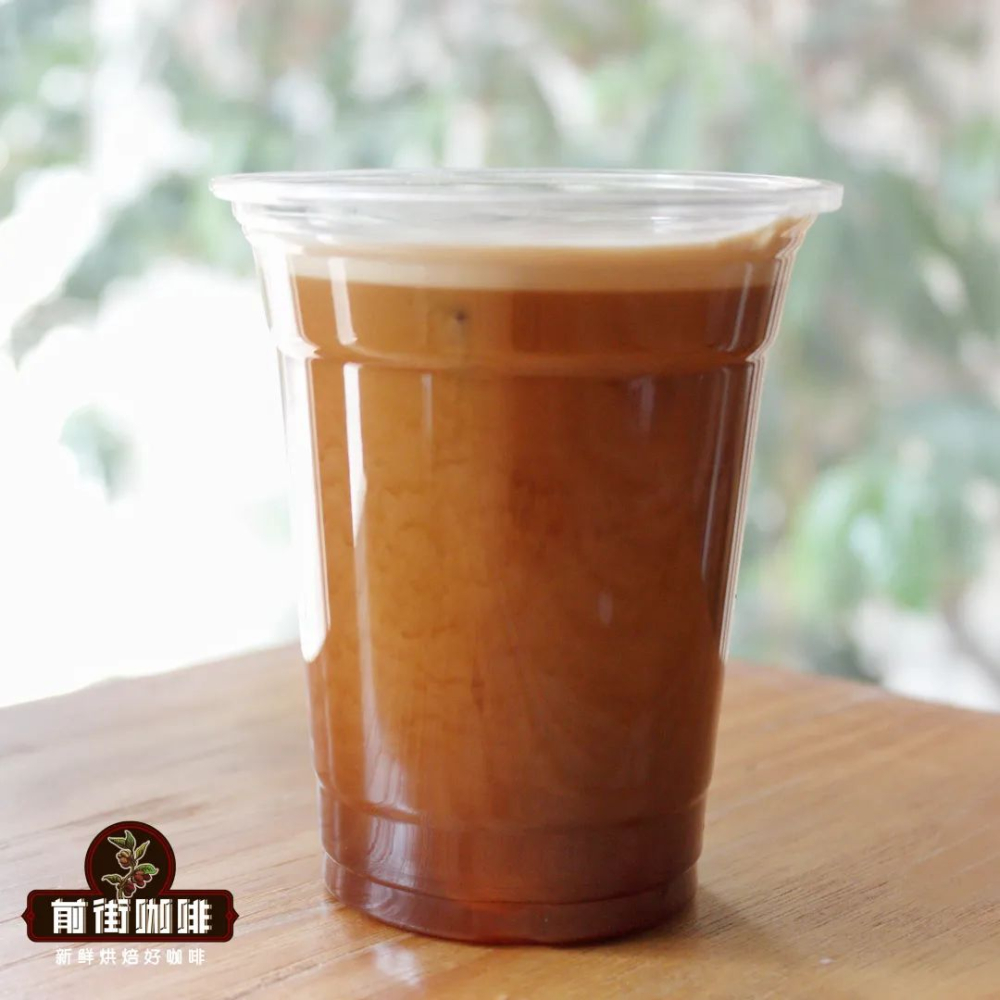
On café menus, Iced Americano is probably the bestseller with the lowest barrier to entry, made by simply combining espresso, ice, and water. But with the same set of ingredients, just adding a few more operational steps, the output becomes another drink—Quicksand Iced Americano.
How exactly is the so-called "quicksand" formed?
The oils on the surface of the espresso are broken apart under the action of steam, transforming into a layer of fine golden foam. Pour this foam together with the coffee liquid into a cup, and after standing for a while, layering occurs, looking like fine sand sliding down layer by layer.
When frothing milk, steam injects air into the liquid, and milk proteins use surface tension to wrap the gas, thereby creating numerous tiny bubbles. The coffee oils themselves contain vegetable oils, proteins, sugars, and aromatic components. During frothing, proteins similarly wrap air to form larger bubbles; these large bubbles are drawn into the rotating liquid flow and then torn into finer foam. The cohesive action between proteins makes the foam dense and mixes it with the liquid.
Lighter, smaller pale bubbles begin to rise and gather at the top of the liquid surface; while water molecules settle downward, and the color of the lower part deepens accordingly. In this way, the "quicksand" state we refer to appears in the cup.
In specific operation, first extract 38 grams of double espresso, pour it into a frothing pitcher containing about 100 grams of ice, then add 50 grams of room-temperature water, and gently shake to cool the coffee liquid thoroughly.
The frothing method is basically the same as making milk foam: first introduce air, then adjust the angle of the frothing pitcher so that the liquid inside forms a vortex (at this point, you can hear the sound of ice cubes colliding), and when the ice cubes have completely melted, it indicates that frothing is complete.
Additionally, Front Street Coffee noticed that some friends skip the step of adding water and froth directly. This tends to introduce too much air, while the total liquid volume is on the low side, making it difficult for the steam wand to be inserted below the liquid surface to froth the bubbles finely. Front Street Coffee's suggestion is to add a small amount of ice water, which not only prevents the coffee liquid from heating up but also ensures the formation of a fine foam layer.
Take a cup filled with ice cubes, pour the frothed coffee liquid into it, and you can enjoy the effect of the coffee liquid sliding down like a waterfall.
In terms of taste, espresso itself has a strong flavor, but after frothing with ice, the bitterness is somewhat reduced, instead making the faint vanilla aroma and refreshing berry acidity more prominent. The foam layer is fine and smooth, and drinking it carries a slight stout-like texture.
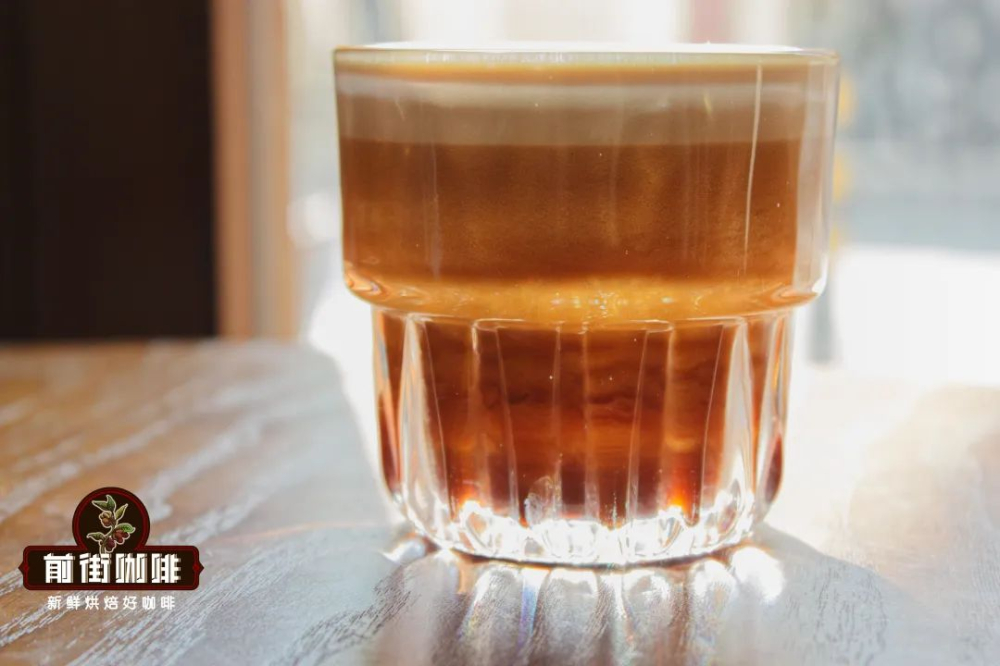
Americano can also be played with this way.
The foam layer of Quicksand Iced Americano is relatively thick and can support some lighter decorative ingredients, such as edible dried flowers. Front Street Coffee tried sprinkling some edible osmanthus on the foam, which not only enriched the coffee's layers but also added a touch of elegant floral fragrance.
Pour the coffee liquid into a pre-frozen "ice cup", let it float steadily on the water surface, and then wait for the espresso liquid to "burst" out from the inside. This is the once-popular Waterfall Iced Americano, using the process of ice melting from solid to liquid to create a dynamic visual scene.
As an enduring classic coffee, Iced Americano uses few ingredients and has simple steps, leaving considerable room for secondary creation. Sometimes, just by changing your approach, you might create a new "hit" coffee.
For professional coffee knowledge exchange and more coffee bean information, please follow Coffee Workshop (WeChat public account: cafe_style).
For more specialty coffee beans, please add private WeChat Front Street Coffee (FrontStreet Coffee), WeChat ID: qjcoffeex.
The above content is compiled by CoffeeHunters, a coffee news website.


