







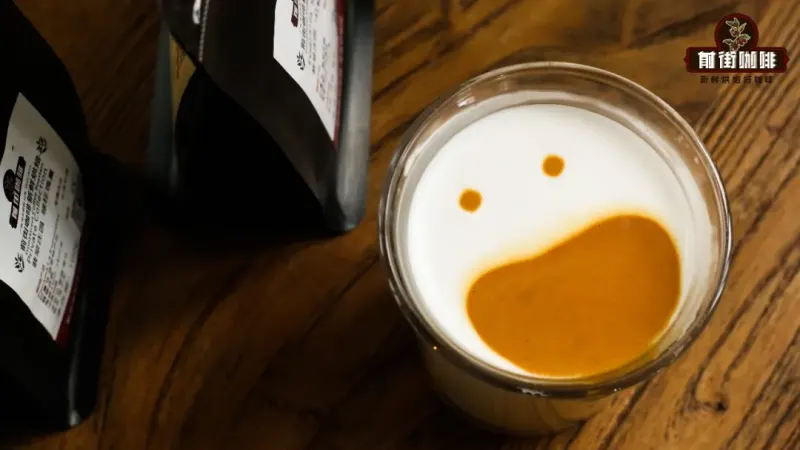
Why Does the Smiley Face Flat White Trip Up Coffee Enthusiasts?
The smiley face on a flat white only looks easy. It is reverse latte art, with espresso poured onto milk, so the design hinges on three details: milk foam kept as thin as possible so the crema can spread into a smiling mouth, a dark roast that yields strong crema, and a cup size matched to the liquid volume. Even then, expect to practice through eight to ten cups before the face turns out clean.
Thin foam is the reason no smiley-face cappuccino or latte exists: thicker foam resists the crema and the mouth never forms. Bean choice matters just as much, since dark roasts give the heavy crema the outline needs. Blends that combine Sumatra Mandheling with Brazilian and Vietnamese beans deliver rich crema and a full body, which suits this pattern for home practice.
The smiley face pattern on a flat white looks like it only requires pouring a shot of espresso and dotting two small marks, but the actual operation is far more difficult than imagined. This article starts from three key details—milk foam thickness, espresso crema strength, and cup size selection—to explain why only a flat white is suitable for making this pattern, and shares how to improve the success rate by controlling the thinness of the milk foam, choosing dark-roasted beans rich in crema, and matching the cup type to the liquid volume. The article also introduces how Front Street Classic Blend combines Sumatra Mandheling, Brazilian, and Vietnamese beans to produce rich crema and a full-bodied flavor, helping coffee enthusiasts make an attractive smiley face flat white at home.
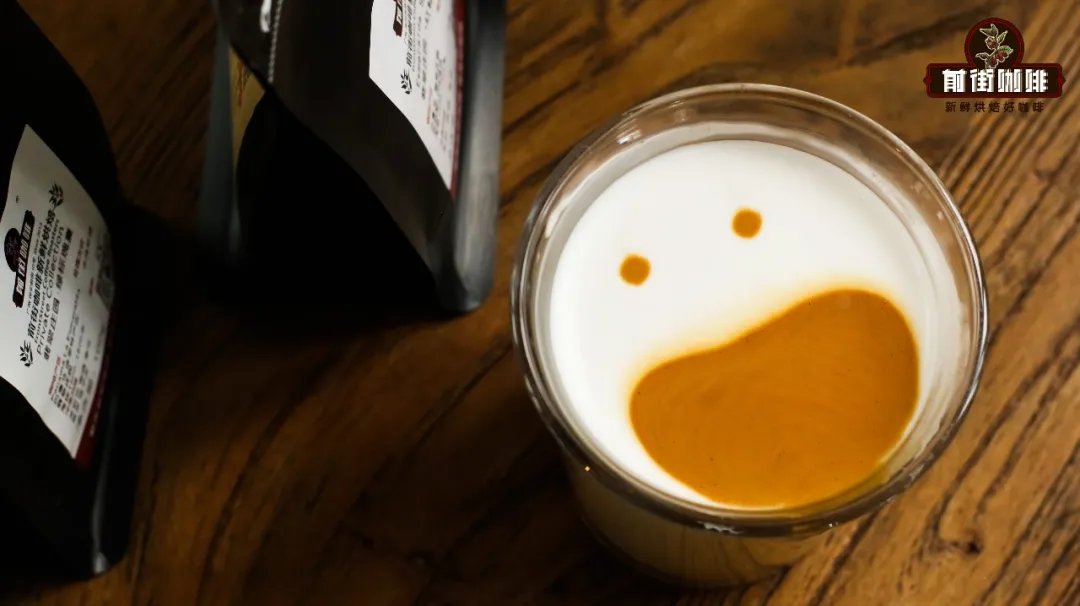
Some people might think that making a smiley face flat white is nothing more than pouring extracted espresso onto the surface of milk and finally dotting two small dots—how could such a simple operation become a trend?
The reason is actually quite straightforward—it only looks easy. Friends who have actually tried it should know this well: unless you are extremely lucky, it is very difficult to make a decent smiley face without practicing through ten or eight cups. The reason the difficulty is relatively high is that the entire pattern-forming process involves many details, and one slight misstep can completely distort the smiley face, making it much trickier than common latte art patterns.

In the past two days, quite a few customers asked Front Street about related questions when selecting coffee beans at Front Street stores, so today Front Street will sort out exactly which steps need to be controlled to make a beautiful smiley face flat white. 1. Milk Foam When making a smiley face flat white, the first detail to pay attention to is the thickness of the milk foam. There is no "smiley face latte" or "smiley face cappuccino" on the market, and the reason is that this pattern only suits a flat white—a flat white's milk foam is naturally thinner.
As Front Street said earlier, the smiley face flat white is a reverse latte art, and the method is to pour espresso onto the surface of the milk. When espresso is used to outline the mouth part, the thickness of the milk foam becomes the key variable. If the milk foam is too thick, the crema of the espresso will be unable to spread smoothly because of increased resistance, and naturally the "smiling mouth" will not form. So the thinner the milk foam, the better; thinness can increase the probability of the pattern forming. Among all kinds of espresso milk coffee drinks, the milk foam thickness of a flat white happens to best meet the requirement. Therefore, the first step is to control the milk foam to be as thin as possible.
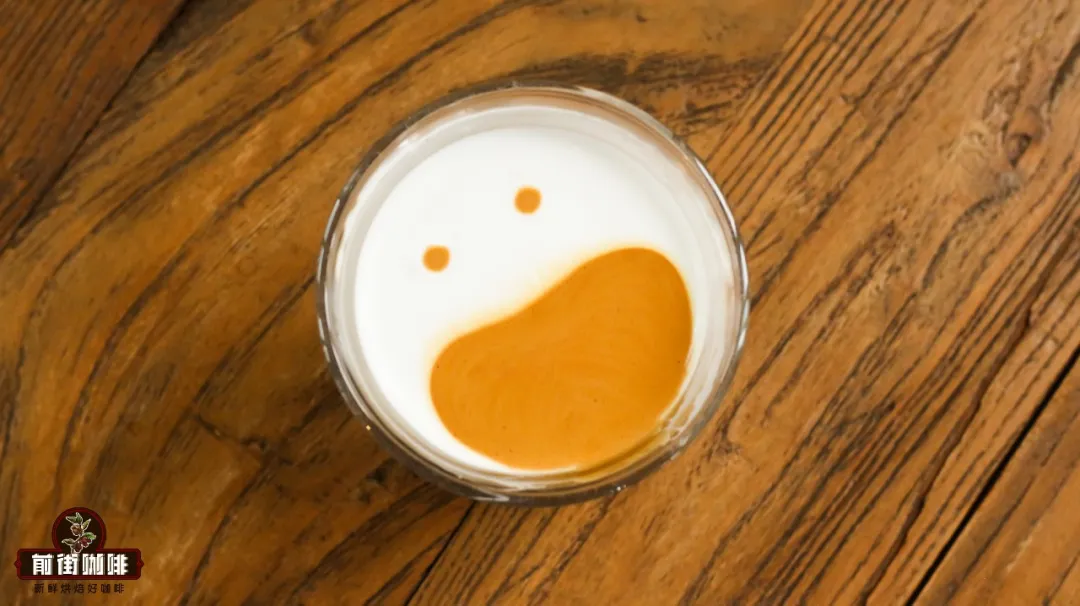
2. Crema The second key point is that the espresso crema must be thick enough. The reason is that the main component capable of spreading across the surface of the milk is coffee crema; crema is the lightest and can float on top of the liquid surface, while the coffee liquid itself is heavier and tends to sink directly into the milk and mix with it. Therefore, the thicker the crema of the coffee used, the easier it is to successfully make a smiley face flat white. To extract espresso with rich crema, when choosing beans it is best to favor coffee beans with a darker roast level, because the darker the roast, the more carbon dioxide the beans accumulate during the process, and the richer the crema extracted. Of course, flavor cannot be ignored either. Coincidentally, there is one coffee bean on the Front Street bean list that fully meets the above conditions—it can extract thick crema and also tastes excellent. It is the one Front Street often mentions—Front Street Italian Classic Blend.
This blend is made by Front Street from richly flavored Sumatra Mandheling, mild Brazilian, and crema-rich Vietnamese coffee beans. The coffee made with it has fragrant chocolate and nutty notes, a full-bodied taste, and also very rich crema. Whether making americano, latte, or espresso and smiley face flat white, it is very suitable. 3. Cup Volume Once the thin milk foam and the espresso with rich crema are ready, the next step is to combine them to make a smiley face flat white. What should be noted at this time? The answer is cup volume. Try to choose a cup with a capacity close to the liquid volume of a flat white, because this can reduce the tilt angle of the cup and increase the chance of success. Many friends clearly have thin milk foam and rich crema, yet still fail frequently, and the problem is often that the cup is too large.

An oversized cup has two drawbacks. First, it is not easy to start pouring the coffee liquid close to the surface. If the distance between the coffee liquid and the milk is too far, the crema will plunge directly into the milk because the impact is too strong. Second, when the cup volume is large and the milk is little, the only way to get close to the surface is to tilt the cup greatly. Although this can make a smiley face at first, when the cup is returned upright the smiley face will deform because of changes in the surface. So the cup cannot be too large. In other words, the tilt angle cannot be too large, and when pouring the espresso you must stay close to the milk surface. As long as you master the above three details, making a smiley face flat white will become very~ simple.
- END -
The above content is compiled by CoffeeHunters, a coffee news website.


