







How Does Pour Height Change Pour-Over Coffee Flavor?
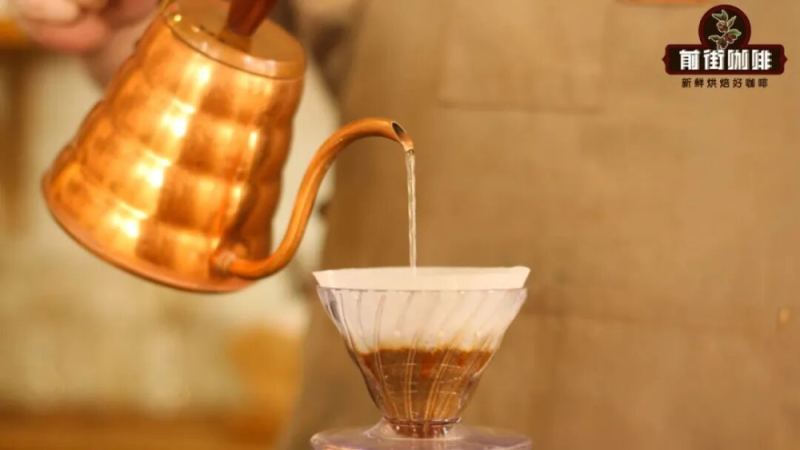
Keeping the kettle spout 0 to 7 cm above the slurry is the range Front Street Coffee recommends for pour-over, because pour height controls how deeply water penetrates the coffee bed, how much agitation it creates, and how much heat the stream loses on the way down. Within that range, the right height depends on roast level and bean character.
There is no single standard height: pouring close to the liquid surface, pouring from high above, and holding a steady 3 to 4 cm can each make delicious coffee. Brewing examples with Huakui and Brazil Queen Estate beans show how raising or lowering the pour stage by stage steers acidity, sweetness, and bitterness toward the intended cup.
Among the many variables in pour-over coffee, the pouring technique is the one most controllable by human effort, and the pouring height—a seemingly subtle parameter—actually has a non-negligible impact on the extraction result. The distance from the kettle spout to the liquid surface determines the strength of penetration, the extent of agitation, and the degree of heat loss in the hot water, which in turn influences the balance of acidity, sweetness, and bitterness in the coffee. This article will systematically analyze the pros and cons of different pouring heights, explain why it is recommended to keep the height between 0 and 7 cm, and use brewing examples with Front Street Coffee.Huakui and Front Street Coffee.Brazil Queen Estate to demonstrate how to flexibly adjust the pouring height at each stage according to the roast level and bean characteristics, so that the extraction result better matches the intended flavor.
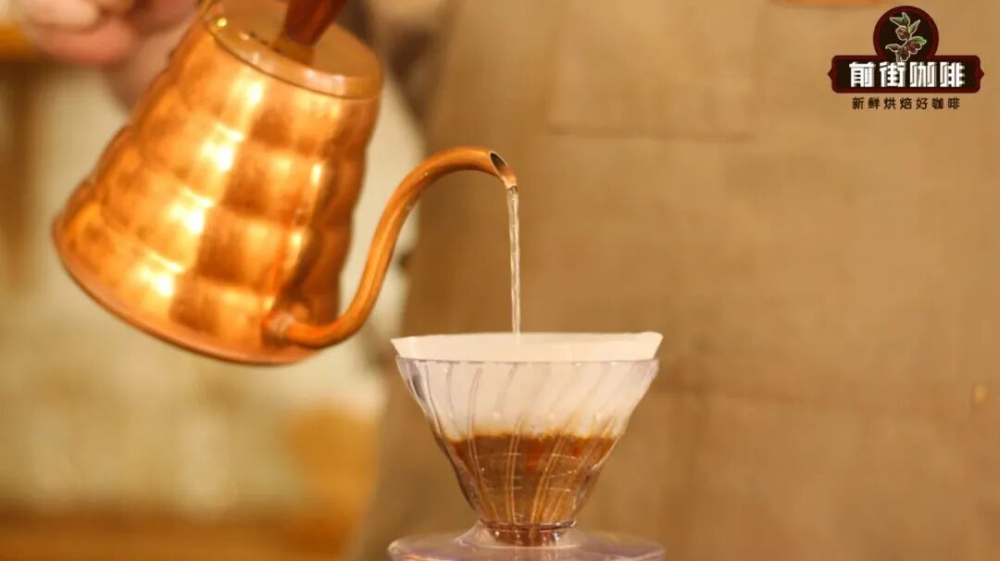
When making pour-over coffee, we usually work around core variables such as coffee dose, grind size, water temperature, coffee-to-water ratio, extraction time, dripper model, and pouring technique. Among these, the pouring technique, because it relies heavily on the operator's control, is often further broken down into several sub-items—such as how many pours to divide the water into, the speed of the water flow, the rhythm of the circular motion, and the position where the water stream lands.
However, some observant friends have noticed a detail that is easily overlooked: the pouring height, that is, the vertical distance from the kettle spout's water outlet to the liquid surface in the cup. Some people have asked Front Street whether the pouring height changes the taste of the coffee, and whether raising the pouring point higher makes the result better.
Why should we pay attention to pouring height?
In its daily observations, Front Street has found that everyone has their own habits when it comes to pouring. Some people like to keep the spout very low, almost touching the liquid surface while circling, some are used to lifting the kettle high and letting the water stream fall straight down, and others, like Front Street, maintain a steady height of 3 to 4 cm throughout. In fact, all three methods can make delicious coffee, so there is no so-called "standard pouring height."
But the interesting thing about pour-over is precisely that the parameters exist in a dynamic, coordinated relationship, and we can work backward from the final cup result to identify the problem and then make targeted adjustments.
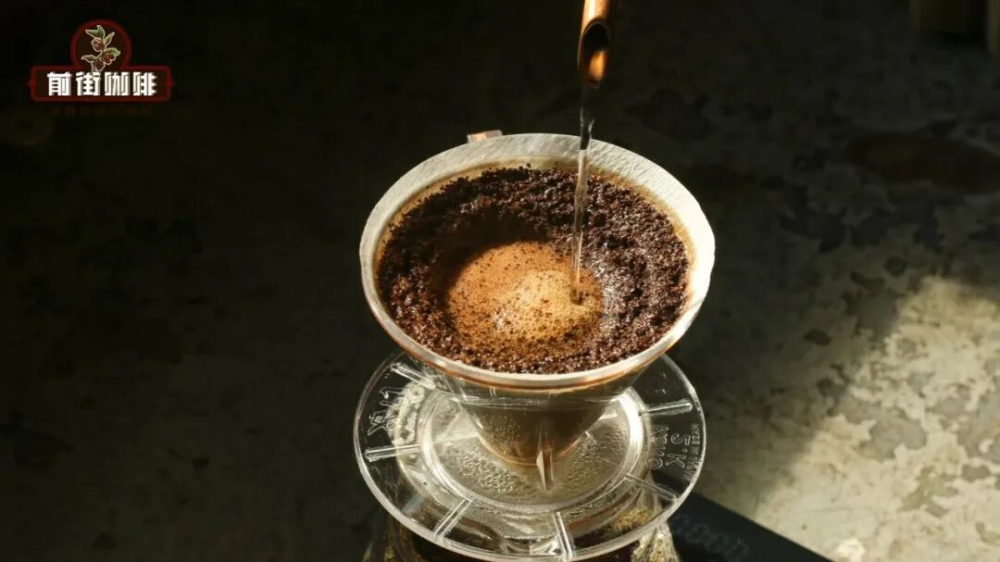
For example, whether you pour in circles or at a fixed center point, and whether the flow is large or small, will affect the coffee's extraction yield; and the force with which the water stream strikes the liquid surface will also change how the flavor is presented, and this force is largely determined by the pouring height. Therefore, if you want to achieve even extraction, you need to find a suitable pouring height and then coordinate it with the other parameters, so that the coffee grounds and hot water come into full and proper contact, ultimately producing a delicious cup of coffee.
What effects does pouring height have on coffee?
Front Street's basic requirements for pouring are actually very simple: the water stream should stay vertical, not break, circle steadily, and not create bubbles when it hits the liquid surface.
Front Street has conducted comparative tests before. When the pouring height exceeds 7 cm, the water stream easily bends and may even break into individual droplets falling down, and when it lands on the liquid surface it also stirs up bubbles, causing the hot water to contact only the surface layer of coffee grounds and resulting in under-extraction. Therefore, it is recommended to keep the pouring height within the range of 0 to 7 cm. In addition, the pouring height also brings the following three levels of impact.
First, during the pour-over process, the water stream continuously "washes," "digs into," and "agitates" the coffee bed, thereby accelerating the release of soluble substances.
The higher the pouring point, the stronger the water stream's penetration, and the greater the washing force on the coffee bed, so substances such as bitterness and off-flavors are brought out more quickly. Moreover, the more violent the turbulence, the greater the agitation of the coffee grounds, and some fine particles, having absorbed enough water, sink to the bottom first and clog the gaps in the filter paper. Therefore, Front Street's advice is to use water streams with excessive penetration—that is, pouring heights above 7 cm—as little as possible in regular brewing plans.
Conversely, if the water stream is kept very low, or even poured right against the liquid surface, the penetration becomes very gentle. On the one hand, the rolling effect on the coffee bed is not obvious enough, which easily leads to under-extraction; on the other hand, if the outlet position is too low, the water stream will develop an outward curve and directly punch a gap in the coffee wall, causing uneven extraction.
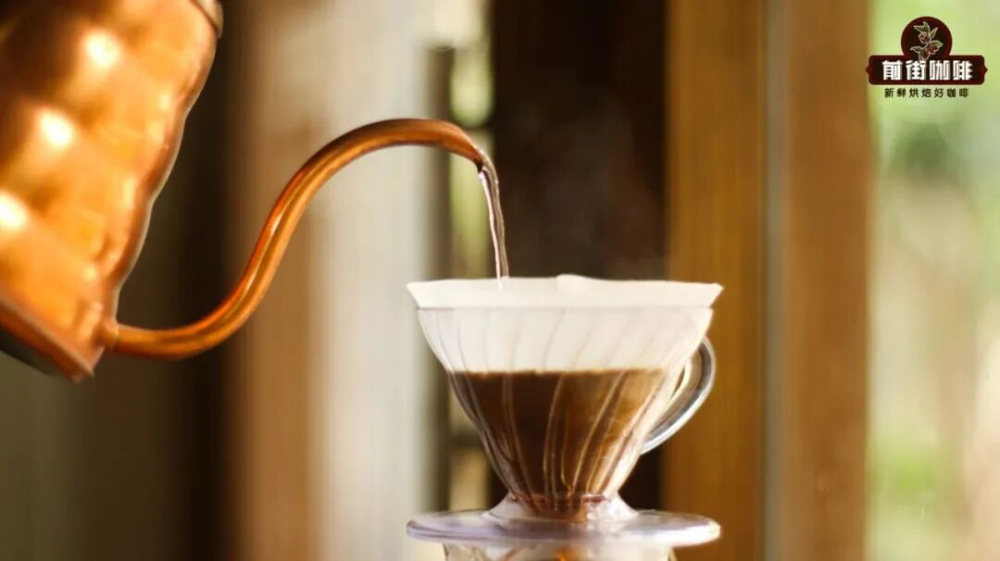
This kind of situation is relatively common among beginners. Front Street recommends keeping at least 2 to 3 cm between the pouring point and the liquid surface, while using a medium-to-large flow.
Second, after hot water leaves the pour-over kettle, its temperature will continue to drop with the time and surface area exposed to the air.
If high-position pouring is used, the surface area of the water stream exposed to the air increases, so heat dissipates more quickly, the actual water temperature participating in extraction decreases accordingly, and the coffee's concentration will also drop.
The most typical scenario for this is brewing a small amount of coffee with a large dripper, such as using a 3-to-4-cup dripper to brew only 15 grams of coffee. Because the dripper itself is relatively tall, the spout of the pour-over kettle has to be raised accordingly, the hot water loses heat severely in the air, and it also easily hits the edge of the dripper, making the pouring operation more difficult.
Adjusting pouring height according to coffee bean characteristics
For medium-light roasted coffee, especially single-origin beans from high-altitude regions, because the beans are dense, the aroma tends to be elegant, bright, and lively. In addition to using the high water temperature and fine grind that Front Street commonly uses, you can appropriately raise the pouring height during the middle extraction stage in order to obtain more flavor compounds that bring acidity and sweetness.
Take the fruit-forward Front Street Coffee.Huakui as an example. Front Street divides it into three pours. The first pour is kept at a height of 3 to 5 cm for the bloom; after the bloom ends, in the second pour, raise the spout to 5 to 7 cm and pour in circles with a small flow; the final pour returns to a height of 3 to 5 cm to finish adding the remaining water. The Front Street Coffee.Huakui brewed this way has especially prominent mango and honey aromas, and a very vivid orange-like acidity and sweetness.
Medium-dark roasted coffee, because it has been heated longer, has a relatively loose internal texture and usually carries roasted aromas and a rich mouthfeel. Front Street will choose a grind like coarse granulated sugar, a lower water temperature, and a dripper with a slower flow rate for extraction. In terms of technique, in order to enhance the coffee's sweetness and finish, the pouring height of the final pour is deliberately lowered.
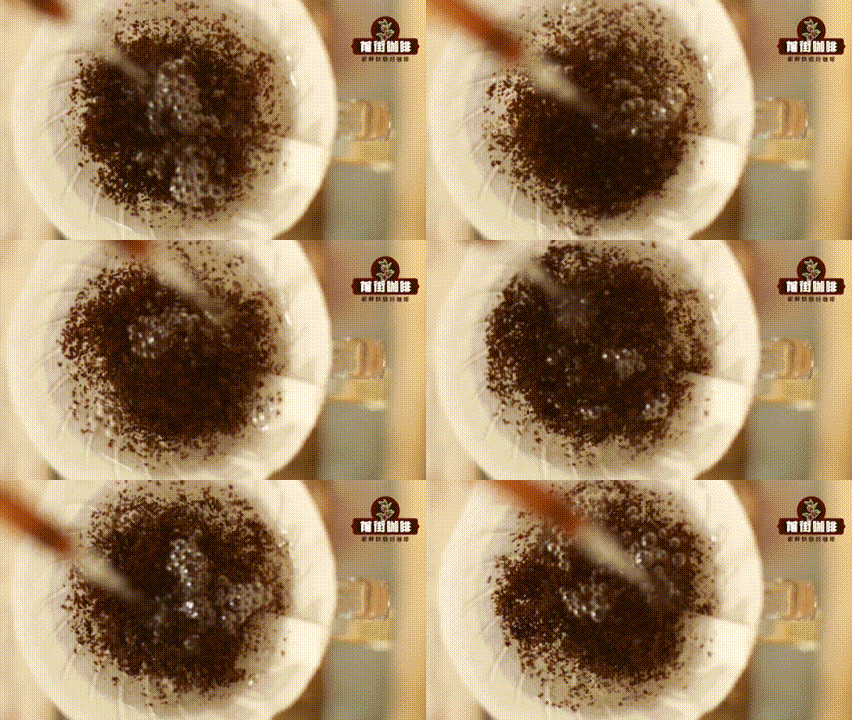
Take Front Street Coffee.Brazil Queen Estate as an example. It is also a three-pour method: the first bloom pour and the second pour are both kept at a height of 3 to 5 cm, poured in circles with a medium flow; in the third pour, the pouring point is lowered to 2 cm, and the remaining water is added in small circles with a small flow. In the end, Front Street Coffee.Queen Estate shows better body, clear sweetness, and a more lasting nutty finish.
The above content is compiled by CoffeeHunters, a coffee news website.


