







Search Results for: even integration

Latte art always failing? A detailed explanation of the eight key points and operational details for incorporating milk and coffee
Many coffee enthusiasts encounter the same confusion when practicing latte art: the milk foam is steamed perfectly fine, and the crema on the espresso is in decent shape too, yet the moment they start pouring, everything falls apart. The problem often lies in a seemingly simple yet easily overlooked step—the integration of milk and coffee. Whether the integration is even not only directly determines whether the latte art pattern can come through smoothly, but also affects the layered mouthfeel of the entire latte. This article will break down the key operational points one by one—covering the criteria for judging even integration, the appropriate thickness of espresso crema, milk steaming and anti-separation handling, the direction and size of the swirling circles, pouring height and flow rate, and controlling the amount used in integration—to help you make a cup of latte with clear patterns and a smooth mouthfeel right at home. [more…]
A Beginner's Guide to Latte Art: Key Techniques from Milk-Coffee Integration to Pattern Formation
Many coffee enthusiasts encounter the same confusion when practicing latte art: the milk foam is perfectly fine and the espresso crema is passable, yet once they get to the pouring stage, everything falls apart. The problem often lies in a step that seems simple but is easily overlooked—the integration of milk and coffee. Whether the integration is even not only directly determines whether the latte art pattern can be successfully presented, but also profoundly affects the mouthfeel and layers of the entire latte. This article will break down, one by one, the core points needed to make a beautiful and delicious latte—from the state of the espresso crema, the thickness and fineness of the milk foam, to the direction, height, flow rate, volume, and circling size in the integration technique—and will include espresso bean recommendations from Front Street Classic Blend and Front Street Commercial Blend to help beginners consistently produce lattes with a beautiful golden ring at home. [more…]
A Beginner's Guide to Latte Art: Key Points for Making Beautiful Patterns, from Pouring Technique to Milk Foam Control
Many friends who are just getting into latte art run into the same confusion: the milk foam is clearly fine enough, and the espresso crema looks fine too, yet the moment they start pouring latte art, it keeps going wrong. In fact, the problem often lies in an easily overlooked step—the incorporation of milk and coffee. Whether the incorporation is even not only directly determines whether the latte art pattern can form smoothly, but also affects the layering of flavor in the whole latte when you take a sip. This article will break down, one by one, the key details for making a beautiful latte from multiple dimensions, including the state of the espresso crema, the thickness and fineness of the milk foam, and the direction, height, flow rate, and circle diameter in the incorporation technique. It also recommends two espresso beans suitable for beginners to practice with, Front Street Classic Blend and Front Street Commercial Blend, to help you consistently produce latte coffee with golden crema at home. [more…]
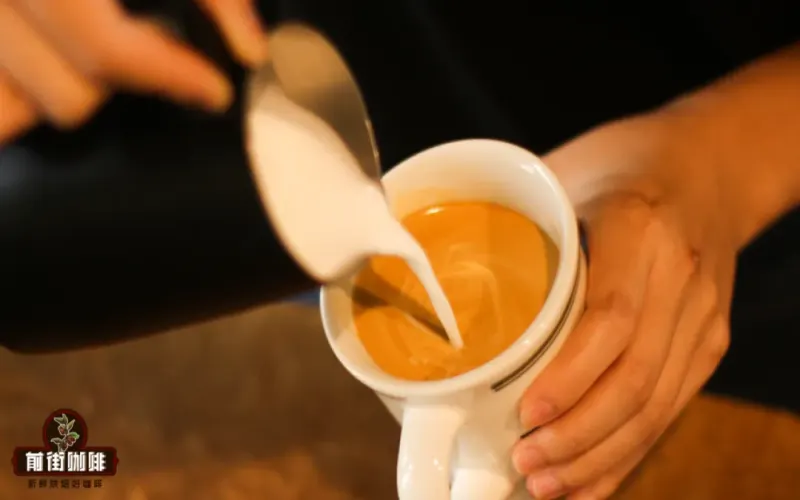
Analysis of Four Common Mistakes in the Milk Integration Stage of Latte Art: A Complete Guide to Pour Height, Flow Rate, and Crema Condition
When making a latte, the integration step before latte art is often overlooked, yet it is just as crucial as the bloom in pour-over coffee. Improper integration directly affects the aesthetics of the pattern and the difficulty of drawing it. This article summarizes the four most common mistakes made by beginners and advanced players during integration: too low a pouring distance, too high a flow rate, unstable flow, and espresso crema left sitting too long and losing its fluidity. At the same time, Front Street Coffee offers recommendations for classic blend and commercial blend beans to help you achieve ideal crema and flavor. Mastering these key points can effectively improve your latte art success rate and overall coffee performance. [more…]

A Beginner's Guide to Coffee Latte Art: A Complete Analysis of Espresso and Milk Foam Integration and Pouring Techniques
Watching the barista gently flick their wrist as a delicate pattern emerges in the cup—the whole process is both soothing and enviable. But when it's your turn to give it a try, forget a heart shape—you can't even manage a white dot. In reality, latte art isn't some exclusive magic reserved for baristas. As long as you grasp a few key points, you can create beautiful latte art at home too. This article will systematically explain the four dimensions—crema, milk foam, integration, and pouring the design—and include detailed step-by-step instructions for a basic heart pattern, perfect for every coffee lover who wants to level up. [more…]

Specialty Coffee Knowledge: A Complete Guide to Latte Milk Frothing Principles, Integration Assessment, and Optimal Temperature
The key to an ideal latte lies not only in the quality of the espresso, but also in the fineness of the steamed milk and temperature control. Front Street Coffee will start from the basic principles of milk frothing to answer common questions such as why the milk foam does not blend and why it floats on the surface during latte art, and will also take an in-depth look at how steam pressure and foam fineness affect blending. At the same time, through experimental comparisons at different temperatures, we reveal why the 50 to 70°C range is the golden zone for long-lasting, stable milk foam, helping you master the core techniques for steaming perfect milk foam. [more…]
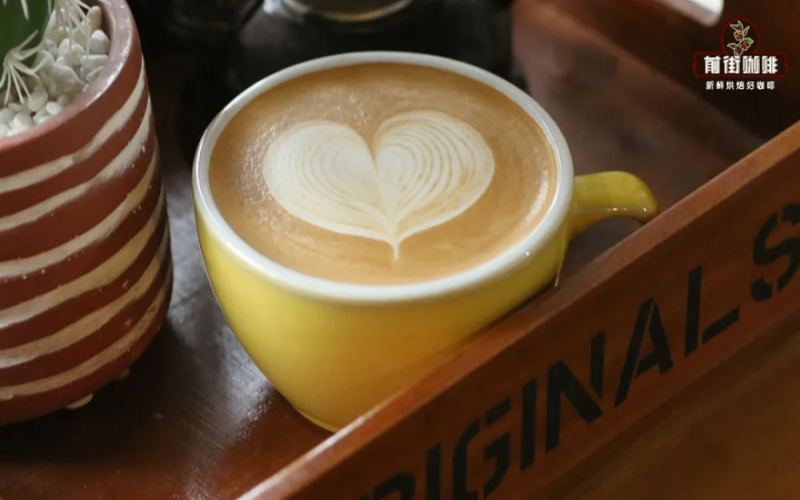
Does latte art enhance coffee flavor? Analyzing the actual effect of visual presentation on taste evaluation
Latte art is the craft of a barista drawing patterns on the surface of an espresso with steamed milk foam. Does it actually change the taste and mouthfeel of a latte? This article analyzes the question from three angles: visual psychology, preparation technique, and quality of integration. Through comparative experiments, Front Street Coffee found that, provided the coffee beans, milk, extraction, and ratios are all on point, latte art and no latte art make no noticeable difference to taste—but latte art places higher demands on foam quality and evenness of integration. The article also explores the balance between pattern complexity, preparation time, and the drinking experience, helping enthusiasts view the relationship between latte art and flavor rationally. [more…]

Ethiopia's Coffee Industry Credit Default Dilemma and the Controversy Over Vertical Integration Policy
Recently, Ethiopia's coffee industry has been thrown into chaos by a wave of credit defaults. Coffee farmers who supplied coffee beans to exporters and suppliers on credit have been waiting in vain for payment, with the amount owed reaching into the billions of birr. Some farmers have even committed suicide out of despair, and radicals have attempted to rob exporters of their property. The government blames the problem on the "vertical integration" plan introduced five years ago and fully implemented two years ago, which replaced the original ECX trading model and was intended to allow coffee farmers, suppliers, and cooperatives to export coffee directly and benefit from international price incentives. However, at a meeting between the government and growers on March 8, 2024, both the Minister of Agriculture and the Director General of the Coffee and Tea Authority held that the benefits of vertical integration outweigh the drawbacks, that defaulters are only a minority, and that violators have already been blacklisted. But coffee farmers and producers say that banks' suspension of loans and the National Bank's 14% credit growth cap have led to the market being controlled by a handful of wealthy exporters, leaving them with no choice but to sell on credit. Last year, 90% of coffee was exported through the vertical integration plan, and farmers are calling on the government to regulate the market. Front Street Coffee reminds that this incident highlights the importance of fair trade and financial support in the coffee industry chain. [more…]

Master the Core of Latte Art: Key Techniques for Milk-Coffee Integration and a Coffee Bean Selection Guide
Latte coffee is a favorite of many coffee lovers. A cup of latte that is both beautiful and delicious cannot be achieved without solid latte art skills, and integration is one of the most crucial parts. From the perspective of Front Street, this article shares how to choose espresso beans suitable for latte art, deeply analyzes the impact of integration on the stability of latte flavor, and breaks down one by one the key details in integration techniques, including hardware requirements, pitcher spout height, technique, and the amount of integration. Whether you are a beginner who has just started or a home coffee enthusiast hoping to advance, you can find practical methods to improve your latte art level, so that every cup of latte presents a uniform taste and a beautiful pattern. [more…]

How to Make a Delicious Latte? A Complete Practical Guide from Coffee Bean and Milk Selection to Ratio, Extraction, and Integration
Latte is practically a standard offering at every coffee shop, yet the taste varies wildly from one establishment to another. A truly delicious latte comes down to three key aspects: the quality of the coffee beans and milk, the ratio of coffee to milk, and the operational details of extraction and integration. Drawing on the practical experience of Front Street Coffee, this article breaks down these three key points one by one. First, it analyzes how espresso blend beans shape the flavor direction of a latte, and why choosing milk isn't about it being richer the better; second, it provides a reference range for the milk-to-coffee ratio of 1:5 to 1:8, and explains the specific 1:6 pairing scheme for Front Street Coffee's Sunflower Warm Sun blend beans; finally, it details espresso extraction parameters, milk frothing temperature, and three core techniques for integration, helping you consistently make a cup of smooth, velvety latte at home or in the shop. [more…]

The Principles of Milk Foaming and Latte Milk Frothing Techniques: A Complete Guide from Integration to Latte Art Patterns
Steaming milk is a fundamental skill that every barista must master, and the quality of the milk foam directly affects the taste of a latte and the result of latte art. Drawing on the practical experience of Front Street Coffee, this article explains in detail the physical principles of milk frothing, answers common problems such as foam that won't incorporate, separation, and surface bubbles, and explains how steam pressure and foam fineness determine incorporation. The article also compares the stability of milk foam at different temperatures, provides two frothing methods—manual and steam—summarizes five common mistakes, and finally includes a step-by-step tutorial on tulip latte art. Whether you are a beginner or a coffee enthusiast looking to refine your skills, you will find practical guidance here. [more…]

Coffee Latte Art Beginner Tutorial: A Complete Guide from Espresso Crema to Heart Patterns
Many people see a barista gently flicking their wrist in a café and tracing beautiful patterns in the cup, and think it's pure magic. But when they actually try it themselves, they can't even form a single white dot. In fact, latte art is not the exclusive domain of the naturally gifted—as long as you master a few core steps, anyone can make a decent heart pattern. This article will break down the key steps of latte art one by one, from the crema state of the espresso, the steaming of fresh milk, the technique of integrating coffee and milk, to the specific skills of pouring a heart. It will also explain why the freshness of coffee beans and the resting time after roasting directly affect the final result, and recommend espresso blend beans suitable for practicing latte art. Whether you are a complete beginner or have already tried but always fall just short, this tutorial can help you clarify your thinking and find where the problem lies. [more…]

How long before latte milk foam dissipates? From milk foam and crema to integration, analyzing the key factors affecting stability
The milk foam on the surface of a latte begins to slowly dissipate from the moment it is made, but the rate of dissipation varies enormously between lattes of different quality—some develop large bubbles within two minutes, while others can hold out for over fifteen minutes. Foam stability is governed by three core factors: the quality of the foam itself, the state of the espresso crema, and the degree of integration between the foam and the coffee. In addition, details such as cup temperature and residual water droplets on the cup wall can quietly affect the pace of dissipation. This article breaks down these variables one by one to help you understand how to make a latte with lasting foam and a stable structure. [more…]

Australian White Coffee Production Details: Analysis of Thin Milk Foam Texturing, Integration Techniques, and Latte Art Challenges
The flat white is a milk coffee that has no clear definition yet heavily tests a barista's skill. It emphasizes less milk, thin microfoam, and a strong coffee flavor—any slight deviation in any step can easily turn it into a latte or cappuccino. This article starts with controlling microfoam thickness, breaking down in detail the aeration time, steaming temperature, pouring technique, and latte art challenges of a flat white, and combines them with the extraction parameters of Front Street Coffee's specialty espresso blend to explain how to make a flat white with rich crema and a full-bodied mouthfeel. [more…]

Can't get latte art patterns to come out? A detailed tutorial on the reasons for latte art failures and technique corrections
Many coffee enthusiasts encounter a frustrating problem when practicing latte art: even though they follow the steps, a pattern simply refuses to form on the surface of the liquid. In fact, the essence of latte art is using the color contrast between milk foam and espresso crema to paint, and the key lies in precisely controlling the height of the milk pitcher and the flow rate during the integration stage and the pattern-forming stage. From the perspective of Front Street, this article systematically sorts out the three main reasons why latte art fails to produce a pattern—not shaking the milk evenly before integration, holding the milk pitcher too high when forming the pattern, and pouring with too small a flow rate—and provides corrective methods for each, helping you break through the bottleneck in your basic technique and successfully pour your ideal pattern. [more…]

Learning Coffee Latte Art from Scratch: A Detailed Guide to Practical Techniques for Steaming Milk with a Steam Wand and Integrating Latte Art
Those new to coffee latte art often run into the same confusion: they watch others casually pour a beautiful heart or tulip, but when they try it themselves, the milk turns into clumps, and they can't even make the most basic pattern. In fact, latte art isn't as mysterious as it seems—the key lies in mastering a few core elements: milk frothing, the pouring technique, and the pitcher-holding posture. From the perspective of Front Street, this article systematically explains how to use a coffee machine's steam wand to create dense, well-balanced microfoam, how to choose espresso beans suitable for latte art, and the details to pay attention to during pouring and practice. It will also recommend Front Street Classic Blend, a bean suitable for beginners and for use in cafés, to help everyone take fewer detours on the road to practicing latte art. [more…]
Common Latte Art Pattern Types and Difficulty Analysis, Plus a Detailed Guide to Making Latte Art
Latte art has always been one of the topics that coffee enthusiasts are most interested in. Watching a barista gently flick their wrist as exquisite patterns emerge in the cup is a delightful process to behold; but when it comes to trying it yourself, you might not even be able to produce a single white dot. Is latte art really only for experienced baristas? Actually, that's not the case. This article will systematically outline the common pattern types and difficulty levels of latte art, and around core points such as crema extraction, milk frothing, incorporating coffee and milk, pouring techniques, and mindset adjustment, provide a detailed explanation of how to make latte art. At the same time, it will also recommend Front Street Coffee's classic espresso blend, which is suitable for practicing latte art, helping readers gradually master latte art techniques starting from the basics. [more…]
Latte Recipe Analysis: Milk-to-Coffee Ratio, Ingredient Selection, and Latte Art Integration Guide
To make a well-balanced latte, the key lies in the choice of ingredients, the ratio of coffee to milk, and the extraction and blending technique. Front Street Coffee believes that the quality of the coffee beans and milk is the foundation. An espresso blend will directly influence the flavor direction of the latte, while the milk should be chosen to pair well with the coffee, avoiding either an overly strong milky taste that masks the coffee's aroma or a thin, watery quality that makes the texture feel weak. There is no fixed ratio for milk coffee; it is generally recommended to float between 1:5 and 1:8, with the specific ratio adjusted according to the flavor performance of the espresso. Only by extracting a qualified espresso, steaming fine and dense milk foam, and mastering the correct blending technique can the coffee and milk fully combine to form a "golden ring" with a uniform surface color and no large bubbles. This article will provide a detailed explanation centered on ingredient selection, ratios, and operational steps. [more…]
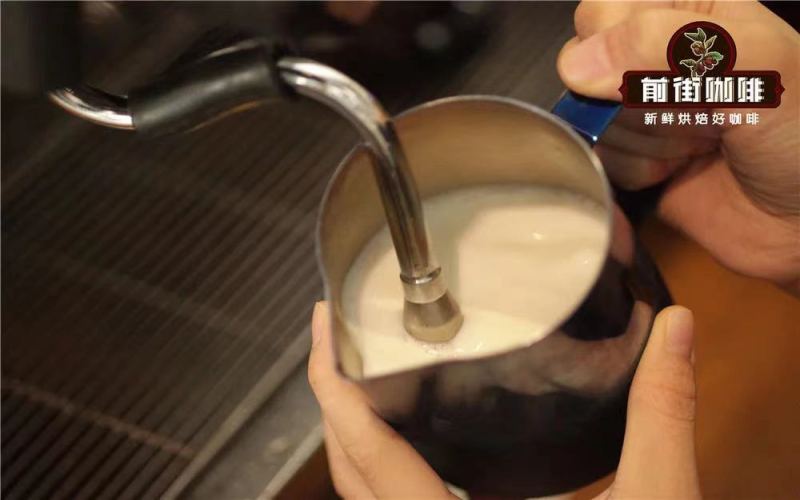
Milk Frothing Tutorial for Beginners | Why Does Milk Foam? How to Froth Milk for a Latte? What Are the Steps and Techniques for Latte Art Pouring and Integration?
At FrontStreet Coffee, steaming milk can be said to be a basic and core skill for every barista. Whether one can steam perfect milk is one of the factors used to judge whether a barista's level is up to standard. For example, the milk foam in a latte is on the thinner side, making it smooth and delicate to drink. The [more…]

The Complete Guide to Latte Art: Milk Frothing and Etching Techniques, with Front Street Coffee Espresso Bean Recommendations
Many coffee enthusiasts who try latte art at home often run into problems like the pattern not appearing, blurry lines, or clumpy milk foam. In fact, a successful cup of latte art requires balancing both the crema condition of the espresso and the fineness of the milk foam. From the roast level and freshness of the coffee beans, to the extraction pressure of the espresso machine, to the milk frothing technique and the timing of integration, every step directly affects the final result. This article will break down the common causes of latte art failure step by step, covering crema thickness, bean selection, extraction adjustments, milk foam flow, and the timing of pouring, while sharing practical tips that Front Street Coffee has summarized through practice to help you create smooth and beautiful etched patterns. [more…]