








What Does Latte Coffee Mean for Milk and Espresso?
Latte coffee means espresso combined with steamed milk, and integration is the step that decides whether the cup tastes even. Integration lets part of the milk fully mix with the espresso rather than sitting on top. Without it, coffee and milk separate across the cup and the first sip differs from the last.
Bean choice comes first: the beans should be freshly roasted and produce a suitable amount of crema, which is why an espresso blend is usually recommended for stable extraction. Blends that include robusta raise crema and body, making pouring easier. Details such as hardware, pitcher spout height and the latte milk to coffee ratio all shape the final texture.
Latte coffee is a favorite of many coffee lovers. A cup of latte that is both beautiful and delicious cannot be separated from solid latte art skills, and integration is a crucial part of it. From the perspective of Front Street, this article shares how to choose espresso beans suitable for latte art, deeply analyzes the impact of integration on the stability of latte flavor, and breaks down one by one the key details in integration techniques, such as hardware requirements, pitcher spout height, technique, and integration amount. Whether you are a beginner just starting out or a home coffee enthusiast hoping to advance, you can find practical methods to improve your latte art level, making every cup of latte present a uniform taste and a beautiful pattern.

Latte coffee can be said to be one of the most common coffee categories in daily life. Watching a barista skillfully pour steamed milk into espresso, in an instant a cup of latte that is both pleasing to the eye and good to drink appears. However, truly achieving both good taste and good looks is not as easy as it seems on the surface. One hurdle that must be overcome is integration. If you also want to take your latte art skills to the next level, then follow Front Street and read on~
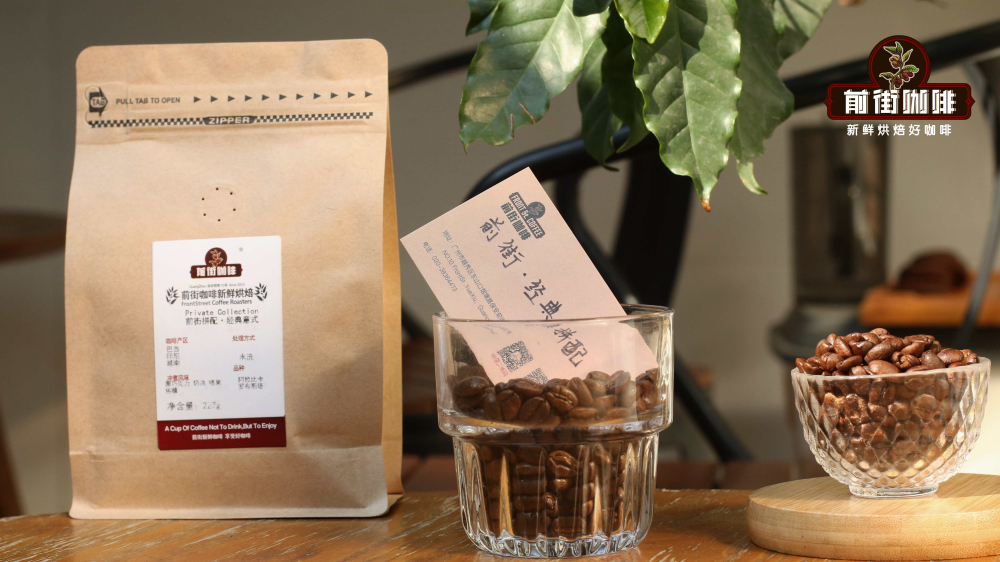
To practice latte art, choosing the right espresso beans is the first step. There are two basic conditions here: first, they must be freshly roasted; second, they must have an appropriate amount of crema. It is usually recommended to use espresso blend beans, as this makes the extraction process more stable. For beginners just getting into latte art, or coffee enthusiasts practicing at home to advance, you can directly get Front Street. Front Street Classic Blend. The espresso extracted with this bean has obvious aromas of butter, roasted hazelnut, caramel, and dark chocolate, with a rich and solid taste. On the basis of the Mamba formula, it adds robusta beans, significantly enhancing the crema and making the body of the espresso fuller, which makes latte art much easier.
Integration
So-called integration means allowing part of the milk to fully mix with the espresso. This is not only to make the latte art look better, but more importantly to ensure the stability of the latte's flavor. Imagine that if integration is insufficient, the distribution of coffee liquid and milk in the entire cup will be uneven. The first sip may taste rather bitter, and the second sip may be too milky, greatly reducing the overall experience.
What counts as proper integration?
Because of this, integration becomes the key to a cup of milk coffee. Good integration first shows as the crema on the surface mixing evenly with the milk foam, which can be seen from the consistency of the liquid surface color, that is, what we often call the "golden ring." Second, the coffee surface should be delicate and smooth, without large bubbles.
The formation of bubbles is largely because the pitcher is positioned too high during integration, causing the milk to break through the crema layer. In the view of baristas, perfect integration is far more important than pouring a beautiful pattern.
What techniques are there for latte art integration?
① First, the "hardware" must pass muster! That is to say, the quality of both the espresso and the milk foam must be good. Espresso needs rich crema and a viscous texture, while milk foam should be delicate and highly fluid. Many times, integration is not ideal because the milk foam is steamed too thick, reducing its fluidity, so the milk foam floats on the surface. In addition, before integration, gently swirl the coffee cup and milk pitcher to increase the fluidity of the liquids inside, which can also improve the success rate of integration.
② The height of the pitcher spout during integration. We all know that when pouring latte art, the pitcher spout needs to be lowered close to the coffee surface so that white milk foam can appear. The same principle applies during integration. If the pitcher spout is too low, a large amount of milk foam will float on the surface, resulting in uneven integration; if it is too high, the surface bubble problem mentioned earlier will occur.
Generally speaking, keeping the distance between the pitcher spout and the coffee surface at about 5 to 10 centimeters is more suitable. Of course, everyone has different habits, and there is no absolutely fixed standard for height and distance.
③ Integration technique. A common integration technique is stirring in one direction: hold the coffee cup with your left hand and the milk pitcher with your right hand, offset the two hands by half a circle and make relative circular motions. The stirring force of one high and one low can easily mix the coffee and milk fully. As for the amplitude of the circles, Front Street suggests making large circles as much as possible without touching the cup wall. The hand holding the coffee cup should pay attention to slowly straightening the cup.

④ The amount of integration depends on how large a pattern you plan to pour. If you do not want latte art, you can directly integrate to a full cup, and the coffee's taste will still remain very good. If you want to pour some simple patterns, you can integrate to seven-tenths full. And if you want to make complex patterns, integrating to four-tenths full is enough.
The above content is compiled by CoffeeHunters, a coffee news website.


