








Does the Coffee Milk Ratio in a Latte Decide Your Latte Art?
Milk integration, the step of pre-mixing a little milk into the espresso before drawing, decides how the pattern turns out. Four common mistakes show up in this stage: pouring too low, running the flow too fast, holding an unstable flow, and letting crema sit until it loses fluidity and no longer moves under the milk.
Integration works like blooming in pour-over: skip it and the final cup suffers. The coffee milk ratio in a latte, and the latte coffee beans made from a given blend, set the crema and flavor you have to work with, so classic and commercial blends are chosen to give steady crema. Fixing these details lifts your success rate.
When making a latte, the integration step before latte art is often overlooked, yet it is just as crucial as the blooming step in pour-over coffee. Poor integration directly affects the appearance of the pattern and the difficulty of drawing it. This article compiles the four most common mistakes made by beginners and advanced players during integration: too low a pour height, too high a flow rate, unstable flow rate, and coffee crema left too long and losing its fluidity. At the same time, Front Street Coffee offers recommendations for classic blends and commercial blend beans to help you achieve ideal crema and flavor. Mastering these key points can effectively improve your latte art success rate and overall coffee performance.

Did you know that latte art actually has a preparatory step just as crucial as the blooming step in pour-over coffee—that is, integration? Integration refers to the operation of pre-mixing a small amount of milk with the coffee liquid first. The reason Front Street compares its importance to blooming in pour-over is that, like blooming, whether this action is done properly directly determines the final quality of the coffee.
In pour-over, if the blooming is insufficient, the coffee grounds cannot fully degas, making extraction more difficult and easily leading to under-extraction. Similarly, in latte art, if integration is not done well, it affects the visual appeal of the latte art pattern, increases the difficulty of drawing the pattern, and in severe cases even drags down the overall performance of the cup. Therefore, integration is an extremely important preliminary step for latte art.
Not only beginners, but even for many veterans who have been immersed in the coffee world for years, achieving proper integration is by no means easy. Because unlike blooming, there are quite a few details to pay attention to during integration, and a single careless move can leave an irreparable mark on the surface.
However, when problems arise, we ultimately need to figure out the root cause in order to make targeted adjustments. So today, Front Street will take stock of the mistakes that frequently occur during the integration stage. You can pay more attention to these in your daily latte art to avoid adding trouble to your drawing.
The flavor of any milk coffee mainly depends on the coffee beans used. If you prefer a traditional style, you might choose Front Street Classic Blend or Front Street Commercial Blend. During extraction, they present aromas of butter, nuts, spices, and dark chocolate. Their wild character and abundant crema are their most prominent features.
1. Pour height too low
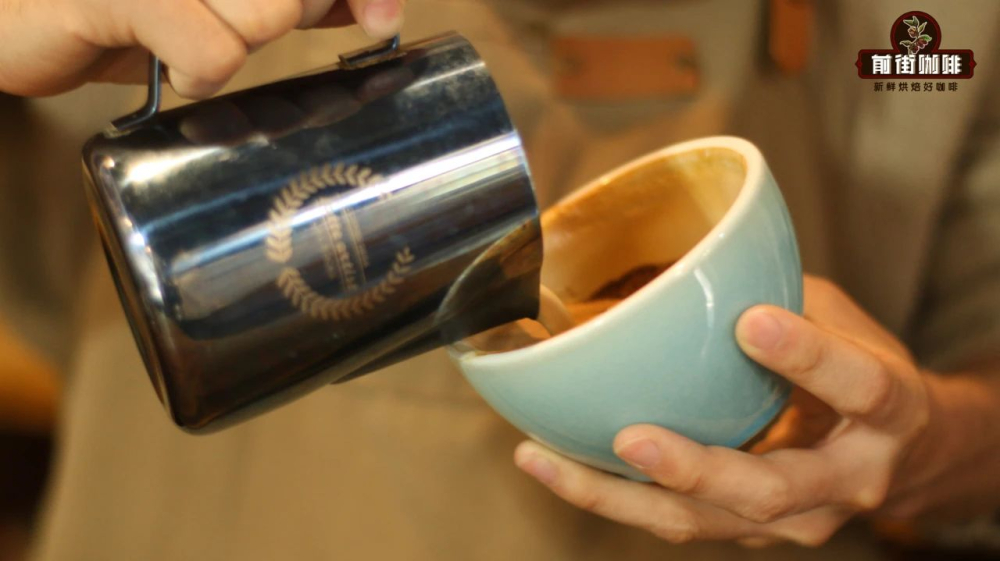
The most common problem is pour height being too low during integration. Here, Front Street will first briefly explain the concept of pour height. In latte art, "pour height" refers to the distance between the milk foam coming out of the pitcher spout and the coffee liquid surface. This distance directly affects the results of latte art and integration. With a fixed flow rate, the higher the pour height, the stronger the impact force of the milk foam, and vice versa.
Usually during the integration stage, we use a relatively high pour height to inject the milk foam, because to fully mix the milk foam with the coffee, a relatively strong impact force is needed to drive the milk foam into the coffee liquid and achieve stirring integration. But many people tend to be "conservative" in their operation and inject the milk foam at a low pour height. As a result, because the distance to the coffee surface is too close, the milk foam lacks impact force and leaves lines on the surface.
Even if the subsequent latte art is done beautifully, the background will look "messy" because of these lines—in short, the pattern is not clean enough. So during integration, we should pay attention to controlling the pour height and try to keep it higher, to avoid dirtying the originally clean "canvas."
2. Flow rate too high
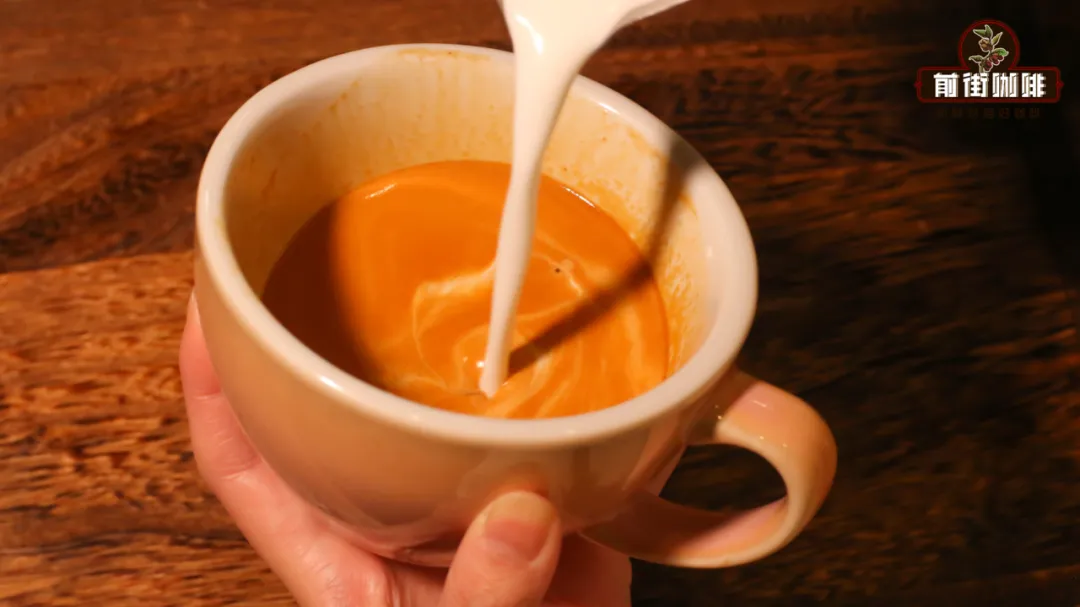
Besides the aforementioned pour height, another key point in latte art is "flow rate." In latte art, flow rate refers to the amount and speed at which milk foam is poured from the pitcher. As Front Street said, the size of the flow rate is also a key factor to focus on during latte art and integration.
During integration, we should try to avoid injecting milk foam at a high flow rate, as this easily causes the milk foam to hit the bottom and then rebound to white (that is, white appearing at the bottom of the coffee liquid). Because at this point there is not much coffee liquid in the cup, the milk foam can easily reach the bottom and then bounce back to "pollute" the surface. So during integration, we should try to control the flow rate.
3. Unstable flow rate
The third situation also belongs to flow rate control problems: the milk foam is injected during the integration stage in an inconsistent, intermittent manner. This situation has many adverse effects on the coffee, but it is also the least common scenario.

An unstable flow rate causes the milk foam to lose its stirring power and prevents it from integrating well with the coffee. At the same time, it easily creates large bubbles on the coffee surface. These bubbles become an "obstacle" that blocks the passage of lines during latte art. But as Front Street said, this is a rare situation. Because unstable flow rate mainly occurs when beginners first start latte art, and basically after two to three days of practice, this situation rarely appears anymore.
4. Coffee left too long before integration, lacking fluidity
Many people focus on the milk foam during integration and latte art, thus neglecting the importance of coffee crema quality. But in fact, the quality of the coffee crema during integration also directly affects the quality of integration. If the coffee crema is left too long, it will separate, clump, dissipate, and lose fluidity.
Crema that has lost fluidity cannot integrate well with the milk foam, which will cause the crema to remain "clumpy" when we formally draw the latte art. This likewise becomes an obstacle during latte art and increases the difficulty of drawing.
If we leave the coffee crema too long because we need to steam milk or for other reasons and it clumps, then before integration, it is best to swirl the coffee in the cup while also swirling the milk foam. This can shake the clumped crema apart, allowing it to reintegrate with the coffee and regain fluidity. In this way, during integration the milk foam can mix better with the coffee and will not become an obstacle during latte art.
The above content is compiled by CoffeeHunters, a coffee news website.


