








What decides whether a hot vanilla latte tastes good?
A good latte rests on three things: the coffee beans and milk chosen, the ratio between them, and the extraction and integration technique. Espresso blend beans set the flavor direction, and the milk-to-coffee ratio generally sits between 1:5 and 1:8, with a 1:6 pairing used as the reference scheme for a caramel chocolate and vanilla cream profile.
Milk choice matters as much as the beans. Even among full-fat fresh milks there are many varieties, and some carry a heavier milky flavor that can mask the espresso. The espresso coffee ingredients, extraction parameters, milk frothing temperature, and three core integration techniques are the details that let a barista repeat a smooth, velvety hot vanilla latte.
Latte is practically a standard offering at every coffee shop, yet the taste varies enormously from one shop to another. A truly delicious latte comes down to three key aspects: the quality of the coffee beans and milk selected, the ratio of coffee to milk, and the operational details of extraction and integration. Drawing on the practical experience of Front Street Coffee, this article breaks down these three key points one by one. First, it analyzes how espresso blend beans shape the flavor direction of a latte, and why choosing milk isn't about being as rich as possible; second, it provides a reference range of 1:5 to 1:8 for the milk-to-coffee ratio, and explains the specific 1:6 pairing scheme using Front Street's Sunflower Warm Sun blend beans; finally, it details espresso extraction parameters, milk frothing temperature, and three core techniques for integration, helping you consistently make a cup of smooth, velvety latte at home or in your shop.

To learn more about specialty coffee, welcome to follow: Front Street Coffee (Frontsteet Coffee)
Front Street has always held that what determines whether a latte is delicious comes down to the quality of the coffee beans and milk themselves, the ratio between the two, and the skill level in the extraction and integration process.
Point One: Choosing the Right Ingredients
The method for making a latte doesn't look complicated—you can find it on practically every coffee shop's menu—yet the taste is never exactly the same from one shop to another. One key reason for this difference is that the milk and coffee beans each shop chooses are not the same.
The flavor of coffee beans directly and significantly influences the overall direction of a latte. Iced lattes made with most espresso blend beans present a robust nutty, chocolate character, with the coffee flavor taking the lead. A small number of coffee beans can also make the milk in an iced latte taste sweeter and creamier. The Sunflower Warm Sun blend beans used in Front Street's shops are chosen specifically to highlight the rich expression of caramel chocolate and vanilla cream. This shows that the selection of espresso beans plays a pivotal role in the taste of a latte.
The choice of milk is equally not to be overlooked. Even among the commonly available full-fat fresh milks on the market, there are more than a dozen varieties. Some have a heavy milky flavor, some are light in mouthfeel, and some are as thin as water. The standard for choosing milk is not simply to pursue richness or a prominent milky flavor, but to find the one that pairs well with the coffee. Milk that is too rich will overpower the coffee's own flavor, while milk with too much wateriness will make the latte bland and weak.
Point Two: A Reasonable Milk-to-Coffee Ratio
Once the ratio of coffee to milk is unbalanced, it can't be called delicious. Add too much milk, and the coffee flavor vanishes completely; add too little milk, and the bitterness becomes too prominent. So when making a latte, you must control the ratio of coffee to milk well.
Front Street believes there is no rigid ratio for a latte—it depends specifically on the flavor performance of the espresso and how well it matches the milk. However, a rough range can be given: 1:5 to 1:8.
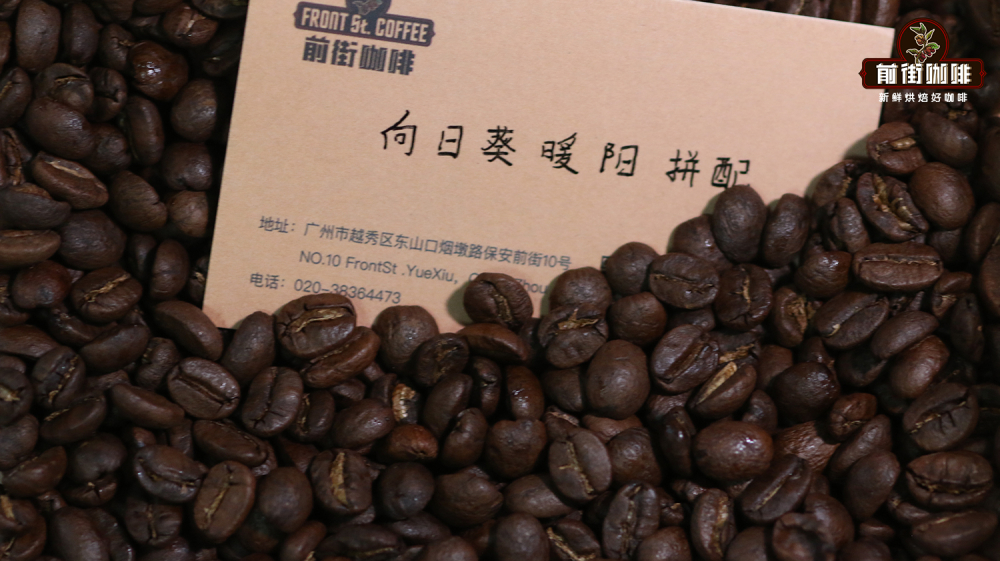
The espresso beans currently used by Front Street are called Sunflower Warm Sun blend coffee beans, a blend of Yirgacheffe Red Cherry and Honduras Sherry, with moderate bitterness and flavor notes leaning toward sherry wine aroma, chocolate, vanilla cream, and brown sugar. These beans are not as intensely bitter as traditional espresso beans, and when paired well with milk, they yield a dense milk chocolate taste. When Front Street uses these beans to make a latte, the coffee-to-milk ratio adopted is 1:6, that is, 40g of espresso liquid paired with 240ml of steamed milk.
Point Three: The Specific Operations
Extracting a qualified shot of espresso and producing fine, dense microfoam are fundamental to making a good latte. Regarding espresso extraction parameters, Front Street recommends using 20g of coffee grounds to extract 40g of coffee liquid, with the time controlled at 25 to 30 seconds. When frothing milk, froth from the 5 o'clock level to the 6 o'clock level in thickness, and keep the temperature between 55 and 60 degrees Celsius.
Next comes the integration stage. Only when the milk and espresso are fully combined can the coffee's taste remain consistent. If the integration is uneven, it's very likely that the first sip tastes too milky and the next sip tastes too strongly of coffee.
Good integration first shows as the crema on the surface blending evenly with the milk foam—that is, a uniform color across the liquid surface, which is what we commonly call the "golden ring." Second, the coffee's surface should be fine and smooth, with no large bubbles.
Integration Techniques
① First, the "hardware" must pass muster. That is to say, the quality of the espresso and the milk foam must be up to standard: the espresso should have rich, viscous crema, and the milk foam should be fine and highly fluid. Many times integration is unsatisfactory because the milk foam was frothed too thick, reducing its fluidity, so the foam simply floats on the surface. Before integrating, swirling the coffee cup and the milk pitcher to enhance the fluidity of the liquid inside can also improve the success rate of integration.
② During integration, the height of the pitcher spout is also crucial. Everyone knows that when pouring latte art, you need to lower the spout close to the coffee's surface to form white milk foam. The principle for integration is the same: if the spout is too low, a large amount of milk foam will float on the surface, causing uneven integration; if the spout is too high, the problem mentioned earlier occurs—bubbles appear on the surface.
Generally speaking, the distance between the pitcher spout and the coffee's surface is kept at about 5 to 10 centimeters. Everyone's habits differ, so there is no completely fixed standard for height and distance.
③ Integration technique. A common integration method is stirring in the same direction: hold the coffee cup in your left hand and the milk pitcher in your right hand, offset the two hands by half a circle to make opposing circular motions, and the alternating high-and-low stirring force easily allows the coffee and milk to fully mix. As for the size of the circles, Front Street recommends making the largest circles possible without touching the cup wall. The hand holding the coffee cup should remember to slowly straighten the cup.
The above content is compiled by CoffeeHunters, a coffee news website.


